Global
Industry
E-commerce
Services Provided
PPC Management
Email Marketing
Content Marketing
Growth Marketing
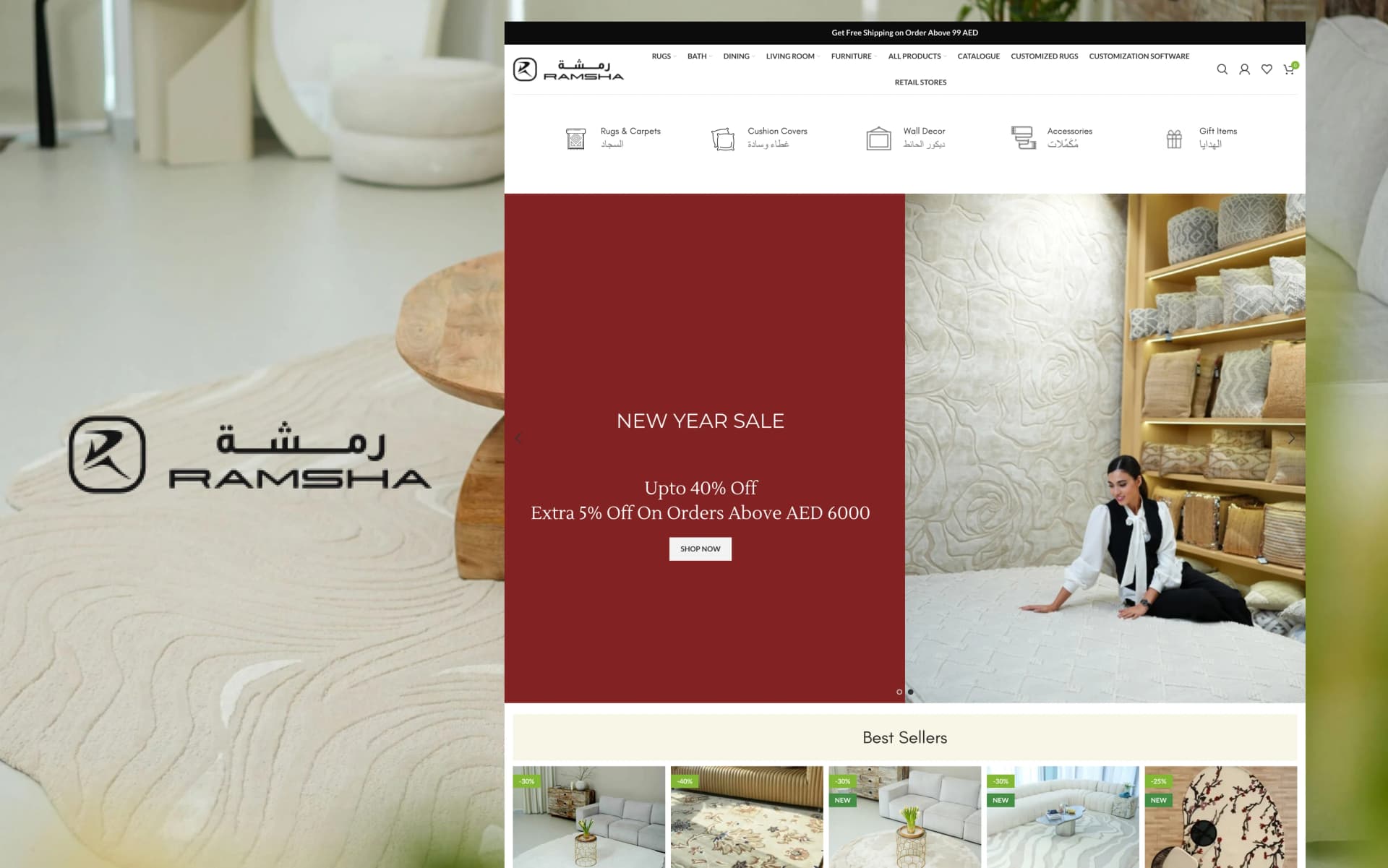
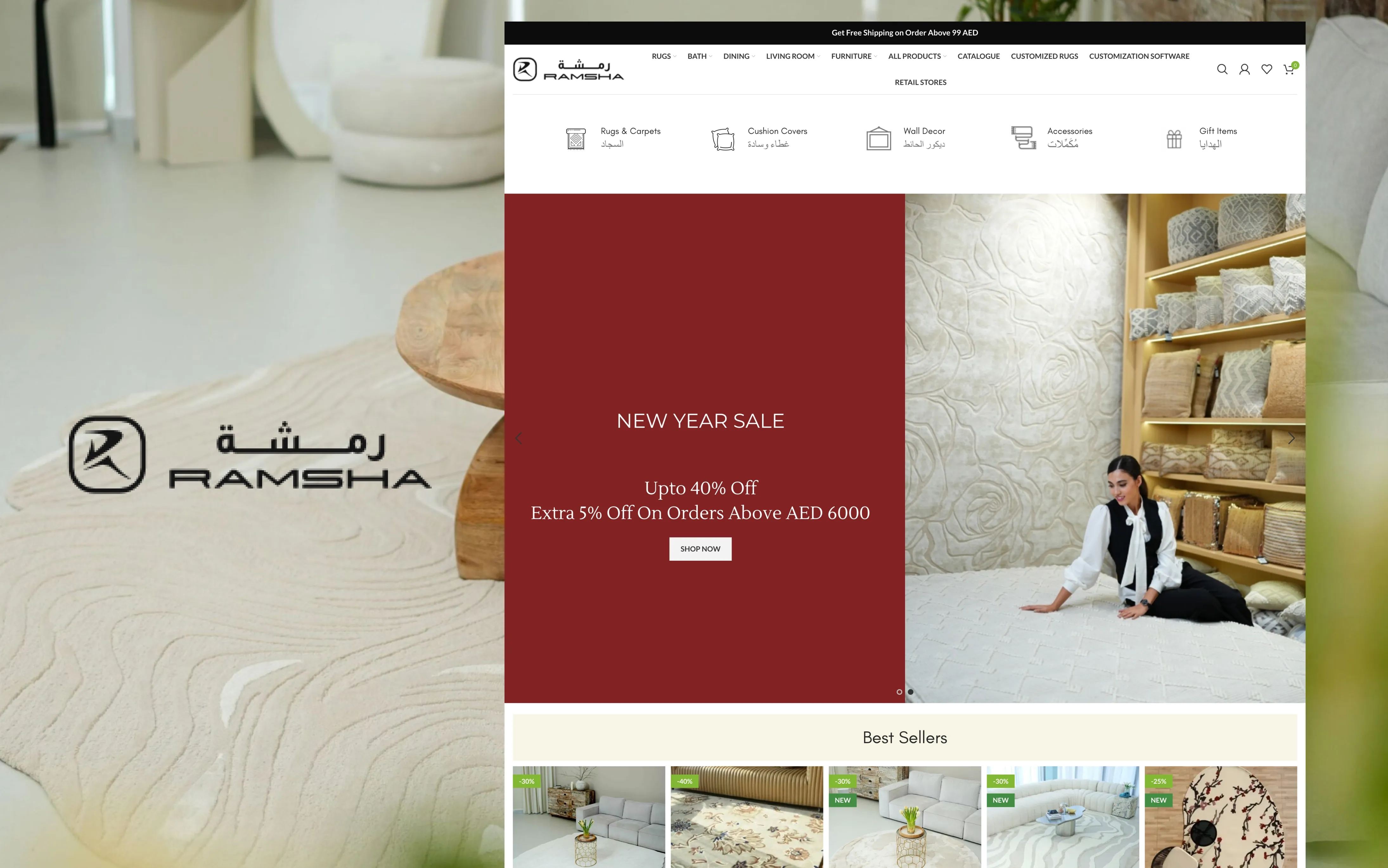
Ramsha Home brought a unique advantage to the competitive UAE home décor market: over 30 years of manufacturing heritage in handmade rugs, carpets, solid-wood furniture, and curated accessories. Their Ajman showrooms displayed the full range of their capabilities, from intricate hand-knotted Persian-style rugs to contemporary hand-tufted designs and custom color-matched carpets. Interior designers and villa owners who visited the physical location understood the value immediately, seeing and feeling the quality difference between machine-made alternatives and artisan craftsmanship. However, their digital presence wasn't capturing this positioning or generating meaningful online revenue. The e-commerce store sat relatively dormant with monthly sales averaging just AED 4,700, relying primarily on walk-in showroom traffic and word-of-mouth referrals. Paid advertising ran inconsistently without category differentiation, treating a AED 200 decorative accent piece the same as a AED 5,000 custom hand-knotted rug. The website experience didn't guide customers through the breadth of offerings or communicate the craftsmanship story that resonated so powerfully in person.
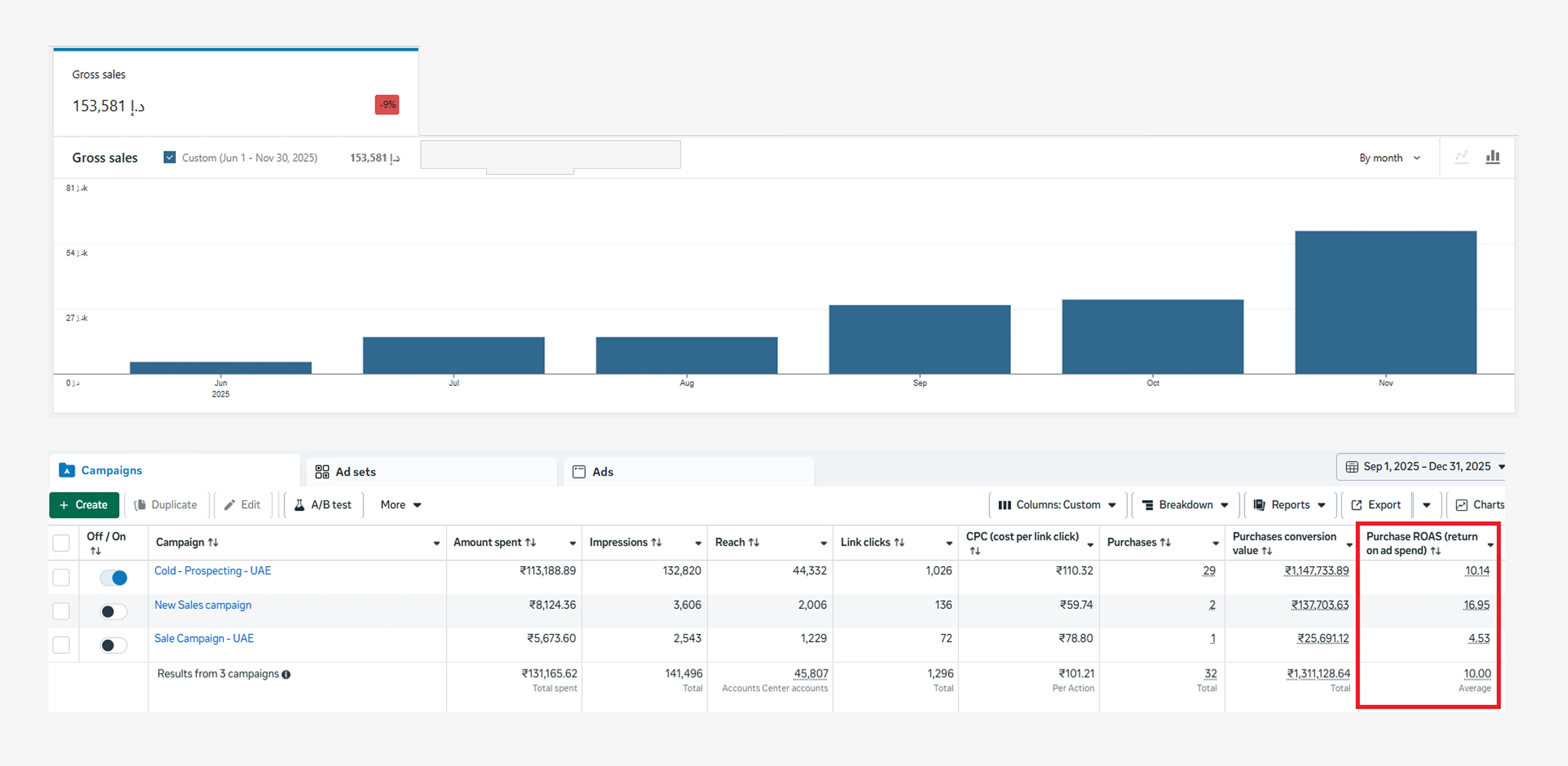
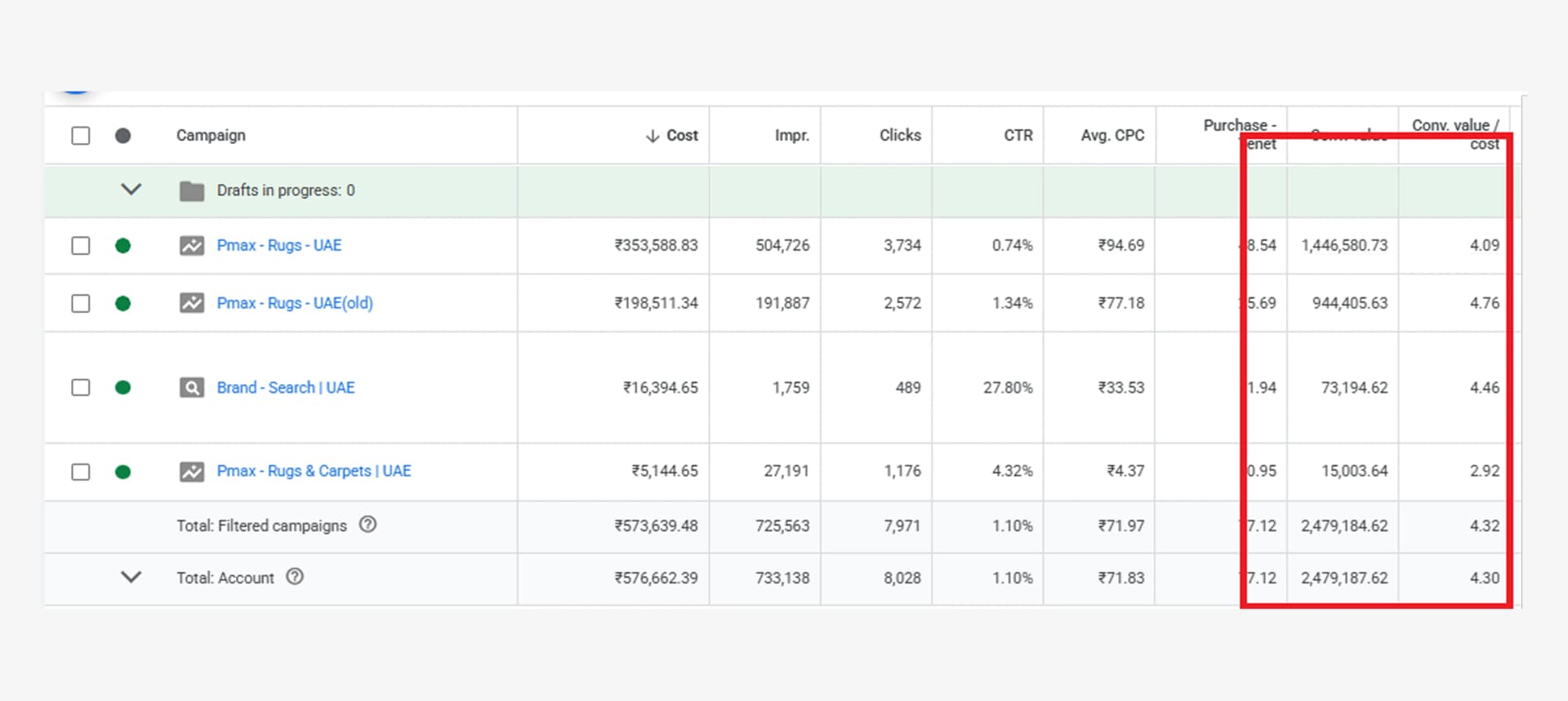
Over five months, we built a category-specific digital commerce engine combining Google and Meta advertising, WhatsApp and email retention systems, and comprehensive website optimization aligned with how customers actually shop for luxury home furnishings. The transformation was substantial: monthly revenue scaled 12x from AED 4.7K to AED 60K while maintaining profitable 6.6x blended ROAS, with average order values reaching AED 1,100 and acquisition costs of just ~AED 155 per purchase.
Note: At the time of publishing this case study, we’re also actively migrating their WooCommerce Website to Shopify to further improvement in conversion rates, and to add incremental revenue for the brand, while also ensuring customer have a flawless experience. Ask our team for a comprehensive update or stay tuned for the update to this case study.
Ramsha Home's physical presence worked well. Customers visiting the Ajman showroom could browse room-setting displays, compare rug construction techniques, discuss custom sizing and color options with knowledgeable staff, and understand the value proposition of investing in handmade pieces that would last decades rather than years. The 30-year manufacturing relationships meant competitive pricing despite premium quality, giving them a margin structure that should have supported aggressive digital growth.
The digital business, however, faced multiple structural challenges:
The opportunity was clear: apply sophisticated e-commerce strategy and infrastructure to a brand with genuine product differentiation and manufacturing advantages, creating a digital channel that could scale beyond the geographic limitations of physical showrooms.
Our strategy recognized that "luxury home décor" encompasses vastly different purchase behaviors, requiring tailored approaches rather than generic tactics:
We began by mapping Ramsha's entire catalog into distinct product universes based on price point, purchase motivation, and buyer profile. Handmade and custom rugs represented the premium tier, purchased by villa owners and interior designers focused on craftsmanship, customization options, and investment quality. These buyers had high consideration time, larger budgets, and valued detailed information about construction techniques and material sourcing. Woven, jute, and shaggy rugs formed the volume tier, appealing to apartment renters and young homeowners doing room makeovers on moderate budgets. They valued contemporary design trends and price-value relationships more than heritage craftsmanship. Furniture and décor accessories served as both standalone purchases and room-completion add-ons, with bundling potential to increase average order values. Project buyers and gift shoppers represented additional segments with their own unique needs around bulk ordering and gift presentation.
Rather than running unified campaigns, we designed separate acquisition and nurture paths for each product universe. Handmade and custom rug campaigns emphasized craftsmanship storytelling, customization capabilities, and large-ticket AOV focus. Creative showcased the weaving process, material quality, and durability arguments that justified premium pricing. Audiences targeted affluent homeowners, villa neighborhoods, and interior design communities. Woven, jute, and shaggy rug campaigns took a completely different approach, highlighting trend-forward designs, room transformation before/after content, and price-value positioning. These campaigns targeted younger demographics, apartment buildings, and home makeover enthusiasts. Furniture and décor campaigns focused on "complete the room" messaging, bundling rugs with complementary side tables, lighting, or accessories through coordinated room-setting visuals.
We structured Google and Meta to serve different functions in the customer journey. Meta handled discovery and inspiration through visually rich content: room makeover transformations, new collection announcements, behind-the-scenes manufacturing stories, and lifestyle imagery showing products in context. The platform's strength in interest-based and lookalike targeting made it ideal for reaching people in early consideration phases or inspiring purchases they hadn't actively planned. Google captured high-intent demand through Search campaigns targeting specific rug types, sizes, and room applications, plus Performance Max for brand searches and remarketing. This division of labor maximized efficiency, using Meta's lower cost-per-click for awareness and Google's superior conversion rates for purchase-ready searchers.
To lower the barrier for new customers unfamiliar with the brand, we implemented strategic first-purchase discounts, particularly on mid-tier woven and shaggy rugs. This allowed people to "try Ramsha" at a comfortable price point, experience the quality firsthand, then potentially upgrade to premium handmade pieces for additional rooms once trust was established. The offer structure was calibrated to maintain margin health while accelerating customer acquisition.
We developed high-AOV offer structures specifically for large rugs and furniture combinations. "Complete your living room" bundles paired rugs with coordinating side tables or lighting. Tiered discount thresholds incentivized customers to add one more item to reach the next discount level. Cart abandonment campaigns highlighted these bundling opportunities, suggesting complementary pieces based on what was already in the cart. This strategy improved unit economics by increasing revenue per transaction without proportionally increasing acquisition costs.
Recognizing UAE consumer preferences, we built core retention flows through WhatsApp alongside email: order confirmations, COD payment reminders, shipping updates, delivery confirmations, first-purchase thank-you messages, back-in-stock notifications for items customers had viewed, and winback campaigns for lapsed buyers. The WhatsApp channel achieved significantly higher open and engagement rates than email, particularly for transactional communications that UAE customers expect to receive via messaging apps.
We segmented the customer base by category interest (handmade versus woven versus furniture buyers), order value tiers, and purchase recency. This allowed highly targeted promotional campaigns: handmade rug buyers received new artisan collection launches, furniture buyers saw room-completion bundles, high-value customers got VIP early access to sales, and recent purchasers received cross-category recommendations for other rooms. This precision prevented message fatigue and improved relevance.
We restructured the WooCommerce site around actual shopping patterns rather than internal product categorization. Navigation clearly separated handmade, woven, jute, and shaggy rugs so customers with specific preferences could find their match immediately. Filters allowed browsing by room type, size, and price range, the three most common decision factors. Product pages received richer content including material stories, care instructions, and styling use-cases showing the rug in different room settings. Most importantly, we aligned all landing page content, banners, and promotional messaging with live campaigns, ensuring that traffic from Google, Meta, WhatsApp, or email always arrived at relevant, conversion-optimized pages mentioning the exact offer they clicked.
We launched the restructured Google and Meta campaigns with initial category segmentation and creative testing. The website received UX improvements and offer infrastructure. WhatsApp and email flows went live, immediately improving the customer experience for new purchasers. Initial performance validated the category-specific approach, with handmade rug campaigns showing higher AOV but longer conversion cycles, while woven rug campaigns drove faster purchase decisions at lower price points. Revenue reached AED 12K, a modest 2.5x improvement but establishing positive trajectory.
With one month of learning data, we optimized audience targeting, creative angles, and budget allocation across categories. Meta discovery campaigns started generating consistent new-customer traffic at profitable costs. Google Search captured growing brand awareness and category-specific intent. The first-purchase offers successfully lowered friction, bringing in customers who then explored premium offerings. Monthly revenue climbed to AED 22K as acquisition efficiency improved.
The retention infrastructure matured with growing customer cohorts receiving lifecycle communications. WhatsApp flows achieved exceptional engagement rates, with back-in-stock notifications converting at over 20% and winback campaigns recovering customers who hadn't purchased in 60+ days. Segmented campaigns targeting handmade rug buyers with new artisan collections and furniture buyers with room bundles generated incremental revenue beyond paid acquisition. Total sales reached AED 38K.
High-AOV bundling strategies gained traction as the website experience better showcased complementary products. Customers adding large handmade rugs to cart received targeted suggestions for coordinating furniture, with many accepting the recommendations and increasing basket sizes by 40-60%. Meta creative testing identified winning formats in room transformation before/after content and manufacturing process videos. Revenue hit AED 52K as all systems operated efficiently.
By month five, the business had transformed into a profitable digital commerce operation. Paid acquisition brought consistent new customers across all product categories, WhatsApp and email retention drove repeat purchases and referrals, and the website experience converted traffic at increasingly higher rates. Monthly revenue reached AED 60K, representing 12x growth from the AED 4.7K baseline.
Handmade and custom rugs generated 42% of revenue despite representing only 18% of transactions, confirming the high-value segment strategy. These purchases had the longest consideration cycles but highest margins and customer lifetime value. Woven, jute, and shaggy rugs drove 48% of revenue through higher transaction volumes at moderate price points, serving as effective entry products for new customers. Furniture and décor contributed 10% of revenue but appeared in 34% of orders as add-on purchases, validating the bundling approach.
Meta advertising drove 58% of new customer acquisition, with room transformation content and new collection announcements performing particularly well. Google Search contributed 32% of revenue with the highest conversion rates and shortest consideration cycles, capturing customers actively searching for specific rug types. WhatsApp and email retention systems generated 10% of total revenue through repeat purchases, cross-category recommendations, and winback campaigns, demonstrating the value of lifecycle marketing infrastructure.
Beyond immediate revenue impact, the engagement established scalable systems designed for continued expansion. The category-specific campaign structures provided frameworks for launching new product lines or seasonal collections. The retention segmentation enabled increasingly sophisticated personalization as the customer database grew. The website optimization improved conversion rates that benefited all traffic sources. Most importantly, the profitable unit economics at AED 60K monthly revenue validated that further scaling would maintain healthy margins rather than requiring unprofitable customer acquisition to hit growth targets.
This project demonstrated that heritage brands with genuine product advantages can achieve rapid e-commerce growth when digital strategy respects product diversity rather than applying one-size-fits-all tactics. Ramsha Home's manufacturing relationships and craftsmanship expertise became competitive advantages once the marketing and website experience effectively communicated these differentiators to the right audiences at the right moments in their purchase journey.
Impact Delivered
450+
Solutions Delivered
for our clients & partners
20M+
People Impacted
through our solutions
15+
Countries Catered
for our global clientele
98%
Client Satisfaction
through verified reviews
Explore other works


We’d love to hear about your brand, your visions, current challenges, even if you’re not sure what your next step is.
Let’s talk