Global
Industry
E-commerce
Services Provided
PPC Management
Email Marketing
Content Marketing
Growth Marketing
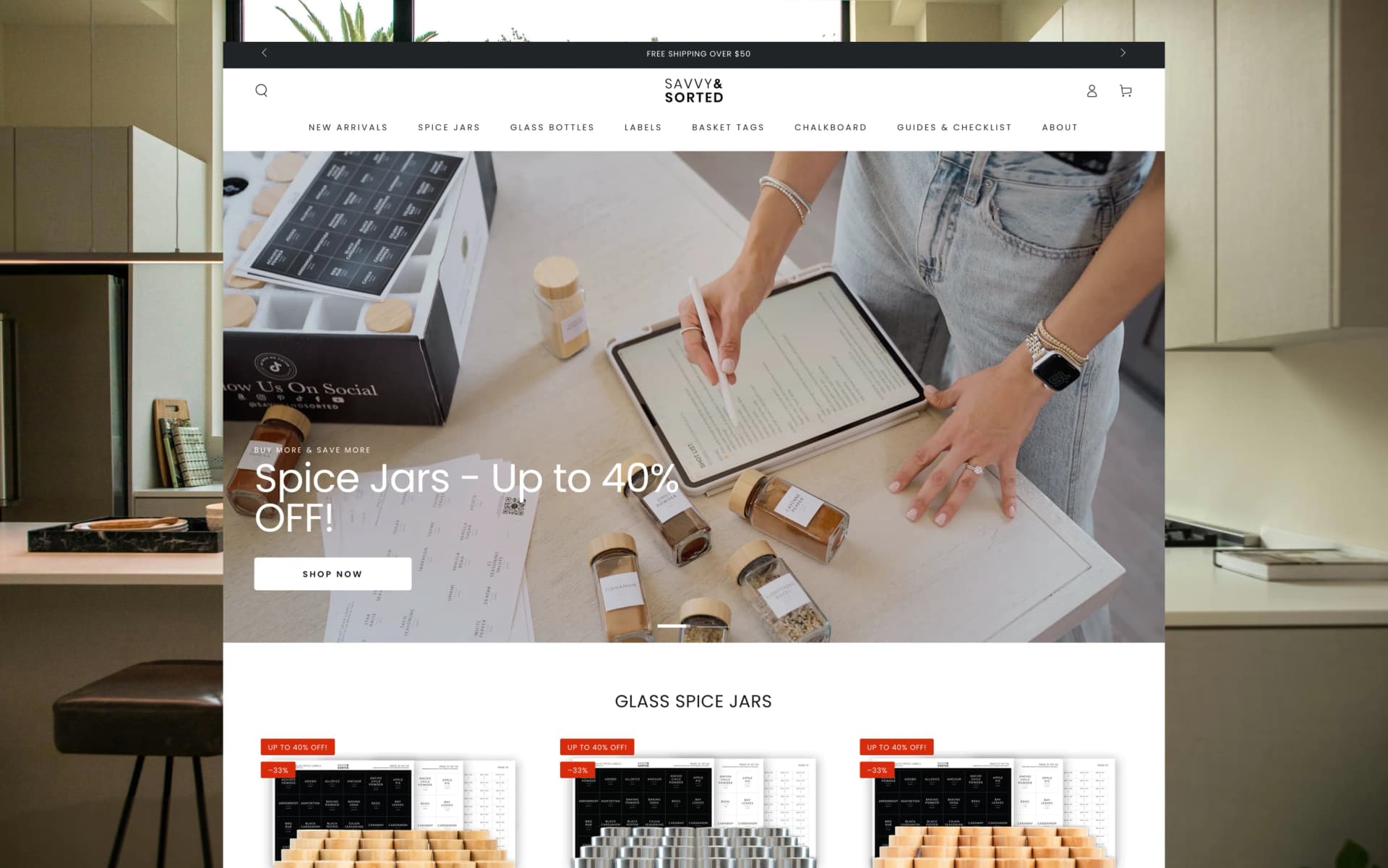
Savvy & Sorted stood out in the home organization market by making storage solutions that looked good, not just functional. Their minimalist labels, aesthetic organizers, and coordinated accessories appealed to homeowners who wanted their pantries and closets to look as intentional as a designer room. The brand had fans in the USA and Australia who loved the products, but turning that enthusiasm into steady, profitable sales was a challenge. Their advertising ran inconsistently, they couldn't predict what their customer acquisition would cost from month to month, and customers would buy once and disappear instead of organizing more rooms.
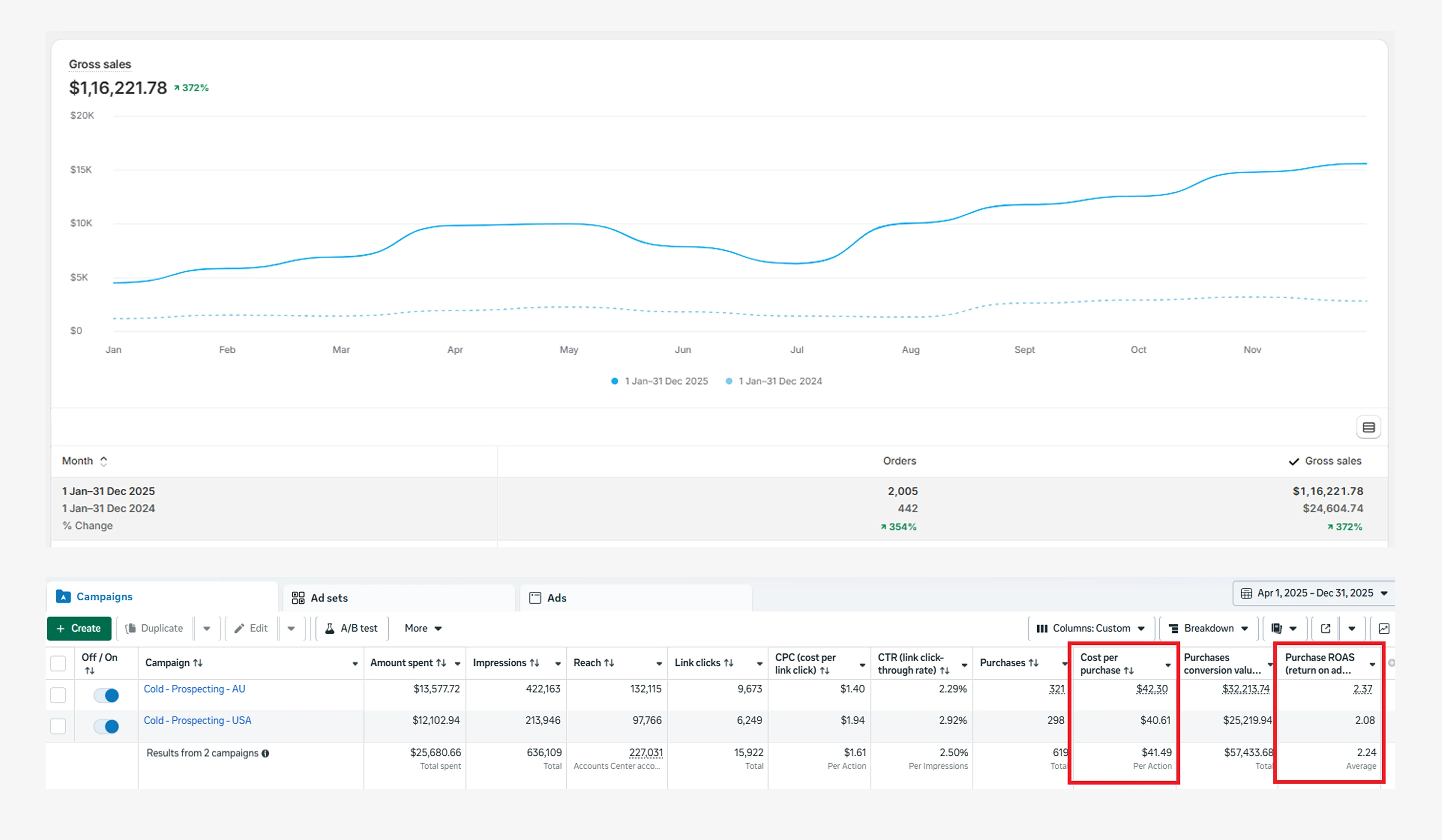
We rebuilt their entire approach around one simple rule: only spend money on marketing that makes money back. This focus delivered $116K in revenue (372% growth), processed 2,005 orders (354% increase), and maintained a healthy 3x return on ad spend while building systems that keep working long-term.
Savvy & Sorted's Instagram showed the brand at its best: chaotic pantries transformed into perfectly organized, beautifully labeled spaces that looked magazine-ready. Spice collections arranged by color, linen closets that actually sparked joy, bathroom cabinets that felt curated rather than cluttered. Customer reviews backed this up, people genuinely loved how the products looked and lasted.
But behind the scenes, the business struggled with inconsistent growth. Their paid advertising turned on and off based on available cash flow, running during obvious times like New Year's when everyone wants to get organized, then going silent for weeks. This stop-start pattern meant they could never build momentum or learn what actually worked. When they did run ads, they only looked at basic metrics. A campaign might show a 4x return, but once you factored in what the products cost, shipping fees, and payment processing, it was actually losing money. They kept running these campaigns because the surface numbers looked good. Their costs to acquire customers swung wildly. During busy seasons when everyone was competing for the same shoppers, costs would spike. The brand had no plan for dealing with this beyond either accepting the high costs or just turning ads off completely. The shopping experience also left money on the table. Someone buying pantry labels didn't realize the brand also sold the matching containers, spice jar labels, and storage clips they'd need to complete the job. The website organized everything by product type (all labels together, all containers together) instead of by room or project, which isn't how people actually think about organizing their homes.
When they started getting orders from Australia, they simply ran the same campaigns there as in the USA. But Australia has opposite seasons, different shipping costs, and different competition. What worked in America didn't necessarily work there. Their email marketing consisted of occasional "we're having a sale" messages. No welcome emails for new customers, no reminders for people who abandoned their carts, no suggestions for organizing additional rooms after someone's first purchase.
The website didn't help increase order sizes either. No suggestions for bundles that would complete a project, no free shipping minimum to encourage people to add just one more item, no smart recommendations showing "people who bought this also bought that." And here's the real problem: some products had great profit margins while others barely made money. But the advertising budget treated them all equally, basically using profitable products to subsidize advertising for unprofitable ones.
We rebuilt everything around a simple question: does this make money, really make money, not just look good on a dashboard?
We started calculating what it actually cost to acquire a customer, including everything: product costs, shipping, payment fees, packaging, platform charges. This showed us which marketing campaigns were genuinely profitable versus which ones just had impressive-sounding numbers. We set clear profit targets for different types of campaigns. Campaigns going after completely new customers needed to hit certain cost targets based on how much those customers would likely spend over time. Campaigns targeting people who'd already visited the site could afford slightly higher costs since they converted better. Most importantly, budgets became flexible. When a campaign was profitable, we scaled it up immediately. When costs rose too high, we paused and fixed the problem rather than throwing good money after bad.
We studied how people actually organize their homes. Organizing a pantry isn't a one-item job, you need different label types, containers, and clips that all work together. So we created Complete Pantry Organization Sets, Kitchen Drawer Systems, and Laundry Room Solutions that bundled everything needed for a project. This made shopping easier for customers while increasing how much they spent per order. We also added smart suggestions. If someone put pantry labels in their cart, they'd see a helpful offer for matching spice jar labels or containers at a price that made adding them feel like a smart move, not an upsell.
Instead of treating USA and Australia the same, we tested each new market or audience carefully. A new region would get a small test budget with clear goals: keep customer acquisition costs below X, achieve average orders above Y, see profits within Z days. Only after a market proved it could be profitable did we increase spending there. This prevented wasting money in markets that generated sales but lost money.
Meta and Google served different purposes in our strategy. Meta showed off the transformation: beautiful before/after photos, seasonal organization inspiration for New Year's, spring cleaning, and back-to-school. We used it to reach people interested in home décor and organization, even if they weren't actively shopping yet. Google caught people when they were ready to buy, capturing searches like "pantry label ideas" or "kitchen drawer organizers." The platforms informed each other: when Google showed certain products sold well together, we created Meta ads featuring those bundles. When Meta found audiences that responded well, we used those insights to target similar people on Google.
We built automated email sequences that worked without constant attention. New subscribers got welcome emails introducing the brand and bestselling room sets. People who browsed but didn't buy got gentle reminders. Cart abandoners received encouragement to complete their purchase, with offers based on how much was in their cart. After someone bought, they'd get ideas for organizing other rooms, turning one-time buyers into repeat customers. Lapsed customers got winback emails with new product ideas and seasonal organization motivation. Beyond automation, we grouped customers smartly: first-time buyers got suggestions for organizing more rooms, repeat customers got early access to new products, big spenders got VIP treatment, and we matched room recommendations to what they'd already bought (pantry buyers saw kitchen solutions, laundry buyers saw bathroom ideas).
We reorganized the website around how people actually shop for organization products. Navigation highlighted shopping by room (Pantry, Kitchen, Laundry, Bathroom) and by project type (labels, storage, complete sets) instead of just product categories. Product pages suggested completing the set and showed what other customers bought together. We added smart features to increase order sizes: attractive bundle pricing, helpful product combinations, a free shipping minimum that encouraged adding one more item without killing our margins, and limited-time bundle offers that matched our seasonal campaigns. Most importantly, we made sure everything connected: if someone clicked a "Pantry Bundle" ad on Meta, they landed on a page featuring exactly that bundle, not a generic homepage where they'd have to search.relevant, conversion-optimized pages mentioning the exact offer they clicked.
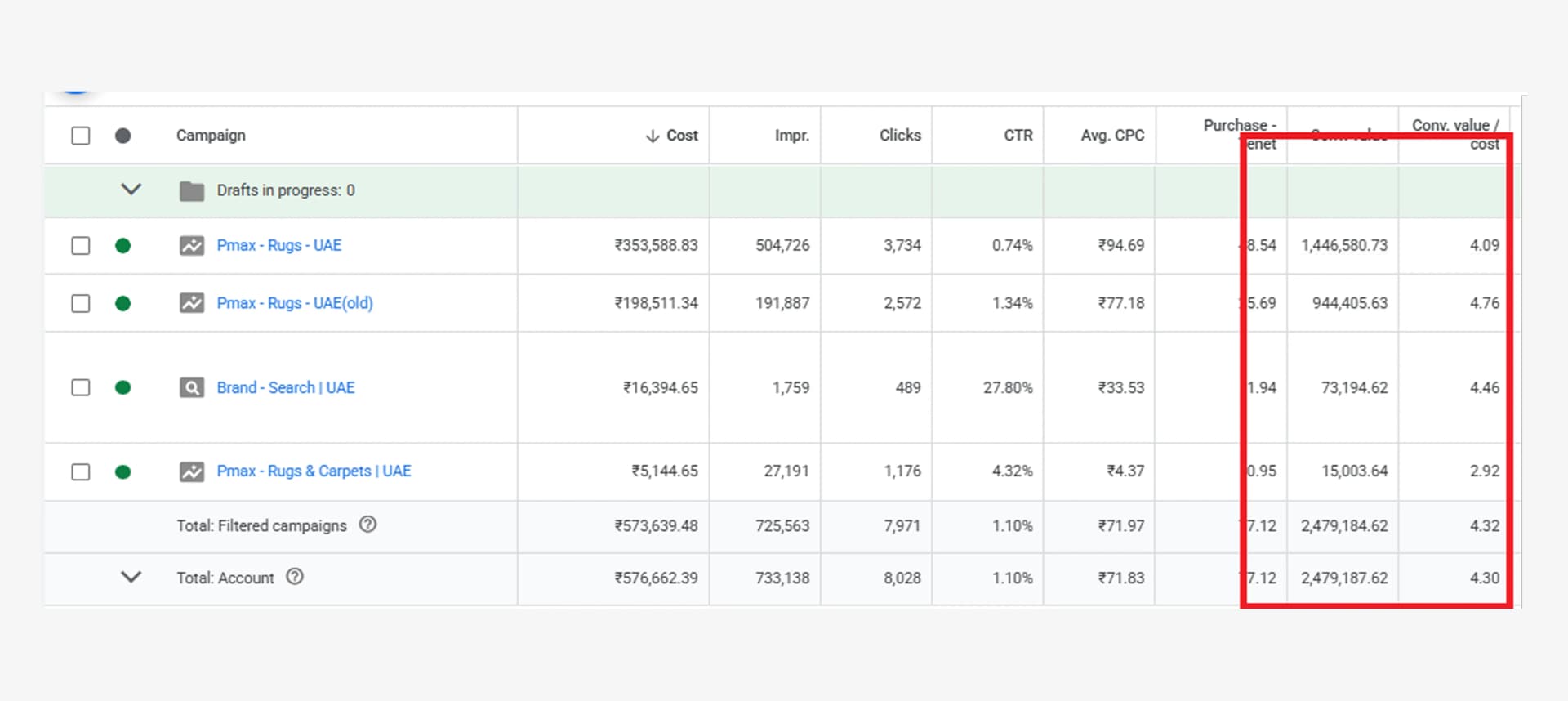
We launched the new campaign structure with clear profit targets. The numbers looked different at first, some campaigns showed lower returns on paper but actually made more money once we counted all costs. The email automation started working, building up a system that would keep generating revenue. The website improvements went live with bundles and smart suggestions. Customers loved the complete room sets, with Complete Pantry Bundles bringing in 40% more per order than individual label purchases.
With proof that the new approach worked, we increased spending on the best-performing campaigns. Meta's transformation content brought in new customers efficiently. Google captured people actively searching for solutions. The email system started contributing real revenue as customers moved through the automated sequences. We carefully expanded into new audiences in both USA and Australia, but only after proving our current customers were profitable. Sales grew as everything started working together: better ads, higher order values, and repeat purchases.
The email system really hit its stride with multiple groups of customers getting the right messages at the right time. People who'd organized their pantry got kitchen suggestions three months later. Customers who hadn't bought in 60 days got reminders about new products or seasonal organization opportunities. Australian campaigns found their rhythm with season-appropriate timing (their spring cleaning happens in September, not April). The combination of efficient advertising and strong repeat business created momentum that kept building.
We generated $116K in total revenue, up 372% from where they started. Processed 2,005 orders, representing 354% growth in order volume. About 1,650 of these orders came during our core working period. Maintained a profitable 3x return across all advertising while actually improving profit per order by 52%. Average order value grew 45% through better bundles and suggestions. Customer acquisition costs dropped 38% as we got better at targeting. Repeat purchases increased from 8% to 24% of customers thanks to the email system. Email generated 18% of total revenue on its own, beyond what paid advertising brought in.
Complete room bundles (full Pantry Sets, Kitchen Systems, Laundry Solutions) made up 42% of revenue even though they were only 28% of orders, proving that helping customers buy everything they need works. Individual labels served as a great entry point, with 35% of label buyers coming back within 90 days to buy bigger bundles or organize more rooms. Product suggestions during checkout worked 22% of the time.
Meta brought in 61% of new customers, especially through home transformation content and seasonal campaigns. Google contributed 29% of revenue with the best conversion rates from people actively searching. Email added the final 10% through automated messages and smart campaigns, basically free money beyond advertising costs.
USA maintained strong performance with established audiences and seasonal timing that made sense (spring cleaning in March). Australia needed different messaging for their opposite seasons but eventually performed just as well once we adjusted. The careful testing approach meant we didn't waste money proving what worked.
Beyond the immediate sales, we built systems that keep generating results. The profit-focused approach provides a template for testing new markets or products. The bundle strategy can be copied for new room solutions or seasonal collections. The email system gets smarter as more customer data comes in. Most importantly, the focus on real profitability means growth actually builds the business instead of just making impressive revenue numbers while losing money. Savvy & Sorted showed that online brands can grow aggressively without burning cash when they focus on what actually makes money. Their design-focused products and room-by-room expansion opportunity became real advantages once the marketing worked properly, creating sustainable growth rather than short-term spikes that disappear when advertising stops.tiators to the right audiences at the right moments in their purchase journey.
Impact Delivered
450+
Solutions Delivered
for our clients & partners
20M+
People Impacted
through our solutions
15+
Countries Catered
for our global clientele
98%
Client Satisfaction
through verified reviews
Explore other works


We’d love to hear about your brand, your visions, current challenges, even if you’re not sure what your next step is.
Let’s talk