
Enterprise Lead Generation: 8 Strategies That Work in 2026
 By
By Share

Share
Get a quick blog summary with



How confident are you that your current MQLs reflect real enterprise buying intent?
In many enterprise teams, activity is mistaken for intent. One person fills a form, downloads a guide, or requests a demo, and it becomes an MQL. But enterprise deals involve multiple people, not just one.
When leads are tracked by contact only, marketing metrics look good, but the pipeline quality is unpredictable. At Tenet, we see this consistently in enterprise audits.
Traffic and campaigns often perform well, but when leads are handed to sales, only a small portion becomes real opportunities.
Most leads show interest from one or two people rather than engagement from the full buying group.
Without this broader account-level engagement, it is hard to know which opportunities are ready to move forward.
In this guide, we break down what truly counts as an enterprise lead and how to build systems that create a predictable, high-quality pipeline.
What counts as a lead in enterprise?
In enterprise sales, one form fill or webinar signup does not mean a company is ready to buy. Large deals involve many decision makers.
IT checks integrations and security. Finance reviews the cost. Procurement looks at compliance. Business leaders evaluate impact.
A real enterprise lead shows intent from multiple people at the same company. They engage with high-intent content like pricing pages, security documents, competitor comparisons, or product demos.
Strong signals include:
- A demo request from a senior leader followed by repeat visits from others at the same company
- Multiple stakeholders visiting pricing, integration, or security pages
- Marketplace inquiries during an active buying cycle
- Inbound requests after searching for competitor alternatives
When you track engagement at the account level, not just individual contacts, your pipeline becomes more accurate and predictable.
What are the different types of enterprise leads?
1. Product-qualified enterprise leads
Product-qualified enterprise leads come from accounts that have already interacted meaningfully with your product. They've either hit usage thresholds during a trial, expanded user seats, or engaged with features that typically correlate with paid conversions.
In an enterprise, this might mean a team of five turned into a team of twenty during a proof of concept, or they've integrated your tool with their core systems. These leads typically appear mid-funnel, after initial awareness but before formal procurement begins.
2. Sales-qualified enterprise leads
A sales-qualified lead has been vetted by your sales team and meets both fit and intent criteria. They work at a company that matches your ICP, hold a relevant title, have a confirmed budget or the authority to create it, and are actively evaluating solutions on a defined timeline.
These leads appear after initial discovery calls and before formal demos or proposals. The key difference from other lead types is direct sales validation of opportunity quality.
👉 Discover how to align sales and marketing for better lead qualification through our growth marketing services.
3. Intent-driven inbound leads
These leads find you through high-intent channels like organic search for competitor alternatives, direct navigation to pricing pages, or content built around bottom-funnel keywords. They're self-educating and often come in after researching multiple vendors.
What separates them from casual traffic is the specific content they engage with: implementation guides, security documentation, integration specs, or ROI tools. They typically appear early-to-mid funnel but signal strong buying intent from the start.
4. Partnership or marketplace-sourced leads
These leads discover you through third-party platforms where they're already in buying mode, such as G2, Capterra, AWS Marketplace, or Salesforce AppExchange. The platform provides built-in trust and comparison tools, which accelerate the evaluation process.
These leads often come in later in the funnel because they've already narrowed their options. They're more likely to convert faster than cold traffic because the marketplace has pre-qualified both their intent and their ability to purchase.
5. Outbound-assisted inbound leads
These leads initially came from outbound efforts (cold email, LinkedIn outreach, or targeted ads) but then engaged with inbound assets on their own.
For example, a prospect who ignored your first two emails but later visited your site directly, read three blog posts, and requested a demo. The outbound motion created awareness; the inbound behavior confirmed interest.
These appear throughout the funnel but are most valuable when they demonstrate autonomous research after initial outbound contact.
👉 See how we combine inbound and outbound tactics in our case studies.
6. Event-driven leads
These come from hybrid or in-person events, webinars, or industry summits. Attendance signals active interest, and follow-up interactions such as Q&A, demo requests, or content downloads indicate engagement with high buying intent.
These leads are typically mid-funnel, bridging awareness and evaluation, and they often include multiple decision-makers, which provides a stronger signal of account-level intent. Well-executed event follow-ups, including personalized content or guided product walkthroughs, can turn these engagements into highly qualified opportunities.
7. Referral or partner-driven leads
These types of leads are introduced through trusted clients, partners, or internal advocates, and they carry built-in credibility that accelerates trust and evaluation. These leads often convert faster than cold inbound traffic because the recommendation pre-validates both need and fit.
They also provide insight into account readiness and help marketing and sales teams measure the influence of partnerships on revenue. Tracking referral patterns across accounts can uncover new high-value segments and optimize partner programs for future pipeline growth.
How does lead generation work in an enterprise business?
Enterprise lead generation is a multi-stage process designed to identify accounts genuinely moving toward a purchase. Unlike smaller sales cycles, it focuses on account-level engagement, multi-stakeholder behavior, and sustained buying intent.
Stage 1: Account-Level Awareness
The process starts with defining the ideal customer profile. Firmographics such as industry, size, and location narrow the target list, while technographics reveal what tools or platforms the company already uses and where gaps exist.
Once target accounts are identified, campaigns run across organic and paid search, marketplaces, industry events, and content syndication.
The goal is to generate engagement from multiple roles within each account and begin tracking meaningful activity.
Stage 2: Intent Stacking
Awareness shows which accounts are looking at your company, but it does not indicate readiness to buy. In an enterprise, intent appears when stakeholders interact with content in a sequence that reflects their role in the buying process.
For example, a director may start by reviewing ROI calculators or case studies, while IT downloads security or integration documentation, and finance could later compare pricing models.
Each of these actions alone is a signal. When they happen together within a realistic buying window, they form a pattern that reflects genuine interest.
Enterprise teams track these sequences using tools like 6sense, Demandbase, Bombora, LinkedIn Sales Navigator, and HubSpot ABM features.
Stage 3: Qualification and Sales Validation
During pipeline reviews, marketing presents accounts with stacked intent. Sales evaluates whether the activity reflects a structured buying motion.
They examine role coverage, engagement timelines, pricing views, implementation research, and competitive signals. If coordination is clear, sales validates budget ownership, buying committee structure, timeline, and vendor landscape.
Shared dashboards in HubSpot, Salesforce, or 6sense support this review process by centralizing engagement history, intent scoring, and account fit data. Both teams look at the same information before deciding whether the account enters the pipeline.
8 Lead generation strategies for enterprise: Tactics to generate leads for enterprise businesses
1. Optimize Service or Product Pages for CRO
Your product pages attract high-intent visitors who are already familiar with the problem you solve. In an enterprise, these visitors are often part of a buying committee evaluating multiple vendors simultaneously, which means your page needs to answer questions for technical buyers, economic buyers, and end users at once.
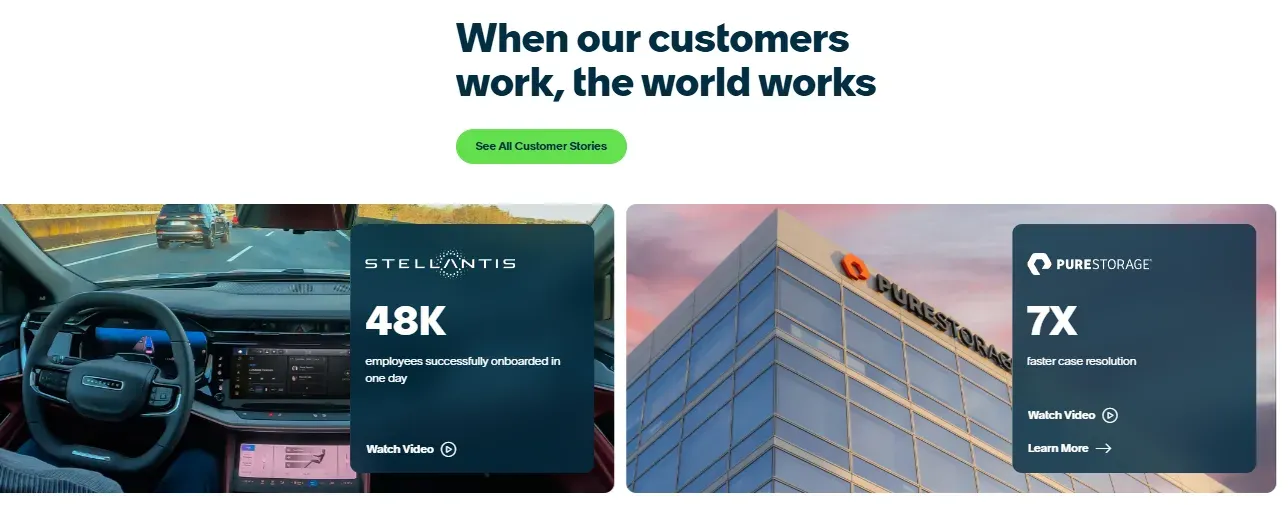
Start with proof like replacing generic benefit statements with customer logos from recognizable brands, quantified outcomes from case studies, and third-party validation like G2 ratings or security certifications. Buying committees need evidence to justify their recommendation internally.
The following image shows how ServiceNow quantifies outcomes from case studies:
TIP: Optimize your CTAs for multiple entry points, as not everyone is ready for a demo. Offer alternatives like "Download Security Overview," "See Integration Options," or "Calculate ROI" alongside your primary demo CTA. This captures leads at different stages while giving you insight into what matters most to each visitor.
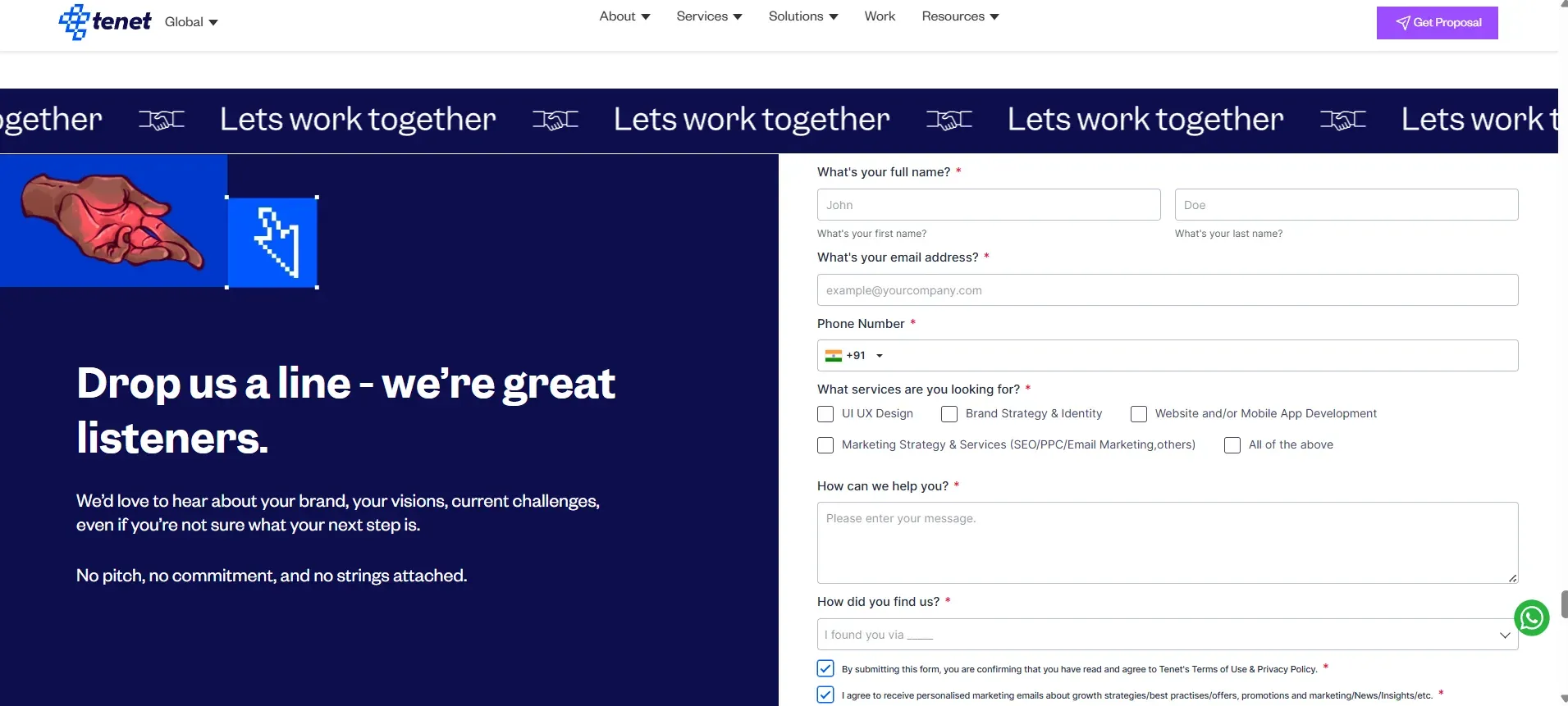
Simplify your forms by asking necessary things only, like company size, role, and use case (information that helps sales prioritize), but don't create friction with unnecessary fields. In an enterprise, decision-makers won't tolerate long forms on a first touch.
Down here is an image of how Tenet uses a non-friction form on the website:
👉 Get expert help optimizing your pages with our CRO audit services.
2. Build Money Pages and Optimize for SEO
Money pages target keywords with direct commercial value, such as “[competitor] alternative,” “enterprise [solution type],” or “[specific use case] software for large teams.”
These searches reflect active vendor evaluation, which means the buyer is comparing solutions rather than exploring the category.
Instead of consolidating these queries into generic solution pages, create dedicated pages aligned to distinct intent clusters.
Each page type should match the evaluation criteria buyers use during enterprise decision-making.
The structure below outlines how different money pages should be positioned to capture high-intent enterprise traffic effectively:
Prioritize keywords based on revenue impact rather than search volume alone, because lower-volume evaluation terms often drive a higher-quality pipeline. Analyzing closed-won deals typically reveals recurring search patterns, which should directly inform which pages you build and expand.
To sustain performance, support these money pages with internal linking from related content, authoritative backlinks, and ongoing updates as competitors reposition and enterprise buyer priorities shift. Optimization at this stage is not a one-time effort but a continuous refinement process.
👉 Learn our approach to building high-converting SEO content with our SEO services.
3. Competitor Name Bidding for Enterprise Lead Generation
Competitor name bidding works in an enterprise because buyers compare vendors before committing to high-value contracts. Searches such as “[Competitor] pricing” or “[Competitor] vs” indicate that evaluation is already underway and alternatives are being considered.
To capture that demand effectively, campaigns should be structured around three keyword groups: exact competitor names, “[Competitor] alternative,” and “[Competitor] vs [another competitor].” These queries reflect increasing levels of intent, from brand awareness gaps to active replacement and formal shortlist comparison.
Here are some examples that show how competitor name bidding is used in meta description and the url:
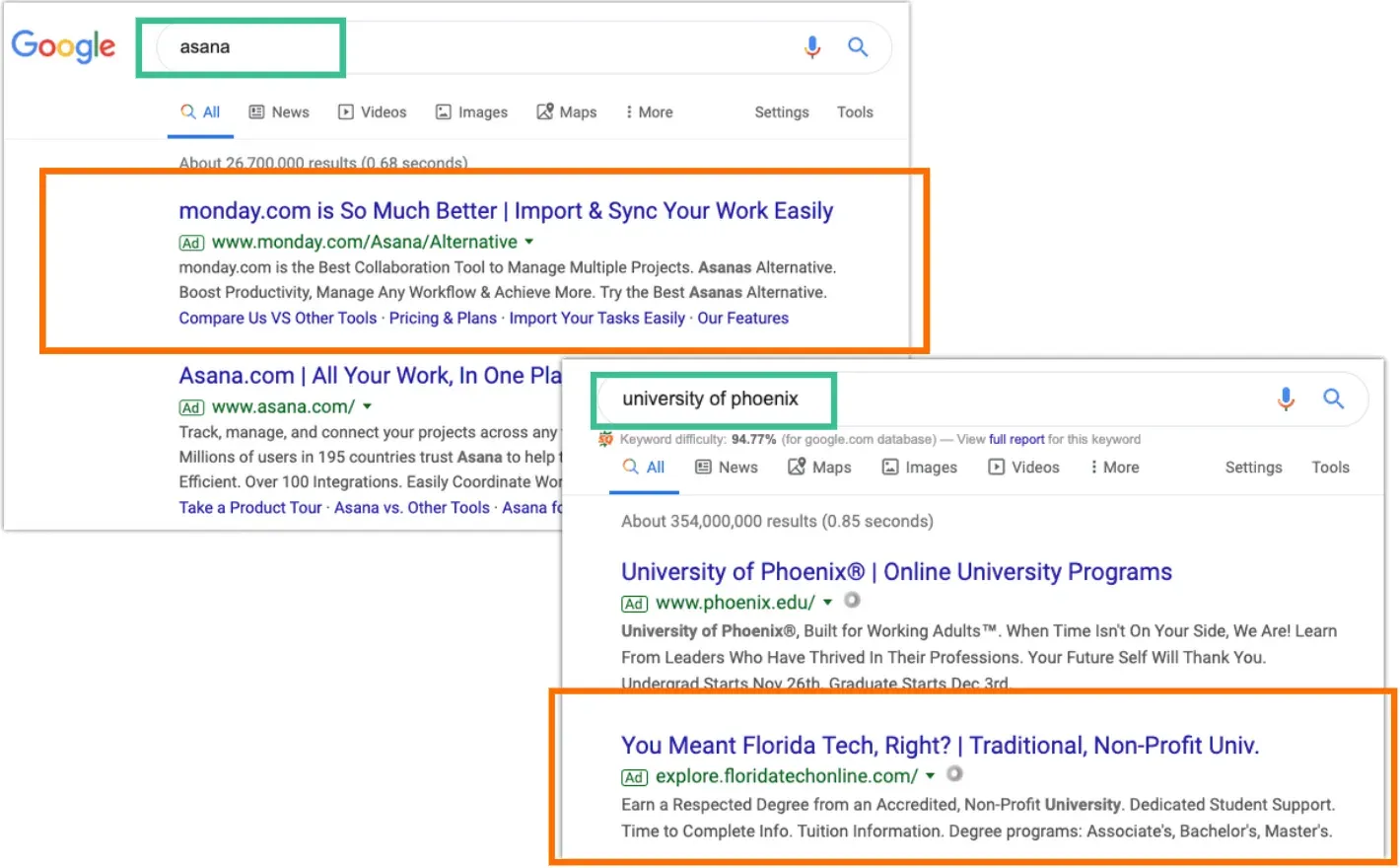
Because intent is high, targeting must be precise. Focus only on competitors whose customers align with your ICP and where you have a clear, defensible advantage, since broad bidding increases spend without improving pipeline quality.
Finally, performance depends on where the click lands. Evaluation-stage traffic should be directed to dedicated comparison pages that address the searched brand directly, explain differentiation clearly, and present a strong next step, as sending this audience to a generic homepage typically weakens conversion.
👉 Explore how we run high-ROI paid campaigns with our PPC management services.
4. Generate Enterprise Leads Through Marketplaces
Enterprise buyers trust marketplaces like G2, Capterra, AWS Marketplace, and Salesforce AppExchange because these platforms provide peer reviews, feature comparisons, and verified user feedback in one place. Buyers use them to shortlist vendors before engaging in direct conversations.
This image shows one of the reviews on Salesforce AppExchange:
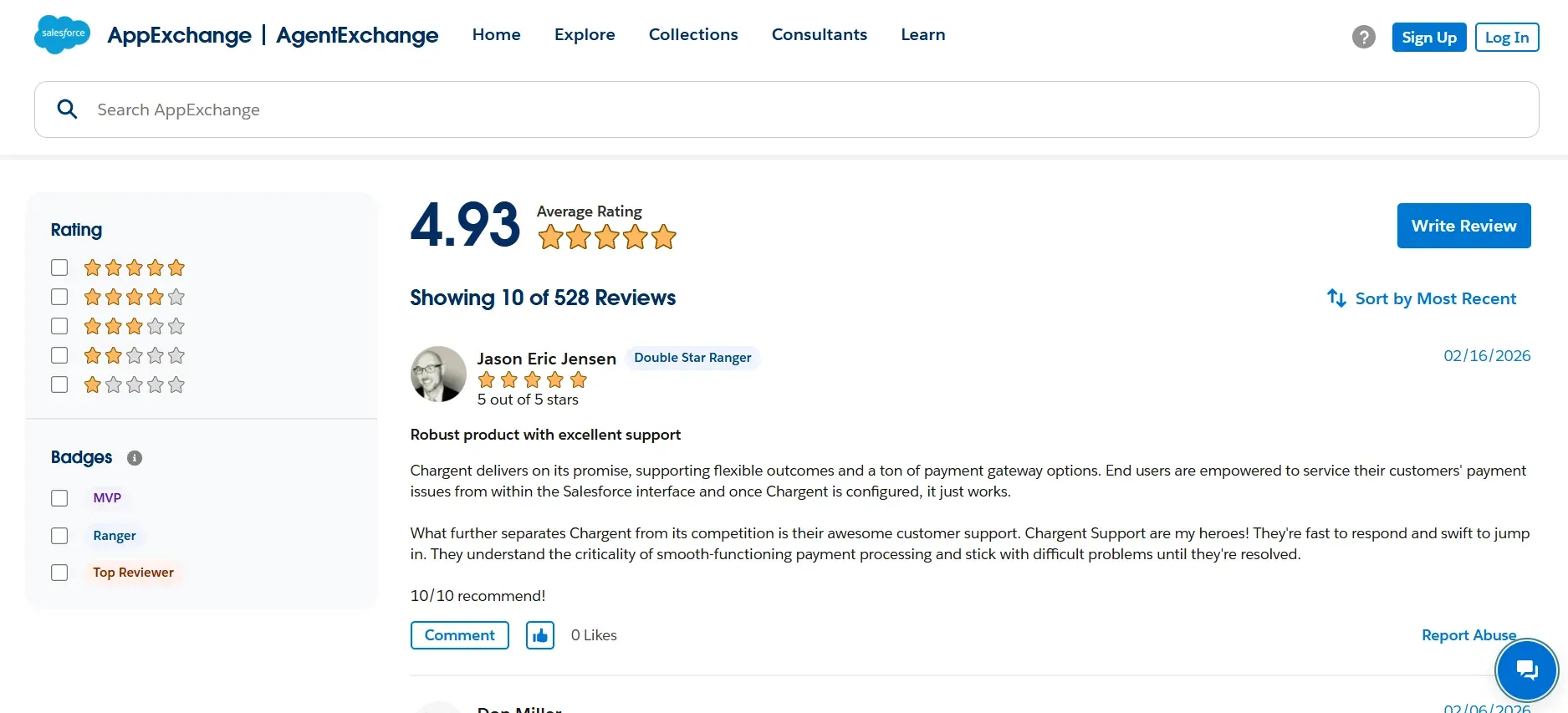
However, simply having a profile is not enough, because visibility within these marketplaces determines whether buyers even see you during evaluation. That visibility typically comes through two mechanisms: organic rankings and sponsored placements.
Organic positioning is driven by review volume, recency, ratings, and profile completeness, which means credibility compounds over time. A structured review generation process from satisfied customers strengthens both ranking and trust.
Sponsored placements in the SERP accelerate exposure by placing your listing at the top of the category and search results, which is particularly useful when entering a new segment or competing against vendors with stronger review histories.
👉 See how we've helped companies use multiple channels in our growth marketing solutions.
5. Launch a Customer Referral Program That Actually Works
Enterprise buyers trust recommendations from people who've already solved the same problem. A referral from a peer at a similar company is worth more than any ad campaign you'll run.
To systemize referrals, build a structured program aligned with enterprise incentives.
So, offer meaningful value such as account credits, premium access, priority support, or co-marketing opportunities, and make the process frictionless through simple referral links or have your customer success team proactively ask happy customers if they know anyone facing similar challenges, then make the warm introduction on their behalf.
This LinkedIn post by Clay demonstrates the referral program perfectly:
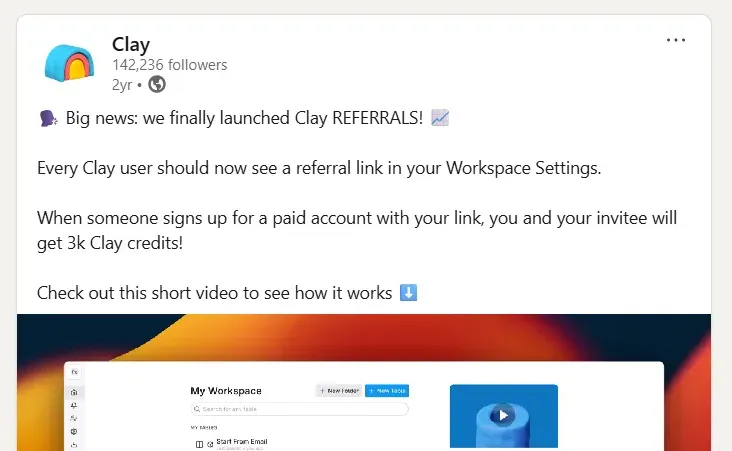
Focus on customers who have achieved measurable ROI and hold influence within your target market, as their advocacy carries the highest weight. After that, track which customers refer the most and why.
Some will refer because they genuinely love your product. Others will refer because the incentive is compelling. Both are fine, but understanding the motivation helps you optimize the program.
👉 See how we help companies build referral systems in our growth marketing work.
6. Sponsor or Speak at Industry Events Your Buyers Attend
Industry events can still generate a meaningful enterprise pipeline, but only when the format encourages real conversations. Buyers attend these gatherings to learn from peers and evaluate solutions in context, not to engage in surface-level booth interactions.
That is why positioning matters more than presence. Once an event aligns with your ICP, the real decision is how buyers will experience your brand inside that environment.
Three formats consistently create stronger outcomes:
- Closed-door roundtables and curated dinners allow smaller groups to discuss real operational challenges, which often lead to more qualified and honest conversations.
- Speaking sessions built around practical insights build credibility before any one-on-one interaction happens. Sharing real customer experiences or tactical lessons gives buyers context and reduces initial resistance.
- Strategic sponsorship within high-attention environments such as event apps, focused tracks, or structured networking sessions keeps your brand visible while buyers are actively engaged.
What happens after the event is where most companies lose momentum. Instead of sending a generic follow-up, continue the exact conversation you started.
Reference the specific challenge they mentioned and share something directly related to it, whether that is a short breakdown of a similar use case, a relevant case study, or a quick video explaining how you would approach their situation.
👉 Explore how we help companies with event-driven campaigns in our solutions.
7. Run Retargeting Campaigns to Accounts That Showed Intent
Retargeting keeps your solution visible to people who have already visited your site, helping them remember you while they weigh their options.
This picture represents how the targeted ads work:
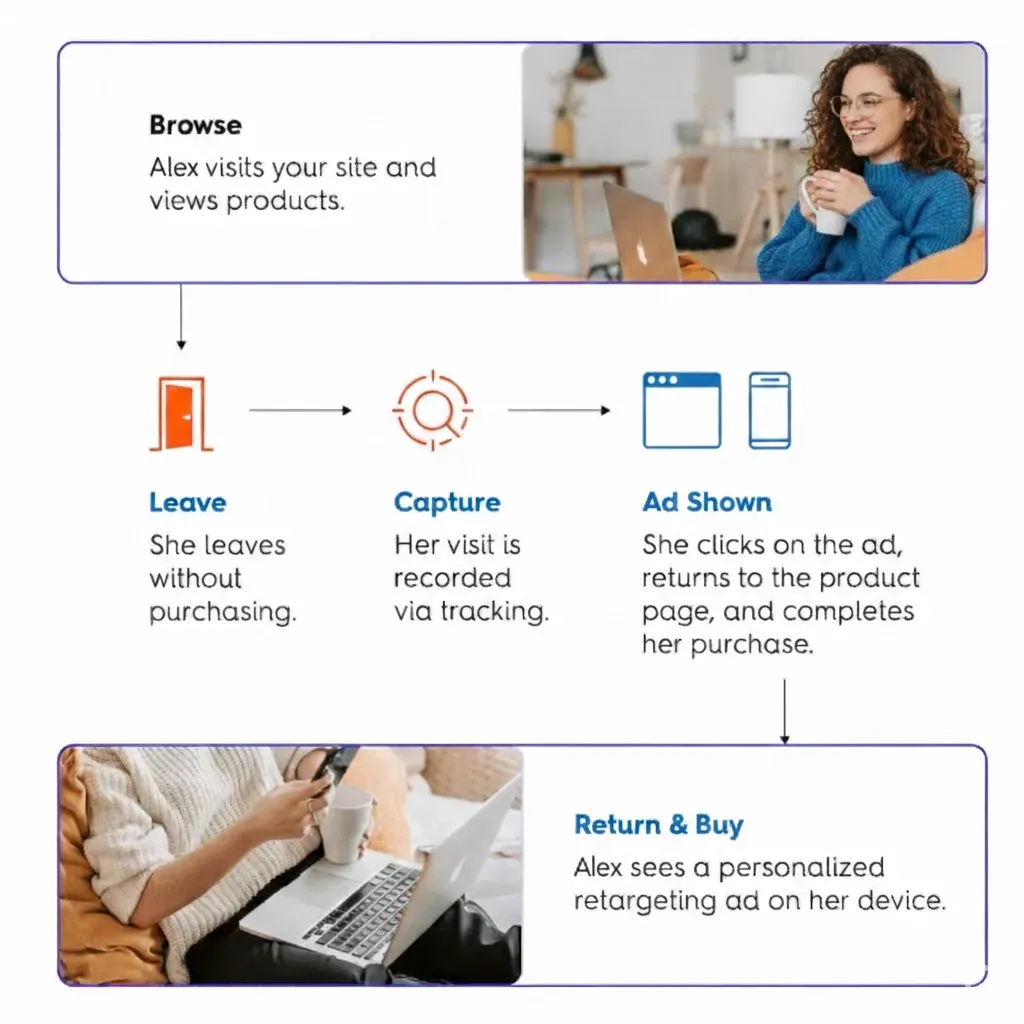
Not every visitor is worth chasing, so focus on high-intent pages like pricing, demo requests, case studies, integrations, or security information. People who only read a blog post usually aren’t ready to engage, and showing them ads dilutes your budget.
Once you know who to target, customize your ads to what they care about. Matching the message to the interest keeps your ads relevant and prevents frustration.
In fact, tools like Clearbit or 6sense can help identify which visitors belong to your target accounts. This ensures your ads reach people who can actually influence the purchase decision.
After that run campaigns for about three to four weeks. This keeps your brand present during evaluation without overwhelming buyers, who are often balancing multiple options and internal discussions.
Make sure to end with with a clear next step. Encourage them to book a demo, start a trial etc. so that the retargeting ads lead to a meaningful action.
👉 Discover how we build targeted paid campaigns with our PPC agency services.
8. Get Featured in "Best Of" Lists and Comparison Articles
Enterprise buyers often start their research with “best CRM for enterprise” or “top project management tools” searches. They land on listicles, comparison articles, and review sites like G2, Capterra, Software Advice, or industry blogs. Without presence there, you stay invisible.
Target the sites that publish these lists.
Most are updated quarterly or annually. Pitch why your product belongs: provide clear comparison data, customer proof points, and differentiators.
Here’s how you can search for your target keywords and find the blog articles ranking in the first and second page of Google:
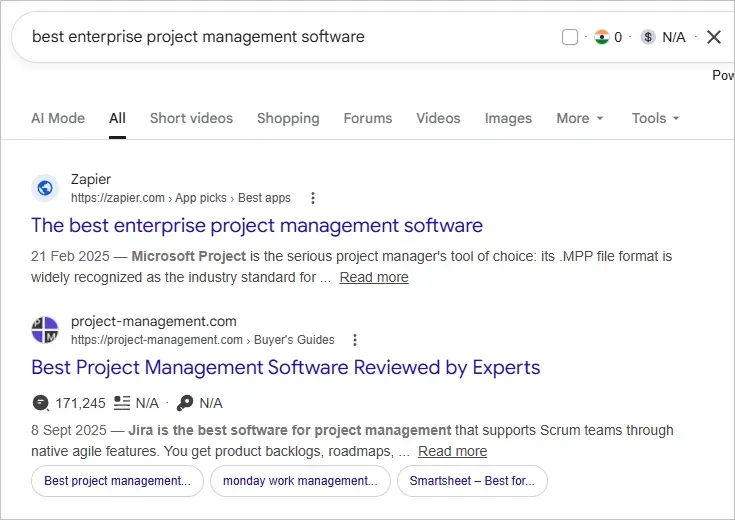
You should also try to develop relationships with writers and editors in your category. Follow them on LinkedIn, engage with their content, and share relevant insights. When they update lists or write new guides, being top of mind increases your chances of inclusion.
Also, keep review site profiles complete and current.
Marketplace platforms like G2, Capterra, and TrustRadius prioritize vendors with active profiles, fresh reviews, and detailed feature documentation. A strong profile increases your likelihood of appearing in editorial content and comparison articles.
👉 See how we build authority through strategic content in our case studies.
How Tenet helped an enterprise HR software generate 100+ leads using organic and paid marketing channels
Yomly is an enterprise HR and payroll SaaS serving mid-to-large organizations across the UAE and GCC. Before working with Tenet, most inbound leads came from paid campaigns, while organic traffic generated only 2–3 low-quality SMB inquiries per month.
The Challenge
Yomly faced low visibility in search due to technical SEO issues, thin content, and lack of commercial landing pages. Existing content failed to address enterprise buying criteria, leaving paid ads as the main source of pipeline.
Enterprise buyers in the region require guidance on compliance, multi-national workforce management, and procurement validation, and Yomly’s site was not serving those needs.
Our solution
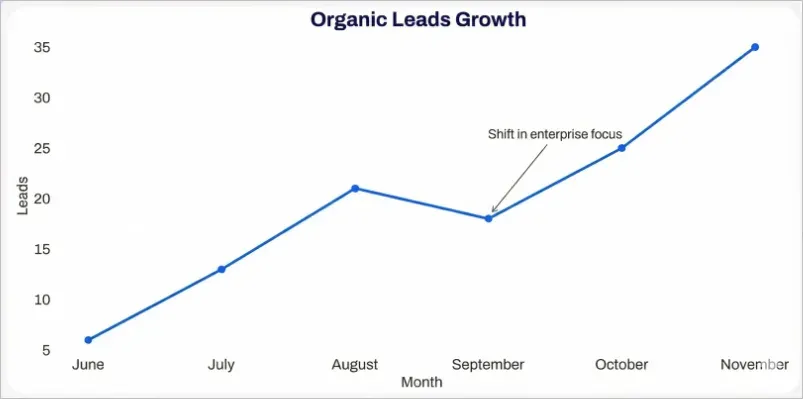
We began by mapping how enterprise HR and payroll buyers in the UAE and GCC search, evaluate, and select solutions. They analyzed the questions, compliance requirements, and evaluation patterns of HR, IT, finance, and procurement teams.
Based on this research, we implemented a multi-pronged approach:
- Industry-specific landing pages: Healthcare, hospitality, manufacturing, and construction pages addressed real enterprise challenges, from compliance to workforce management.
- Geography-specific pages: UAE, Saudi Arabia, Qatar, and Oman, reflecting local regulations and payroll requirements.
- Content refresh: Thin pages were expanded, FAQs added, and internal linking optimized to direct authority to commercial pages.
- Weekly publishing: Comparison guides, case studies, and region-focused insights captured high-intent traffic.
- Paid campaigns: Budgets shifted to competitor and high-intent keywords, with enterprise-focused landing pages replacing generic lead capture.
This strategy ensured every stakeholder encountered content tailored to their stage, producing a pipeline of qualified enterprise leads rather than casual inquiries.
This image below shows how Yomly also gained visibility across AI Overviews and leading LLM-based recommendation platforms:
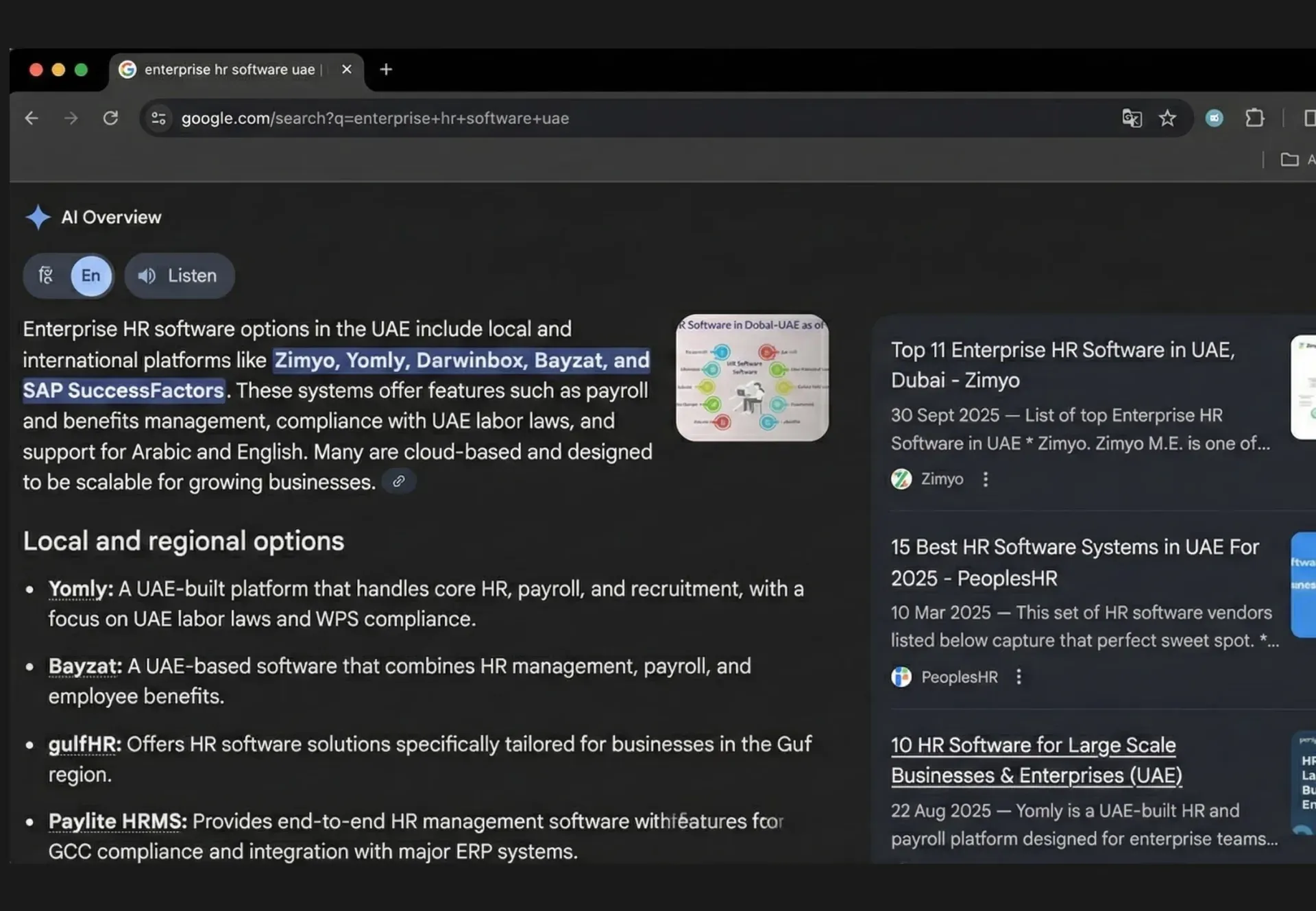
Results
- First-page rankings rose from 132 to 763
- Daily organic clicks increased from 80 to 300+
- Monthly enterprise-qualified leads jumped from 6 to more than 30
👉 Read the full Yomly case study and get in touch with Tenet to discuss what a demand program looks like for your category.
Get a free enterprise marketing consultation call with our experts.
Get a free enterprise marketing consultation call with our experts.






Got an idea on your mind?
We’d love to hear about your brand, your visions, current challenges, even if you’re not sure what your next step is.
Let’s talk


