
The Reality of Design Awards No One Wants to Admit
 By
By Share

Share
Get a quick blog summary with



Most businesses hire agencies based on Awwwards, Red Dot, and CSSDA badges. They assume a trophy means the agency will deliver a design that converts, retains users, and grows revenue.
Those same businesses often end up with a site that wins design praise from Webby and FWA judges but fails on mobile, confuses visitors, and drops conversions by 30% or more.
This article cuts through such industry flattery and can help you learn what awards actually measure, why agencies chase them, and how to spot real design quality without being misled by trophies.
What Is Wrong With Most Design Awards
1. The "Dribbblisation" of Value (Aesthetics Over Function)
The primary critique of platforms like Awwwards, FWA, and CSSDA is that they prioritize "visual innovation" over basic usability.
This phenomenon, often called the "Dribbblisation of Design," rewards eye candy that looks good in a static screenshot or a 15-second showreel but fails in a real browser.
Awards judge "Creativity" and "Design" (visuals) as dominant criteria. For instance, Awwwards’ scoring system explicitly weights Design (40%) and Creativity (20%) significantly higher than Content (10%).
The sad 😞part is that judges and clients fall for the "aesthetic-usability effect," where a visually stunning interface is perceived as usable even if it is broken.
This masks critical failures in navigation or conversion flow until the site goes live and revenue drops.
👉 Check out the UX Statistics roundup that shows how a well-designed interface can increase conversion rates by up to 200%.
2. Judges Review "Case Studies," Not Real Products
A critical flaw in the process is what is actually being judged. In many categories, judges do not use the live product for an extended period; they review a highly polished "submission package."
Usually, what happens is that agencies submit "concept videos" or "walkthroughs" running on high-end hardware with perfect internet speeds. This hides the reality that the site might crash a standard user's mobile browser or take 10 seconds to load (a death sentence for conversion rates).
Because they reward "campaigns" or "microsites" meant to be temporary, many award-winning links are dead within a year.
The award celebrates the launch hype, not the lifecycle or long-term user retention
3. The "Pay-to-Play" Ecosystem
High-prestige awards are businesses themselves, often functioning as "vanity publishers" where the barrier to entry is financial, not just meritocratic.
Major awards can cost hundreds or thousands of dollars just to enter, plus additional fees to claim the trophy if you win. This filters out smaller, scrappier agencies that might be doing higher-converting work in favor of large agencies with dedicated "award budgets".
Because of this Large agencies treat awards as a "marketing expense".
They design specific "award bait" projects (often pro-bono or for fictional clients) solely to win trophies, which they then use to sell expensive, ineffective work to paying corporate clients
4. The Accessibility Blind Spot
Award-winning sites frequently rely on "scroll-jacking" (hijacking the user's scroll behavior), WebGL heavy loaders, and experimental navigation.
These features are nightmares for screen readers and keyboard navigation, violating WCAG (Web Content Accessibility Guidelines) standards.
Not only this, by rewarding sites that only work well on the latest MacBook Pro with fiber internet, these awards implicitly praise excluding users on older devices, slower connections, or with disabilities ( which might be the very users a business usually needs to reach).
👉 The shift toward inclusive, accessible design is one of the defining forces reshaping what great digital work means in 2026, and this guide on UI UX Design Trends covers how leading design teams are now building for performance and accessibility first rather than aesthetic novelty.
Who Really Benefits From Design Awards
1. Agencies
For agencies, awards are high-octane marketing assets that simplify the sales cycle. As these help them:
- Build Faster Trust-Building: A trophy functions as third-party validation that can shorten the distance from "Who are you?" to "When can you start?". It acts as an instant conversation starter while also boosting confidence among potential clients.
- Charge Premium Pricing: Winning a notable award gives agencies the leverage to raise their rates by 10–30% with less resistance.
- Recruitment & Retention: Awards act as a powerful “talent magnet,” attracting professionals who want to work at agencies that prioritize high-quality creative work. Winning can boost employee retention by up to 45%, as it validates their efforts and strengthens team pride.
- SEO & Traffic: Award wins often come with high-authority backlinks from the award’s website, which improves search engine rankings and drives organic traffic.
2. Award Organizations
Most award bodies operate as profitable businesses where the "pay-to-play" model is the primary engine and this is usually done through:
- Ticket Loop: Revenue is generated not just from entry fees, but from "winner packages" that include trophies, gala tickets, and the rights to use a badge.
- Upselling Prestige: Some organizations even sell bulk "nomination ticket packages" to PR agencies, who then resell them to their clients at a premium.
3. Clients
For the business hiring the agency, the benefits are more psychological and reputational than operational as:
- For a marketing manager, an award substantiates their choice of agency to their own C-suite, proving they hired "the best".
- For B2C brands, displaying an award logo on product packaging can act as a "quality seal" that nudges undecided consumers toward a purchase.
Despite these perks, there is slim evidence tying award-winning creative work to actual business effectiveness or long-term revenue growth.
👉 Before choosing any design agency, understanding what the numbers behind real UX impact look like gives you a much stronger position, and the CRO Statistics guide gives you the data benchmarks to hold any design partner accountable to actual, measurable results.
The Real Costs of Chasing Awards
1. The "Success Penalty" (Hidden Winner Fees)
The most deceptive cost is that winning often triggers a massive new bill. Many "pay-to-play" awards charge a mandatory "Winner Package" fee just to keep your title or use the badge.
Here are how much it cost to enter or win in well-known design awards:
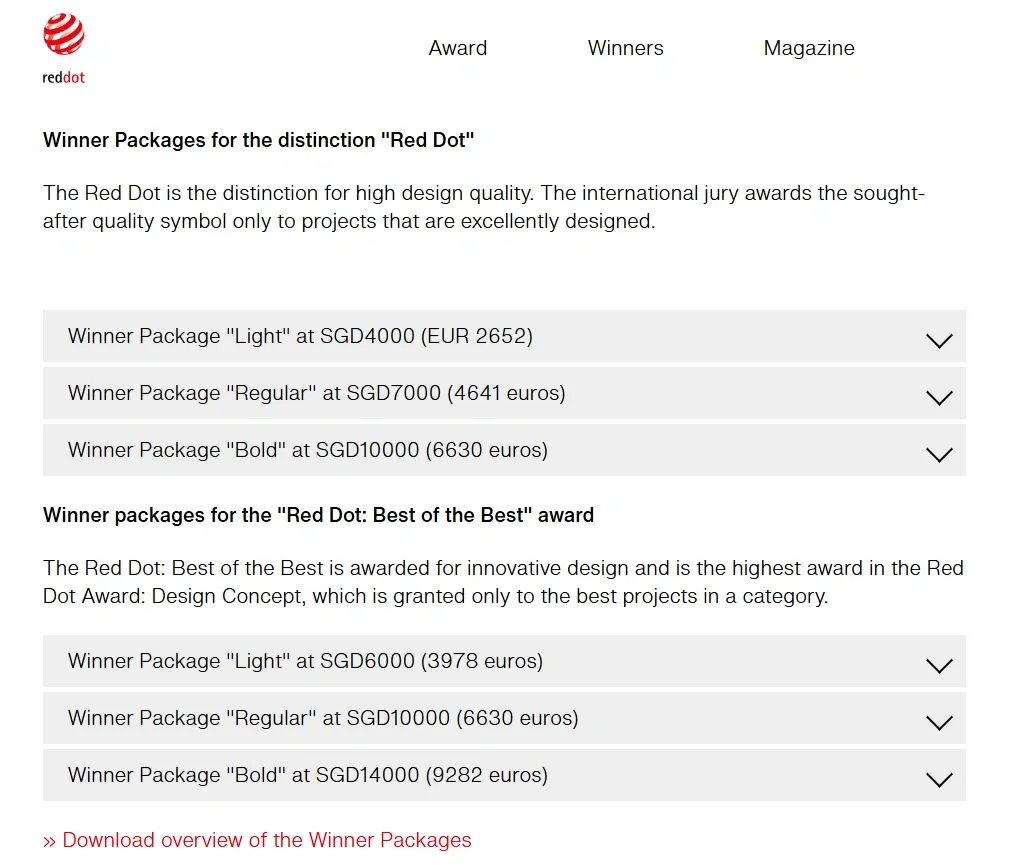
- Red Dot: While entry might cost roughly €450–€890, winners can be hit with "Winner Packages" ranging from €3,200 to over €9,200 to cover yearbook features, online profiles, and physical trophies.
Here is a screenshot showing Red dot’s “winner packages” pricing in Euro:
- Awwwards & FWA: Small submission fees (around $60–$150) are only the start; agencies often pay for annual "Pro" memberships (approx. $165/year) to gain better visibility and free daily submissions.
- Certificate Farms: Some smaller awards function as "prestige stores," charging $200–$300 per project for what essentially amounts to a printed receipt and a digital badge.
2. The Opportunity Cost of "Award Bait"
Agencies often spend hundreds of non-billable hours on "pro-bono" or internal projects specifically designed to win awards. Think like this, if a senior team spends 100 hours on a "spec" project for an award rather than a client project, the agency loses tens of thousands in billable revenue.
Also, creating the high-end videos, custom photography, and interactive walkthroughs required for a winning submission can cost $5,000–$20,000 in production alone
3. Cultural Drain and Staff Burnout
Chasing "innovation" for judges' sake rather than "effectiveness" for users often creates a toxic work environment as Awards often reward projects that required "all-nighters" and extreme overtime.
This creates a hero culture where quiet, efficient performance is ignored in favor of flashy, high-stress bursts, leading to 96% burnout rates in high-pressure design sectors.
Also, when experienced staff realize they are building "eye candy" instead of solving real business problems, they often leave for companies with more sustainable, outcomes-focused missions.
👉 Chasing design prestige is costly, especially when it hurts conversions, while the CRO Pricing Guide shows how those budgets can compound into real growth.
What to Do Instead of Chasing Awards
1. Build "Proof of Impact" Case Studies
Instead of a glossy video of a website’s animations, create a narrative driven by hard data. Also, try to replace things like "Winner of Site of the Day" with outcome based things like "Increased Checkout Completion by 22%."
You can use tools like Google Analytics 4 or Hotjar to document the "Before vs. After." This way you can create and then use your real case study that shows how you solved a specific user friction point is worth more to a serious CEO than any badge.
2. Prioritize "Invisible Design" (UX & Accessibility)
Award judges love what is loud and flashy; users love what is invisible and fast and we all know that users are going to be our real life “Bill Payers”.
That’s why you need invest in Core Web Vitals. A site that loads in under 2 seconds on a 4G connection is a "win" that directly correlates to lower bounce rates and higher SEO rankings.
Also, instead of experimental navigation, ensure your site is WCAG 2.1 compliant. This expands your market reach to the 15% of the global population with disabilities ( a massive user base that award-bait sites often ignore).
3. Conduct Constant User Testing
Awards are based on the opinion of 5–10 "expert" judges. Real design quality is found in the behavior of 1,000 real users.
Most beneficial thing for any company or agency would be to spend the budget on usability testing (e.g., UserTesting.com) instead of spending on award entry fees on.
While doing the “usability testing” make sure If a design element doesn’t help a user complete their task faster or more clearly, REMOVE it instantly even if it looks "cool".
4. Apply for "Effectiveness" Awards Only
If you must have trophies for marketing, target organizations that require business data to win. As these judge based on marketing effectiveness that means you cannot win without proving your work met specific business objectives.
Which also means you would requires a track record of impact over time.
5. Focus on the "LTV" (Lifetime Value) of the Client
True design quality isn't revealed on launch day; it’s proven in the months and years that follow.
While award-obsessed agencies often "fire and forget" (sprinting toward a flashy launch to meet a submission deadline), results-driven partners treat the launch as just the starting line. They prioritize the LTV (Lifetime Value of the client) by shifting the focus from initial vanity to long-term optimization.
Instead of walking away once the site is live, this approach involves staying in the trenches to A/B test headlines, refine button placements, and smooth out navigation flows based on how real humans actually use the product.
In this model, the ultimate success metric isn't a trophy from a panel of judges who looked at the site for five minutes; it’s the multi-year retainer and the steady stream of referrals earned by consistently hitting ROI targets.
Your best "award" is a client who grows so much they wouldn't dream of going anywhere else.
How Tenet Approaches Design
Tenet (formerly KodeGlobe) approaches design as a revenue-generating engine rather than just a visual exercise.
We reject "vanity metrics" like likes or impressions, focusing instead on measurable outcomes like conversion rates, user retention, and business growth.
Our methodology is built on "Intentional Design," where every pixel is meant to connect with an audience and drive a specific action. Our process typically follows an 8-step agile cycle involving weekly sprints to ensure transparency and speed.
We prove this through results, not trophies:
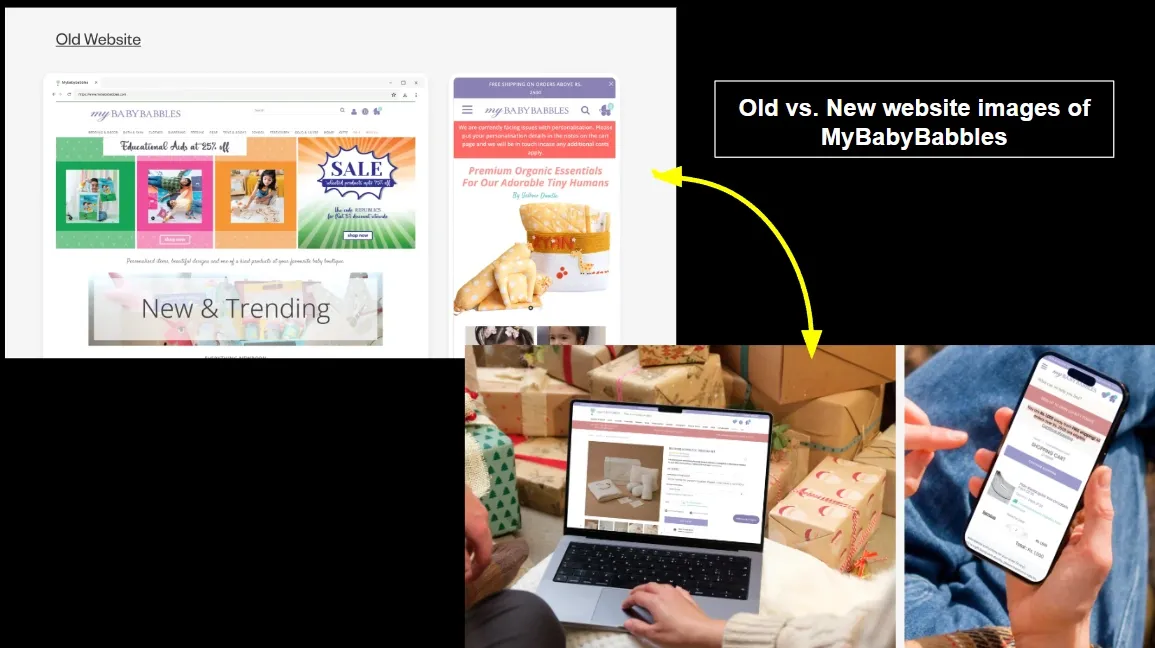
- For E-commerce (MyBabyBabbles): Rather than chasing a "pretty" layout, we used a 300+ pointer audit to identify hidden friction points.
By applying our intentional design framework, we transformed a complex funnel into a seamless experience that directly increased average order value and conversion rates.
- For Enterprise Healthcare (G42 Healthcare/M42): When a global leader’s digital presence didn't match its innovation, we moved beyond aesthetics to overhaul their Information Architecture.
By prioritizing technical performance and SEO-driven design, we helped them scale into the region's largest tech-enabled healthcare company.
If you’re ready to move past "award-bait" visuals and start building a digital product that prioritizes your users and your bottom line, feel free to reach out for a strategy session.
Expertise Delivered Straight to Your Inbox
Expertise Delivered Straight to Your Inbox




Got an idea on your mind?
We’d love to hear about your brand, your visions, current challenges, even if you’re not sure what your next step is.
Let’s talk


