
AI in Web Design Statistics
 By
By Share

Share
Get a quick blog summary with



AI is becoming increasingly integrated into web design, influencing how websites are planned, designed, developed, and optimized. Designers and developers now use AI for tasks such as interface creation, prototyping, personalization, accessibility, and code generation.
This growing use of AI is changing both design workflows and how websites are built and experienced.
This statistical roundup brings together key AI in web design statistics covering adoption, website performance, user experience, development, creativity, and AI’s role in modern web workflows.
How we collected and reviewed these statistics
We reviewed research reports and industry studies from sources such as Stanford, Adobe, SonarSource, the OECD, and the World Bank. We extracted statistics related specifically to AI, web design, development, user experience, accessibility, productivity, and AI driven website traffic.
We then grouped similar findings into clear sections and checked each figure against its original source before including it in this roundup. Where studies used different methods or measures, we kept the original context instead of combining the numbers into a single comparison.
Here are the key AI in web design statistics at a glance
- AI-driven websites recorded 4.3 out of 5 in user satisfaction, compared with 3.4 out of 5 for traditional websites.
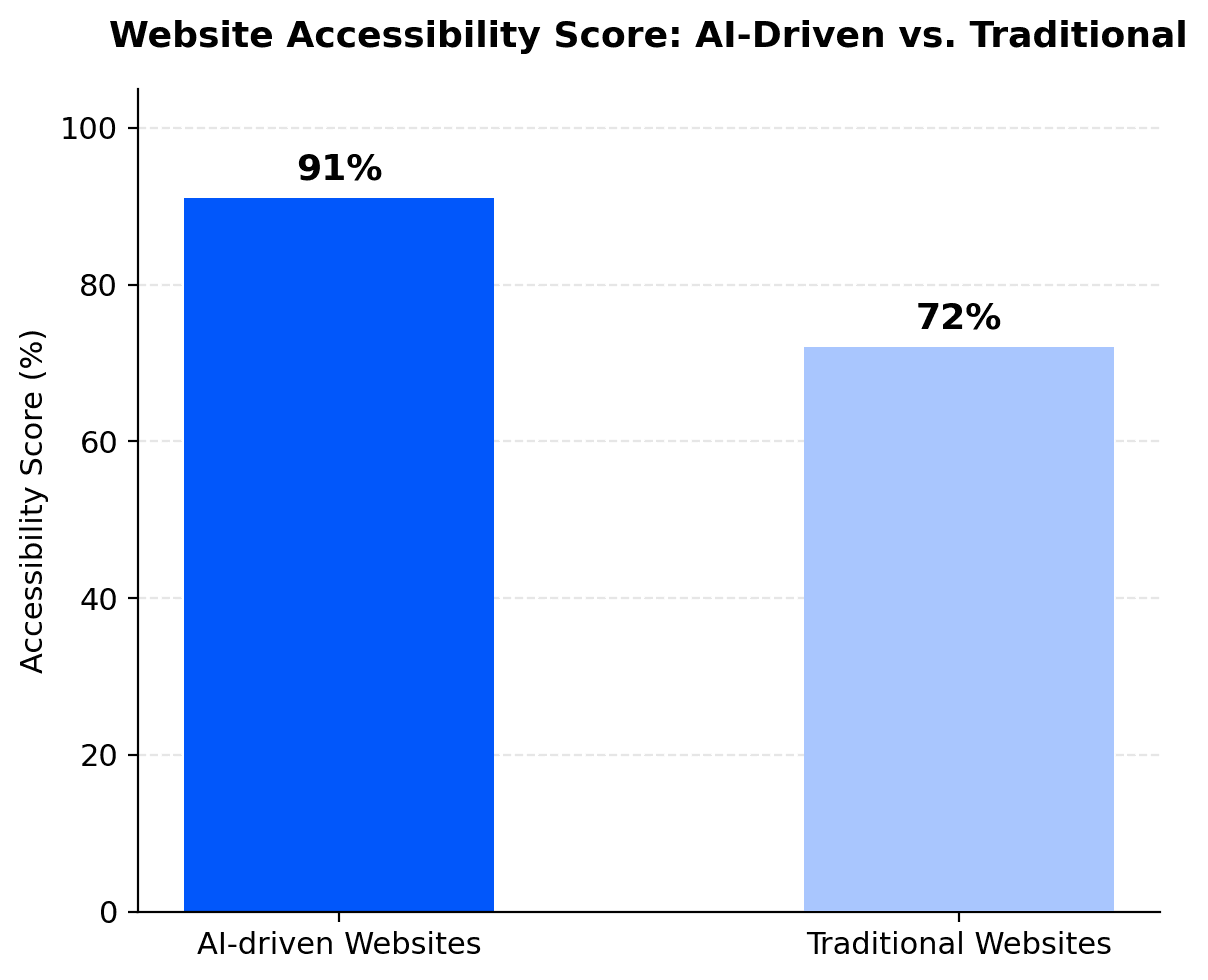
- AI-driven websites achieved a 91% accessibility score, compared with 72% for traditional websites.
- Users spent an average of 4.1 minutes on AI-driven websites, compared with 2.5 minutes on traditional websites.
- AI-driven websites had a 29% bounce rate, compared with 48% for traditional websites.
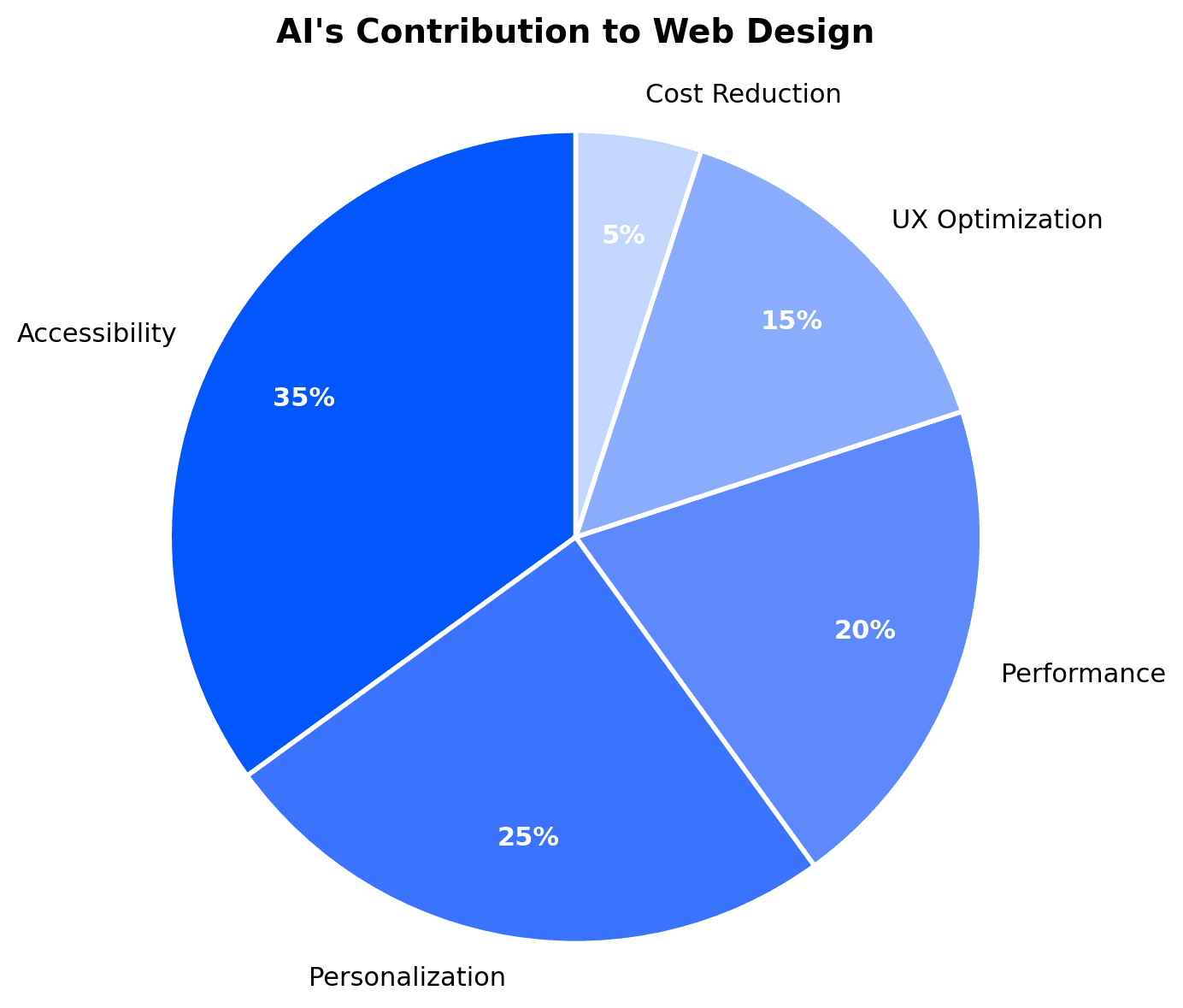
- In the study, AI contributed 35% to accessibility, 25% to personalization, 20% to performance, 15% to UX optimization, and 5% to cost reduction.
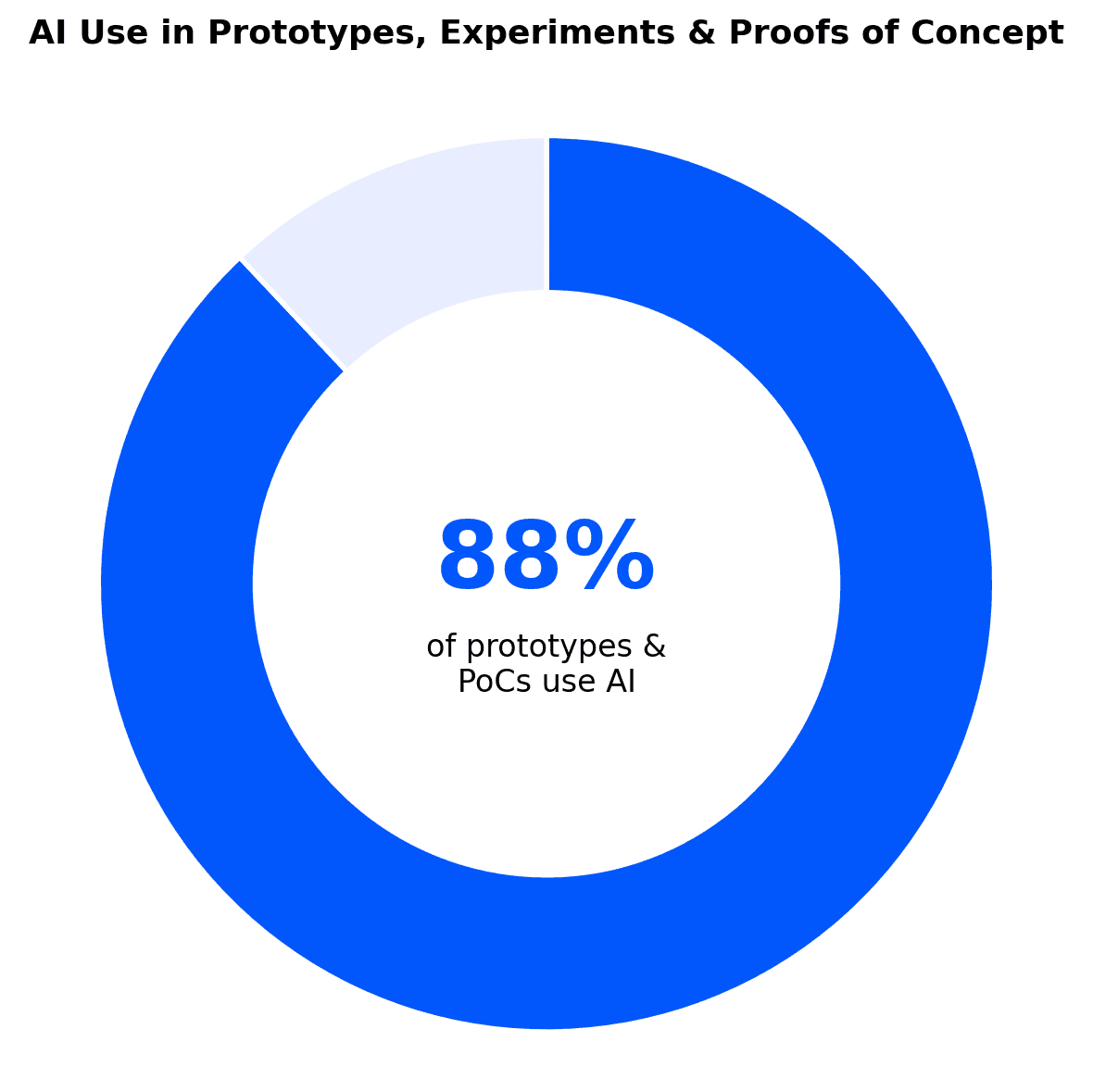
- 73% of developers use AI in customer-facing applications, while 88% use it for prototypes, experiments, or proofs of concept.
- Developers report an average 35% productivity increase from AI coding tools, with 82% saying AI helps them code faster.
- 90% of developers use AI to assist with new code, but only 55% consider it extremely or very effective for this task.
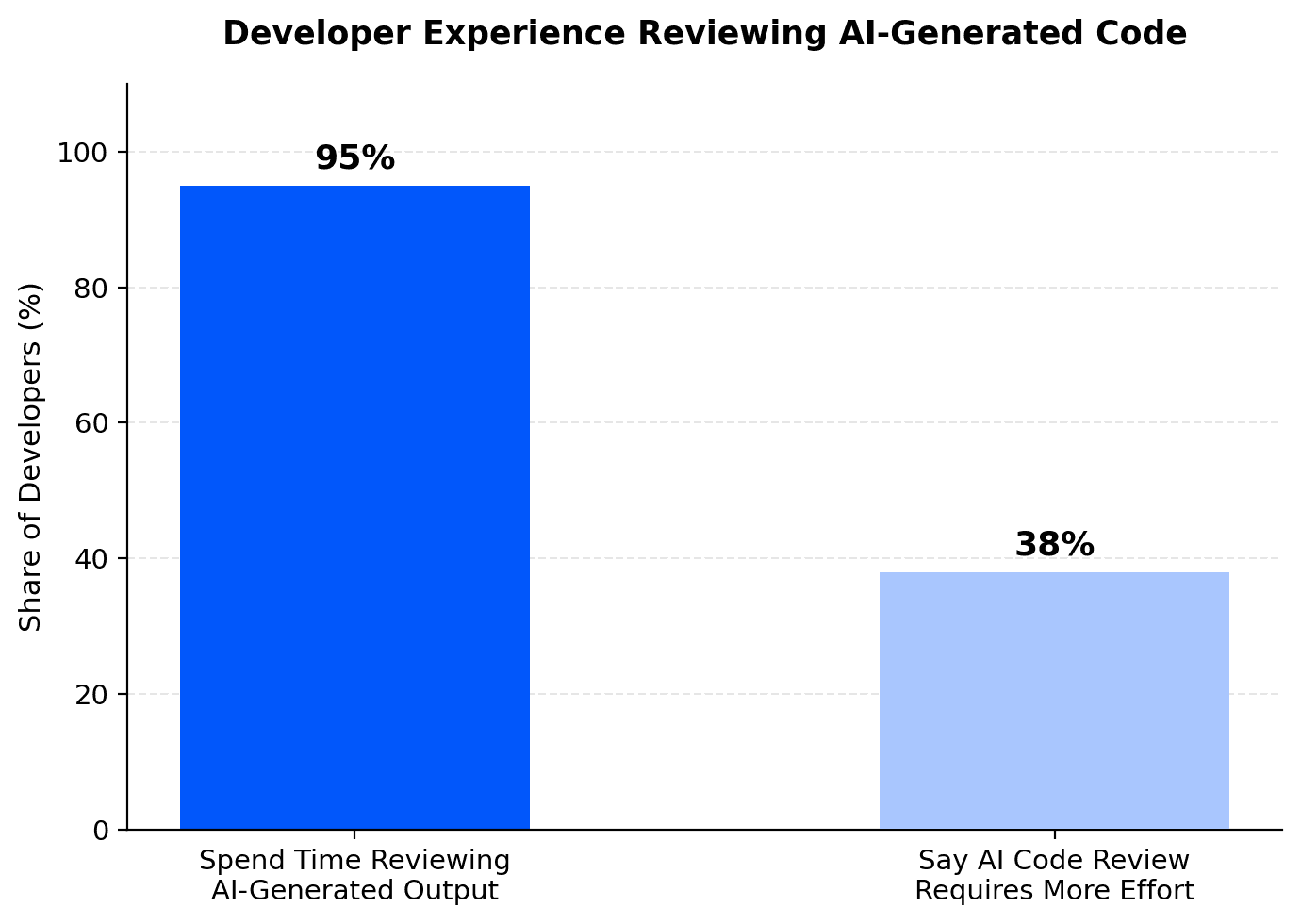
- 96% of developers do not fully trust AI-generated code to be functionally correct, while 95% spend time reviewing, testing, or correcting AI output.
- Gemini users were 4.8 times more likely to visit Graphics & Web Design websites than Google Search users, based on worldwide desktop data from October 2024 to September 2025.
Note: Our web designers at Tenet combines AI enabled workflows with UI/UX research, accessibility, responsive design, and conversion focused development to build websites that support business growth. Learn more about our web design services →
AI impact on website experience statistics
- AI-driven websites received an average satisfaction score of 4.3 out of 5, compared with 3.4 out of 5 for websites built using traditional design methods.
- AI-driven websites achieved a 91% accessibility score, higher than the 72% recorded for traditional websites.
- Visitors spent an average of 4.1 minutes per session on AI-driven websites, compared with 2.5 minutes on traditional websites.
- AI-driven websites recorded a 29% bounce rate, compared with 48% for traditional websites, indicating fewer visitors left without continuing their interaction.
- The average page load time was 2.1 seconds for the AI-driven website, compared with 3.2 seconds for the traditional website.
- AI’s contribution to web design in five areas includes 35% accessibility, 25% personalization, 20% performance, 15% UX optimization, and 5% cost reduction.
AI adoption in web development
- 73% of developers use AI in customer-facing applications, showing that AI-assisted development is already being used in products and services that users directly interact with.
- AI is used in 88% of prototypes, experiments, or proofs of concept, making it relevant to the early stages of website and interface development.
- 28% of surveyed professionals build customer-facing web or mobile applications, providing a direct connection between the developer survey and web development.
- Developers report an average 35% increase in personal productivity when using AI coding tools, while 82% say these tools help them write code faster.
- 71% of developers say AI helps them solve complex problems more efficiently, suggesting that its role extends beyond simple code generation.
- 90% of developers use AI to assist with new code, although only 55% rate AI as extremely or very effective for this task.
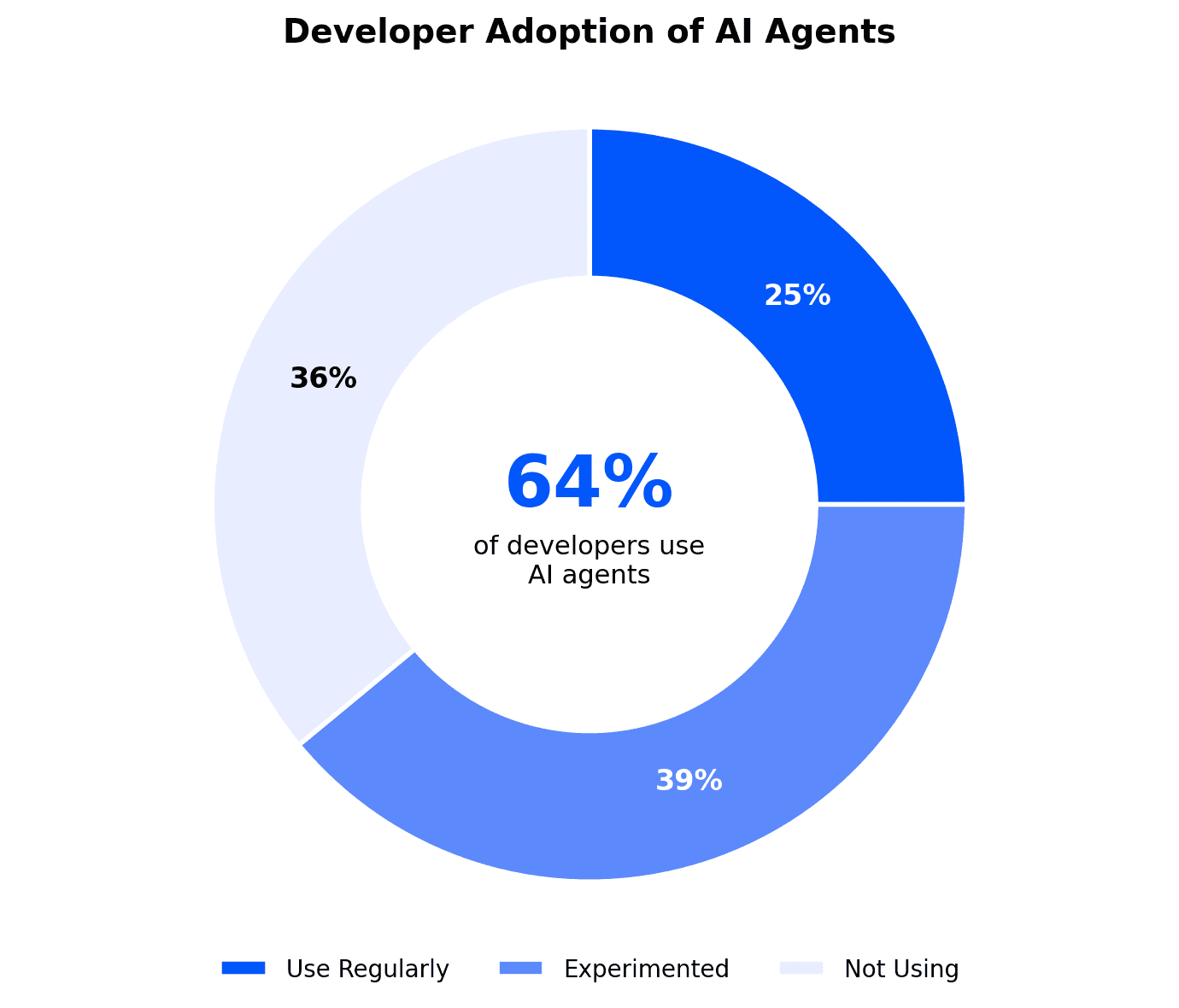
- 64% of developers have started using AI agents, including 25% who use them regularly and 39% who have experimented with them.
- Among developers using AI agents, 46% use them for vibe coding, while 48% use them to generate complete features or modules.
AI and design creativity statistics
- 77% of respondents believe AI cannot replace human creativity in design, showing that most respondents still see a role for human creative input.
- Only 17% believe AI has improved their designs, while 42% disagree and 41% remain neutral on AI's effect on design quality.
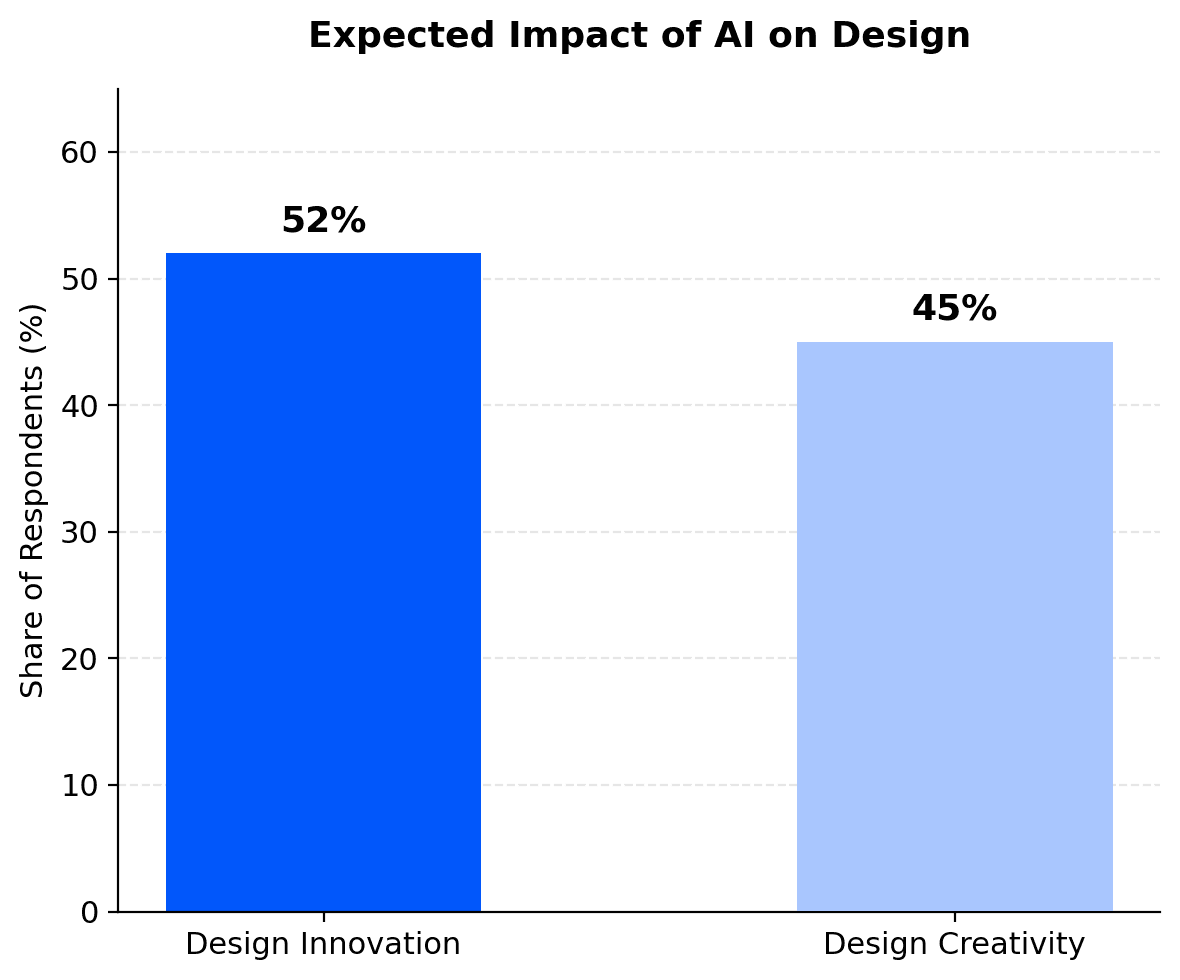
- 52% expect AI to boost design innovation, while 45% expect it to improve design creativity.
- 30% believe AI enhances creativity, whereas 41% disagree, showing mixed views about AI’s effect on the creative process.
- 44% of AI users say the technology gives them more time for creative, high-value work, suggesting some designers use AI to reduce routine work rather than replace creative tasks.
- 76% of design professionals believe AI increases the risk of design imitation, highlighting concerns about originality when AI is used in design workflows.
AI and development efficiency statistics
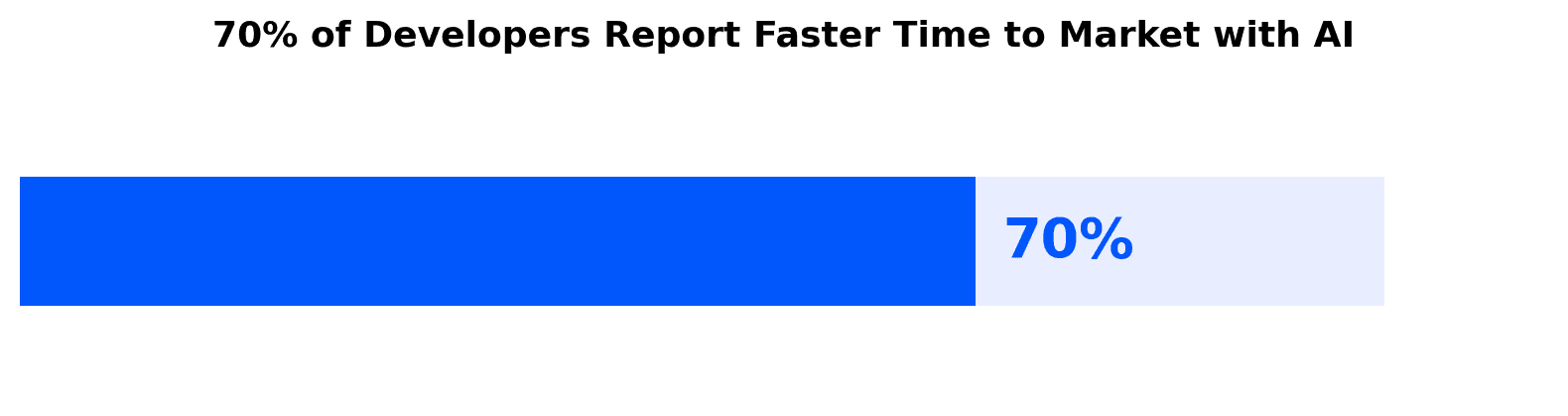
- 70% of developers report that AI has positively impacted time to market, meaning AI may help teams move products and updates from development to release faster.
- However, only 47% report a positive impact on end-user experience, showing that faster development does not necessarily result in a better experience for website users.
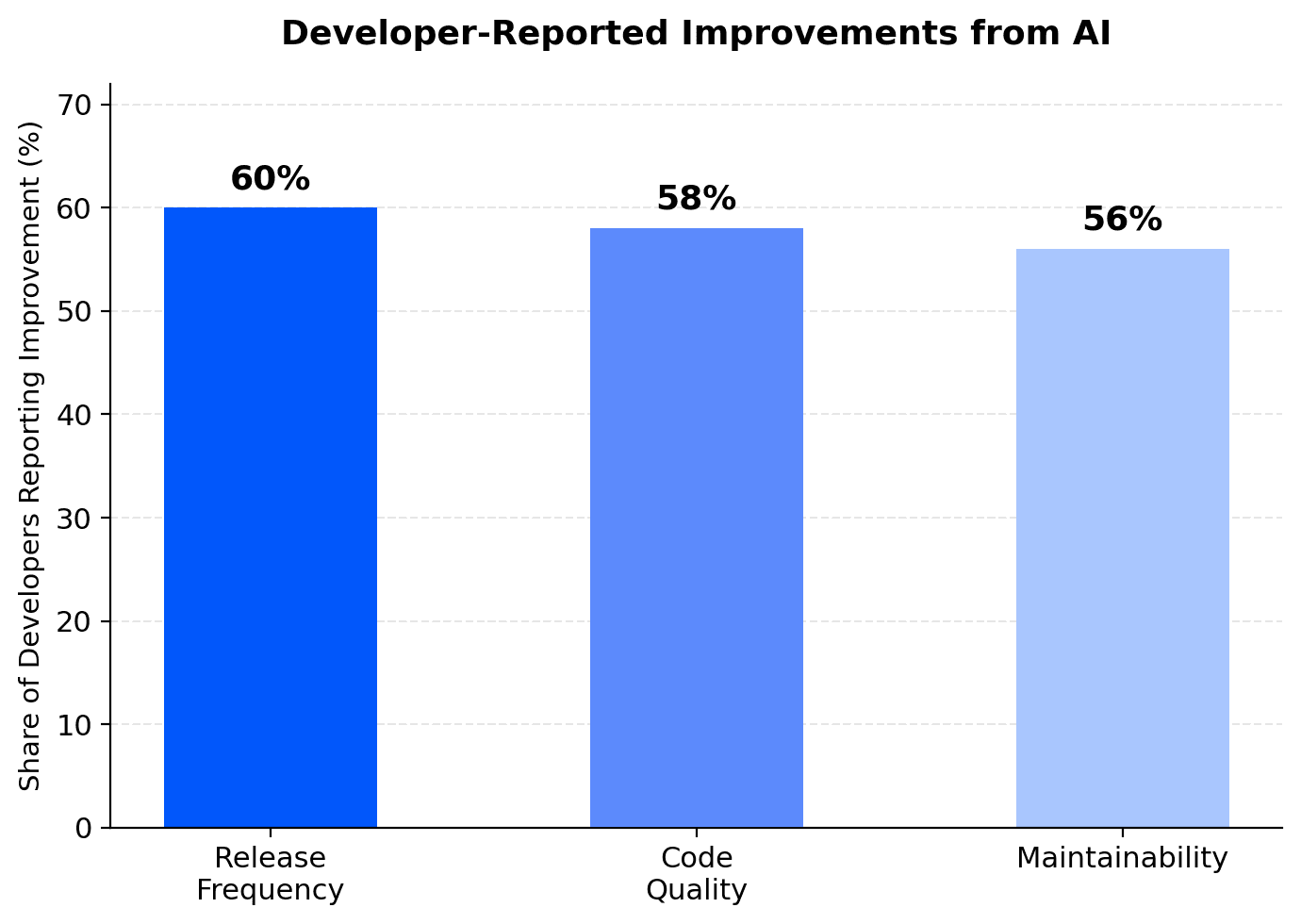
- 60% of developers report improved feature or fix release frequency, 58% report improved code quality, and 56% report improved maintainability.
- 65% of developers use AI for debugging, but only 44% consider it extremely or very effective for this task.
- 72% of developers use AI for refactoring or optimizing existing code, although only 43% rate AI as extremely or very effective for this work.
AI-generated website quality and risks statistics
- 96% of developers do not fully trust AI-generated code to be functionally correct, indicating that human review remains important when AI builds websites.
- 95% of developers spend at least some time reviewing, testing, or correcting AI-generated output, while 38% say reviewing AI-generated code requires more effort than reviewing human-written code.
- 61% of developers say AI can produce code that looks correct but is not reliable, highlighting the risk of accepting AI-generated website code without testing.
- Another 61% say it takes significant effort through prompting and fixing to get good results from AI, showing that AI output may still require substantial developer input.
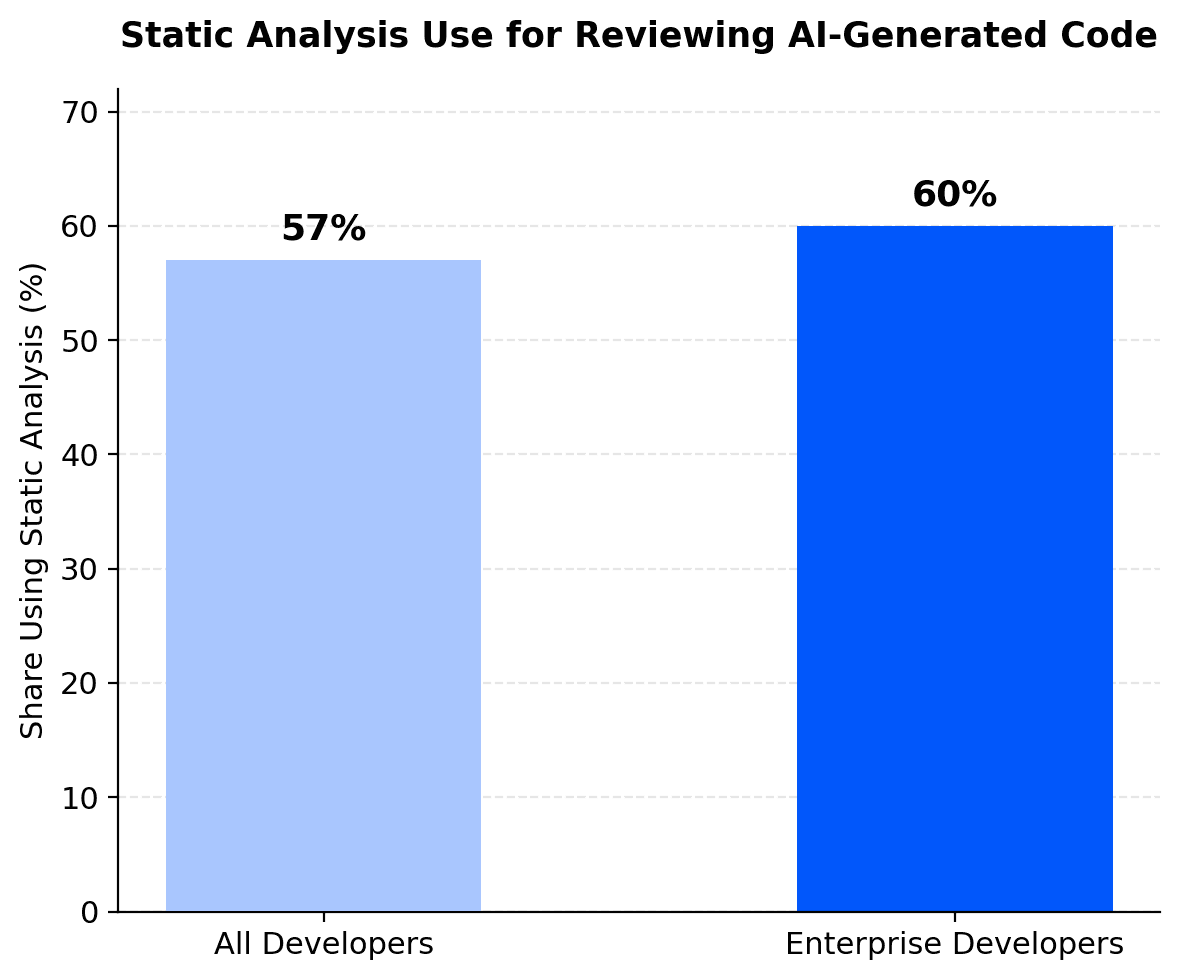
- 57% of developers use static analysis to review AI-generated code, rising to 60% among enterprise developers.
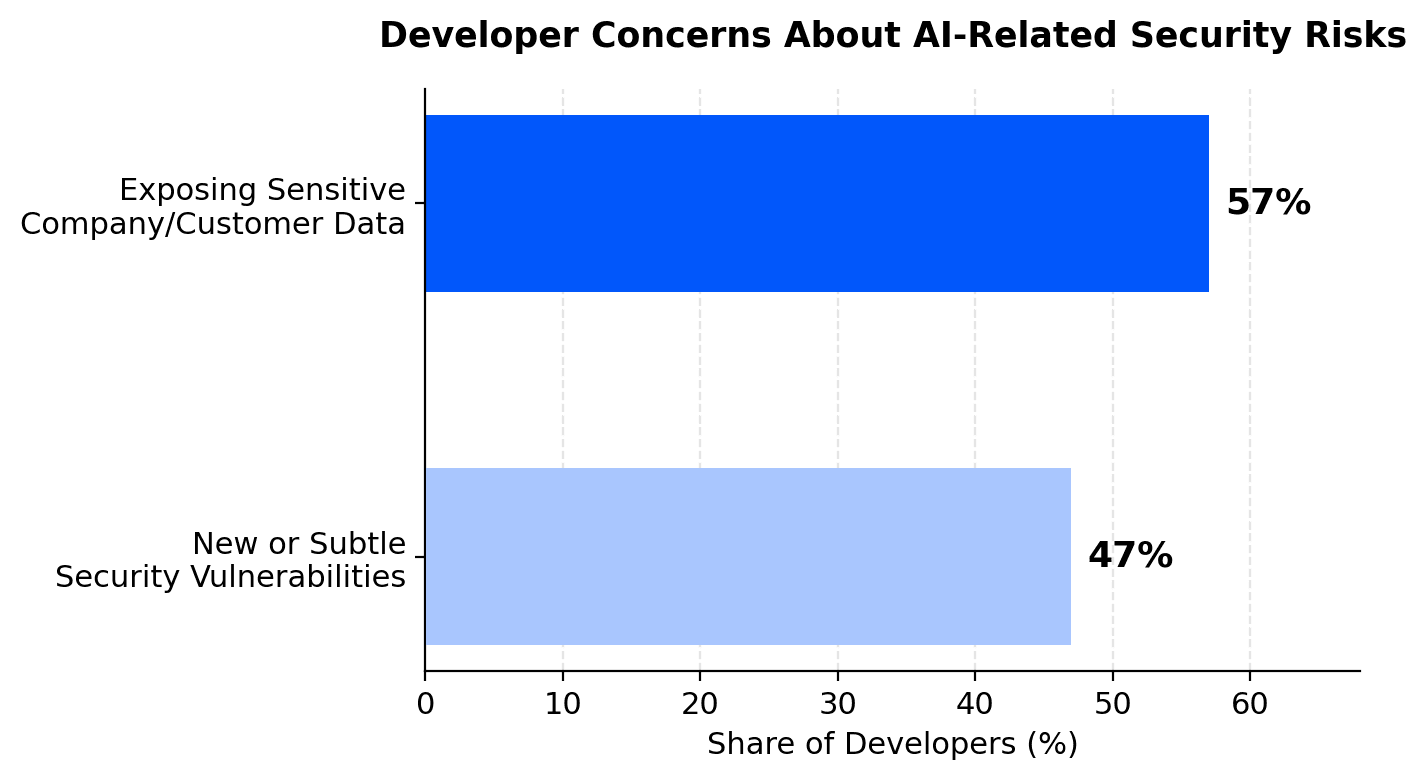
- 57% of developers worry that AI could expose sensitive company or customer data, while 47% worry about new or subtle security vulnerabilities.
AI and website visibility statistics
- Gemini users were 4.8 times more likely to visit Graphics & Web Design websites than Google Search users, based on worldwide desktop data from October 2024 to September 2025.
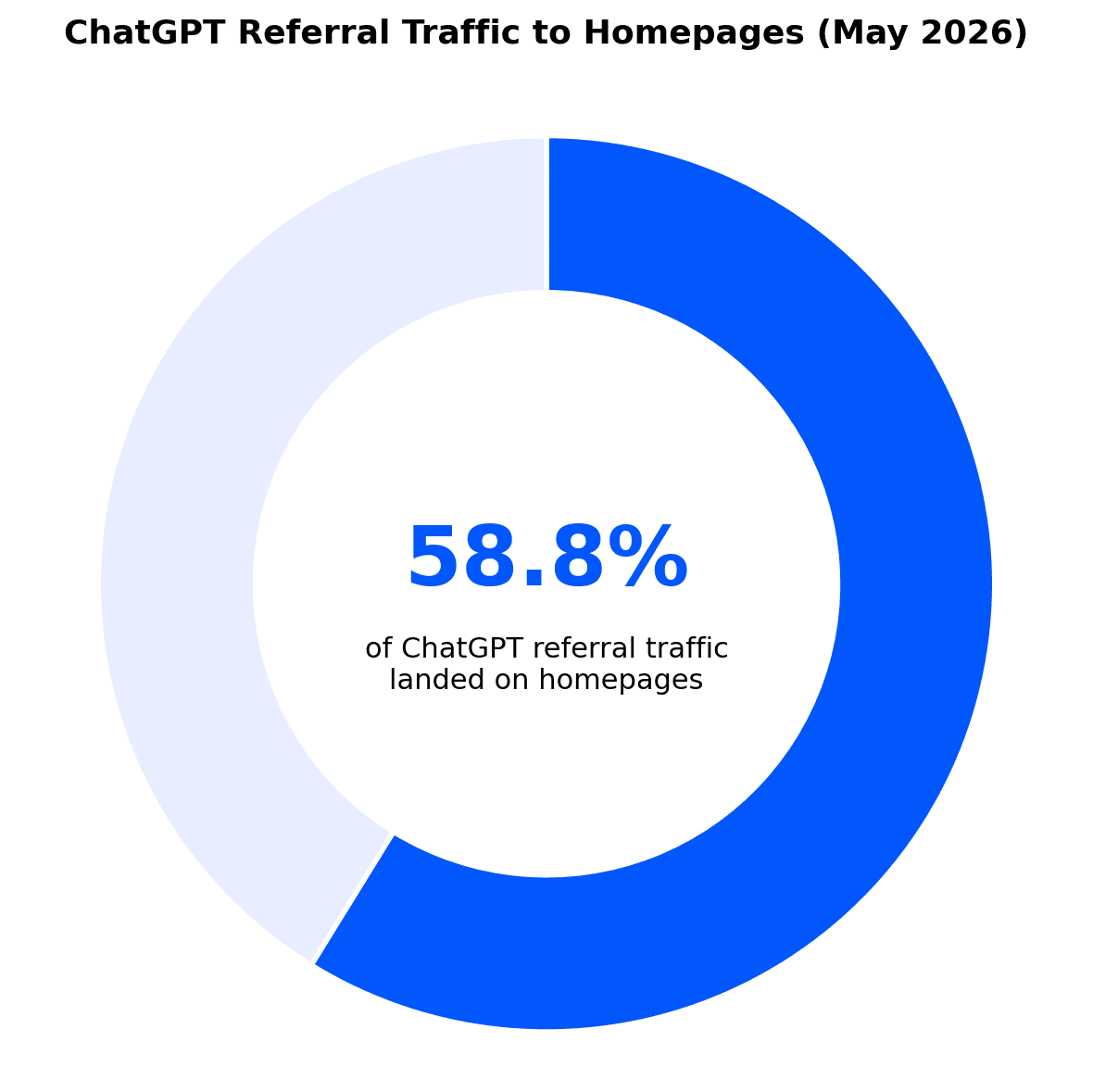
- 58.8% of ChatGPT referral traffic landed on website homepages in May 2026, making the homepage an important entry point for visitors coming from AI search.
- 41.7% of ChatGPT citations pointed to URLs two folders deep, suggesting AI search visibility isn't limited to a website’s homepage.
- The report found that 65% of cited URLs were located two or three folders deep, highlighting the importance of website structure for visibility in AI-generated answers.
Final Words
For businesses looking to turn these capabilities into practical digital products, the underlying design process still matters. At Tenet, our team combines UI/UX research, usability testing, accessibility, mobile-first design, and developer-ready execution to create digital experiences built around real user behavior. Its website design services also focus on performance, intuitive navigation, and conversion.
With 450+ projects completed across 15+ countries, Tenet can help businesses turn AI-enabled ideas into practical, user-friendly digital experiences that support engagement and growth.
FAQs
How does AI affect website user satisfaction?
User satisfaction reached 4.3 out of 5 with AI-based design, compared with 3.4 out of 5 for traditional design. The study measured satisfaction after participants completed tasks on both website types, making it a key indicator of user experience.
Does AI improve website accessibility?
Accessibility scores reached 91% with AI-based design, compared with 72% for traditional design. The study assessed accessibility through a WCAG audit, making it a direct comparison of how the two approaches performed against accessibility requirements.
Do users spend more time on websites built with AI?
Average session duration was 4.1 minutes for the AI-based website, compared with 2.5 minutes for the traditional version. Session duration was one of the performance measures used to assess how users interacted with each website during the study.
Can AI reduce website bounce rates?
The bounce rate was 29% for the AI-based website, compared with 48% for the traditional website. The study included bounce rate alongside satisfaction, accessibility, session duration, and page load time to compare the two website experiences.
How many developers use AI in customer-facing applications?
73% of developers use AI in customer-facing applications, showing that AI-assisted development is being applied to products and services that users interact with directly. The survey also examined AI use across prototypes, internal software, and business-critical applications.
Data Sources
- https://static.poder360.com.br/uploads/2026/08/attachment-2026-generative-ai-landscape-evolution-ai-search.pdf
- https://hai.stanford.edu/assets/files/ai_index_report_2026.pdf
- https://business.adobe.com/resources/sdk/.q3-ai-traffic-trends-report/q3-2026-ai-sourced-traffic-insights.pdf
- https://ppp.worldbank.org/sites/default/files/2026-08/World%20Development%20Report%202026%20The%20Promise%20of%20Artificial%20Intelligence.pdf
- https://www.sonarsource.com/state-of-code-developer-survey-report.pdf
- https://www.oecd.org/content/dam/oecd/en/publications/reports/2026/02/exploring-possible-ai-trajectories-through-2030_b6fb75d9/cb41117a-en.pdf
Expertise Delivered Straight to Your Inbox
Expertise Delivered Straight to Your Inbox























Got an idea on your mind?
We’d love to hear about your brand, your visions, current challenges, even if you’re not sure what your next step is.
Let’s talk


