
7 Most Important Rebranding Strategies (+ Real Examples)
 By
By Share

Share
Get a quick blog summary with



In 2010, Gap launched a new logo and lost $100 million in six days. In 2014, Airbnb repositioned itself and grew to one billion users within four years.
Both companies faced the same question: Does our brand still represent who we've become?
Gap answered poorly. Airbnb got it right.
The difference wasn't luck - it was strategic clarity.
Rebranding isn't about design trends. It's about realigning your identity with market reality, customer expectations, and your evolved vision. When done strategically, rebranding becomes your most powerful growth lever.
This guide reveals the exact strategies that transform brands, dissects why some rebrands succeed while others fail, and provides a framework to determine your brand's path forward.
Lee’s first talk about some effective rebranding strategies:
What are the most important rebranding strategies?
Rebranding is a powerful way to refresh your brand's perception and drive growth in a changing market.
Here are seven of the most impactful rebranding strategies, explained with their meaning, ideal use cases, typical changes, and real-world examples.
1. Brand Repositioning
Brand repositioning is the strategic process of changing how your brand is perceived by the market.
It involves shifting perception, redefining what the brand stands for, and guiding the audience to see it in a new way, such as transforming a “value-focused brand” into a “premium choice” or a “playful brand” into a “sophisticated one”.
It is about telling a new story that aligns with business goals and resonates with the right audience.
When to use this strategy
When your current positioning no longer matches customer expectations, market conditions, or business goals (e.g., targeting a younger demographic or entering new markets).
What usually changes
Target audience focus, pricing perception, marketing channels, and overall brand promise.
Example
Burberry repositioned itself from a brand associated with British gang culture to a modern luxury icon starting in the early 2000s under CEO Angela Ahrendts.
They emphasized heritage through celebrity endorsements and digital innovation, resulting in revenue doubling to over $3.2 billion and a 250% stock price increase.
👉 Before you begin a full rebrand, it helps to know what your current brand communicates. Here’s a step-by-step breakdown of how to design a brand identity that stays true to your purpose while evolving with your market.
2. Product or Service Evolution Rebrand
Product or service evolution rebrand updates a brand to reflect significant changes or expansions in its core offerings.
It ensures that the brand identity accurately communicates new capabilities, innovations, or business directions to the audience.
When to use this strategy
During major business pivots, such as shifting from physical to digital offerings or launching innovative new features.
What usually changes
Product messaging, visual elements tied to the offering, and sometimes the brand architecture to accommodate new lines.
Example
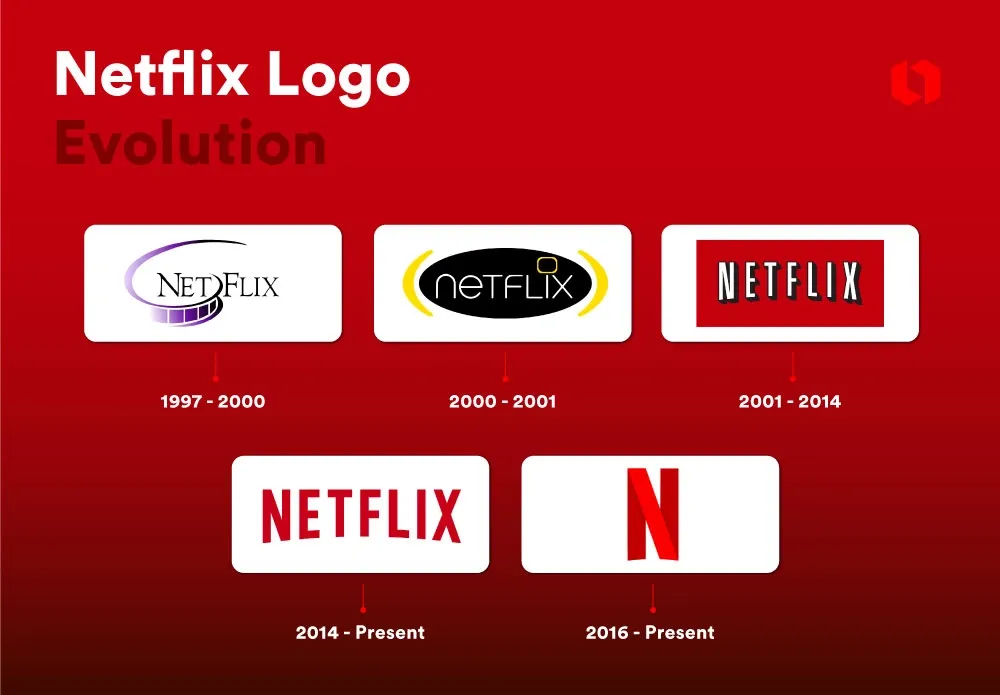
Netflix evolved from a DVD-by-mail rental service to a streaming and original content powerhouse (key rebrand phases 2013–2016).
They introduced a simplified red “N” logo and focused on original programming, growing from about 33+ million subscribers in 2013 to over 280 million globally by Q3 2024.
The following image shows the evolution of Netflix’s logo as the brand grew from a DVD rental service to a global streaming powerhouse:
👉 If your business is in an early growth stage, check out our article on branding for startups. It covers how to define purpose, audience, and positioning from day one.
3. Messaging and Brand Voice Update
This strategy focuses on changing how the brand communicates with its audience.
It reshapes tone, language, humor, values, and storytelling so the brand feels more human, relevant, and emotionally resonant.
The goal is not to change what the brand sells, but how it connects and is understood.
When to use this strategy
When the current voice feels outdated, too serious, or disconnected from the target audience (e.g., appealing to Gen Z with humor).
What usually changes
Advertising copy, social media tone, slogans, website content, and campaign themes.
Example
Old Spice was seen as an old-man brand until 2010, when it launched the "The Man Your Man Could Smell Like" campaign.
Actor Isaiah Mustafa delivered absurd, confident monologues targeting women buyers.
Here’s an image from Old Spice’s “The Man Your Man Could Smell Like” campaign with Isaiah Mustafa’s confident, over-the-top monologues.

The shift to playful, over-the-top humor generated 1.4 billion impressions in the first week, with sales increasing 107% in the following month and revitalizing the brand for a new generation.
4. Visual Identity Refresh
A visual identity refresh updates the look and feel of a brand to make it more modern, cohesive, and emotionally appealing.
It typically preserves key recognizable elements, such as core colors or logo structure, so the brand evolves without losing familiarity or trust.
When to use this strategy
When the current look feels dated or no longer aligns with the desired emotional response (e.g., needing to appear more trustworthy or energetic).
What usually changes
Logo, color palette, typography, imagery style, icons, and overall design guidelines.
Example
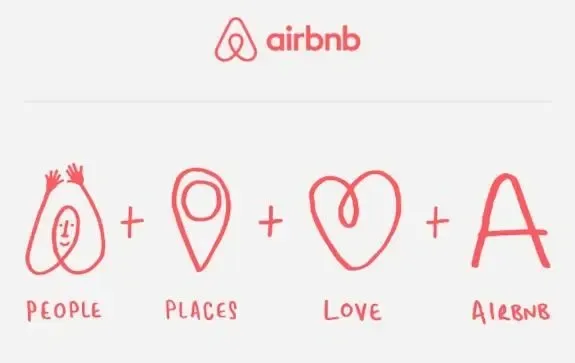
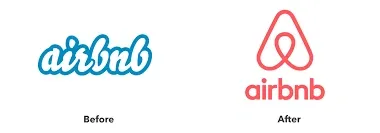
In 2014, Airbnb replaced its wordmark with the "Bélo" symbol (representing belonging). They adopted warmer colors, community-focused photography, and a cleaner aesthetic.
This visual breaks down the new Bélo symbol, showing how it brings together people, places, and love to explain the meaning behind Airbnb’s rebrand.
The following picture shows the before and after logo of Airbnb:
This helped shift perception from "cheap rentals" to "unique experiences anywhere," contributing to explosive growth - valuation rose from about $10 billion pre-rebrand to over $100 billion by its 2020 IPO.
👉If you’re evaluating your brand’s visual direction, our guide on Visual Branding explains how consistent design can strengthen perception across every customer touchpoint.
5. Name Change
A name change involves fully replacing the brand or company name to signal a clear break from the past.
It is one of the boldest rebranding moves, often used to redefine perception, remove limitations, or support a major strategic shift, instantly drawing attention and setting new expectations.
When to use this strategy
After mergers, to escape negative associations, or when the original name limits growth (e.g., too descriptive or region-specific).
What usually changes
Company/product name, domain, signage, legal branding, and all marketing materials.
Example
Dunkin’ officially shortened its name from Dunkin’ Donuts to Dunkin’ beginning in 2019 to reflect that beverages like coffee, tea, and specialty drinks had become the core of its business, accounting for about 60% of U.S. sales and positioning the brand as a beverage-led chain rather than just a donut shop.
This image highlights Dunkin’s redesigned logo, reflecting the brand’s updated visual identity and modern approach.
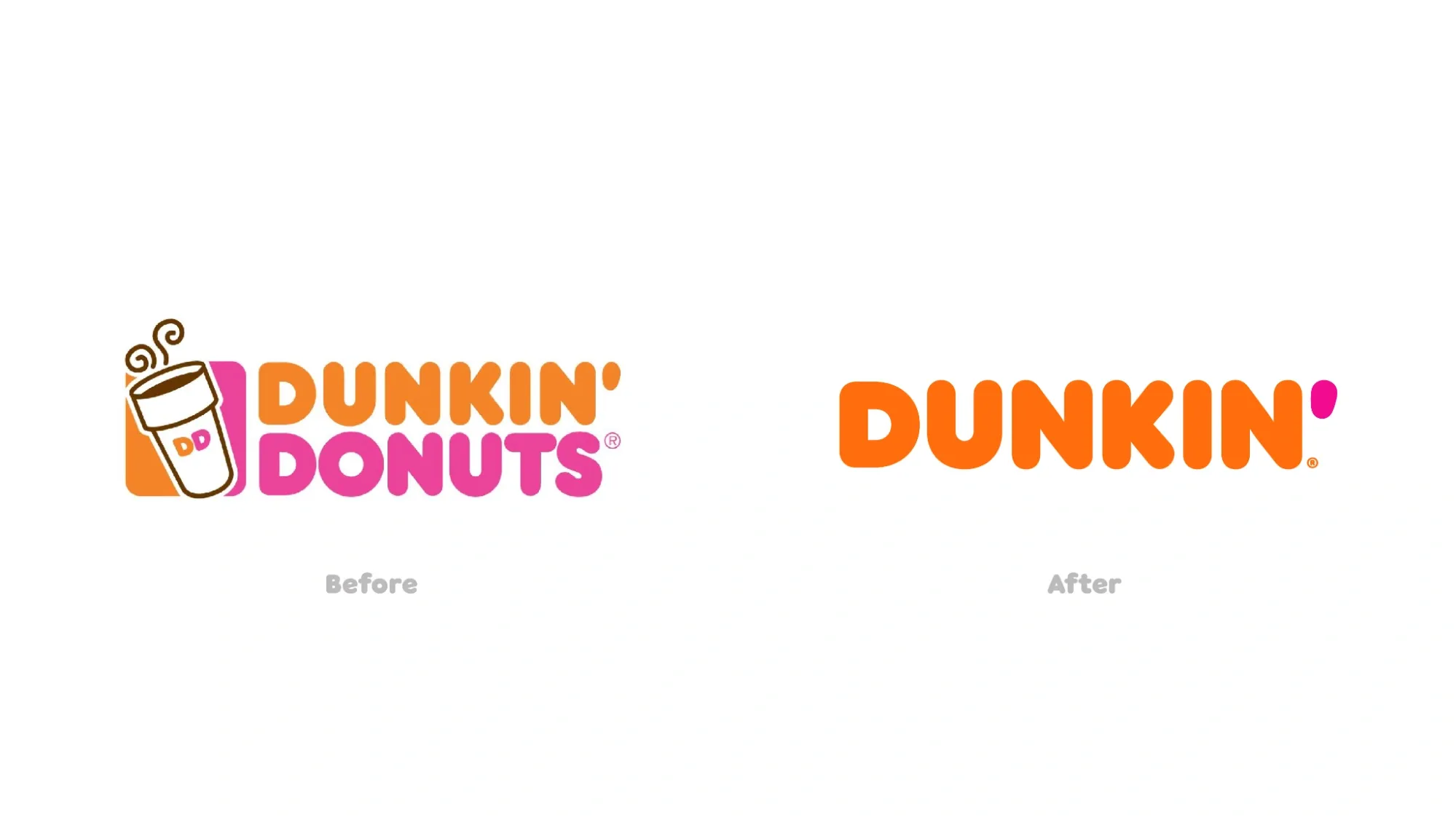
The change helped modernize the brand and align it more closely with customer perception and menu evolution.
6. Differentiation-Led Rebranding
Differentiation-led rebranding focuses on clearly defining and amplifying what makes the brand uniquely valuable in a crowded market.
It sharpens positioning by emphasizing distinct strengths, category leadership, or a clear point of difference that helps the brand stand out from similar competitors.
When to use this strategy
When your category feels homogenized and customers struggle to see what makes you different.
What usually changes
Key selling points in messaging, visual cues that highlight uniqueness, and campaign focus on contrasts with rivals.
Example
Starting around 2017, Wendy's transformed its social media into a witty, savage voice that roasted competitors (e.g., the viral #NuggsForCarter tweet exchange).
Source: Below are some images demonstrating some humorous tweets by Wendy:

This real-time engagement set them apart in fast food.
Result: Twitter followers increased 125%+ in a year, brand mentions increased dramatically, and it contributed to sustained sales growth.
7. Customer-Focused Rebranding
Customer-focused rebranding places real customer feedback at the core of the brand’s evolution.
It involves openly acknowledging gaps, improving the experience in meaningful ways, and communicating changes transparently to rebuild trust, loyalty, and long-term credibility.
When to use this strategy
After negative feedback, declining loyalty, or when research reveals clear customer pain points.
What usually changes
Product quality, communication style, service features, and public acknowledgment of improvements.
Example
In 2009–2010, Domino's faced brutal customer feedback calling their pizza "cardboard."
Source: Here are some customer text screenshots that clearly show just how bad the issues were:

The "Pizza Turnaround" campaign featured real negative quotes, showed chefs reformulating recipes, and launched tools like the online pizza tracker.
Here’s the YouTube video from the 2009 Pizza Turnaround campaign, where Domino’s openly acknowledged customer criticism.
YT video: https://www.youtube.com/watch?v=AH5R56jILag
Honesty paid off: U.S. same-store sales jumped 14.3% in Q1 2010, and the stock price soared from ~$8 in 2010 to over $400 by 2024.
Here are the rebranding examples to learn from
Rebranding can either breathe new life into a business or backfire spectacularly. The difference lies in how well the new identity aligns with audience expectations and business strategy.
Let’s look at some real-world rebranding examples that reveal what works, what doesn’t, and what every brand can learn from them.
Dunkin':
What They Did:
In 2018, Dunkin' officially dropped "Donuts" from its name, simplified its logo, and invested $100 million in store redesigns featuring modern aesthetics, new beverage equipment, including tap systems for cold drinks, and dedicated mobile order pickup lanes.
This image shows the redesigned logo of Dunkin’
The Rebranding Need:
Dunkin' wanted to signal its evolution from a donut-centric chain to a beverage-led, all-day brand. With 60% of sales coming from beverages (especially coffee), the company needed to modernize its image to appeal to younger, health-conscious consumers and compete more effectively in the coffee market.
Benefits Gained:
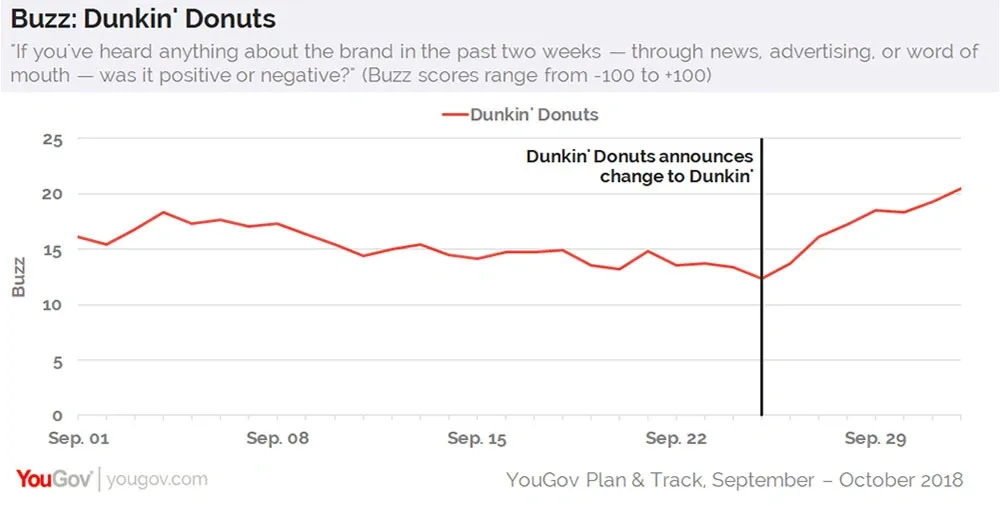
The rebrand generated significant buzz, with Dunkin's "Word of Mouth" score jumping from 15% to 23% within two weeks of the announcement. Systemwide sales grew 4.6% and comparable store sales increased 1.3% in Q3 2018.
The company successfully attracted younger demographics while maintaining loyalty among existing customers, positioning itself for expansion into 1,000 new stores over three years.
This image is of YouGov data showing how Dunkin’s rebrand sparked sustained conversation, with the highest buzz of the year.
Old Spice:
What They Did:
Old Spice executed a bold rebrand in 2010 through the viral "The Man Your Man Could Smell Like" campaign featuring Isaiah Mustafa. The brand shifted from traditional advertising to humorous, self-aware digital marketing with interactive social media engagement.
Here is an image of “The Man Your Man Could Smell Like” campaign of old spice:
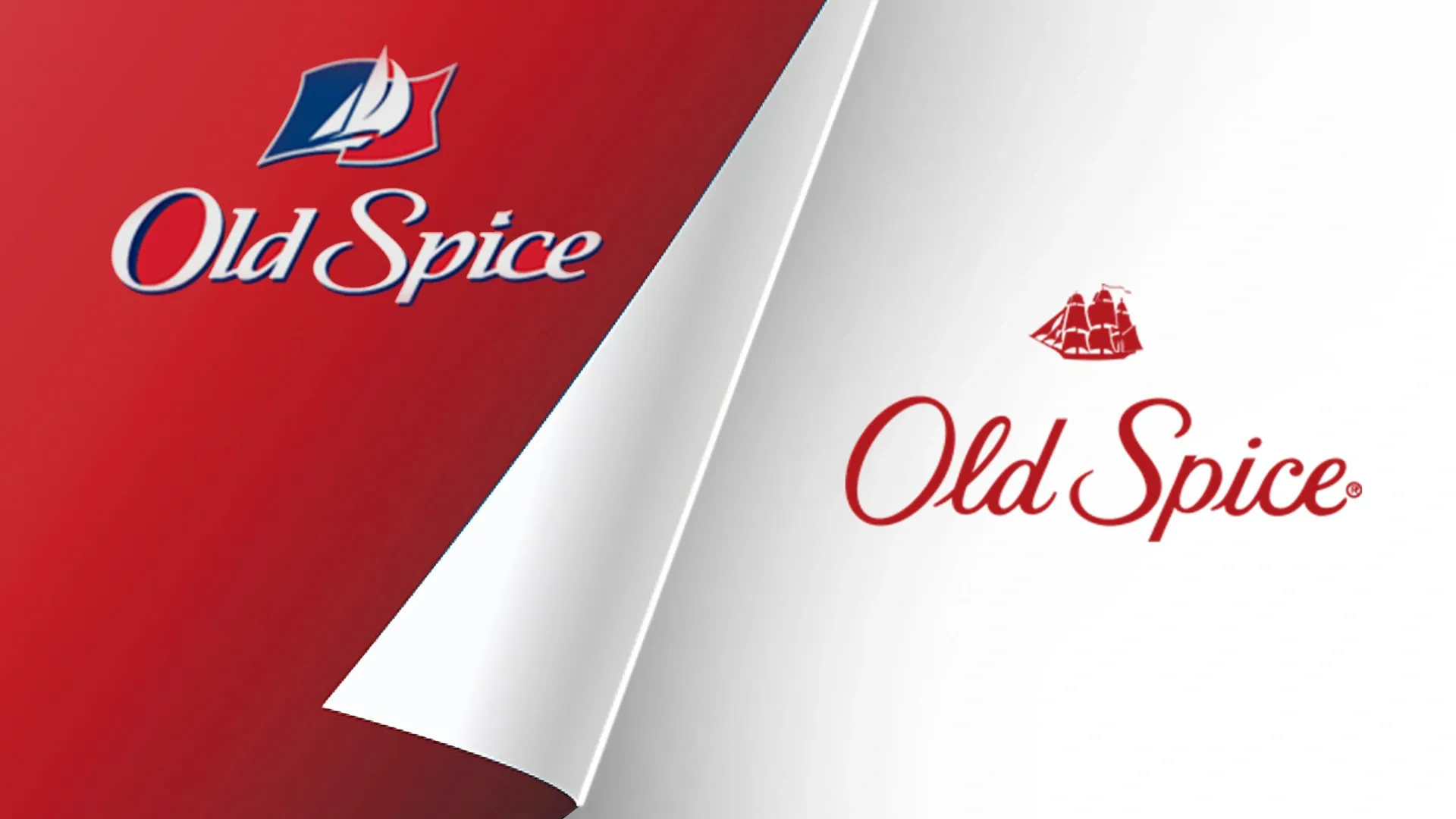
This shows the before and after rebranding of Old Spice:
The Rebranding Need:
Old Spice was seen as a dated brand for older men, losing market share to younger, trendier competitors. The brand needed to appeal to a younger demographic without alienating existing customers.
Benefits Gained:
The campaign became a cultural phenomenon, garnering millions of online views and setting new standards for interactive marketing. Old Spice experienced significant market share increases among younger demographics, transforming the brand into an innovative, culturally relevant leader in men's grooming.
Airbnb:
What They Did:
In 2014, Airbnb launched a comprehensive rebrand, introducing the "Bélo" logo - a symbol representing people, places, love, and belonging.
This graphic breaks down the new symbol, connecting people, places, and love to show the meaning behind Airbnb’s rebrand.
The rebrand extended beyond visual identity to include warmer color palettes, human-centric photography, simplified website and app interfaces, and messaging that emphasized community over transactions.
The visual below shows how Airbnb moved from a script logo to the Bélo symbol for a more distinctive identity.
The Rebranding Need:
Airbnb had outgrown its original identity as a budget accommodation platform. With over 400 million users and expansion into experiences beyond lodging, the brand needed to reflect its evolution into a global hospitality community. The founders wanted to communicate that Airbnb offered more than rooms; it offered belonging anywhere.
Benefits Gained:
The rebrand generated massive social media engagement and won numerous design awards. By June 2018, Airbnb had grown to over one billion users and expanded to nearly 200 countries with over six million listings.
The company's valuation reached over $30 billion, with the rebrand playing a central role in positioning Airbnb as a lifestyle brand rather than just a rental service.
LEGO:
What They Did:
In 2004, LEGO underwent a strategic rebrand by cutting product complexity by 30%, eliminating unprofitable lines, and returning to its core identity through creative play. The company strategically partnered with global franchises like Star Wars, Harry Potter, and Marvel, bridging physical and digital play experiences.
The Rebranding Need:
LEGO was near bankruptcy in the early 2000s after over-expanding into unrelated businesses. Product complexity had exploded, costs soared, and the brand lost focus on what made it beloved - simple, creative play.
Benefits Gained:
Sales grew from near-bankruptcy to over $2 billion by 2014, representing 900% growth. The rebrand reclaimed LEGO's position as the world's leading toy manufacturer. Strategic franchises introduced new audiences, while community initiatives like LEGO Ideas deepened engagement.
Today, LEGO appeals to both children and adult collectors, commanding premium pricing and sustained brand advocacy.
Rebranding missteps to learn from
Even global giants have stumbled in their rebranding efforts. Here are two cases that show why strategy should always come before design.
Gap: The $100 Million Logo Disaster
What Happened:
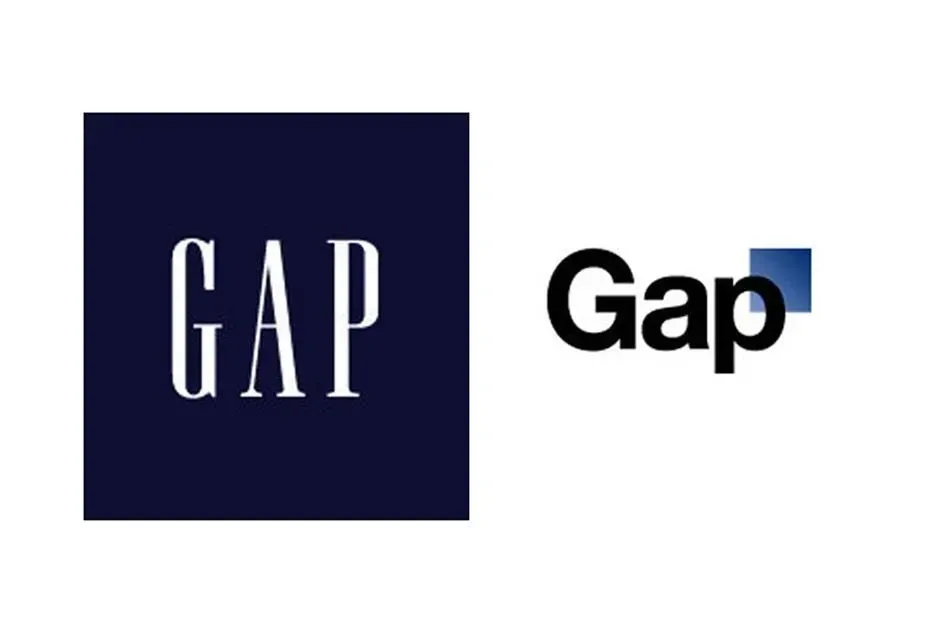
In 2010, Gap abruptly unveiled a new logo featuring Helvetica font with a small gradient box, replacing its iconic white-on-blue design that had been used for decades. The change was launched without customer research, communication, or a supporting narrative.
Here is an image of Gap’s infamous rebrand (the new one is on the right):
The Outcome:
Immediate consumer backlash erupted across social media, with customers calling the logo "ugly" and "generic." Within just six days, Gap reversed the decision and restored the original logo, making it one of retail's most public failures. The $100 million investment was wasted, demonstrating the risks of rebranding without strategic planning or stakeholder engagement.
Lessons Learned:
Never rush rebranding without a comprehensive strategy and customer insight. Communicate the reasoning behind changes. Test designs before full rollout. Preserve brand equity built over decades rather than erasing it overnight.
Tropicana: Losing Brand Recognition Overnight
What Happened:
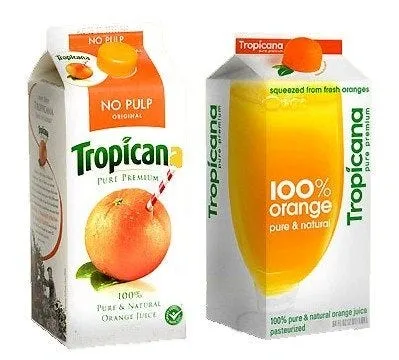
In 2009, Tropicana redesigned its packaging, removing the iconic orange-with-straw image that had defined the brand for decades. The new design featured a minimalist white carton with a generic glass of juice and simplified typography.
Below is an image of Tropicana’s rebrand (new on the right):
The Outcome:
Sales dropped 20% within two months, resulting in a $30 million loss. Confused customers couldn't find Tropicana on shelves, demonstrating the power of visual equity. The company quickly reverted to the original packaging and launched a recovery campaign.
Lessons Learned:
Don't underestimate the emotional attachment customers have to familiar brand elements. Test packaging changes with core buyers before full market rollout. Simplification can erase distinctiveness if not executed thoughtfully.
When to consider rebranding?
Rebranding isn’t just a design decision; it’s a strategic move that can redefine your market position, brand perception, and business growth. But knowing when to rebrand is just as important as how to do it.
Here are some clear indicators that it might be time to consider rebranding your business.
1. Your Brand No Longer Reflects Your Vision
As companies evolve, their goals, audience, and positioning often shift. If your brand identity no longer aligns with who you are today or where you want to go tomorrow, it’s time for a refresh.
This often happens with startups that have outgrown their early identity and need a brand that represents their maturity and mission.
2. You’re Targeting a New Market Segment
When expanding into new markets or appealing to a different audience, your current branding might not resonate. A rebrand can help you communicate more effectively with new customer segments by aligning visuals, messaging, and tone with their preferences and expectations.
3. Outdated Visual Identity or Brand Experience
Design trends evolve, and what looked modern five years ago might appear dated now. A refreshed logo, color palette, and digital experience can make your brand more relevant and engaging, especially in digital-first industries where aesthetics drive credibility.
4. Mergers, Acquisitions, or Structural Changes
When two companies merge or a business undergoes major organizational changes, rebranding helps unify the new identity under a single brand voice and vision. It’s a crucial step to build trust and clarity among customers, employees, and stakeholders.
5. Reputation Damage or Negative Brand Perception
If your brand has faced public criticism or loss of trust, a thoughtful rebrand can be a powerful way to start fresh. However, this should go beyond visuals; it requires real operational and cultural changes to rebuild authenticity.
6. Declining Sales and Engagement:
When customer interest drops, competitors gain market share, and brand recall weakens, it's time to reassess. Stale or outdated brand positioning loses relevance as customer needs evolve and competitors introduce fresher, more compelling alternatives.
Monitor key performance indicators, such as website traffic, social media engagement rates, and customer inquiry volumes. Declines in these metrics often signal that your brand has lost its competitive edge and customer connection.
Partial vs. Total rebrand: which is right for your business?
The scope of your rebrand depends on your specific situation. Understanding the difference between partial and total rebranding helps you make the right choice.
Assess your current brand health, market position, and business objectives. If your brand remains strong but needs modernization, a partial rebrand preserves equity while keeping audiences engaged. If your brand faces reputation challenges or a fundamental business shift, a total rebrand communicates transformation and signals a fresh start.
The important thing is to ensure your rebrand decision is data-driven, stakeholder-aligned, and executed with clear communication to your audience.
👉 Still unsure about the investment side of things? Our breakdown of branding costs helps you understand budget ranges, timelines, and what drives ROI in rebranding projects.

How Tenet helped ASDAV with rebranding services
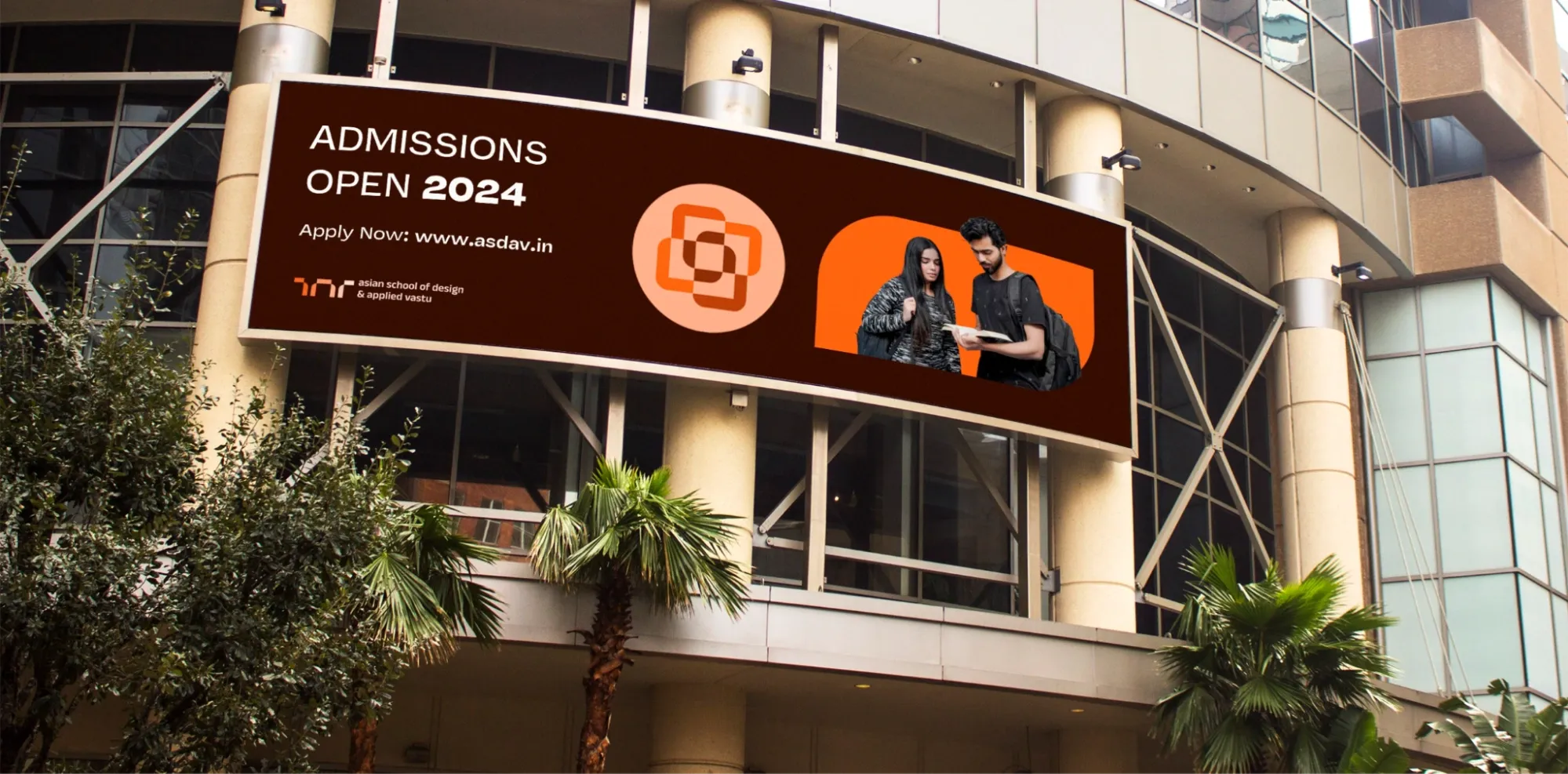
Asian School of Design & Applied Vastu wanted to position itself as a modern institute that blends design, engineering, and construction education. Its existing brand lacked clarity and did not connect with a wider audience.
Tenet followed a structured approach. We started with discovery workshops, founder interviews, and market research to define purpose and audience.
Then we built a clear brand strategy, positioning, and voice. We created a complete visual identity system, including logo, colors, typography, and brand guidelines. We also designed and developed a modern, user-focused website to support growth.
Here is an example:
The Impact?
- Renewed internal alignment and founder confidence in brand direction
- Increased engagement across digital touchpoints
- Stronger brand perception and recall within the education and design sectors
The result was a clear, scalable brand with stronger engagement and recall. If your brand needs the same clarity, explore our rebranding services.
Talk to our experts to plan your rebranding strategy
Talk to our experts to plan your rebranding strategy









Got an idea on your mind?
We’d love to hear about your brand, your visions, current challenges, even if you’re not sure what your next step is.
Let’s talk


