
How to Keep Brand Voice Consistent Without Repetitive Copy
 By
Share

Share
Get a quick blog summary with



Most brands do not struggle with maintaining a consistent voice because their writers lack skills.
The problem often starts when the brand does not have clear writing guidelines.
One writer uses formal language, another takes a casual approach, and someone else repeats phrases from older content to stay within the brand guidelines.
However, consistency does not mean using the same words, phrases, or messaging everywhere. It means maintaining a recognisable personality across different communication channels while adapting the language to each situation.
This guide explains how to maintain a consistent brand voice without making every blog, social media post, email, or website page sound the same.
What is brand voice, and why does it matter?
Brand voice is the personality a business communicates through its written and spoken content. It reflects how a brand expresses its values, communicates with customers, and presents its products or services.
For example, a brand might use simple language, short sentences, and a direct communication style. Another might prefer a more expressive tone with humour and conversational language. These choices help customers recognise a brand even when they do not see its logo or name.
However, brand voice and brand tone are not the same.
Brand voice vs. brand tone: What's the difference?
Brand voice represents the personality that stays consistent across communication channels. Brand tone describes how that personality changes based on the situation, audience, and purpose of the message.
For example, a brand can maintain a friendly and helpful personality while using different tones in different situations.
- Product guide: Direct, informative, and easy to understand.
- Welcome email: Warm, friendly, and encouraging.
- Customer support reply: Calm, empathetic, and solution focused.
- Product launch announcement: Energetic, engaging, and persuasive.
The brand still sounds recognisable in each situation. However, it does not use the same language or level of formality everywhere.
This distinction matters because applying one fixed tone to every communication can make content feel unnatural. A playful social media caption might work well for a product announcement, but the same approach may not suit a customer support response about a billing problem.
Why does brand voice consistency matter?
A consistent brand voice helps businesses build recognition and trust. When customers encounter similar communication principles across different channels, they develop a clearer understanding of what the brand represents.
It also helps internal teams maintain the same communication standards. Writers, editors, designers, and marketing teams can work on different campaigns without creating conflicting messages.
Most importantly, a consistent voice gives brands room to experiment with different content formats and ideas without losing their identity.
Why does brand content start sounding repetitive?
Many brands confuse consistency with repetition. They believe that using the same tagline, headline structure, and key phrases across different channels will make their communication more recognisable.
However, repeating the same messages does not necessarily strengthen brand identity. It can make content predictable and reduce its value to readers.
Here are some common reasons why brand content starts sounding repetitive.
1. Using the same phrases across every platform
A brand might have a strong value proposition and use it in every blog introduction, social media caption, email, and advertisement.
Although the message remains relevant, readers eventually encounter the same explanation multiple times. The content starts feeling like a collection of repeated promotional messages rather than useful communication.
2. Treating brand guidelines as fixed writing templates
Some brand guidelines include approved phrases, taglines, and sample sentences. Writers may interpret these examples as templates that they must follow in every piece.
This limits their ability to explore different ways of communicating the same idea.
Brand guidelines should explain how a brand communicates, not force writers to use identical sentence structures.
3. Relying on a limited vocabulary
When multiple writers work on the same brand, they may use different words to describe the same product or service.
Without clear vocabulary guidelines, the content can become inconsistent. On the other hand, forcing writers to use only a handful of approved expressions can make every piece sound identical.
Brands need to define preferred and restricted language while allowing writers to communicate naturally.
4. Reusing the same content structure
Publishing every blog with the same introduction, problem statement, list of benefits, and conclusion can make the content predictable.
The same issue appears in social media campaigns when every post starts with a question or uses an identical call to action.
Writers should follow consistent editorial standards without relying on one structure for every topic.
5. Using AI tools without brand specific instructions
AI writing tools can produce content quickly, but generic instructions often result in generic copy.
For example, asking an AI tool to write friendly and professional content does not explain what those qualities mean for a particular brand.
Without writing rules and real content examples, AI tools may rely on common expressions and repeat similar sentence patterns across multiple pieces.
The solution is not to stop using AI. It is to give these tools clear brand guidelines and review their output before publishing.
How to keep your brand voice consistent without repeating the same copy?
The following practices can help your team maintain a recognisable personality while producing fresh content.
1. Define your brand voice through clear personality traits
Start by identifying three to five traits that describe your brand personality.
For example, a technology company might define its voice through these traits:
The important part is to explain how each trait affects actual writing.
Words such as friendly, professional, innovative, and trustworthy are not enough on their own. Different writers may interpret them differently.
For example, a friendly brand might use conversational language, ask relevant questions, and acknowledge customer concerns. A professional brand might use clear explanations, accurate information, and a respectful tone.
You can also create a simple brand persona to make these traits easier to understand. Imagine your brand as a person at a dinner party. Would it be the expert who explains complex topics with precision or the supportive friend who makes difficult subjects easier to understand?
This exercise gives writers a practical reference when they face situations that the brand guidelines do not cover.
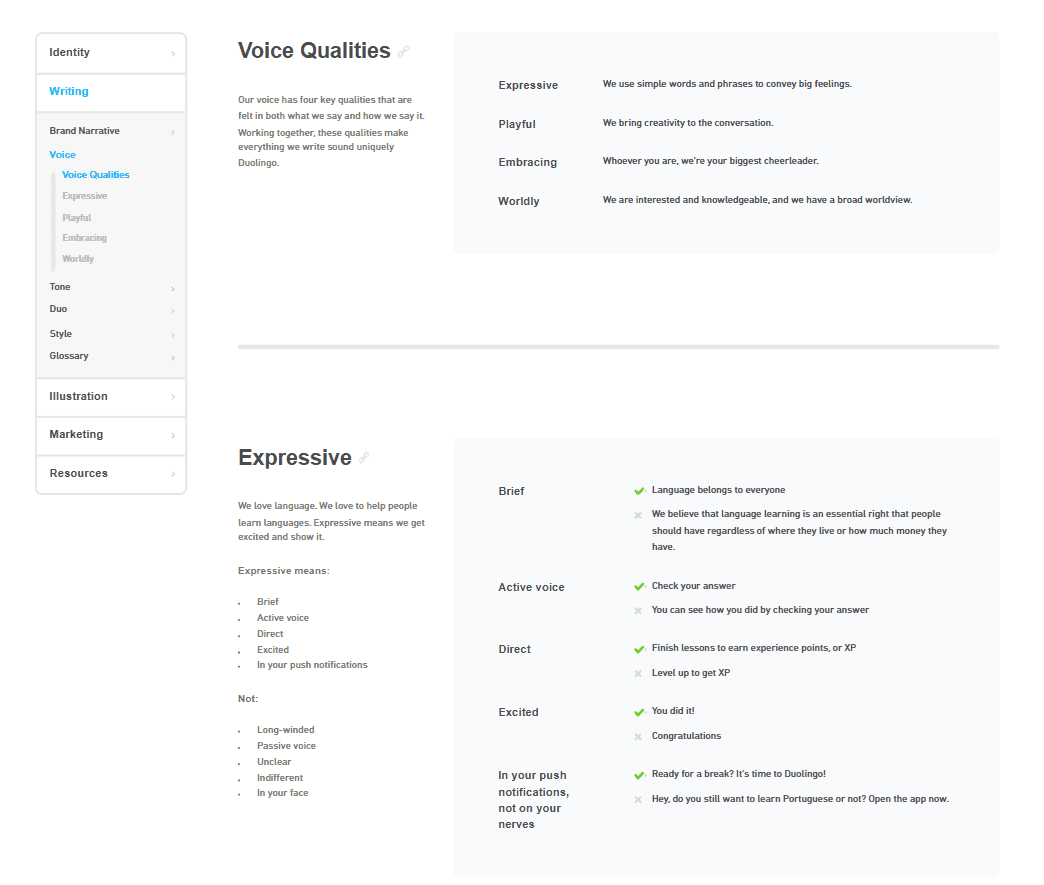
The following screenshot shows traits made concrete, so a writer can check a draft against a personality, not just against adjectives.
2. Create a brand voice guide with practical writing examples
Once you define your brand personality, document the rules in a brand voice guide.
A useful guide should help different writers produce content that feels like it belongs to the same brand. It should also give them enough flexibility to develop new ideas.
Include these five elements:
- Voice traits: Document three to five personality traits and explain how each one affects writing.
- What to do and what to avoid: Create a simple list of preferred and restricted writing behaviours.
- Vocabulary guidelines: List preferred words, expressions to avoid, and terms that should not appear in competitor comparisons or unsupported claims.
- Grammar and punctuation rules: Set standards for contractions, sentence length, numerals, punctuation, and casual language.
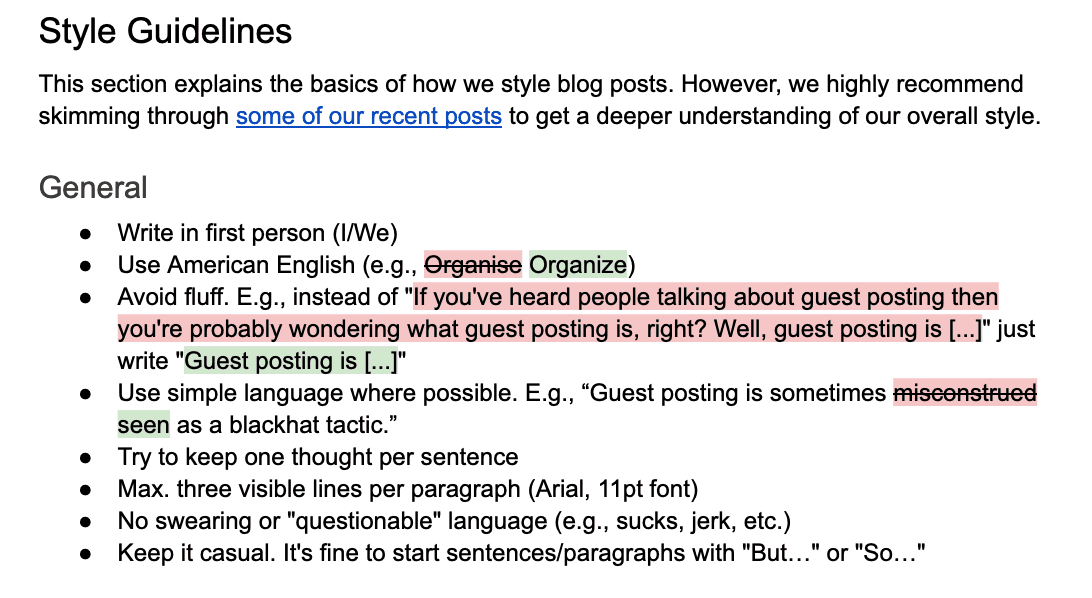
- Real writing examples: Include two or three approved examples and at least one example of content that does not match the brand voice.
Do not limit your examples to homepage copy or promotional content. Include different communication formats, such as a social media caption, a product description, and a customer support response.
Here’s an example of a brand style guideline document from Ahrefs:
AI tools can sometimes reuse existing phrases or produce content that closely resembles published material. Before publishing AI assisted content, check it for originality and unintended duplication.
You can also visit a plagiarism detector to identify matching text and review sections that may need rewriting. This helps your team maintain original messaging while following the brand's writing guidelines.
3. Build a messaging framework instead of repeating the same slogans
Brand voice consistency and message consistency are related, but they solve different problems.
Your brand voice defines how you communicate. Your messaging framework defines what you communicate and the different ideas you use to explain your value.
Repetition often starts when a brand relies on one strong positioning statement and uses it in every campaign.
Instead, build several message pillars around your core positioning.
For example, a UI UX design agency might use these messaging pillars:
Each pillar communicates a different part of the same brand story.
This approach allows content teams to explore different topics without changing the brand's core positioning.
For example, one article can explain why users leave poorly designed websites. Another can discuss how user research improves product decisions. A third can present a case study showing how a better user experience helped a business.
The messaging changes, but the brand's focus on user experience and business growth remains consistent.
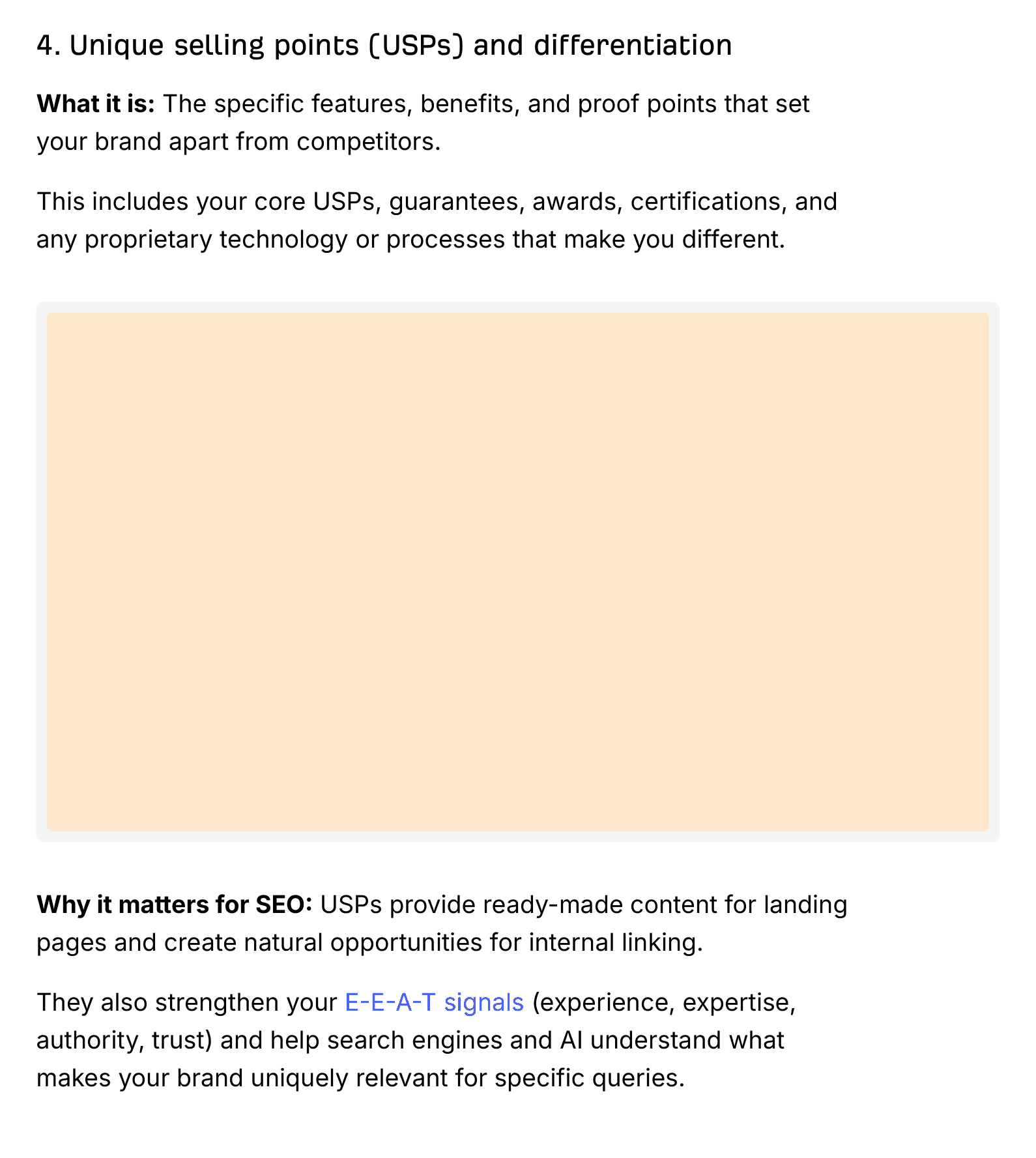
Screenshot: Ahrefs, SEO Brand Marketing, Unique selling points and differentiation section.
These sections show how to anchor different pillars to one positioning, so new topics do not pull the brand in different directions.
4. Change your content angles, examples, and proof points
You do not need a completely new message every time you publish content. You need a fresh way to communicate the message.
Start by changing the evidence and examples you use.
For example, if your brand wants to communicate that its product saves customers time, you can explain this benefit through:
- A customer example showing how the product reduced manual work.
- A process breakdown explaining how users complete tasks faster.
- A comparison between the old and new workflows.
- Data showing the time customers save.
- A product demonstration showing how a specific feature works.
The core benefit remains the same, but each piece provides different information.
You can also change the angle based on the reader's knowledge level.
A beginner might need a simple explanation of how a product works. An experienced user might want to understand its limitations, integrations, or advanced features.
Both pieces can maintain the same brand voice because the personality remains consistent while the information changes.
Finally, experiment with content structures. One article can start with a statistic, another with a practical problem, and another with a step by step process.
The goal is to reuse writing principles, not entire paragraphs or introductions.
5. Adapt your tone to different channels and situations
Your brand should sound recognisable across platforms, but each platform serves a different purpose.
A website page, email, social media post, and customer support reply should not follow identical writing rules.
Create a tone map that explains how your brand should communicate in different situations.
You should also account for situations that require a different tone.
For example, a billing issue needs direct and empathetic communication. A product launch can use a more energetic approach. A technical guide should focus on precision and clarity.
Document these tone changes in your brand voice guide. Include a short example for each situation so writers can understand the difference.
6. Give writers creative freedom within brand guidelines
A brand voice guide should provide direction, not restrict every writing decision.
Writers need room to experiment with headlines, introductions, sentence structures, and content angles. Otherwise, they may produce technically consistent but repetitive copy.
Set clear boundaries around the elements that must remain consistent.
For example, all writers should follow the same brand personality, vocabulary preferences, positioning, and communication principles. However, they can choose different examples, hooks, and explanations based on the topic.
This becomes especially important when working with multiple writers, freelancers, and external agencies.
Share the same one page brand guide with everyone. Review their initial drafts against the documented rules rather than personal writing preferences.
When you find repeated issues, update the guidelines with specific examples. This helps the entire team improve instead of correcting the same mistakes in individual drafts.
7. Use AI writing tools without losing your brand personality
AI tools can help teams produce content faster, explore different messaging angles, and rewrite copy for different channels.
However, they need clear instructions to produce content that reflects a specific brand.
Start by providing the AI tool with your one page brand voice guide. Include personality traits, preferred vocabulary, restricted expressions, tone variations, and approved writing examples.
You should also give channel specific instructions.
For example, a prompt for a blog article should explain the expected level of detail, audience knowledge, and writing style. A social media prompt should focus on the platform, audience, and purpose of the post.
Ask the tool to explore different ways to communicate the same message instead of simply rewriting existing copy.
For example, if your original message is about improving website conversions through better UX design, ask for different angles based on customer problems, research findings, design decisions, and business outcomes.
Finally, review the generated content before publishing.
Check whether it follows the brand guidelines, uses natural language, and introduces fresh information. Remove generic expressions and repeated phrases that do not add value.
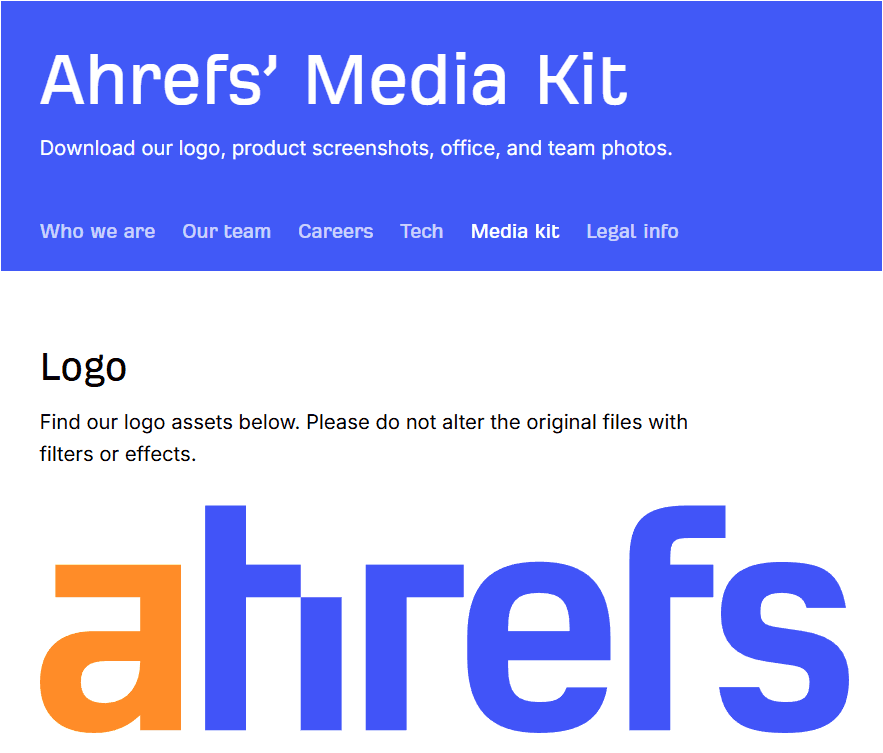
Ahrefs also highlights the importance of using brand kits to identify existing writing patterns and apply them when creating new content.
💡 The key principle is to give AI tools actual brand rules and examples rather than relying on broad instructions such as friendly and professional.
8. Audit your content regularly to identify inconsistencies
Brand voice consistency is not a one time task. Your content, audience, products, and communication needs change over time.
Review recently published content to identify where your brand voice starts drifting or becoming repetitive.
Select five recent pieces from different channels, such as a blog article, website page, social media post, email, and product announcement.
Compare each piece against your brand voice guide and ask:
- Does the content reflect the brand personality?
- Does it use the preferred vocabulary?
- Does the tone match the platform and situation?
- Does it introduce a fresh example, message, or angle?
- Does it sound like the same brand as the other pieces?
If a piece does not meet the guidelines, identify the reason.
Sometimes, the writer may have misunderstood a rule. In other cases, the brand guide may not explain a particular situation clearly enough.
Fix the content when the rules are clear. Update the guide when the rules need more explanation.
This feedback loop helps teams maintain consistency without forcing every new piece to follow an old writing pattern.
Brand voice consistency checklist
Before publishing content, use this checklist to make sure it reflects your brand identity without repeating existing copy.
- Can readers recognise the brand without seeing its logo or name?
- Does the content reflect the defined brand personality?
- Does it use a fresh example, proof point, or content angle?
- Does the tone match the reader's situation and the communication channel?
- Does it follow the preferred vocabulary and grammar rules?
- Does it avoid unnecessary repetition of previous headlines and introductions?
- Does it communicate something useful to the reader?
- Can another writer use the same guide to produce content that feels consistent with the brand?
If you cannot answer yes to these questions, check whether the content needs revision or the brand guidelines need clarification.
Examples of brands that maintain a consistent voice without repetitive copy
Looking at how established brands communicate across different channels can help you understand how voice consistency works in practice.
Ahrefs
Ahrefs uses a direct and practical communication style across its educational content. Its articles often explain concepts through steps, data, and examples rather than relying on promotional language.
The topics and formats change, but the communication approach remains recognisable. Readers can expect useful explanations and practical information.
Duolingo
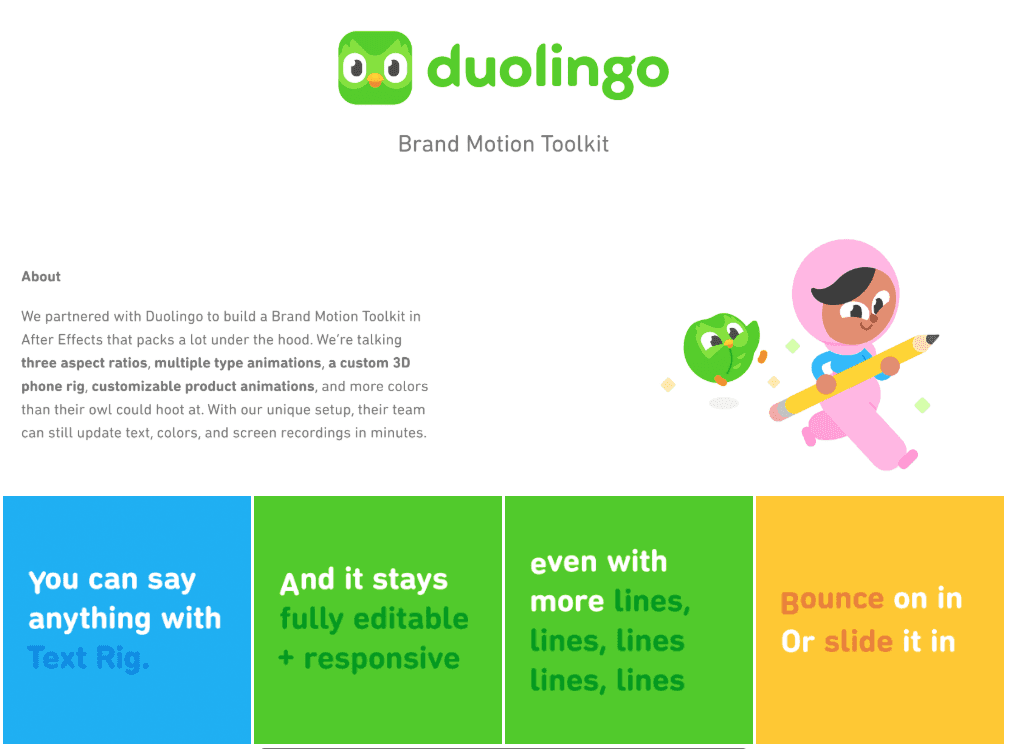
Duolingo uses a playful and expressive personality across its communication channels. Its voice remains recognisable in learning prompts, product messages, and social media content.
However, the brand does not need to use the same jokes or expressions in every situation. It adapts its communication while keeping its playful personality.
Tenet and ASDAV
Tenet's work with ASDAV, an interior design training institute, provides an example of how brand identity and communication can work together.
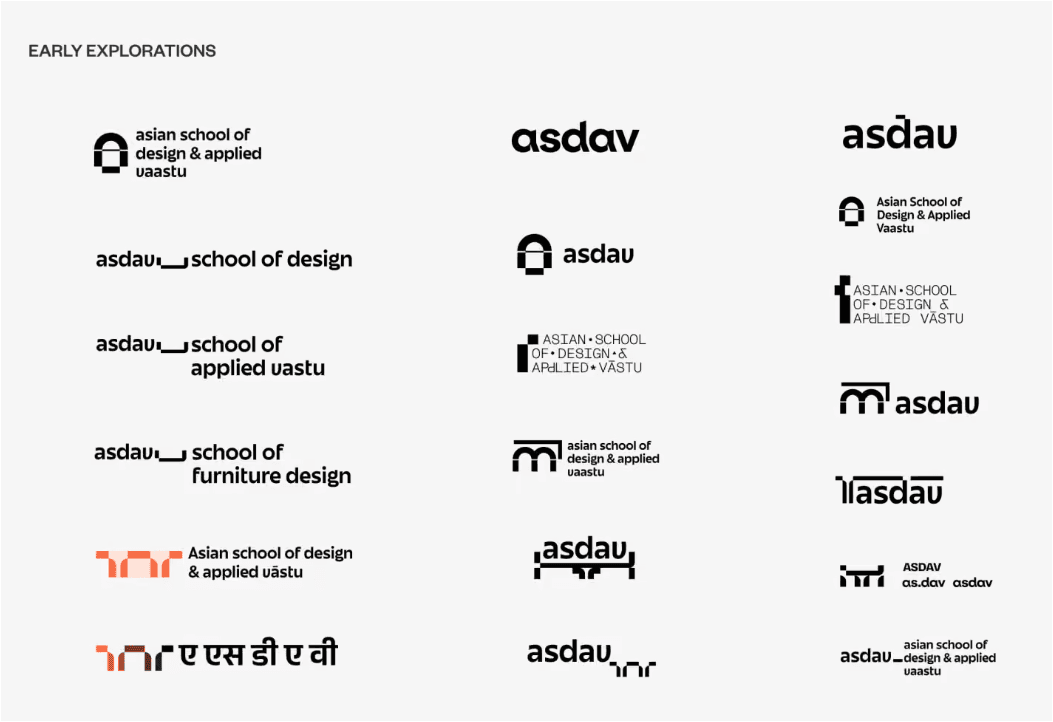
ASDAV needed a cohesive identity across its materials and platforms. Tenet developed an identity system based on values that could work across different markets and touchpoints.
The objective was not to create a static set of visual rules. It was to establish a consistent identity and voice that the organisation could apply across its communications.
1. How do you maintain a consistent brand voice across different platforms?
Create a brand voice guide that defines your personality traits, preferred vocabulary, grammar rules, and tone variations. Share it with everyone who creates content for your brand. Adapt the tone and content format to each platform while keeping the underlying personality consistent.
2. How can you make brand messaging sound less repetitive?
Build multiple messaging pillars around your core brand positioning. Use different customer problems, examples, proof points, and content structures to communicate your value. Avoid copying the same headlines, introductions, and promotional phrases across different channels.
3. What should a brand voice guide include?
A brand voice guide should include three to five personality traits with practical writing behaviours, a list of preferred and restricted words, grammar and punctuation rules, tone variations for different situations, and real content examples. A short version should be available for everyday use.
4. Can AI tools maintain a consistent brand voice?
Yes. AI tools can follow a consistent brand voice when you provide clear writing guidelines and approved content examples. Give them channel specific instructions and review their output to remove generic expressions, repeated phrases, and content that does not match your brand personality.
5. How often should you update your brand voice guidelines?
Review your guidelines when your brand launches a new product, enters a new market, changes its positioning, or shows repeated inconsistencies during content audits. Make small updates when needed instead of rewriting the entire document every year.
Expertise Delivered Straight to Your Inbox
Expertise Delivered Straight to Your Inbox


























Got an idea on your mind?
We’d love to hear about your brand, your visions, current challenges, even if you’re not sure what your next step is.
Let’s talk


