
Claude Mythos Is Here And It’s Not What You Expected
 By
By Share

Share
Get a quick blog summary with



When Anthropic introduced Claude Mythos, it didn’t follow the usual pattern of AI launches. There were no benchmark comparisons, no performance claims, and no wide public rollout. Instead, what surfaced was a tightly controlled system with capabilities that immediately raised concerns across cybersecurity circles, enterprises, and regulators. This is not only the other model iteration but also it is a restricted deployment of an AI system with real-world offensive and defensive security implications.
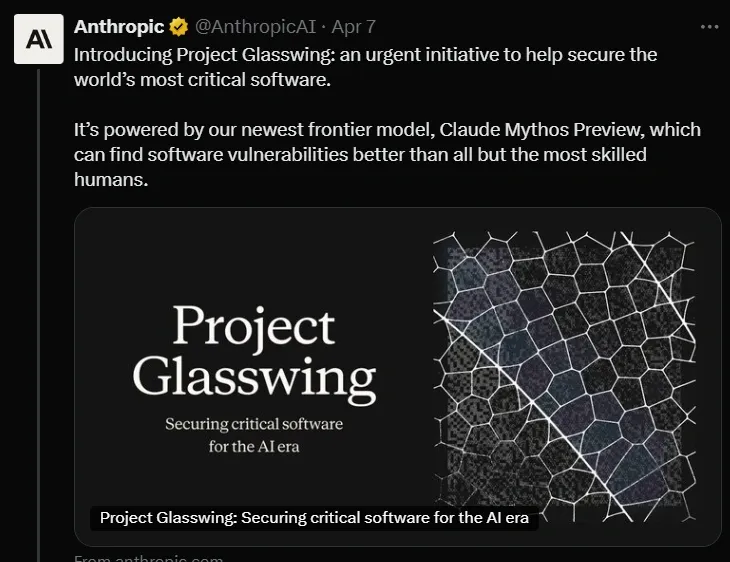
You can read The Claude Mythos Preview system card is available here
What Claude Mythos Actually Does
Claude Mythos is designed to operate at a level far beyond typical code analysis tools or AI debugging systems. Based on early reports and limited partner access, the model demonstrates the ability to identify vulnerabilities that have historically required highly skilled human researchers.
More importantly, it does not stop at detection.
Mythos can analyze large codebases, identify subtle flaws, and move toward generating viable exploit paths. In some cases, it has been able to uncover long-standing vulnerabilities and connect multiple weaknesses into a single exploit chain, a process that traditionally demands deep expertise and time.
This shifts AI from being a support tool to something much closer to an autonomous security operator.
At a high level, its capabilities include:
- Identifying zero-day vulnerabilities across systems
- Understanding complex, legacy code structures
- Generating exploit pathways by chaining vulnerabilities
- Operating across multi-step security workflows with minimal guidance
This is a meaningful leap, not because it makes AI “smarter,” but because it enables AI to act on that intelligence in high-stakes environments.
Why Anthropic Has Kept It Gated
Unlike most AI systems that are released widely and iterated in public, Claude Mythos has been deliberately restricted. Anthropic has limited access to a small group of trusted partners, and the reasoning behind this is directly tied to the model’s dual-use nature.
The same system that can help organizations detect and fix vulnerabilities can also be used to discover and exploit them.
If released without constraints, Mythos could:
- Accelerate vulnerability discovery at scale
- Automate exploit development
- Lower the expertise required to execute sophisticated cyberattacks
This creates a scenario where the risk is not hypothetical. The capabilities demonstrated by Mythos suggest that misuse could have immediate and widespread consequences.
As a result, Anthropic has chosen a controlled rollout strategy, prioritizing safety and coordination over speed.
The Gated Rollout: A Defense-First Approach
Instead of public access, Claude Mythos is being deployed through a limited program involving a small set of organizations. These include major technology companies, financial institutions, and infrastructure players.
The structure of this rollout reflects a clear objective: use the model to secure systems before similar capabilities become widely available.
Key aspects of this approach include:
- Access limited to a few dozen vetted partners
- Focus on defensive cybersecurity use cases
- Collaboration with organizations that manage critical infrastructure
- Significant internal investment to support testing and implementation
This is not about early adoption for growth.
It is about risk containment and preparedness.
Impact on Cybersecurity: What Changes
Claude Mythos is changing how cybersecurity teams operate, both immediately and at a structural level. What used to take weeks manual audits, deep code reviews, vulnerability testing can now be done much faster and with greater depth.
But the bigger shift is always continuity.
Security is moving from periodic checks to a more continuous process where systems are constantly scanned, issues are detected earlier, and fixes can begin before risks escalate. This allows organizations to stay ahead instead of reacting after damage is done.
At the same time, this creates a new challenge. If defenders can find vulnerabilities faster, attackers can eventually do the same. This reduces the gap between discovery and exploitation, making response time critical.
In simple terms, cybersecurity is no longer just human vs human.
It is becoming AI vs AI.
The Core Risk: When Capabilities Spread
The biggest concern around Claude Mythos is not just what it can do today, but what happens when similar systems become widely available.
AI capabilities historically do not remain restricted for long. Competing companies, open-source communities, and independent researchers tend to replicate and expand on new breakthroughs.
When that happens, the implications are significant:
- Advanced exploit development could become more accessible
- The barrier to entry for cyberattacks could drop
- Attack cycles could become faster and more automated
Anthropic’s decision to gate Mythos is, in many ways, an attempt to delay this scenario and give defenders a head start.
What This Means Going Forward
Claude Mythos changes how businesses should think about AI.
It’s no longer enough to ask what a model can do. The more important questions are how it behaves, how it is controlled, and what risks it introduces.
For cybersecurity teams, the shift is already clear. Security will become more automated, more continuous, and more dependent on AI. At the same time, response speeds will need to match faster, AI-driven threats.
This also points toward greater collaboration between companies, governments, and technology providers, especially as risks become more complex.
At Tenet, we are already seeing this transition play out. Businesses are moving toward building scalable, secure, and well-governed AI ecosystems, where performance and protection are treated as equally important components of long-term strategy.
The Real Signal Behind Mythos
Claude Mythos is not designed for mass adoption today, and that in itself is the most important signal.
For the first time, an AI system is being restricted not because it is incomplete, but because of the level of capability it has already reached. This marks a clear transition in how AI systems are perceived and managed.
It demonstrates that AI is now capable of operating in environments where the impact is immediate, the risks are tangible, and the consequences extend beyond individual users to entire systems and institutions.
This represents a new phase of AI development, one where capability alone is no longer the defining factor. Control, reliability, and responsible deployment are becoming equally critical.
And that is the shift businesses need to prepare for.
Expertise Delivered Straight to Your Inbox
Expertise Delivered Straight to Your Inbox




Got an idea on your mind?
We’d love to hear about your brand, your visions, current challenges, even if you’re not sure what your next step is.
Let’s talk


