
60+ Shocking AI Job Replacing Statistics Relevant for 2026
 By
By Share

Share

Get a quick blog summary with



AI is changing the global job market. Many reports now track how many jobs AI may replace, which roles face a higher risk, and where new jobs may grow.
This listicle roundup presents clear statistics about AI job displacement, workforce exposure, industry impact, and future job creation.
All data in this article comes from trusted research reports, industry studies, and global institutions. Source URLs are attached at the end of the article for reference.
Key AI Job Replacement Statistics for 2026
Here are the most important numbers from this report:
- 92 million jobs could be replaced globally by 2030 due to AI and other labor shifts.
- 47% of US workers are at risk of automation over the next decade.
- 77,999 tech jobs were cut in the first half of 2025 due to AI adoption.
- 34% of all work tasks could be fully automated by 2030.
- 14% of the global workforce, or about 375 million workers, may need to change careers by 2030.
- 80% of customer service roles could be automated in the coming years.
- 7.5 million data entry and administrative jobs could disappear by 2027 due to AI tools.
- 55% of people believe AI will eliminate more jobs than it will create.
How Many Jobs Could AI Replace Globally by 2030?
- By 2030, experts estimate that 92 million jobs worldwide could be replaced due to AI and other labour market shifts. That equals about 8% of today’s total global workforce.
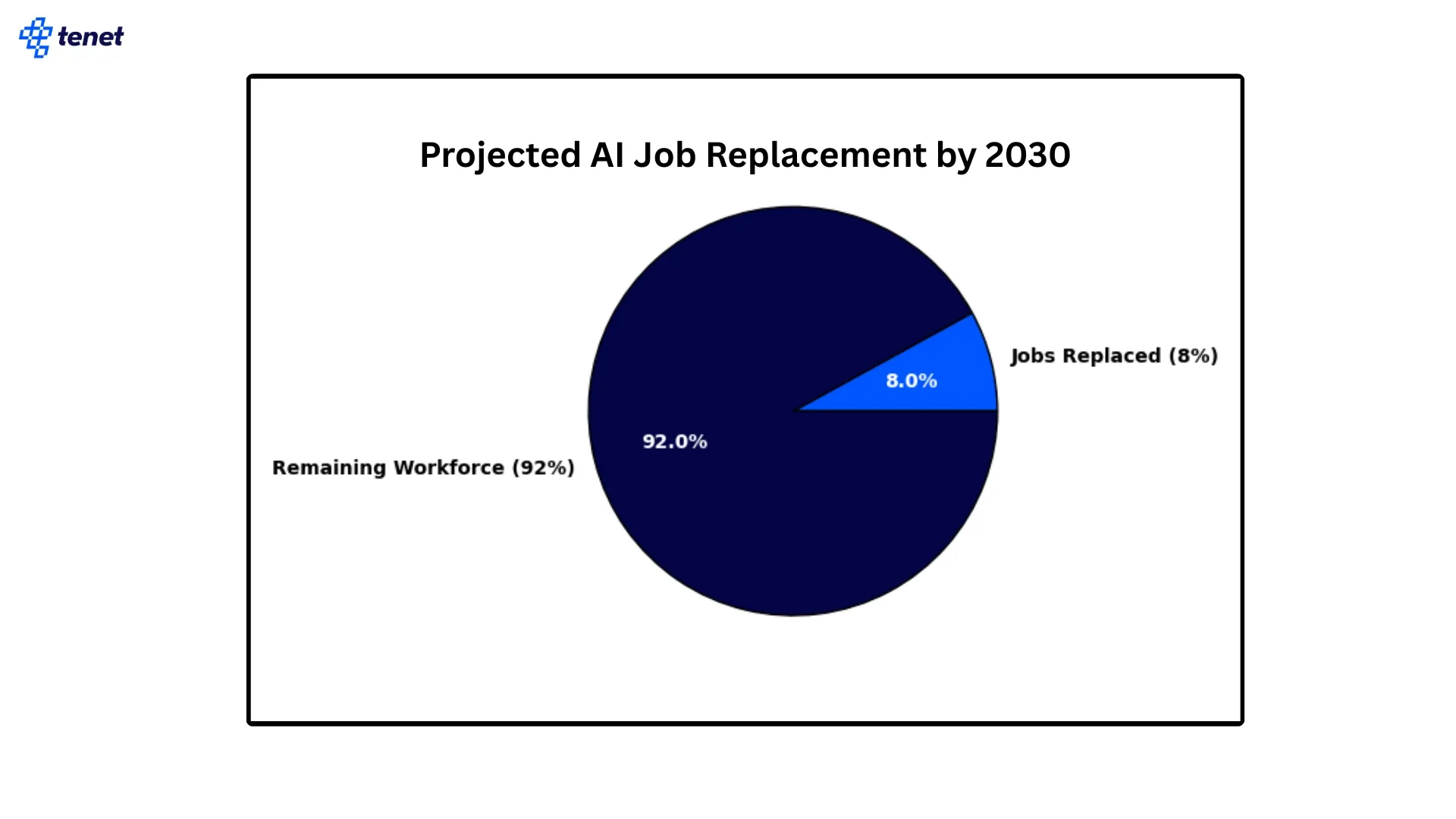
- Global manufacturing could lose 20 million jobs to automation tools by 2030, showing how machines are taking over jobs that involve routine physical work.
- AI was directly linked to 4.5% of all job losses reported in 2025, showing that AI and job loss is already happening.
- Between January and June 2025, companies reported 77,999 tech job cuts connected to AI adoption, which equals hundreds of people losing jobs every day.
- Wall Street banks expect to cut around 200,000 roles over the next 3 to 5 years as AI takes over entry-level and back-office tasks.
- Experts project that 2 million additional manufacturing jobs may disappear as robotics and AI systems expand in factories.
These numbers show that AI job replacement is already moving at a global scale. Manufacturing, banking, and tech are seeing early impact from automation tools. Millions of roles may disappear as companies increase efficiency. The AI job market is shifting faster than many expected.
How Many Workers Are at Risk of Losing Their Jobs to AI?
- A study found that 11.7% of the total US workforce could already be replaced by AI, which equals more than 1 in 10 workers.
- Over the next decade, 47% of US workers are at risk of losing their jobs to automation, indicating a high risk of large-scale job displacement.
- The IMF reports that 40% of jobs worldwide are exposed to AI, meaning AI could perform a major part of those roles.
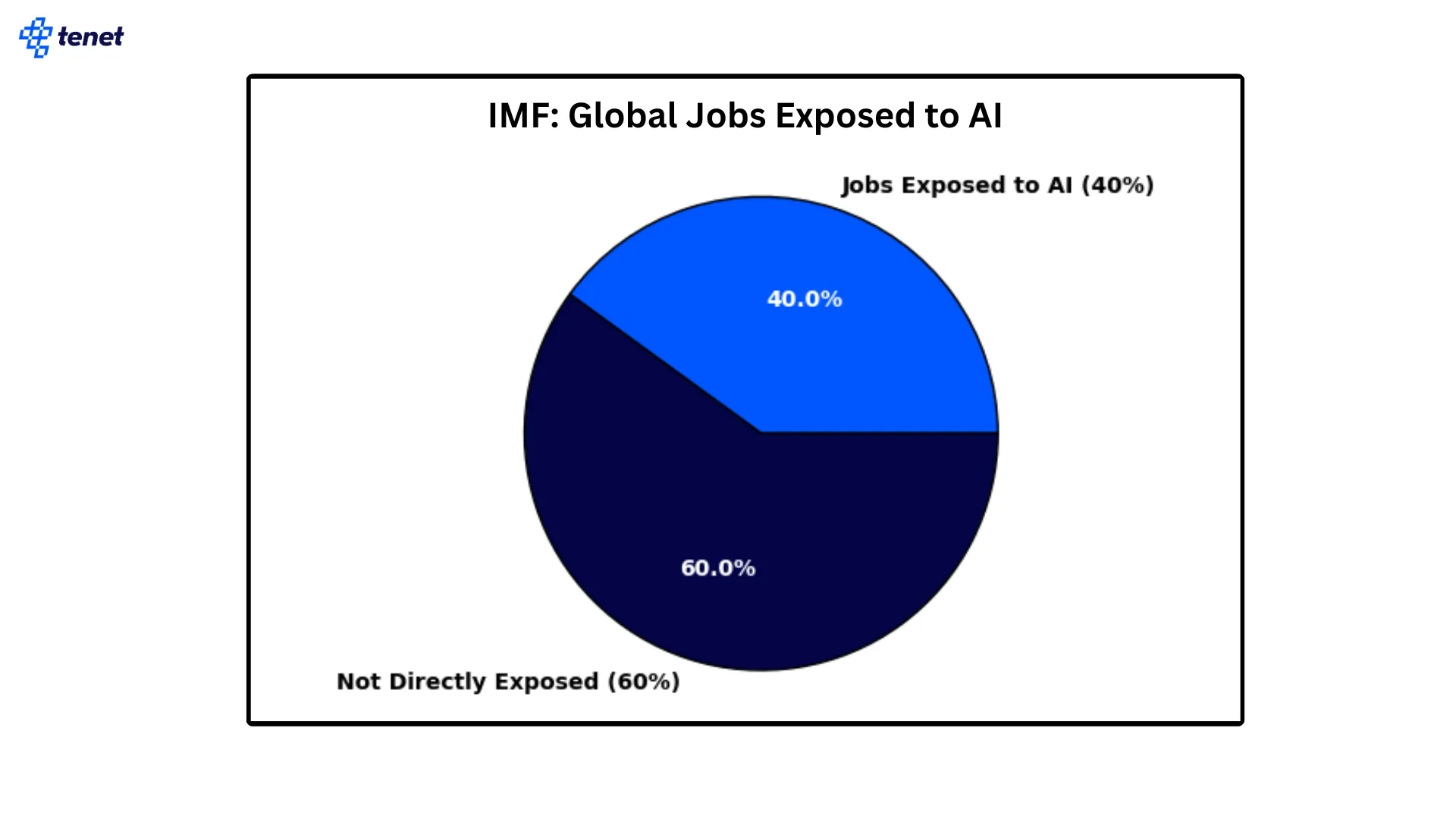
- In advanced economies, 60% of jobs could be impacted by AI, increasing concerns about AI taking over jobs in developed nations.
- Across the US and Europe, about two-thirds of all jobs face some level of automation exposure, showing the wide impact of artificial intelligence on employment.
- Around 19% of US workers could see more than half of their daily tasks affected by AI, increasing the likelihood that AI will replace jobs over time.
- Research shows that 80% of the US workforce could have at least 10% of their tasks influenced by large language models, especially in office roles.
- Only 23% of workers are currently in jobs least likely to be replaced by AI, meaning most workers face some level of disruption.
- Studies estimate that 25% of all current work tasks could be handled by AI systems, which shows how fast AI is taking over jobs at the task level.
- 27% of workers with a bachelor’s degree work in highly exposed jobs, compared to 19% with some college and 12% with only high school education.
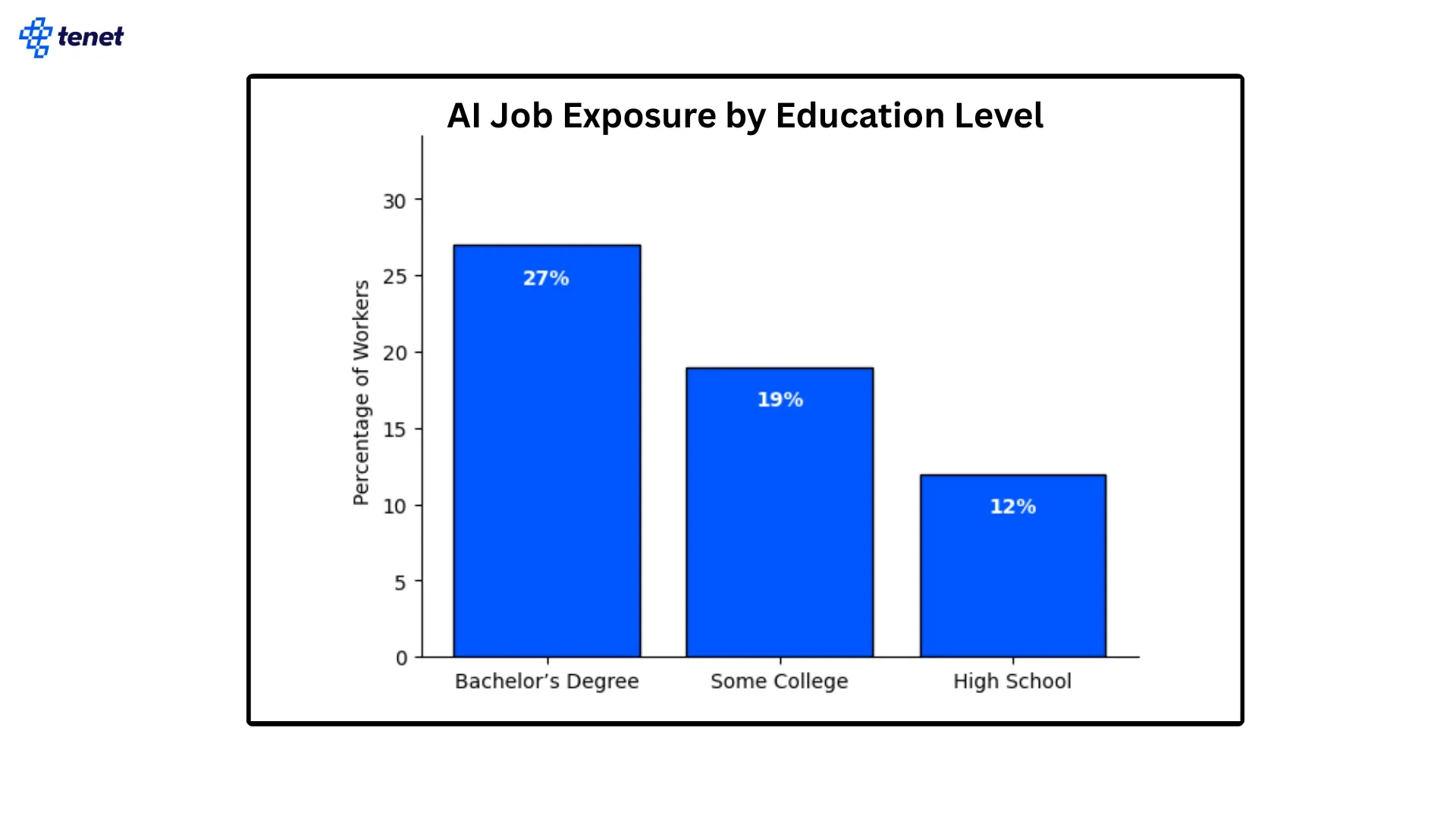
- In contrast, just 3% of workers without a high school diploma face high exposure, showing AI often targets white-collar roles.
Job exposure is much wider than confirmed layoffs. Many workers face task automation even if their job title stays the same. AI job replacement risk is highest in office and knowledge-based work. The long term workforce impact could be significant.
How Much of Today’s Work Can AI Already Do?
- Almost 49% of jobs can now use AI for at least 25% of their tasks, which shows that AI is already supporting or replacing part of daily work.
- Experts say that 60% of occupations could be impacted by AI by 2030, even if not fully replaced.
- Employers predict that 34% of all work tasks could be fully automated by 2030, which highlights the long term AI job replacement trend.
- AI systems can already assist with or complete 18,000 different work tasks across 1,000 job roles, with an estimated value of $4.5 trillion in the US economy.
- Research shows that AI exposure scores are rising by 9% every year, meaning AI capability is expanding fast.
- In nearly 77% of all jobs, the tasks that AI performs best are considered important or very important, which increases job displacement risk.
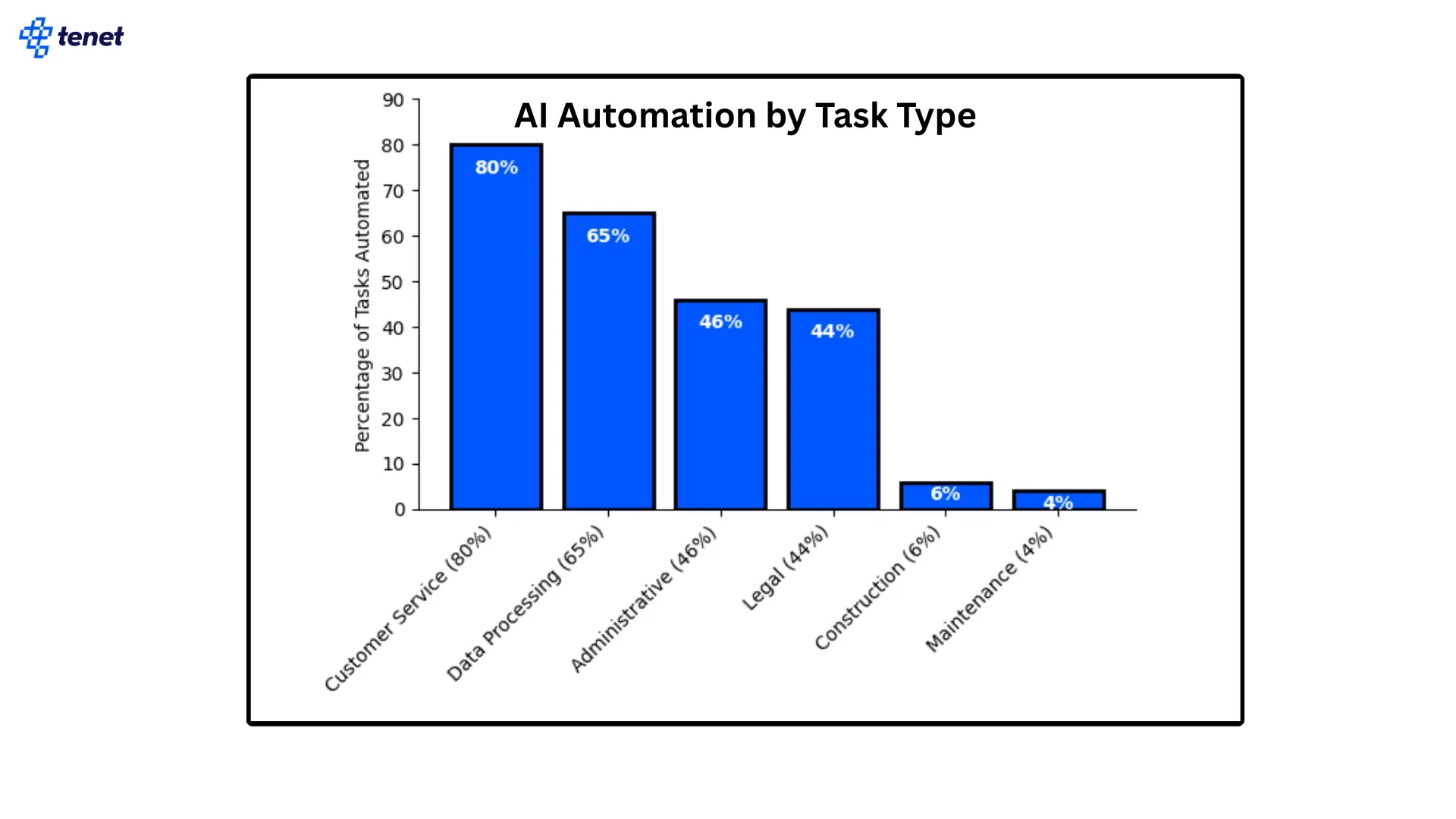
- Studies predict that 80% of customer service roles could be automated, putting millions of service jobs at risk.
- About 65% of data processing and information handling tasks could be automated, making office and back-end roles more vulnerable.
- Around 46% of administrative tasks and 44% of legal tasks can already be automated.
- While physical roles remain safer, with only 6% of construction tasks and 4% of maintenance tasks currently suitable for AI automation.
- At the same time, analysts estimate that it may take around 20 years to automate half of all current global work tasks, which means AI replacing jobs will happen in phases.
AI can handle data processing, writing, and administrative work with growing accuracy. This gradual automation increases pressure on routine roles. AI replacing jobs is happening step by step, not all at once.
Which Jobs Are Most Likely to Be Replaced by AI?
- Postal service clerks rank among the fastest declining roles through 2030, as digital systems replace manual processing work.
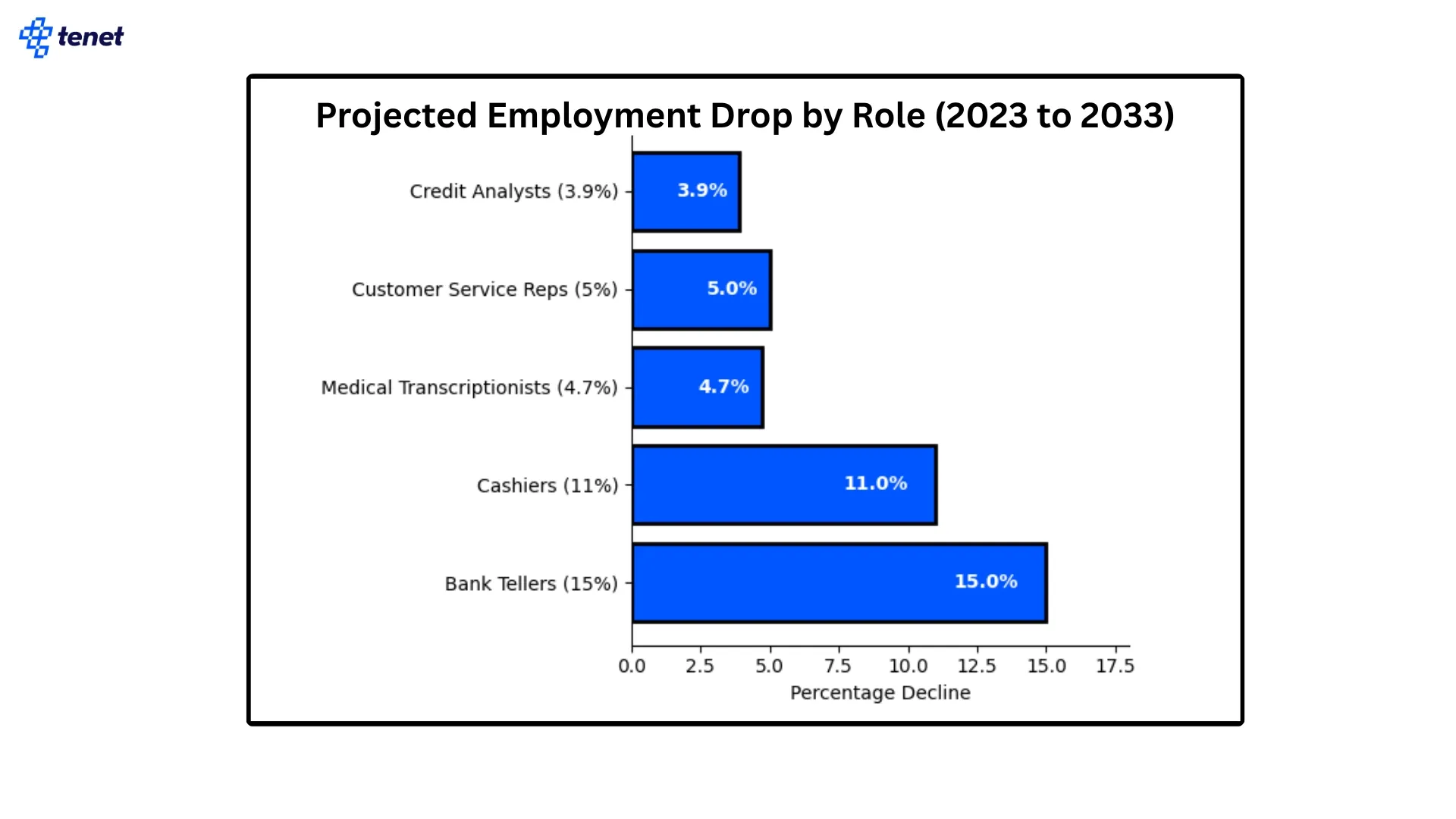
- Bank teller jobs are projected to drop by 15% between 2023 and 2033, which means over 50,000 positions could disappear.
- Cashier employment may fall by 11% in the same period, removing more than 350,000 retail jobs.
- Employment for medical transcriptionists is expected to decline by 4.7%, as speech-to-text AI tools improve.
- Customer service representative roles could shrink by 5%, with AI chatbots handling routine queries.
- Credit analyst positions are forecast to drop by 3.9%, as AI tools process financial risk faster than humans.
- Since 2000, automation has already eliminated 1.7 million manufacturing jobs, showing long-term job displacement due to AI and robotics.
- Reports suggest that 7.5 million data entry and administrative roles could disappear by 2027 as AI tools replace repetitive office work.
Roles built on repetition and predictable tasks face the highest risk. Retail support, banking clerks, data entry, and customer service are shrinking in many regions. Automation tools perform these tasks faster and at lower cost. Creative, physical, and human care roles remain more stable for now.
Are Companies Already Replacing Workers With AI?
- Around 30% of US companies have already replaced workers with AI tools, and that number could rise to 38% soon.
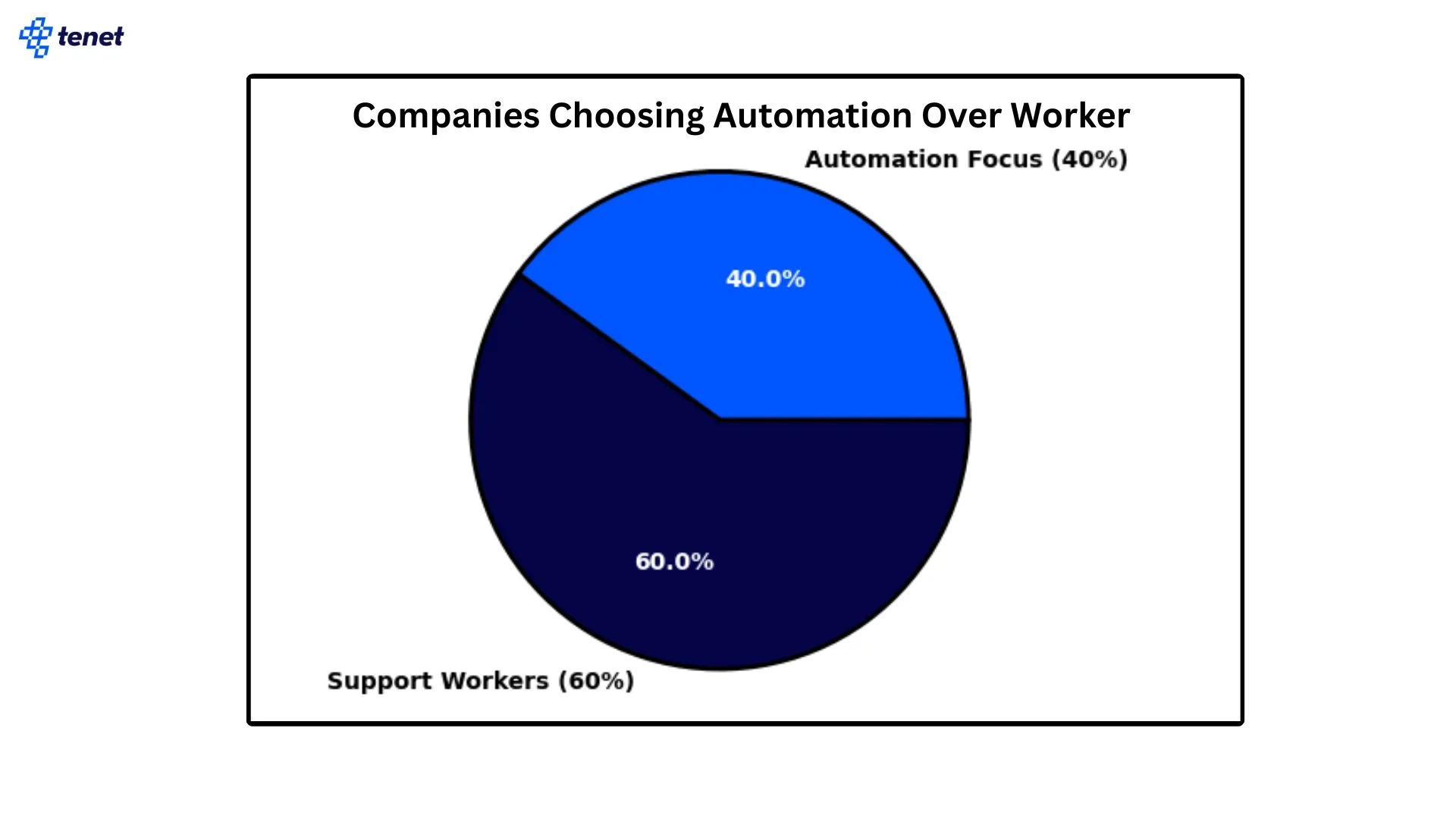
- Nearly 40% of companies that adopt AI choose automation instead of using AI to support workers, which increases job displacement due to AI.
- About 1 in 6 employers expect AI to reduce headcount in 2026, showing that AI job losses may continue.
- Reports show that AI contributed to 4.5% of total job losses in 2025, proving that AI and job loss are already measurable.
- Large private sector firms show higher risk, as 26% expect workforce cuts linked to AI adoption.
- In just the first six months of 2025, 77,999 tech jobs were directly tied to AI-driven layoffs, which equals hundreds of people losing jobs each day.
- Wall Street banks plan to remove approximately 200,000 jobs over the next 3 to 5 years, especially in entry-level and back office roles.
Companies are actively using AI to reduce staffing and automate workflows. Large firms lead this shift because they invest more in technology. AI-driven layoffs show that automation is already part of cost-cutting strategies. This trend may continue as tools improve.
Will AI Force Millions of People to Change Careers?
- By 2030, about 14% of the global workforce may need to switch careers because of AI-driven disruption, which equals nearly 375 million workers worldwide who could face major job changes due to AI.
- Young workers feel a stronger impact, as data shows a 13% decline in employment among workers aged 22 to 25 in AI-exposed roles.
- In advanced economies, 60% of occupations could be impacted by AI by 2030, increasing pressure to adapt.
- Service roles such as customer support may see up to 80% automation, reducing traditional job paths.
- Exposure to AI continues to grow each year, rising by around 9% annually, which means career disruption could speed up.
AI will reshape many roles, even if it does not fully remove them. Workers may need to learn new skills to stay competitive. Career transitions could increase as automation spreads across industries. Reskilling will play a key role in adapting to AI job displacement.
Are Workers Afraid That AI Is Taking Over Jobs?
- About 32% of US workers believe AI will lead to fewer job opportunities, showing strong concern about AI job displacement.
- More than 43% of workers worry that using AI at work could make their job obsolete, which reflects the fear of AI replacing jobs.
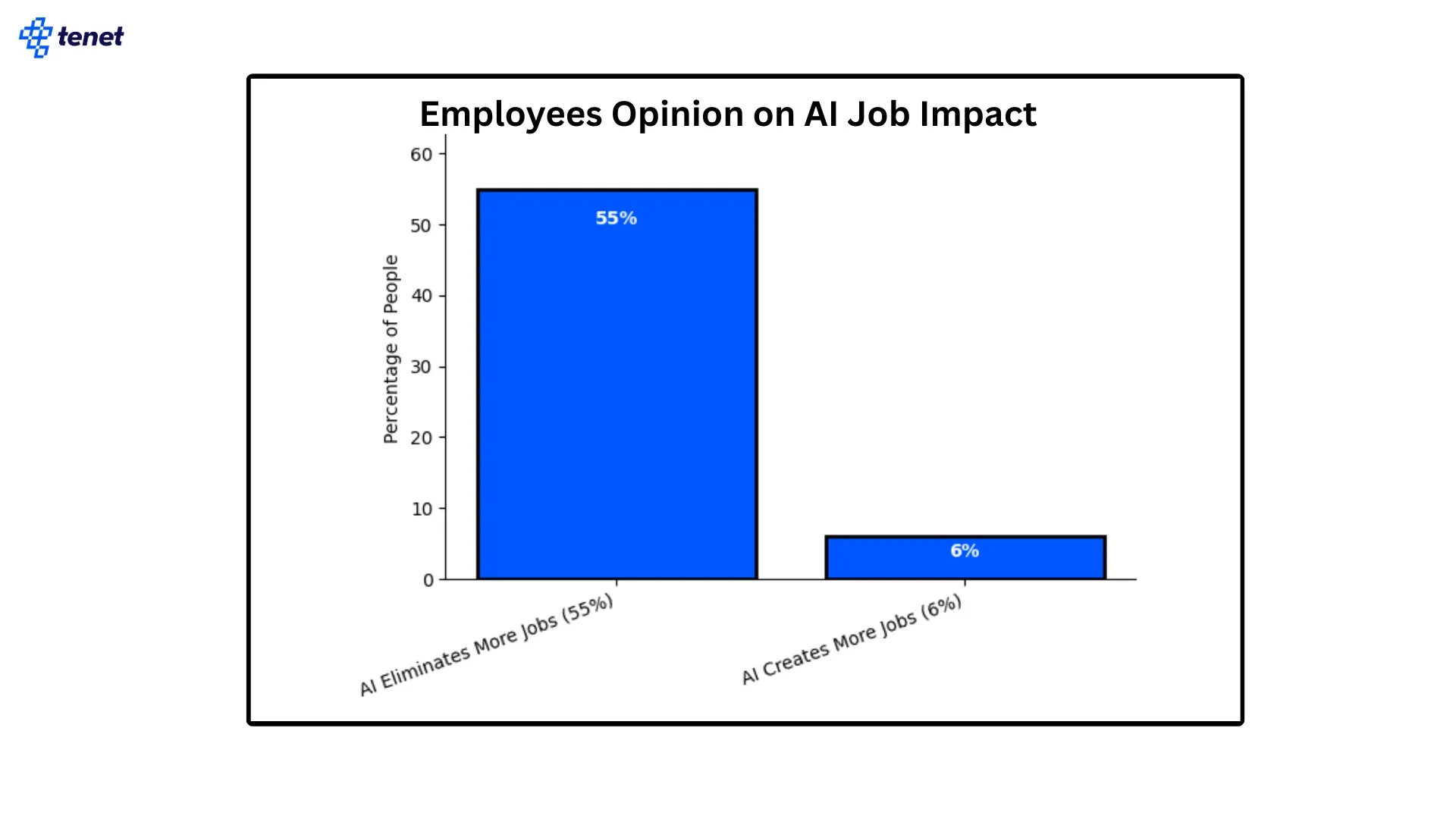
- Around 55% of people think AI will eliminate more jobs than it will create, increasing anxiety about AI job replacement predictions.
- Only 6% of workers believe AI will create more job opportunities in the long run, which shows limited optimism.
- Among young adults aged 18 to 24, 52% worry that AI will negatively impact their future careers, which shows higher stress among early-career workers.
- Younger workers are 129% more likely to fear job loss from AI compared to older workers, showing a clear age gap.
- In one survey, 38% of Asian workers said they fear AI will replace their jobs, compared to lower concern among other groups.
- Fully remote workers are 42% more likely to believe AI will disrupt their job, suggesting that digital roles face a higher perceived risk.
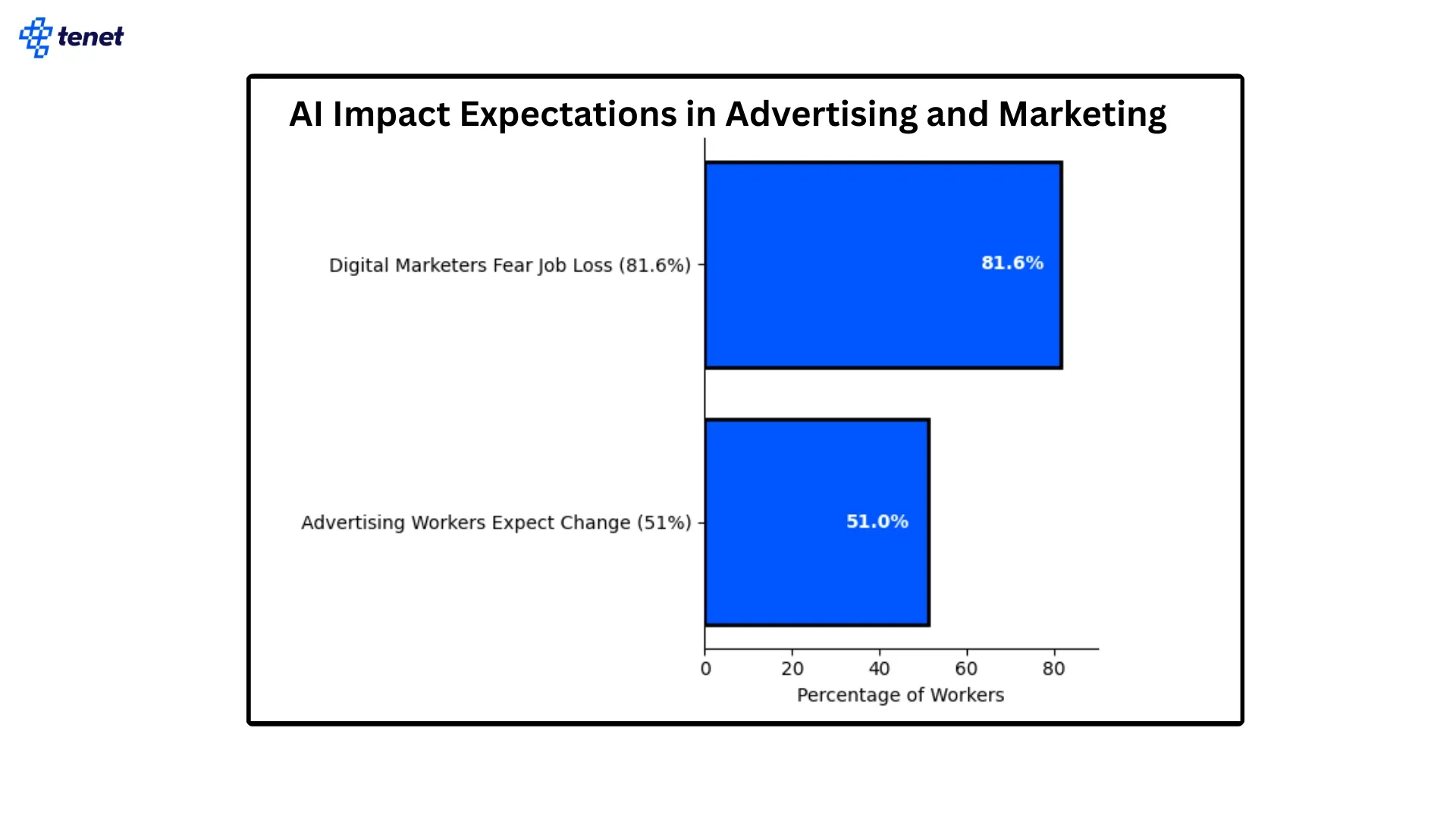
- In advertising and marketing, 51% of workers expect their jobs to change due to AI, especially with generative AI in the workplace.
- In the marketing industry, 81.6% of digital marketers believe content writers will lose jobs due to AI, showing strong concern about generative AI replacing creative roles.
Public concern about AI job loss continues to rise. Younger workers feel stronger fear about career stability. Many believe automation may reduce future job opportunities. This growing anxiety reflects uncertainty about the long term impact of AI on employment.
Will AI Create More Jobs Than It Replaces?
- By 2030, AI could help generate 170 million new jobs worldwide, which may offset many jobs replaced by AI.
- After subtracting expected job losses, experts predict a net gain of 78 million jobs globally, showing that AI job market impact may be positive overall.
- Between 2025 and 2030, Big Data Specialist is expected to see the largest net job growth worldwide, reflecting demand for AI-related skills.
- Software developer roles are projected to grow by 17.9% between 2023 and 2033, even as AI automates some coding tasks.
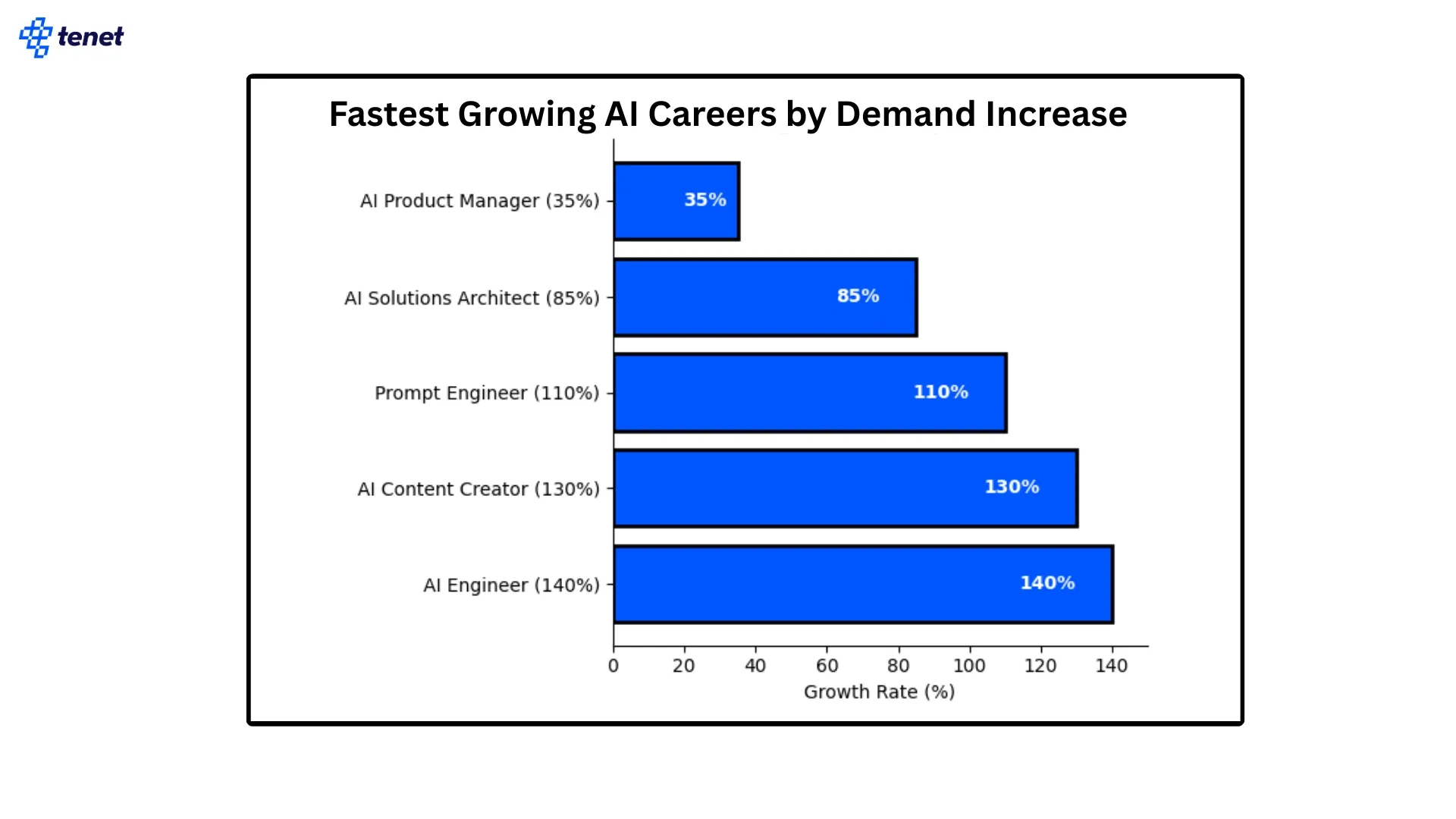
- AI Engineer roles show explosive growth, with demand rising by over 140%, making it one of the fastest-growing careers.
- AI Content Creator positions have grown by more than 130%, showing how generative AI in the workplace also creates new opportunities.
- Roles like Prompt Engineer, AI Solutions Architect, and AI Product Manager are growing at rates between 35% and 110%, proving that AI replacing jobs also creates new technical careers.
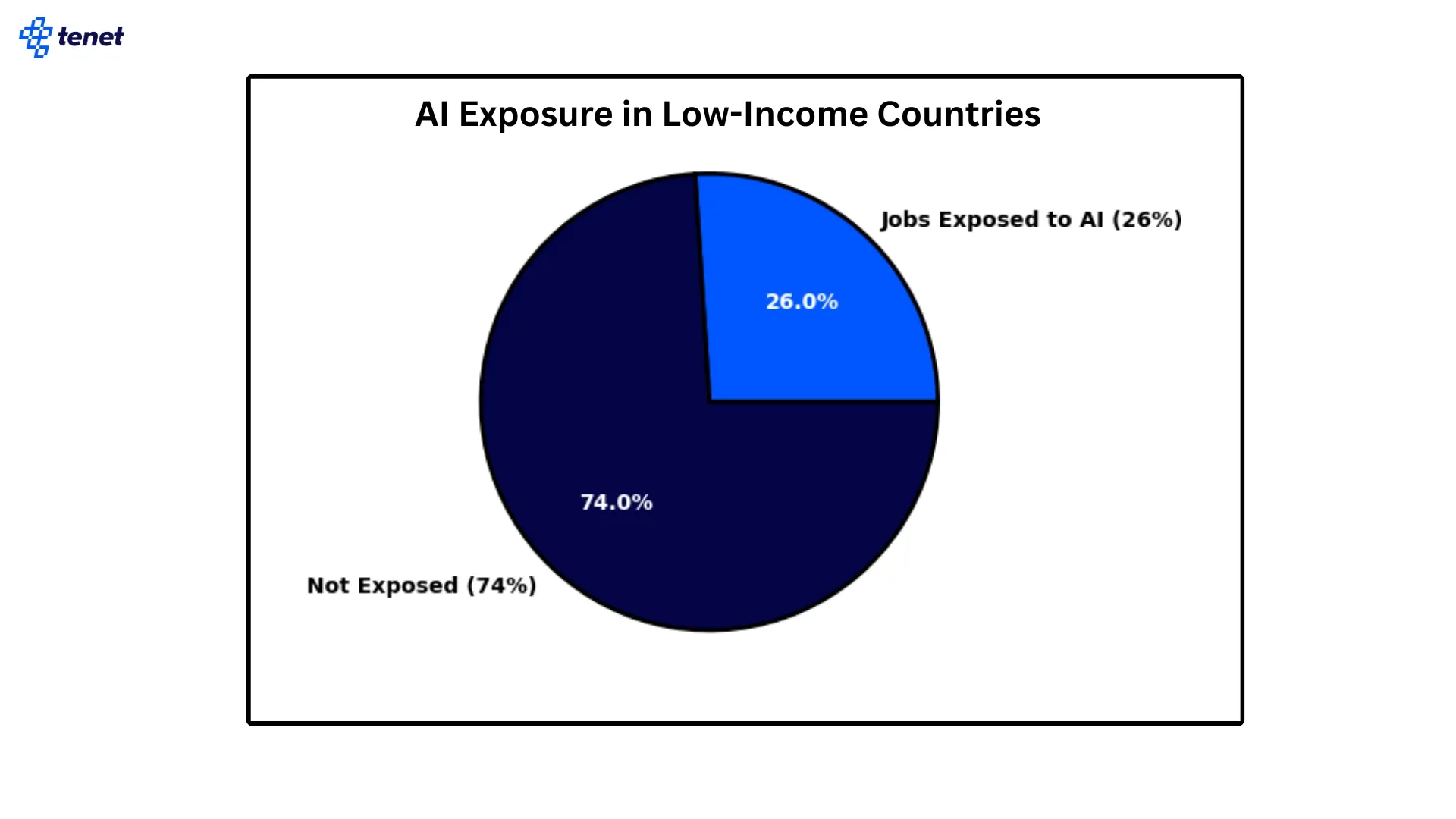
- Only 26% of jobs in low-income countries are exposed to AI, compared to much higher rates in advanced economies.
- Despite AI job displacement concerns, 63% of business leaders believe AI will not significantly reduce employment levels in high-income countries
AI is reducing routine roles but creating demand for new technical skills. Data, engineering, and AI-focused careers show strong growth. The overall job market impact may become positive over time. Success depends on how fast workers move into emerging roles.
Are Women or Men More at Risk of AI Job Displacement?
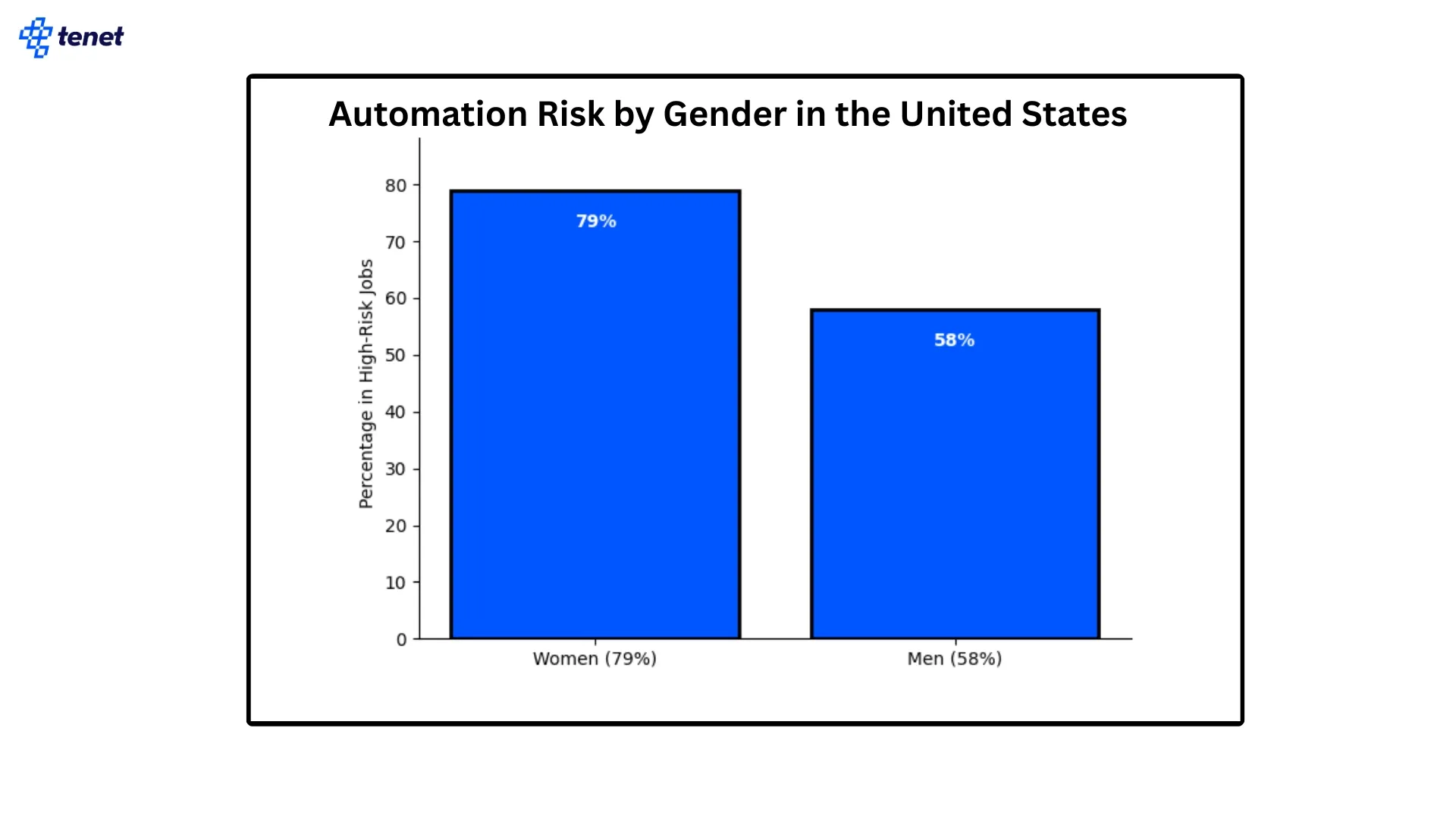
- In the United States, 79% of employed women work in jobs at high risk of automation, compared to 58% of men.
- In high-income countries, the gap is wider. Around 9.6% of women’s jobs are at the highest risk of automation, compared to 3.2% for men.
- Globally, about 4.7% of women’s jobs face severe disruption from AI, while only 2.4% of men’s jobs face the same level of risk.
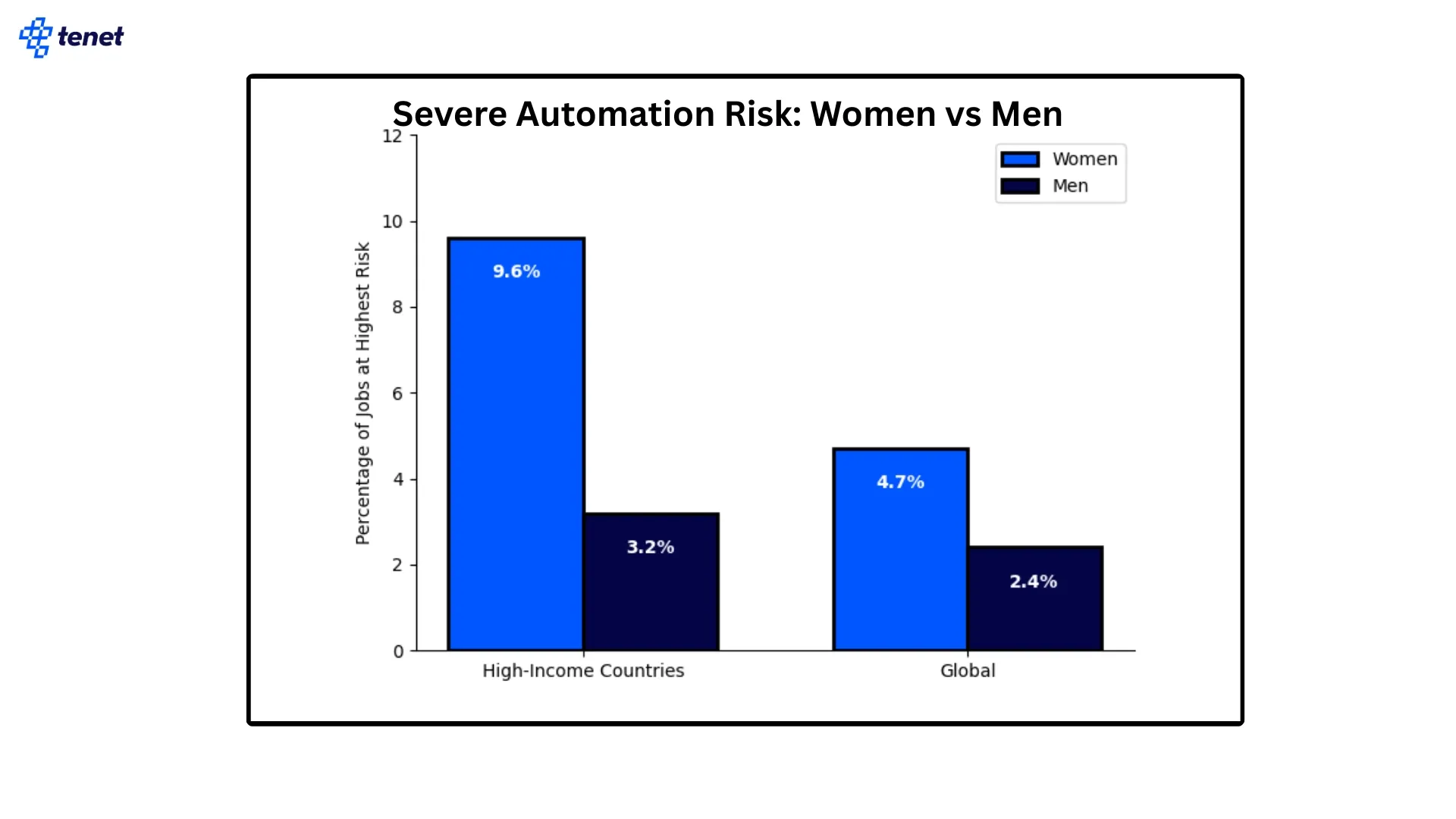
Automation risk differs across genders and industries. Women often work in administrative and office roles with higher exposure. Men are more represented in physical jobs that face slower automation. AI workforce impact depends heavily on job type and economic structure.
💡 Explore further resources
- Global AI Usage Statistics
- 200+ AI Agents Statistics: Usage, ROI, & Industry Trends
- 60+ AI SEO Statistics You Must Know
Final Words
Artificial intelligence is changing the global job market. Many routine and repetitive jobs are declining. Office support, data entry, retail, and some banking roles face high automation risk. AI and automation tools now handle many predictable tasks.
At the same time, AI is creating new jobs. Roles in data analysis, AI systems, software development, machine learning, and digital strategy are growing fast. The demand for digital skills is increasing across industries.
Surely, AI will replace some jobs, reshape many others, and create new career paths. The long term effect on employment depends on reskilling, workforce training, and how quickly businesses and governments adapt to AI-driven change.
Data Sources
- https://reports.weforum.org/docs/WEF_Future_of_Jobs_Report_2025.pdf
- https://www.huffingtonpost.co.uk/entry/is-ai-replacing-workers_uk_6960d472e4b0120ab25d0392
- https://patentpc.com/blog/manufacturing-job-impact-how-many-roles-are-being-replaced
- https://www.cnbc.com/2025/11/26/mit-study-finds-ai-can-already-replace-11point7percent-of-us-workforce.html
- https://www.euronews.com/next/2026/01/19/will-ai-replace-jobs-anthropic-report-finds-the-answer-is-not-so-straightforward
- https://ijsrem.com/download/the-impact-of-ai-and-machine-learning-on-job-displacement-and-employment-opportunities/
- https://www.bloomberg.com/news/articles/2025-01-09/wall-street-expected-to-shed-200-000-jobs-as-ai-erodes-roles
- https://arxiv.org/pdf/2303.10130
- https://www.weforum.org/press/2025/01/future-of-jobs-report-2025-78-million-new-job-opportunities-by-2030-but-urgent-upskilling-needed-to-prepare-workforces/
- https://cepr.org/voxeu/columns/impact-artificial-intelligence-growth-and-employment
- https://www.mckinsey.com/featured-insights/employment-and-growth/technology-jobs-and-the-future-of-work
- https://www.staffingindustry.com/news/global-daily-news/30-of-companies-swapped-workers-for-ai-in-2024-more-to-come
- https://www.finalroundai.com/blog/ai-replacing-jobs-2025
- https://edition.cnn.com/2025/05/29/tech/ai-anthropic-ceo-dario-amodei-unemployment
- https://builtin.com/artificial-intelligence/ai-replacing-jobs-creating-jobs
- https://journals.sagepub.com/doi/full/10.1177/23780231221131377
- https://www.nexford.edu/insights/how-will-ai-affect-jobs
- https://www.imf.org/en/publications/staff-discussion-notes/issues/2024/01/14/gen-ai-artificial-intelligence-and-the-future-of-work-542379?cid=bl-com-SDNEA2024001
- https://www.fortune.com/article/what-are-the-jobs-most-exposed-to-ai-microsoft-research/
- https://www.pewresearch.org/social-trends/2023/07/26/which-u-s-workers-are-more-exposed-to-ai-on-their-jobs/
- https://www.bbc.co.uk/news/technology-65102150
- https://time.com/6565026/ai-job-replacement-mit-study/
- https://www.weforum.org/publications/the-future-of-jobs-report-2025/in-full/2-jobs-outlook/
- https://www3.weforum.org/docs/WEF_Future_of_Jobs_2023.pdf
- https://www.imf.org/en/Blogs/Articles/2024/01/14/ai-will-transform-the-global-economy-lets-make-sure-it-benefits-humanity
- https://www.forbes.com/sites/jackkelly/2025/04/25/the-jobs-that-will-fall-first-as-ai-takes-over-the-workplace/
- https://www.pewresearch.org/social-trends/2025/02/25/u-s-workers-are-more-worried-than-hopeful-about-future-ai-use-in-the-workplace/
- https://explodingtopics.com/blog/ai-workforce-research#will-ai-take-your-job-we-asked-an-expert
- https://inews.co.uk/news/politics/ai-fear-jobs-uk-public-robots-act-against-human-interests-2385893
- https://seo.ai/blog/ai-replacing-jobs-statistics
- https://www.surveymonkey.com/curiosity/cnbc-workforce-survey-may-2023/
- https://www.nu.edu/blog/ai-job-statistics/
- https://papers.ssrn.com/sol3/papers.cfm?abstract_id=5316265
- https://www.demandsage.com/ai-job-replacement-stats/
- https://adsknews.autodesk.com/en/news/ai-jobs-report/
Expertise Delivered Straight to Your Inbox
Expertise Delivered Straight to Your Inbox


























Got an idea on your mind?
We’d love to hear about your brand, your visions, current challenges, even if you’re not sure what your next step is.
Let’s talk


