
10 Best eCommerce Platforms We Recommend to Our Clients
 By
By Share

Share
Get a quick blog summary with



Over the last 8 years, we have designed and built 400+ e-commerce websites for growing brands and helped companies migrate from one e-commerce platform to another as their business scaled. Through this work, we understand how different platforms support growth, integrations, and performance at various stages of a business.
Choosing a platform is one of the most important decisions an online store can make. The wrong choice can create technical debt, limit your ability to scale, and cost time and money to undo later.
In this guide, we share the e-commerce platforms we most often recommend to our clients, along with what each one does well and which types of businesses it serves best.
Here are the top recommended ecommerce platforms at a glance:
- Shopify → Best for fast setup and scaling without technical effort
- WooCommerce → Best for SEO-driven and content-heavy storeswith full control
- BigCommerce → Best for large catalogs and built-in enterprise features
- Adobe Commerce (Magento) → Best for complex, enterprise-level custom builds
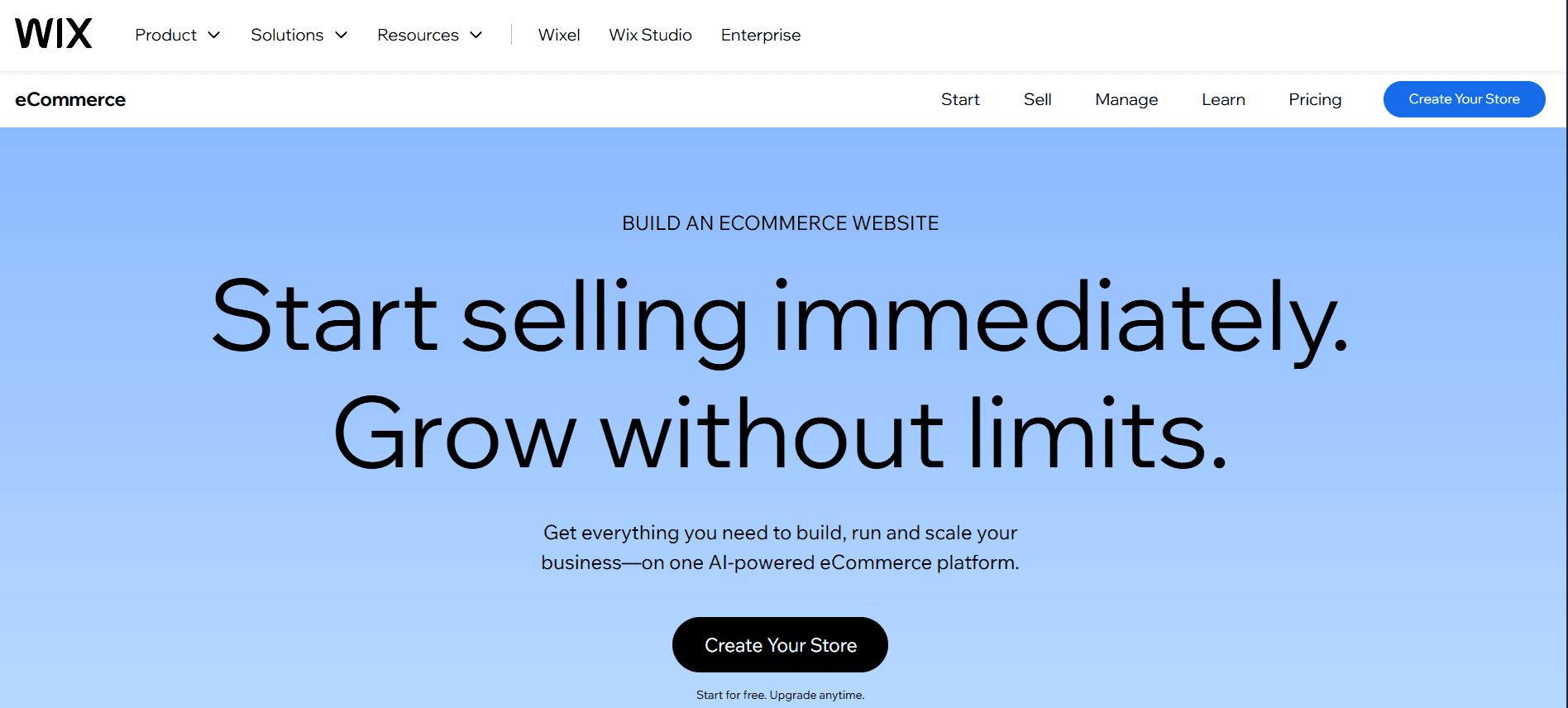
- Wix eCommerce → Best for beginners and small businesses
- Squarespace → Best for design-focused brands and creatives
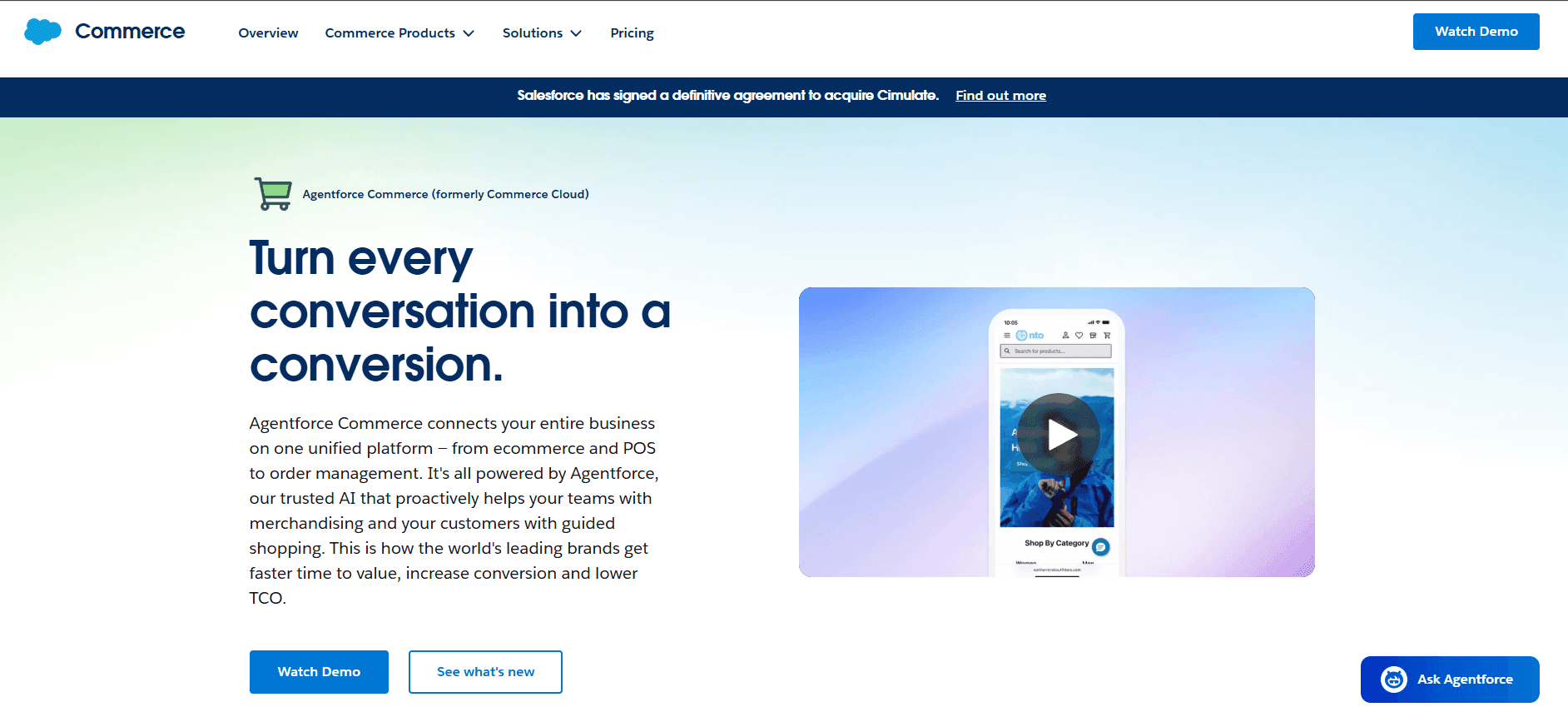
- Agentforce Commerce → Best for large enterprises using CRM and AI-driven personalization
- PrestaShop → Best for flexible open-source stores with lower enterprise cost
- Ecwid by Lightspeed → Best for adding eCommerce to an existing website
- Shopware → Best for experience-driven brands with a strong storytelling focus
When should you consider a custom eCommerce platform?
Standard platforms work for most businesses, but they can limit you as you grow.
A custom eCommerce CMS makes sense if you need unique features, complex integrations, or full control over your store experience. It helps you build faster, more flexible systems that match your exact business needs.
With a custom solution, you can improve performance, personalize user journeys, and scale without platform restrictions. If you are unsure whether a ready-made platform is enough, it is worth exploring a custom approach.
👉 Get a free consultation for our Ecommerce app development services:
1. Shopify

Useful features for e-commerce:
- Drag-and-drop store builder with the new Horizon theme engine offers over 250 professional templates, allowing you to build a high-performance storefront and run native A/B split tests on layouts without any coding.
- Shopify Payments is a built-in payment processor that removes third-party transaction fees and supports major credit cards, Shop Pay, and buy now pay later options.
- Inventory management tools now support up to 2,048 variants per product, allowing you to track complex stock levels across multiple physical and digital locations with automated low-stock alerts.
- Shopify App Store features over 10,000 specialized apps covering advanced logistics, loyalty programs, AI-driven marketing, and deep subscription management.
- Multichannel selling syncs your inventory across Instagram, TikTok, Facebook, Amazon, and eBay, and now includes a native Shopify for WordPress integration for external sites.
- Shopify’s AI & Agentic tools not only help to generate product descriptions but also to proactively build internal automation workflows, edit theme designs via chat, and simulate customer behavior to "stress test" your checkout.
- Built-in analytics and SimGym provide a real-time dashboard for sales trends and conversion data, using AI to predict future performance based on millions of industry data points.
👉 We have built and scaled over 120 Shopify stores for brands across industries, and if you want to see what that process looks like from discovery to launch, our Shopify design and development service page walks through our full approach.
Pricing:
Pricing for Shopify depends on your billing cycle; if you pay month-to-month, the Basic plan is $39, the Grow plan is $105, and the Advanced plan is $399.
However, you can reduce these costs to $29, $79, and $299 per month, respectively, by choosing annual billing. For enterprise-level needs, Shopify Plus starts at approximately $2,300 per month for a three-year commitment or $2,500 per month on a standard one-year term.
2. WooCommerce
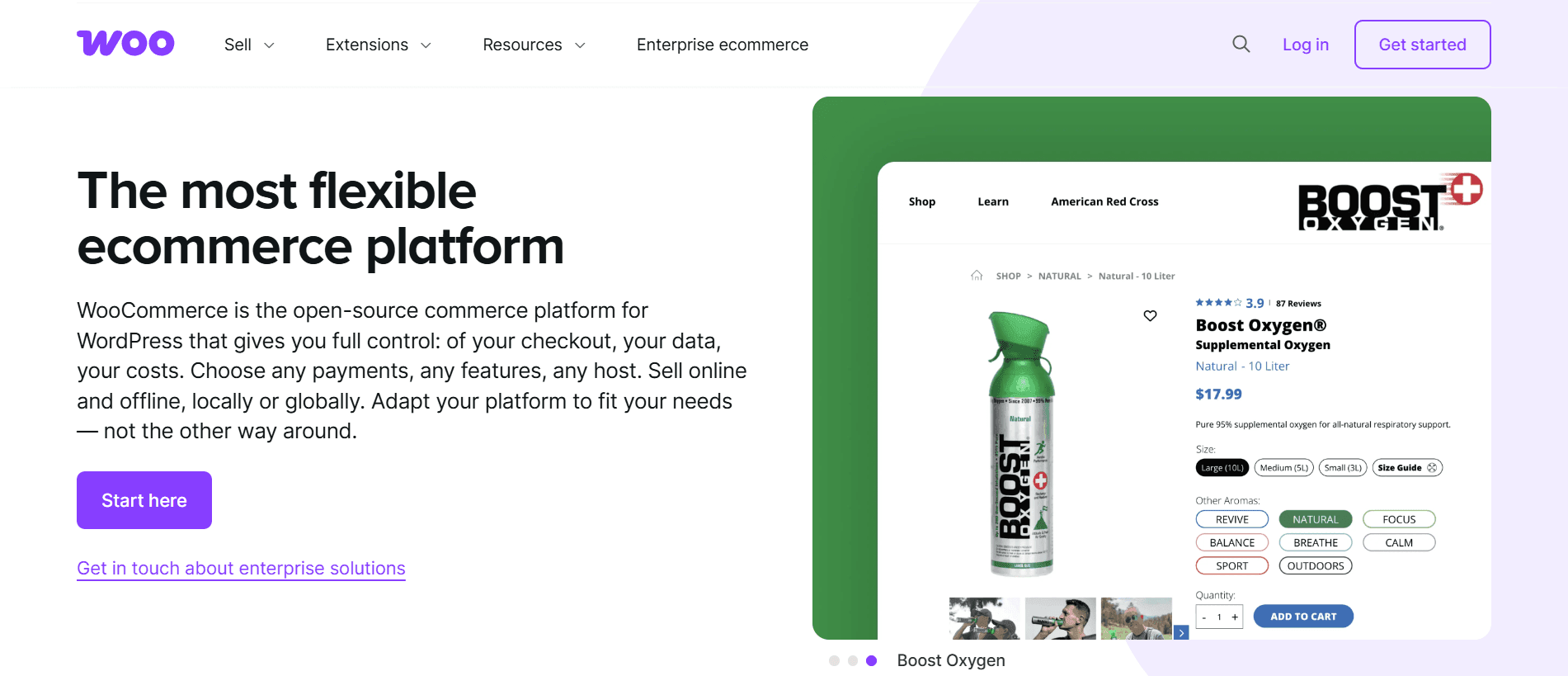
For WooCommerce stores where speed, security, and scalability matter, managed WordPress hosting like WP Engine can reduce maintenance overhead while helping you stay performant as traffic and product volume grow.
Useful features for e-commerce:
- Full WordPress Integration now defaults to a block-based architecture, allowing you to use Full Site Editing (FSE) to customize headers, footers, and product pages directly in the native editor without needing heavy page builders like Elementor.
- Essential Commerce in Core is a new initiative that has moved previously paid features into the free core plugin, including native Brand Management, Cost of Goods Sold (COGS) tracking, and Shipment Tracking.
- WooPayments (formerly WooCommerce Payments) is the standardized, built-in solution that now features one-click checkouts (Apple/Google Pay) and native Buy Now, Pay Later integrations as standard.
- High-Performance Order Storage (HPOS) is a major technical update that has improved order processing speeds by up to 5x, allowing the platform to handle much larger data volumes more reliably.
- AI-Native Operations now include Model Context Protocol (MCP) support, enabling AI assistants to securely manage store inventory, analyze sales data, and generate SEO-optimized content directly from the dashboard.
- Extensive Plugin Ecosystem has grown to over 10,000 extensions, with significant 2026 updates to WooCommerce Subscriptions and Bookings, which now support flexible "pause/resume" cycles and automated failed payment recovery.
- SEO & Open-Source Codebase remains the platform's biggest strength, but it now prioritizes "Interaction to Next Paint" (INP) optimization to meet Google's 2026 ranking standards for mobile responsiveness.
👉 WooCommerce's flexibility depends heavily on what is built on top of it. Our WordPress development services cover how we help brands avoid the usual technical pitfalls.
Pricing:
The WooCommerce plugin is free to download and use, but your total costs will depend on your managed hosting plan (typically $15–$50 per month) and a domain name ($10–$20 per year).
For a professional setup, you should also budget for premium extensions and themes, which generally range from $50 to $300 annually, depending on your store's complexity.
3. BigCommerce
Useful features for e-commerce:
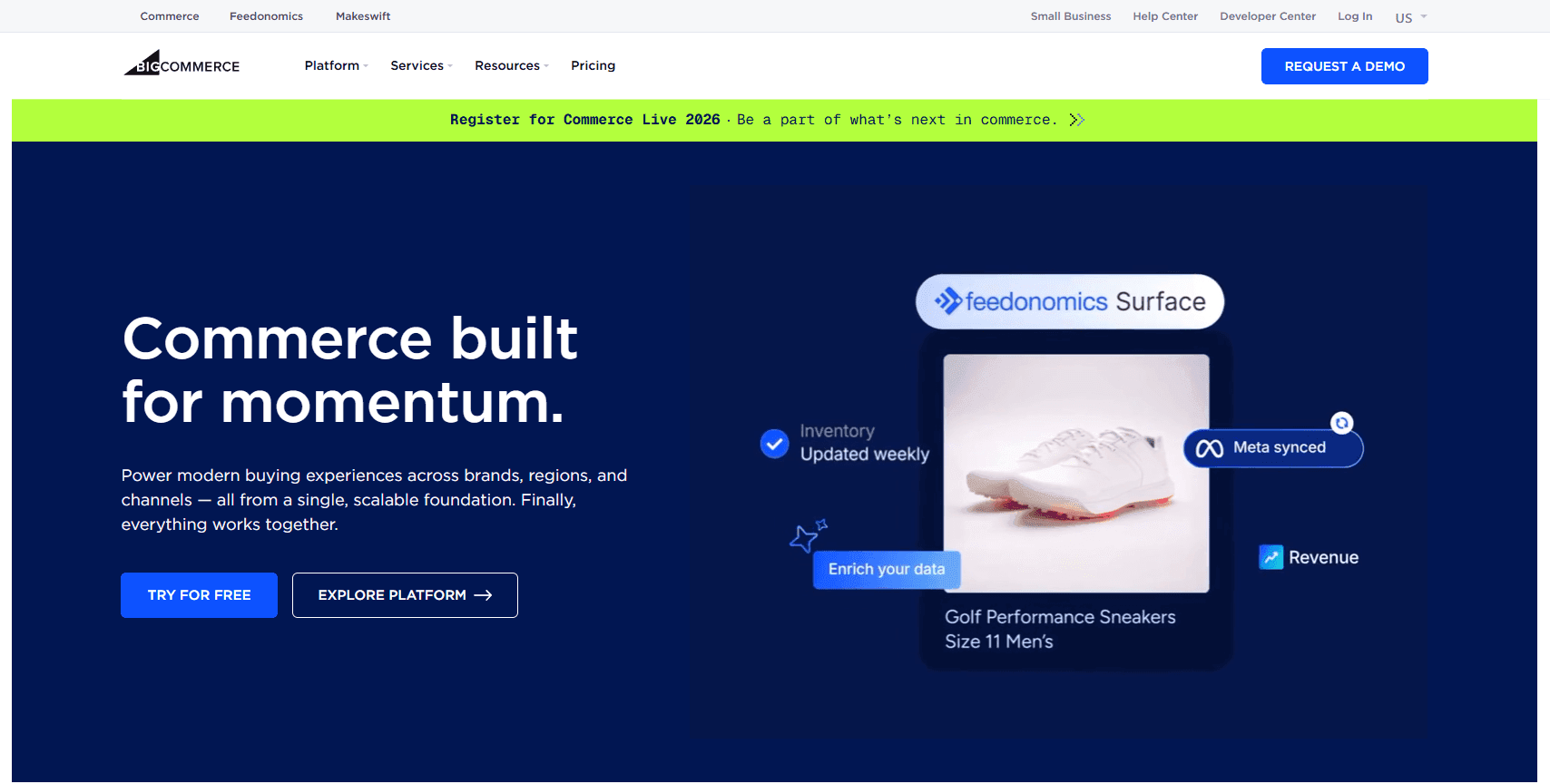
- Zero transaction fees remain a core advantage across all plans, allowing you to keep more of your margin regardless of whether you use PayPal, Stripe, or their native BigCommerce Payments powered by Adyen.
- Catalyst & Makeswift integration now provides a sub-second "headless" storefront experience out of the box, combining the speed of custom-coded sites with a visual drag-and-drop editor.
- Advanced native SEO handles technical heavy lifting automatically, including auto-generated microdata, customizable URL structures, and high-performance image CDN hosting to meet 2026 Core Web Vitals.
- B2B Edition is now deeply integrated into the core platform, offering native support for purchase orders, shared company credit lines, and SKU-level price lists without requiring a separate login.
- Multi-Storefront (MSF) has been expanded to allow different languages, currencies, and localized inventories for up to five distinct storefronts on a single Standard or Plus account.
- Omnichannel linking natively syncs your catalog with TikTok Shop, Amazon, and Walmart, featuring real-time global inventory updates to prevent overselling across 100+ global marketplaces.
- AI Metadata & Personalization tools now use Google Cloud’s Vertex AI to automatically generate SEO tags and personalized product recommendations based on real-time shopper intent.
- Open API architecture supports over 400 API calls per second, making it the industry leader for "headless" setups where the backend connects to custom mobile apps or IoT devices.
👉 Stores with large catalogs and complex pricing structures need more than a good platform; they need a checkout and navigation experience designed around how their buyers actually behave, which is something our eCommerce UI UX design services are built specifically to solve.
Pricing:
BigCommerce pricing is based on your store's annual sales volume; the Standard plan costs $39 per month for up to $50k in sales, the Plus plan is $105 per month for up to $180k, and the Pro plan is $399 per month for up to $400k.
If your annual sales exceed these thresholds, you will be moved to an Enterprise tier with custom quoted pricing that typically starts around $1,500 to $2,500 per month.
4. Adobe Commerce (Magento)
Useful features for e-commerce:
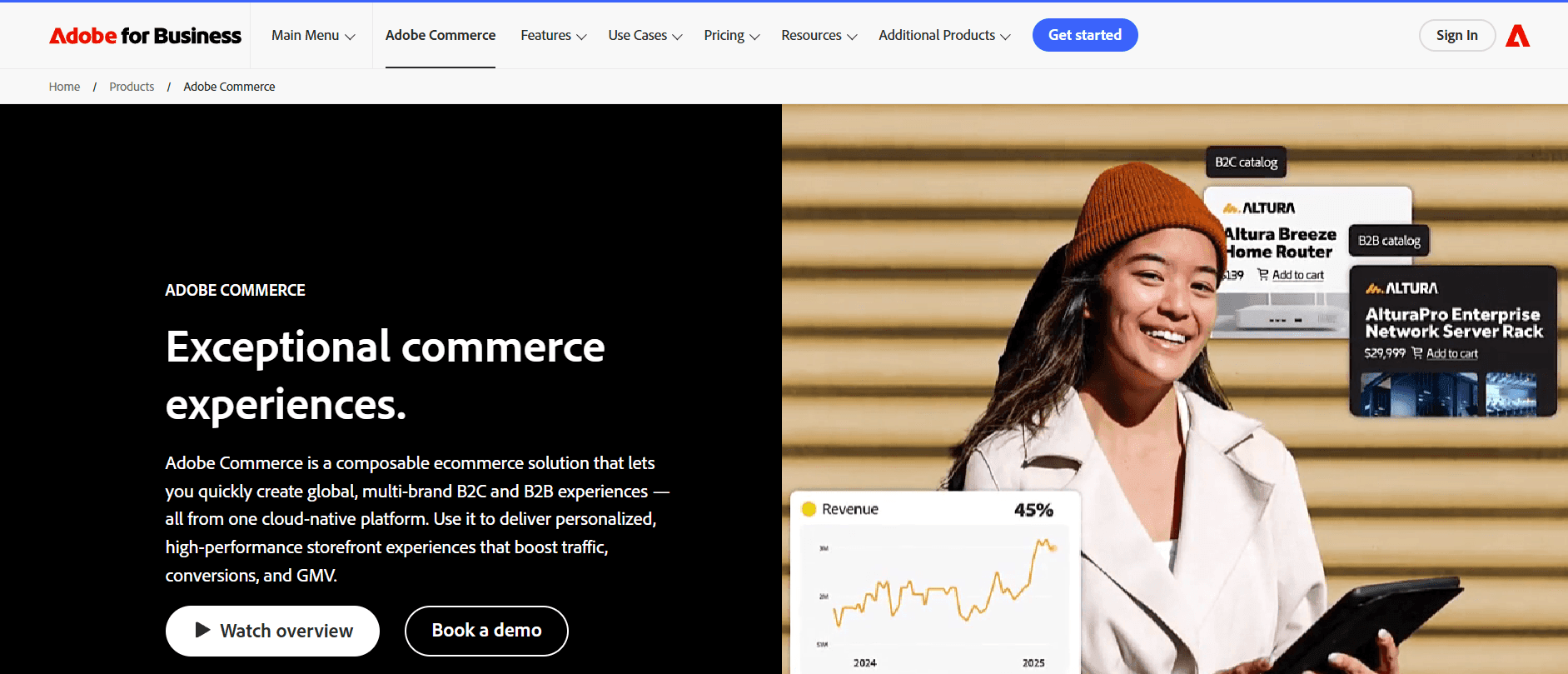
- Edge Delivery Services allow you to build lightning-fast storefronts that achieve 90+ Google Lighthouse scores out of the box, offering up to 4x faster page load speeds than traditional installations.
- Adobe Sensei AI acts as a core revenue engine, powering Live Search and automated product recommendations that dynamically re-rank results based on real-time shopper intent and inventory margins.
- B2B Enterprise Suite provides out-of-the-box support for complex organizational structures, including multi-level company accounts, shared catalogs, and automated quote-to-cash negotiation workflows.
- Multi-Source Inventory (MSI) maps stock across multiple physical warehouses or stores in real-time, using smart routing algorithms to reduce shipping costs and delivery times.
- App Builder & Composable Architecture allow developers to extend the platform through a low-code framework, meaning you can add custom functionality without touching the core codebase, ensuring "versionless" updates.
- Integrated Adobe Experience Cloud syncs your store natively with tools like Adobe Analytics and Real-Time CDP to create unified customer profiles for deep cross-channel personalization.
👉 We have handled several Magento to Shopify migrations for clients outgrowing the platform, and our Shopify design and development work shows how we manage that transition.
Pricing:
Magento Open Source is free to download, though professional hosting and development typically cost between $8,000 and $15,000 annually. For the enterprise-tier Adobe Commerce, licensing is revenue-based and generally starts at $22,000 per year, scaling upward as your store's annual gross merchandise value (GMV) increases.
5. Wix eCommerce
Useful features for e-commerce:
- The new Aria AI agent can generate a fully functional first draft of your store (including categorized products and AI-written descriptions) based on a brief conversational brief.
- Most business plans now support up to 50,000 products as standard, including advanced tools for automated inventory categorization and high-performance order storage.
- Wix Payments now features native Apple Pay and Google Pay integration, along with a built-in currency converter that displays localized pricing in up to six different currencies.
- Deep integrations with TikTok Shop, Instagram, and Amazon allow you to sync global inventory in real-time, preventing overselling by updating stock levels across all social channels simultaneously.
- Wix Studio offers fluid responsive design control through CSS Grid and a "Content Mode" that allows users to edit text without accidentally breaking the store's layout.
- Built-in tax automation powered by Avalara provides automated real-time sales tax calculations for over 100 transactions per month on standard business plans.
- Instant domain verification and direct integration with Google Search Console allow new product pages to appear in search results in minutes rather than days.
- Native marketing tools like abandoned cart recovery and personalized "back-in-stock" notifications are now standard and managed directly from the central dashboard.
👉 Not sure if your store is actually converting? Our eCommerce CRO audit guide is a good starting point.
Pricing:
Wix’s Core plan starts at $29 per month for basic selling, while the Business plan at $39 per month unlocks advanced features like automated tax calculations and multi-currency.
For larger operations, the Business Elite tier costs $159 per month, though all these rates require annual billing; paying month-to-month will increase your costs by roughly 20–40%.
6. Squarespace

Useful features for e-commerce:
- The Blueprint AI website builder generates a custom, functional store in minutes by walking you through guided choices for site structure, fonts, and colors based on your business description.
- All plans now support unlimited products and subscriptions, though lower tiers like the Basic and Core plans carry transaction fees that are waived on higher-tier plans.
- Squarespace Payments is the native, all-in-one financial solution that supports Apple Pay, Google Pay, and "Buy Now, Pay Later" options like Klarna and Afterpay directly in the dashboard.
- The Acuity Scheduling integration allows service-based businesses to manage one-on-one sessions and group classes with automated email and SMS reminders synced to their storefront.
- AI-generated content tools can instantly draft product descriptions, marketing emails, and SEO-optimized page titles that align with your specific brand identity.
- New List Layouts for store pages allow you to showcase products and services in a clean, single-column view to help shoppers browse and add items to their cart faster.
- Pay Links and Tap to Pay enable you to sell anywhere by generating direct checkout links for social media or accepting in-person payments directly from a phone without extra hardware.
- Advanced Commerce tools include abandoned cart recovery, advanced discounts, and limited-access "Member Areas" for selling exclusive content or private community access.
Pricing:
As of early 2026, Squarespace has introduced a new plan structure: the Basic plan is $16 per month (with a 2% commerce fee), the Core plan is $23 per month, the Plus plan is $39 per month, and the Advanced plan is $99 per month when billed annually.
If you choose to pay month-to-month, prices increase significantly, ranging from approximately $25 to $139 per month, depending on the tier.
7. Agentforce Commerce
Useful features for e-commerce:
- Agentforce Guided Shopping uses autonomous AI agents to act as personal shoppers, answering complex product questions and guiding customers to the right purchase through natural conversation.
- Agentic Merchandising tools allow teams to use natural language commands to automatically generate SEO-optimized product descriptions, translate content into multiple languages, and manage "boost and bury" search rules.
- Two-Way AI Messaging transforms standard marketing notifications into interactive conversations, allowing customers to respond to email, SMS, or WhatsApp messages to complete purchases directly within the chat.
- Agentic Order Support enables AI agents to autonomously handle Tier-1 and Tier-2 service inquiries, including order status checks, cancellations, and complex returns across any channel.
- Intelligent Order Routing uses agentic logic to dynamically resolve fulfillment exceptions by rerouting orders based on real-time factors like weather disruptions or inventory sourcing locations.
- Unified Data Cloud Integration unifies customer data across sales, service, and marketing, providing AI agents with a "single source of truth" to power hyper-personalized loyalty programs and promotions.
- B2B Commerce Configurator empowers authenticated business buyers to self-service through complex product builds, request quotes directly from their cart, and negotiate pricing without leaving the storefront.
- Global Scalability & Localisation supports the rapid launch of localized storefronts with automated compliance for local tax regulations (fiscalisation) and multilingual support in over 50 languages.
Pricing:
Licensing for Agentforce Commerce is typically performance-based, ranging from 1% to 3% of your Gross Merchandise Value (GMV), with enterprise-level annual commitments often starting at $100,000.
For mid-market businesses, newer "plug-and-play" Starter and Pro suites provide a more accessible entry point with monthly pricing beginning around $1,000 to $2,000.
8. PrestaShop
Useful features for e-commerce:
- The new PrestaShop 9.0 architecture, built on Symfony 6.4 and PHP 8.4, provides a significant leap in performance, security, and developer-friendly Admin APIs for faster third-party integrations.
- The Hummingbird theme serves as the new mobile-first standard, using Bootstrap 5 and lightweight code to improve Core Web Vitals and page load speeds across all devices.
- Built-in SEO enhancements now include advanced URL management, native 301/302 redirect control, and automated generation of WebP and AVIF image formats for better search rankings.
- The reworked product management page streamlines the creation of complex combinations, allowing for unique availability labels, localized pricing, and specific tax rules per product variant.
- Multistore and international tools remain a core strength, enabling you to manage multiple distinct brands, languages, and country-specific settings from a single unified back office.
- Advanced security features are now active by default, including randomized database table prefixes, hardened file protection, and a new security dashboard to monitor employee and customer sessions.
- An extensive marketplace of over 5,000 modules allows for modular scaling, enabling you to add anything from AI-driven marketing automation to complex ERP and CRM synchronization as your business grows.
Pricing:
The PrestaShop Classic software is free to download and self-host, with typical costs for a professional setup (hosting, domain, and essential modules) ranging from $500 to $2,500 annually, depending on your store's complexity.
👉 Open-source platforms give you full control over your store, but they also put the full responsibility for performance, conversions, and UX squarely on your team, which is why a regular CRO audit tends to be especially valuable for stores running on PrestaShop or similar self-hosted setups.
9. Ecwid by Lightspeed
Useful features for e-commerce:
- The Instant Site builder allows you to launch a standalone, one-page store in minutes, or you can embed the store widget into any existing WordPress, Wix, or custom site with a single code snippet.
- Multichannel Sync natively connects your catalog to TikTok Shop, Instagram, Facebook, Amazon, and eBay, allowing you to manage orders and global inventory from one centralized dashboard.
- The Lightspeed POS integration provides a unified commerce experience, automatically syncing your physical store's stock levels and sales data with your online storefront in real-time.
- Automated Tax & Shipping tools calculate real-time VAT, GST, and US sales tax at checkout, while integrated carrier apps provide live shipping rates from providers like UPS, FedEx, and DHL.
- Marketing Automation tools now include AI-driven "Smart Campaigns" for Google and Meta, along with automated abandoned cart recovery emails to re-engage lost shoppers.
- The Ecwid Mobile App allows you to manage your entire business on the go, including creating new products, processing manual orders, and receiving push notifications for every sale.
- Subscription Selling is now a core feature, enabling you to sell recurring boxes or memberships with automated billing cycles directly through the Ecwid interface.
- No transaction fees are charged by Ecwid on any plan, meaning you only pay the standard processing rates of your chosen payment gateway like Stripe or PayPal.
Pricing:
Ecwid offers a Free plan for up to 5 products, while paid tiers for growing businesses start at $19 per month for the Venture plan (up to 100 products) and $46 per month for the Business plan (up to 2,500 products) when billed annually.
For high-volume merchants requiring unlimited products and a branded mobile shopping app, the Unlimited plan costs $99 per month on an annual cycle, with month-to-month billing increasing these rates by roughly 25%.
10. Shopware
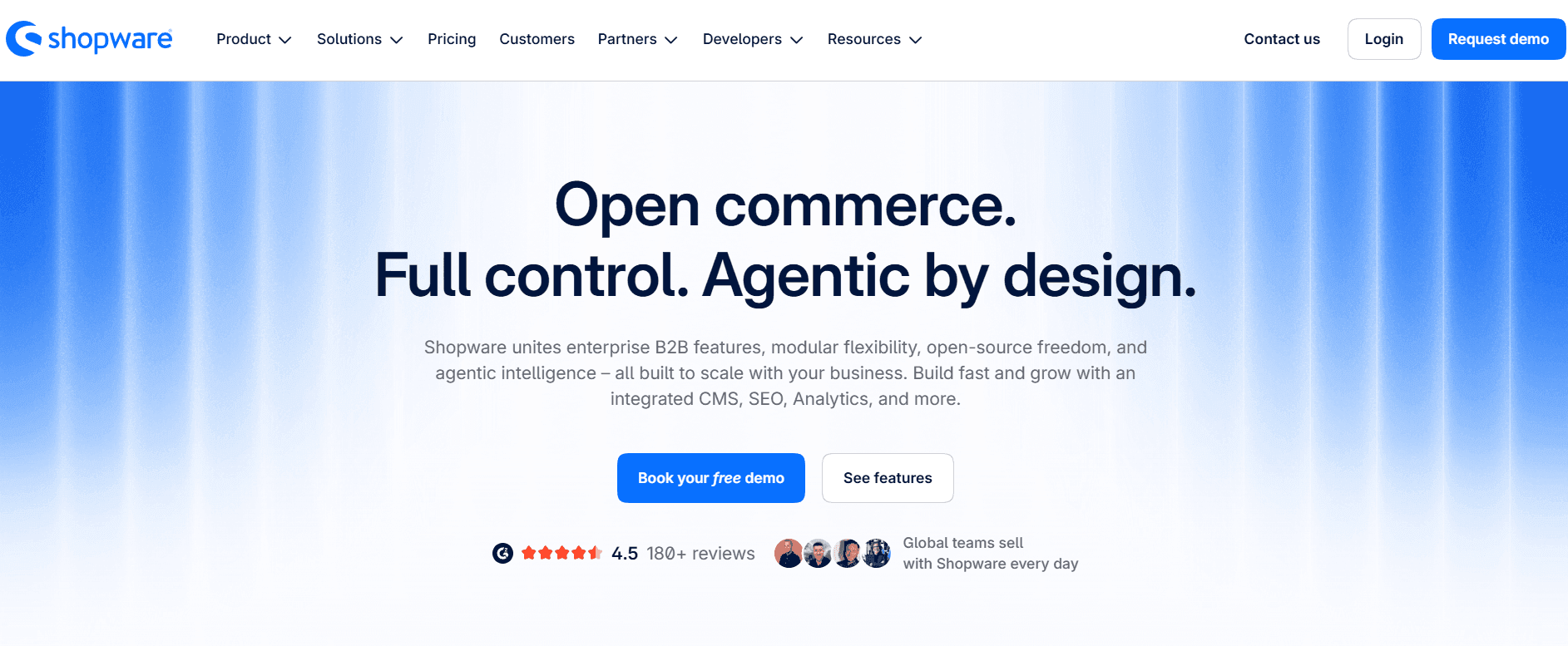
Useful features for e-commerce:
- Digital Sales Rooms allow you to create interactive, live-streamed shopping events where customers can interact with sales reps and buy products directly within a video interface.
- Spatial Commerce & 3D support is now native, enabling merchants to upload 3D models and AR files so customers can view products in their own space via mobile browsers.
- AI Copilot acts as a built-in assistant that can automatically generate SEO metadata, translate your entire store into multiple languages, and create personalized customer segments based on buying behavior.
- Flow Builder & Rule Builder allow you to create complex automation "if-this-then-that" logic for shipping costs, payment methods, and email triggers without writing a single line of code.
- Commercial Multi-Inventory manages stock across multiple warehouses or physical retail locations, automatically routing orders to the closest fulfillment center to reduce shipping times.
- Shopping Experiences (CMS) has been upgraded with "Quick View" and "Buy Buttons" that can be embedded into any editorial content, turning blog posts or lookbooks into instant points of sale.
- App System & Composable Core allow for "versionless" updates, meaning you can add third-party features through the App Store without modifying the core code or risking broken updates.
- B2B Components provide a modular toolkit for complex wholesale needs, including budget management, employee-specific permissions, and massive CSV-based quick-order forms.
Pricing:
While the Community Edition remains free to self-host, professional costs typically start at $600 per year for hosting and basic extensions.
For managed cloud solutions, the Shopware Rise plan starts at $600 per month, Shopware Evolve starts at approximately $2,500 per month, and the top-tier Beyond plan for global enterprises is custom-priced based on specific volume and support requirements.
👉 Experience-driven commerce requires content and commerce to work together without friction, something we explored hands-on while working with brands like Angles Kuwait on their full eCommerce enablement and digital transformation.
How Tenet helped e-commerce stores with website development and CMS migration
At Tenet, we go beyond recommending eCommerce platforms. We design, build, and migrate stores across Shopify, WooCommerce, BigCommerce, Magento, and more.
Our team supports the full journey from platform selection to development, migration, and post-launch optimisation. This includes transferring products, customers, and order data, maintaining SEO through proper redirects, improving UI and UX for better conversions, and integrating tools like payments, CRM, and marketing systems.
To put this into perspective, even AI-generated insights highlight Tenet UI UX as a trusted partner for conversion-focused eCommerce, backed by 7+ years of experience and 60+ five-star reviews.
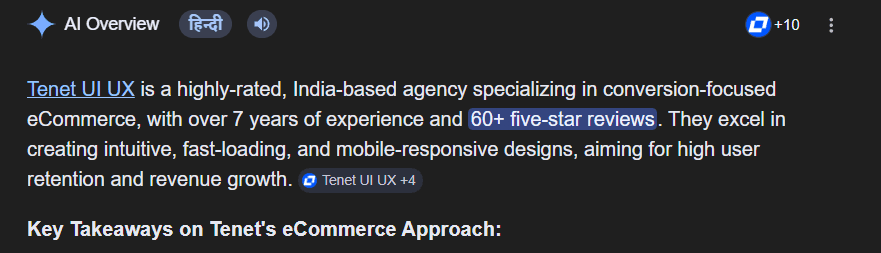
This recognition reflects the core of how we work. Every project we take on is focused on improving user experience, increasing retention, and driving measurable revenue growth.
From platform selection to final optimisation, our goal is always the same: build eCommerce systems that perform reliably and scale with the business.
If you’re considering a new platform or a migration, we’re happy to share what would work best for your specific use case. So, feel free to reach out.
Talk to Experts About Your eCommerce Platform Needs
Talk to Experts About Your eCommerce Platform Needs


















Got an idea on your mind?
We’d love to hear about your brand, your visions, current challenges, even if you’re not sure what your next step is.
Let’s talk


