
What Is GEO? A Simple Guide to Winning in GEO (2026)
 By
By Share

Share
Get a quick blog summary with



For years, search worked in a simple way. You typed a question into Google Search, saw a list of links, and clicked the one that looked useful.
But today, many people ask their questions directly to AI tools like ChatGPT or Perplexity AI. Instead of ten links, they get one clear answer that pulls information from many sources.
This shift changes how websites get discovered.
If your content is not part of the sources these AI systems rely on, it may never appear in the answer even if you rank well on traditional search.
That is where Generative Engine Optimization comes in. It focuses on helping your content become a trusted source that AI systems reference when they generate answers.
In this guide, we will explain how GEO works and what teams should start doing now.
What is Generative engine optimization (GEO)?
Generative Engine Optimization (GEO) refers to the practice of improving how your brand and information appear in answers generated by AI tools such as ChatGPT, Perplexity AI, and features like Google AI Overviews.
Here is an example showing how Tenet helped Yomly appear in AI-generated answers across platforms like ChatGPT and AI Overviews.
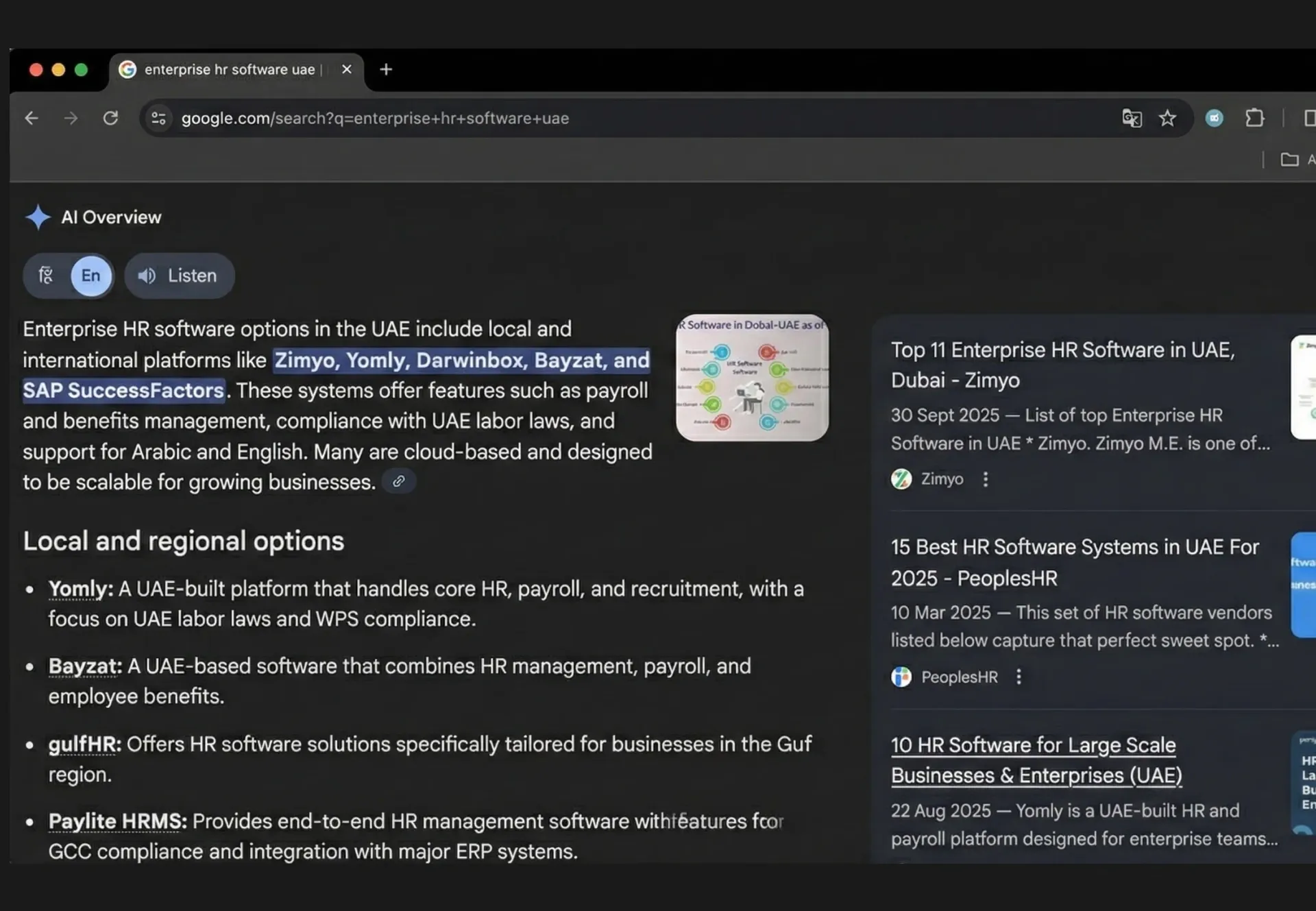
When someone asks a question on these platforms, the system does not simply show a list of websites. Instead, it analyzes information from multiple sources and generates a single response written in natural language.
Because of this, visibility depends on whether your information can be discovered, understood, and used when these answers are created.
Is GEO the same as SEO?
Search Engine Optimization and Generative Engine Optimization are closely related, but they are not the same.
Search engines such as Google Search typically return a ranked list of websites. Users scan the results and click on a page to find the information they need.
AI tools such as ChatGPT, Perplexity AI, and features like Google AI Overviews work differently. Instead of presenting a list of links, they generate a direct response by combining information from multiple sources.
Because of this difference, the goals of SEO and GEO are slightly different.
SEO focuses on improving rankings and attracting clicks, whereas GEO focuses on making sure your brand or information is included when AI systems generate answers.
👉 Relevant Read: AEO vs SEO vs GEO: How to Win in Google and AI Search
Why is GEO Important Now?
To understand why GEO matters now, it helps to look at the search trends that are reshaping online discovery.
1. Rise of AI Overviews in Google
Google has started integrating AI-generated answers directly into search results through AI Overviews.
These answers often appear at the top of the page and resolve the query without requiring the user to click on any website.
Here is an example showing how a search result page looks today, where the AI Overview provides a summary and references to multiple sources before the traditional results appear.
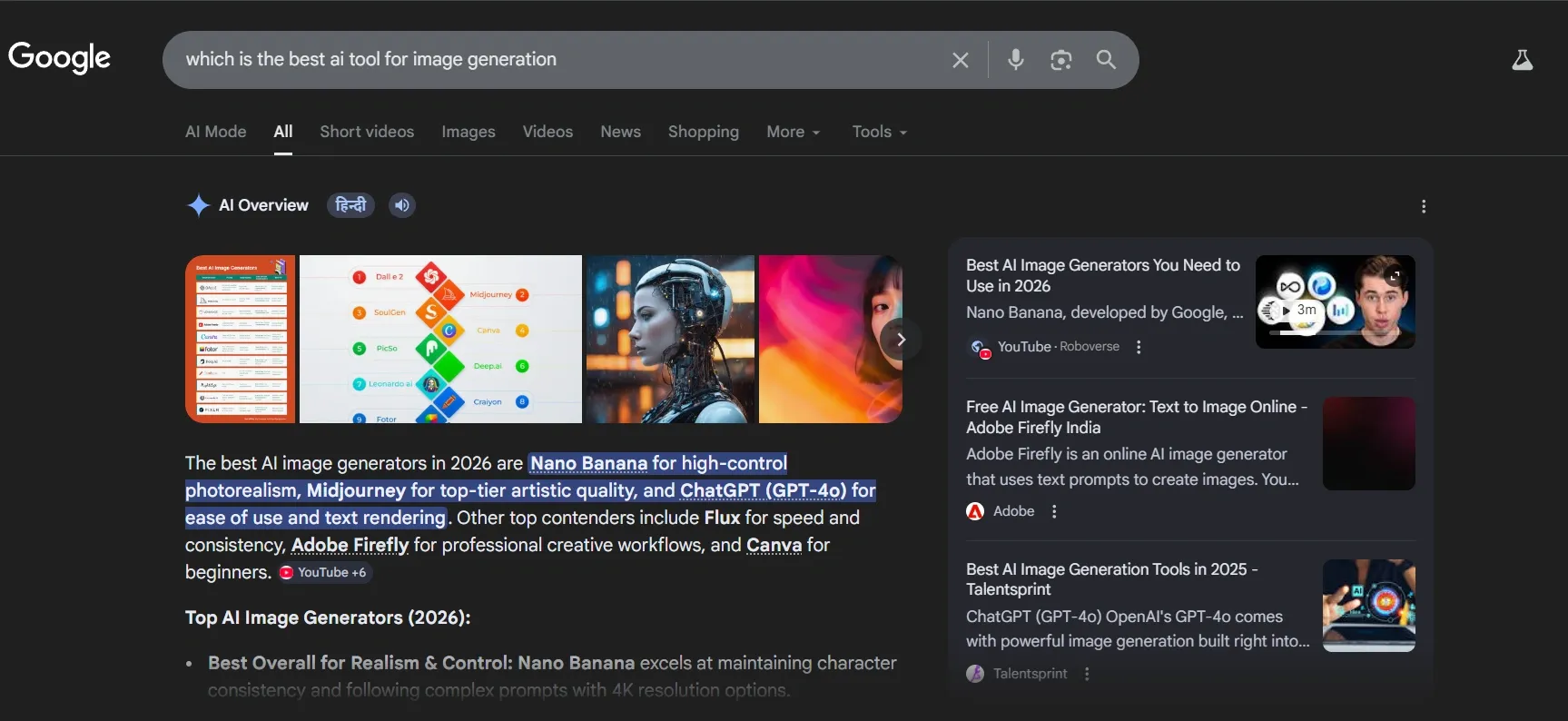
Recent data shows that when AI Overviews are present, click-through rates for top-ranking pages can drop by around 58%, and up to 83% of those searches end without a click.
Earlier, ranking higher meant getting more traffic. Now, even top-ranking pages can lose visibility if they are not included in the AI-generated answer. This means even if your page ranks first, users may not visit your site because the answer is already visible.
In practice, visibility is shifting from ranking on the page to being part of the answer itself.
👉 Our roundup of 60+ AI SEO statistics covers the latest data on how AI Overviews are reshaping click behavior, brand visibility, and content discovery across search.
2. Growth of AI-driven search behavior
AI tools such as OpenAI ChatGPT are no longer niche products. They are now part of how millions of users search, evaluate, and make decisions online.
ChatGPT alone has reached around 900 million weekly active users globally, making it one of the fastest-growing consumer platforms to date.
This level of adoption signals a deeper shift in user behavior.
Instead of relying only on search engines, users are increasingly turning to AI tools to:
- understand complex topics
- compare products and services
- get direct recommendations based on their needs
The key difference is that AI systems do not just return options. They filter, summarize, and present a single, structured answer.
As a result, discovery is no longer limited to search engine results pages. It is expanding into AI interfaces in which fewer sources are surfaced and decisions are made earlier in the process.
👉 For a closer look at how LLMs are expanding and what that means for brand discoverability, our LLM usage statistics guide tracks the growth numbers you need to understand the scale of this shift.
3. Reduced click-through behavior
Click-through rates are declining across search, even when rankings remain the same.
When AI-generated answers appear in search results, the top-ranking page can lose up to 58% of its clicks, even without any position drop.
This graph shows the dramatic impact AI Overviews have on search engagement, leading to a significant drop in clicks across organic and paid results:
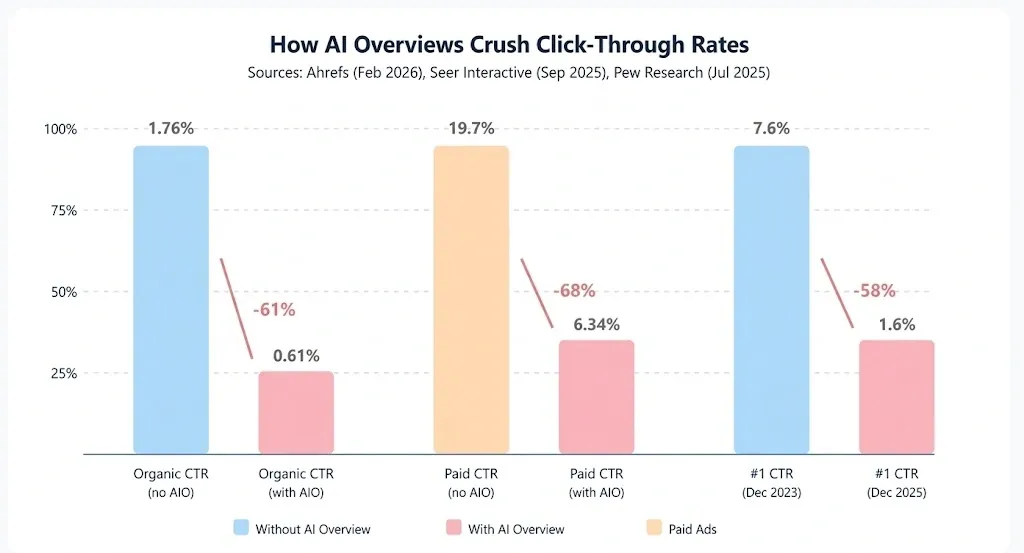
In practical terms, a page that earlier received 100 clicks from a query may now receive closer to 40, simply because users are getting key information directly on the results page.
4. Shift from traffic to visibility
Earlier, search worked in a predictable way.
A user searched for “best email marketing tools,” opened 3 to 4 websites, compared features, and then made a decision. Each of those websites got traffic and a chance to influence the user.
Now, that journey often ends before the click.
The same query can return a Google AI Overview that lists tools, key features, and use cases in one place. The user can quickly scan this, shortlist options, and move forward without visiting multiple websites.
By the time a user clicks, they are no longer exploring. They are just confirming details like pricing or reviews for the options they have already shortlisted.
This means fewer websites get traffic from the same query, even though the number of people searching has not changed.
👉 Our piece on Google's AI Mode breaks down exactly how this shift from rankings to contextual presence is changing what SEO teams need to focus on right now.
5. Rise of Zero-Click Discovery
AI search tools like Google AI Overviews and OpenAI ChatGPT are increasingly answers 65% of queries right on the results page, often reducing the need for users to click through to websites.
This shift toward zero-click behavior is changing how website traffic is distributed and where user attention is captured.
That’s why GEO is needed to help the brand appear in these AI-generated answers, where users form opinions and shortlist options.
Instead of relying only on clicks, GEO ensures your brand stays visible early in the decision process, increasing the chances of future searches, consideration, and conversions.
6. Increase in AI Referral Traffic
While overall click volume from search is declining, a new type of traffic is emerging from AI systems. These AI referrals still make up a small share of total website traffic, typically between 0.1% and 1% across most industries.
At first glance, this seems insignificant. However, the importance of this traffic comes from its quality, not its volume.
This is proved by Microsoft Clarity, as they found that AI-driven visits converted at around 3x higher rates than other channels.
This graph shows how LLM has achieved 11x better conversion performance across channels.
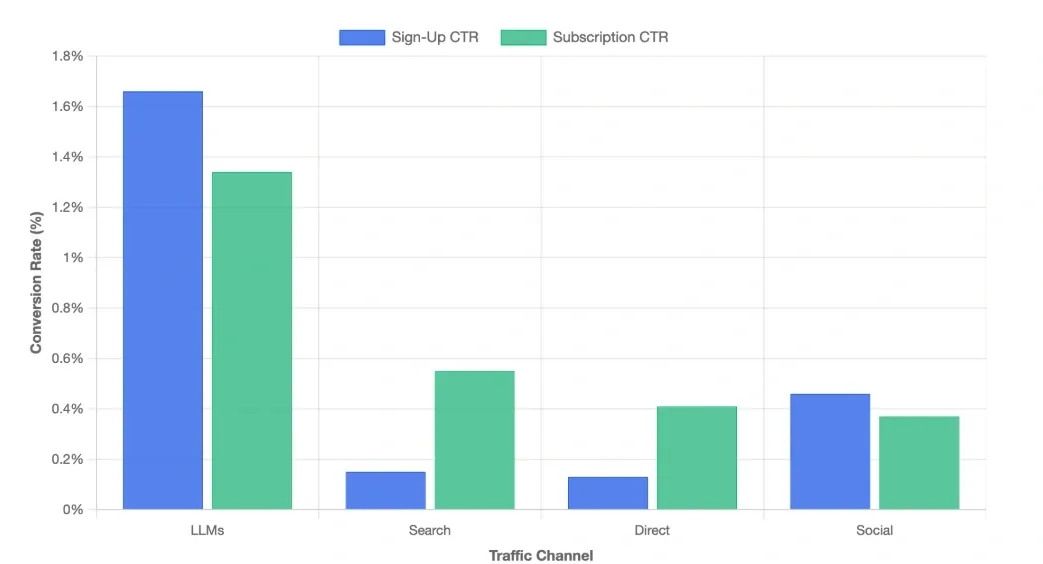
When a user clicks from a search engine, they are often still exploring options. When a user clicks on an AI recommendation, much of that exploration has already been done for them.
This changes the nature of the visit. Instead of browsing, users are validating a decision.
As a result, even though AI referral traffic is still small, it represents a high-intent segment of users that is likely to grow over time.
How to win in GEO? Clear steps for 2026 and beyond
Here are the steps to make that happen.
Step 1: Understand how AI platforms see your brand today
Before you try to improve your visibility in AI-generated answers, you need to understand what these systems already know about you.
AI tools do not “rank” your brand in the traditional sense. They form an understanding based on multiple sources and then decide whether to include you in an answer.
The easiest way to see this in practice is to test it yourself.
Start by creating a list of real queries your customers would ask. These can come from sales calls, support questions, or even platforms like Reddit and Quora. Include a mix of:
- informational queries like “What is [your category]?”
- comparison queries like “[your brand] vs competitors”
- and commercial queries like “best [category] for [use case].”
Now search these queries across AI platforms such as OpenAI ChatGPT and Google AI Overviews.
For example, when we searched for Tenet as a UI/UX agency, this is the response that appeared:
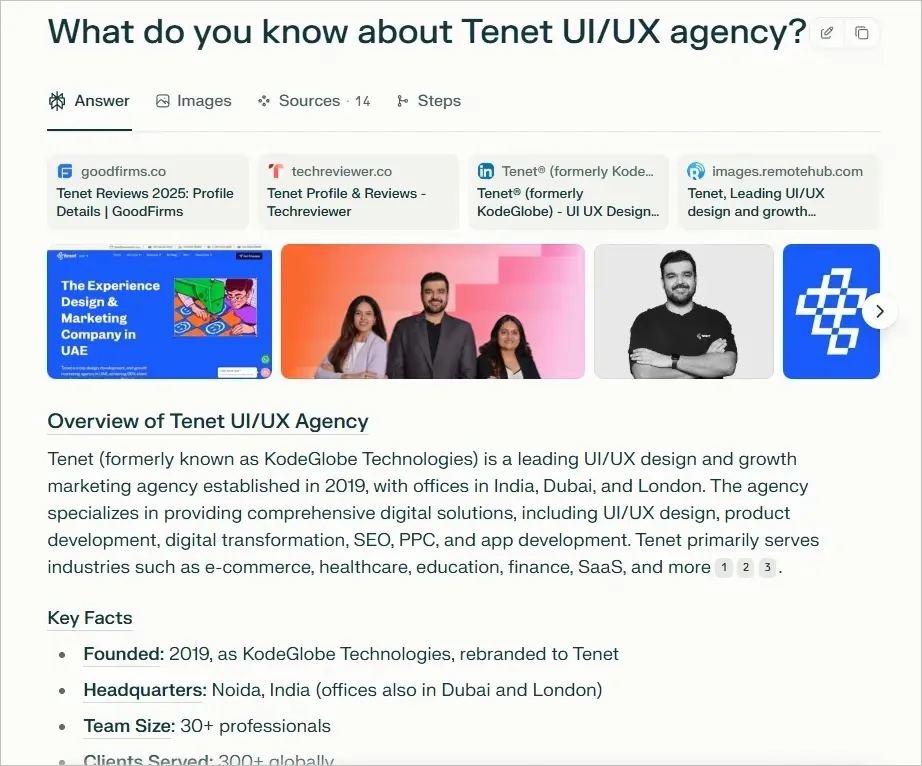
Pay attention to three things:
- whether your brand appears at all
- how it is described
- and which sources are being used
Repeat the full audit every 30 days and after major content or PR pushes. Screenshot everything for a living "AI Brand Health" document.
Below is an image of a scorecard that you can use to document your LLM responses for commercial search queries
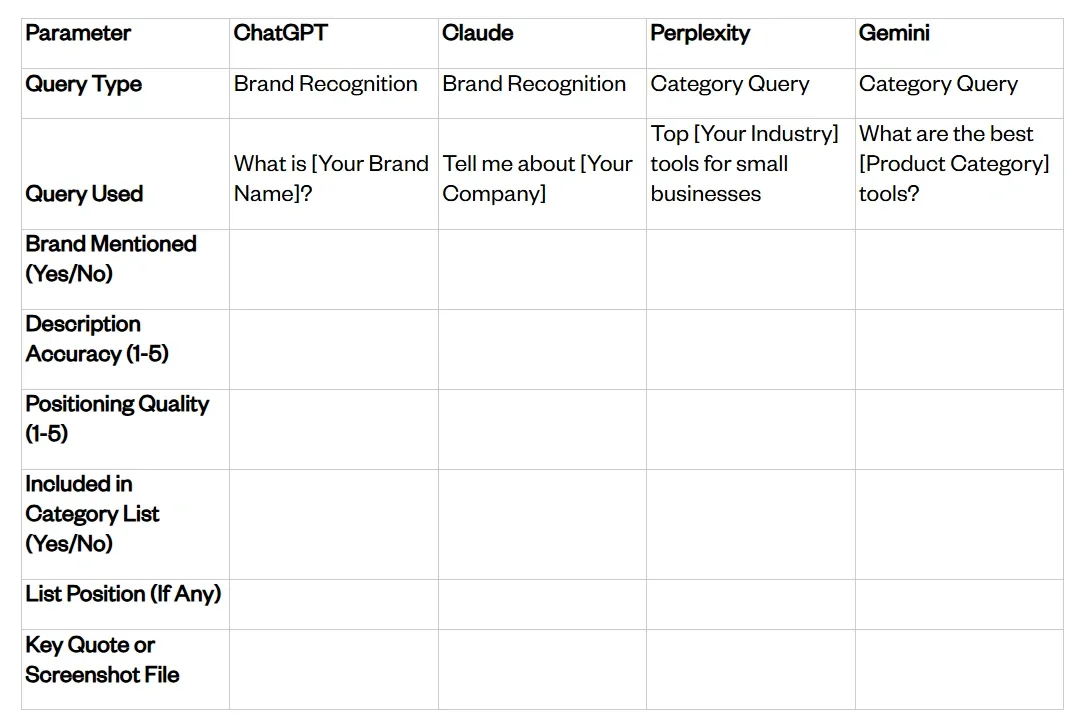
In case your brand is rarely or inaccurately mentioned, don't panic…. the next steps will "train" the systems so that your brand’s entity signals improve fastest.
👉 You can use our LLM SEO guide to run a practical brand audit across ChatGPT, Perplexity, and Gemini as your first step.
Step 2: Identify who AI recommends instead of you/ ( Map the Competition’s "Citation Set")
Once you know how your brand appears, the next step is to understand who is showing up in your place.
AI-generated answers are competitive. For most queries, only a few brands are mentioned. If your competitors are consistently included and you are not, that is a visibility gap.
Start with the same queries you used earlier, especially:
- “best [category] tools”
- “[category] for [use case]”
- “[your brand] vs competitors”
Search these across platforms like OpenAI ChatGPT and Google AI Overviews.
Now look closely at the responses.
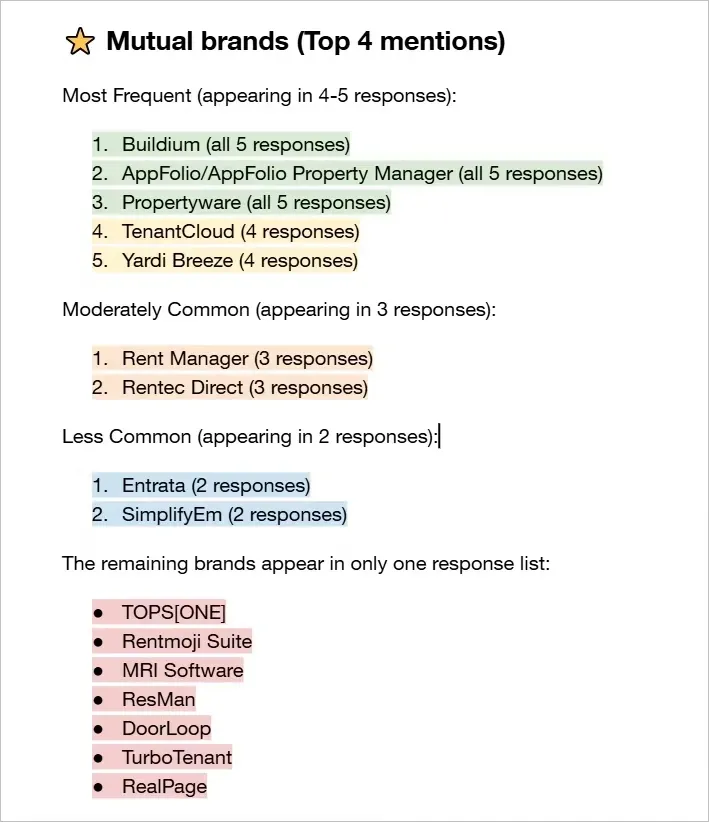
- Which brands are mentioned repeatedly?
Here is an example is a list we created showing competitors dominating LLM results for the query “best property management software.”
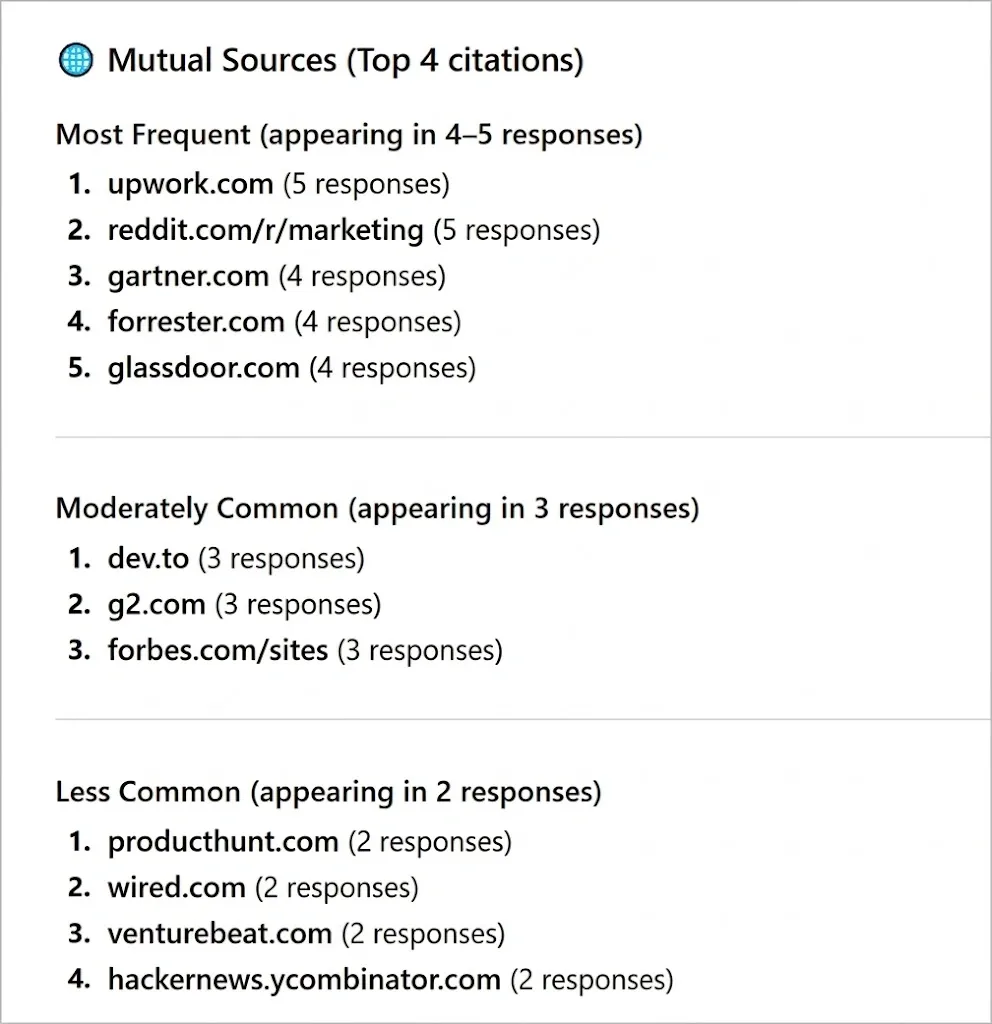
- Which websites or sources are being cited?
This is an illustration showing list of websites or sources being cited continuously by AI searches:
You will start to notice patterns.
Some brands appear often because they are featured in listicles. Others show up because they are widely discussed on platforms like Reddit or have strong comparison content.
Also, analyze competitors’ weaknesses like: Do competitors lack fresh data, transparent pricing, real case studies, or clear comparisons? Where do they dominate (e.g., strong Reddit presence or video content)?
This helps you answer a key question: Are you missing because your content is weak, or because you are not present in the sources AI relies on?
👉 Relevant Read: 12 Overlooked SEO Mistakes (Shared by SEO Professionals)
Step 3: Set Up Technical Access for AI Crawlers
AI systems rely heavily on bots like GPTBot, ClaudeBot, and PerplexityBot to scan sites directly. These bots pull structured facts and decide what to include in answers.
If your site blocks them or lacks clear signals, your content stays hidden no matter how strong it is. To prevent this, check these files first:
- Check your robots.txt file.
- Add allow lines for GPTBot, ClaudeBot, PerplexityBot, and Google-Extended.
- Block only admin or duplicate paths.
Include facts such as founding year, exact product category, HQ address, and update rules like "FAQ refreshed January 2026".
👉 Bing recently launched AI citation tracking inside Webmaster Tools, and our breakdown of Bing's new AI performance data explains exactly what to look for once your technical setup is in place.
Step 4: Make your website your single source of truth
AI systems rely heavily on your website to understand your brand. If your messaging is unclear or inconsistent, it becomes difficult for these systems to confidently include you in answers.
This is why your website needs to act as a single, reliable source of truth. Here are some Actionable sub-steps for priority pages that can help you do so:
Homepage
- Craft a clear positioning statement in the meta title, H1, and first 150–200 words (e.g., " [Brand] is the leading [exact category] for [target audience] helping [specific outcome] in 2026").
- Repeat key facts naturally. Add Organization schema.
- Include a prominent TL;DR or hero section that stands alone as an AI-friendly summary.
About Page
- Make it the definitive entity page: Founding year/date, founders' names and short bios, exact location(s) with NAP (Name, Address, Phone), mission, USPs, team highlights, achievements, and verifiable stats.
- Use plain, factual language. Add the same positioning as the homepage. Include schema and "Last Updated" date.
Contact / Locations Page
- Display full NAP details prominently (multiple times if multi-location). Add a contact form alongside visible info.
- Implement LocalBusiness schema. Ensure consistency with Google Business Profile and directories.
FAQ Page
- Build 10–20+ entries matching real prompts (e.g., "What is Generative Engine Optimization?", "How does [your product] compare to [competitor]?").
- Use exact question H2s, direct answers first, then supporting details. Apply FAQPage schema.
- Expand to cover trustworthiness, pricing tiers, awards, etc.
Reviews, Pricing, and Comparison Pages
- Publish transparent, data-rich content: Side-by-side tables, customer quotes with attribution, real metrics, and update dates.
- These pages perform strongly in commercial AI queries.
Step 5: Build Citation-Ready Content with Answer-First Design
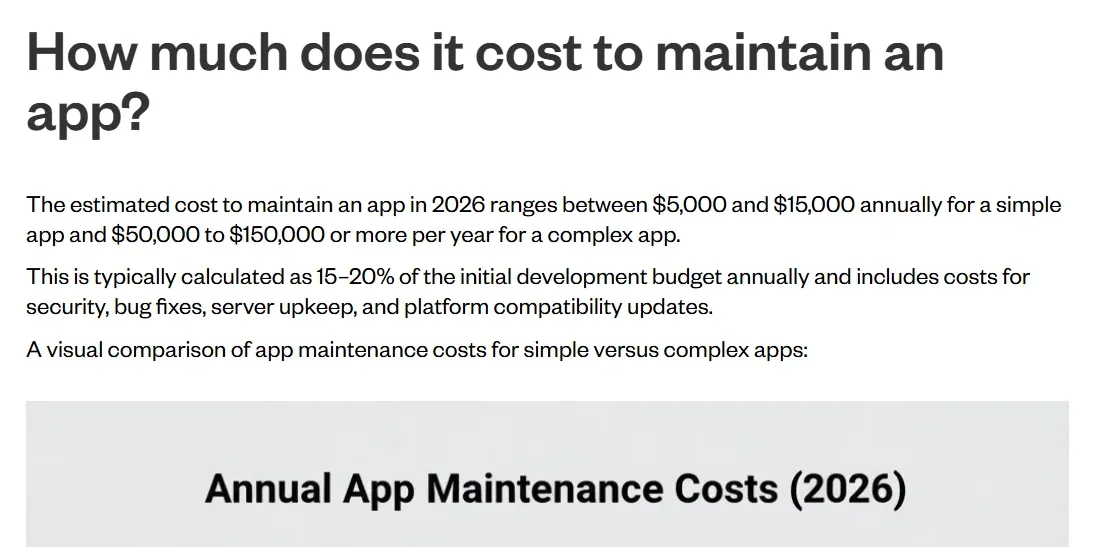
AI systems do not read content the way humans do. They scan for clear, direct, and self-contained answers that can be extracted and reused inside a response.
The given screenshot illustrates how Answer first design works in real:
This means the way you write content matters as much as what you write. For this, you need to:
- Structure every important page with exact question-based headings (H2/H3) that mirror user/AI prompts.
- Use headings that match real questions your audience is asking, such as “What is [your category]?” or “[your product] vs [competitor].” This makes it easier for AI systems to match your content to a query.
- Lead with direct answers: Place the core response in the first 100–200 words, followed by details, lists, tables, or data.
- Maximize fact density: Include original statistics, case studies, proprietary data, comparisons, checklists, and cited sources. Use short paragraphs, numbered/bulleted lists, bolded takeaways, and TL;DR boxes.
- Add multimedia: Video embeds/transcripts (YouTube is heavily cited), images with descriptive alt text, and interactive elements where helpful.
- Keep content fresh, like adding "Last Updated" dates and refreshing high-traffic or high-potential pages every 1–3 months with new data or insights.
👉 The content principles behind answer-first writing connect directly with the broader AI SEO agency framework we use when building citation-ready strategies for enterprise and SaaS clients.
Step 6: Earn Mentions, Co-Citations, and Listicle Placements
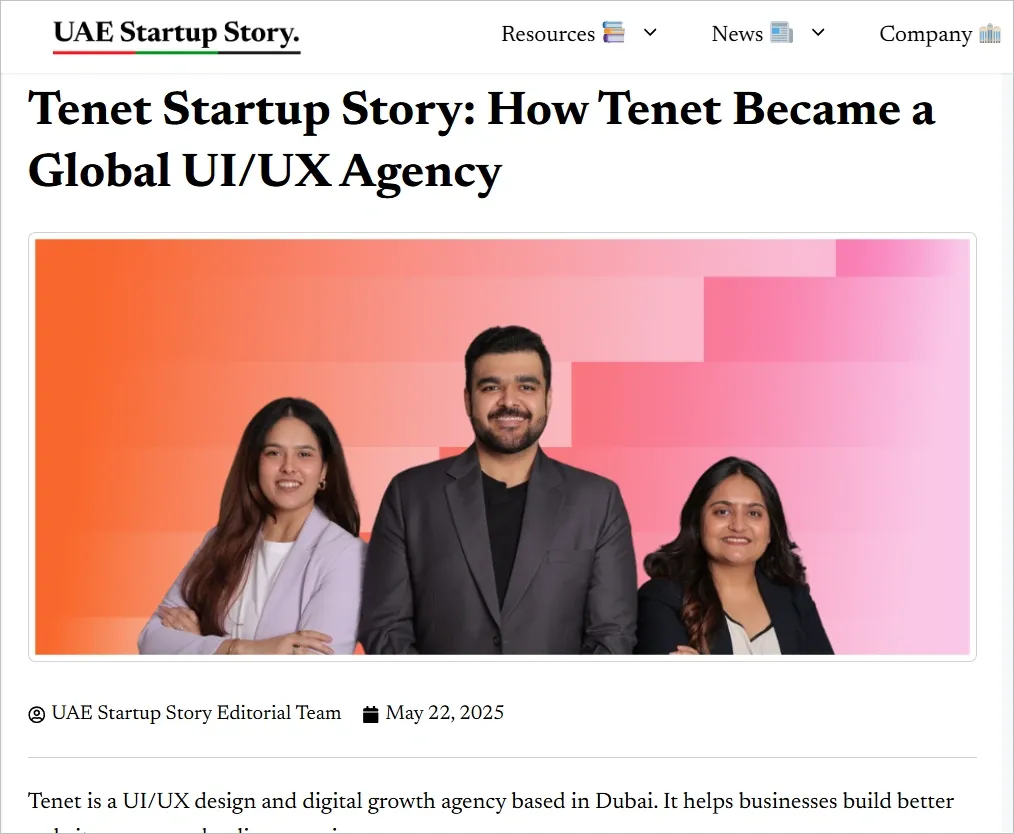
At this point, your website is not enough. If you search “best payroll software UAE” or similar queries, you will notice something: The same few blogs, listicles, and platforms keep showing up.
This visual is the best example that shows Tenet being mentioned in a listicle and also featured in an UAE startup media outlet:
These are the sources AI tools rely on. If your brand is not present there, it is less likely to be included in answers. So, what you can do is:
- Publish and syndicate press releases with full entity details (positioning, NAP, website, key facts). Use Google News-eligible wires and free/paid distribution.
- Target existing listicles: Search "best [category] 2026" or similar in Google and AI tools. Note top-ranking pages, identify coverage gaps, and pitch with data-backed differentiators, social proof, and assets.
- Create and distribute your own listicles/comparisons on UGC platforms (Medium, LinkedIn, Reddit, YouTube "Top X" videos) and your site.
- Engage authentically on high-citation platforms, like Reddit, Quora, forums, TikTok, and industry communities and try to provide value first.
- Monitor and convert unlinked mentions: Use tools or alerts to find brand references and request links or corrections with updated details.
- Create content in different formats like videos, podcasts, and written summaries. Platforms such as YouTube and Reddit are often used as sources, so being present there increases your chances of getting picked.
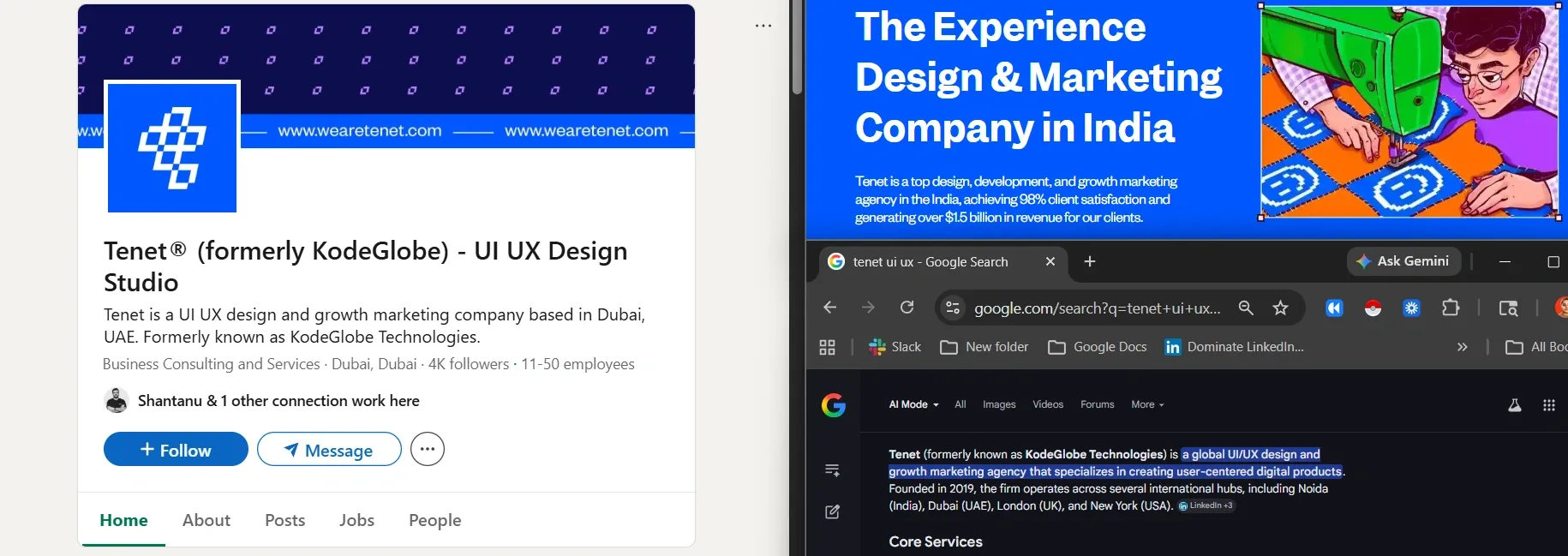
Step 7: Establish Brand Consistency Across All Platforms
AI systems build your brand profile by pulling the same facts from 20+ sources like LinkedIn, Google Business Profile, review sites, and directories.
Inconsistent details across these create confusion and drop you from answers. Your website acts as the hub, but platforms must echo it exactly.
Start with a single fact sheet from your site: exact brand name, tagline, founding year, founders' names, HQ address with NAP, 3 core USPs, and 2-3 stats like "Processed 500k transactions in 2025".
Here is an image demonstrating how Tenet implies this in real:
Push this to:
- Google Business Profile (verify NAP, add services, photos)
- LinkedIn Company Page (match about section word-for-word, add founders)
- Review sites like G2, Capterra (claim profiles, upload logo, fill missing fields)
- Wikipedia (if eligible: create neutral page with 10+ citations to news/articles)
- Industry directories (Crunchbase, Product Hunt with identical description)
Test by searching "[your brand] overview" in ChatGPT or Perplexity. Check if facts match your sheet and sources include multiple platforms. Fix mismatches within 48 hours.
How Tenet Helped Yomly Win in GEO
Yomly, a UAE-based enterprise HR and payroll SaaS platform, improved its visibility in AI-generated answers with the help of Tenet, a growth-focused digital experience company, leading to a strong increase in high-intent leads.
Results we generated for Yomly in 6 Months
- Organic Clicks: Grew from 5.2K to 20.5K
- Keyword Rankings: First-page rankings increased from 132 to 763
- Lead Generation: Monthly enterprise leads rose from 6 to 30+
What Drove GEO Visibility
Our SEO team focused on making Yomly appear consistently in AI-generated answers across platforms like ChatGPT and Google AI Overviews.
- Clear positioning for AI understanding
Key pages were rewritten to clearly explain what Yomly does, who it is for, and how it compares to alternatives. This made it easier for AI systems to extract and use this information in responses.
- Targeting decision-stage queries
Content was built around high-intent searches such as payroll software UAE and HR software GCC, increasing the chances of being included in AI-generated recommendations.
- Consistent signals across the web
Yomly’s messaging was aligned across its website and external sources, helping AI systems confidently recognize and include the brand in answers.
If this is something you are thinking about for your brand, we are always open to a conversation. Feel free to reach out 😀
Get expert help to make your brand appear in AI-generated answers
Get expert help to make your brand appear in AI-generated answers









Got an idea on your mind?
We’d love to hear about your brand, your visions, current challenges, even if you’re not sure what your next step is.
Let’s talk


