
Why does SEO Cost More in Some Niches than Others?
 By
By Share

Share
Get a quick blog summary with



If you are getting quotes for SEO, you’ve likely noticed a massive gap in pricing. A local dentist might be quoted $500 to $1,500 a month, while a personal injury lawyer or a software company is told they need to spend $5,000 to $20,000+ just to get started.
This isn't because the agency is trying to overcharge; it's because your competitors set the "entry fee" for your industry.
In high-profit niches, every company is fighting for a small number of top spots, and the sheer volume of technical work and authority needed to beat them simply costs more.
This guide breaks down why the "math" of your industry is the biggest factor in your marketing bill.
Reason 1: Your Website’s Current Domain Authority and Technical Health
Two sites in the same niche can face wildly different price quotes simply because one has a stronger backlink profile and cleaner code. Agencies do not charge a flat rate for SEO.
They estimate the hours required to close the gap between where your site is today and where it needs to be to rank. That gap is measured in two specific ways: domain authority and technical debt.
- A site with a Domain Authority (DA) of 10 requires a completely different link-building strategy than a site with a DA of 50.
The following visual of the Domain Authority scale helps you know when the DA needs evaluation and when it’s working well:
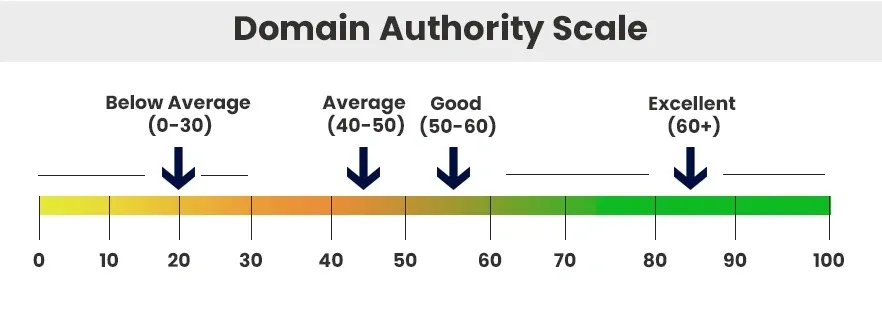
To compete against established players with DA 60‑70, you need to acquire backlinks from sites with DA 50 or higher. Those links cost between $600 and $1,500 each.
A site with DA 30 can often use lower‑authority links in the $150‑$300 range. The difference in the monthly budget is direct and unavoidable.
- Technical debt is the hidden multiplier. A basic technical SEO audit for a small, well‑built site costs $500 to $7,500.
For an enterprise site with legacy code, poor internal linking, or multilingual architecture, a thorough audit runs $10,000+.
Agencies build this into their proposal because they cannot start optimization until they know what is broken.
👉 If you want to see the exact technical and backlink issues that most agencies find when they audit a site, Tenet's breakdown of 12 Overlooked SEO Mistakes covers what quietly drains authority and rankings before a campaign even starts.

Reason 2: Competitive Keyword Density and Niche Market Saturation
The number of businesses bidding for the same keywords, especially in paid search, is a direct indicator of the SEO effort required.
In saturated niches, SEO costs rise because you are effectively paying to displace established players who have been building content and links for years.
The most reliable indicator of this saturation is not an SEO tool's difficulty score but the cost‑per‑click (CPC) in Google Ads. High CPC means high commercial intent and high competition.
- In legal services, a single click on a competitive keyword can cost over $50. In insurance or finance, CPCs range from $50 to $200.
Below given image is an example of legal services keyword pricing:
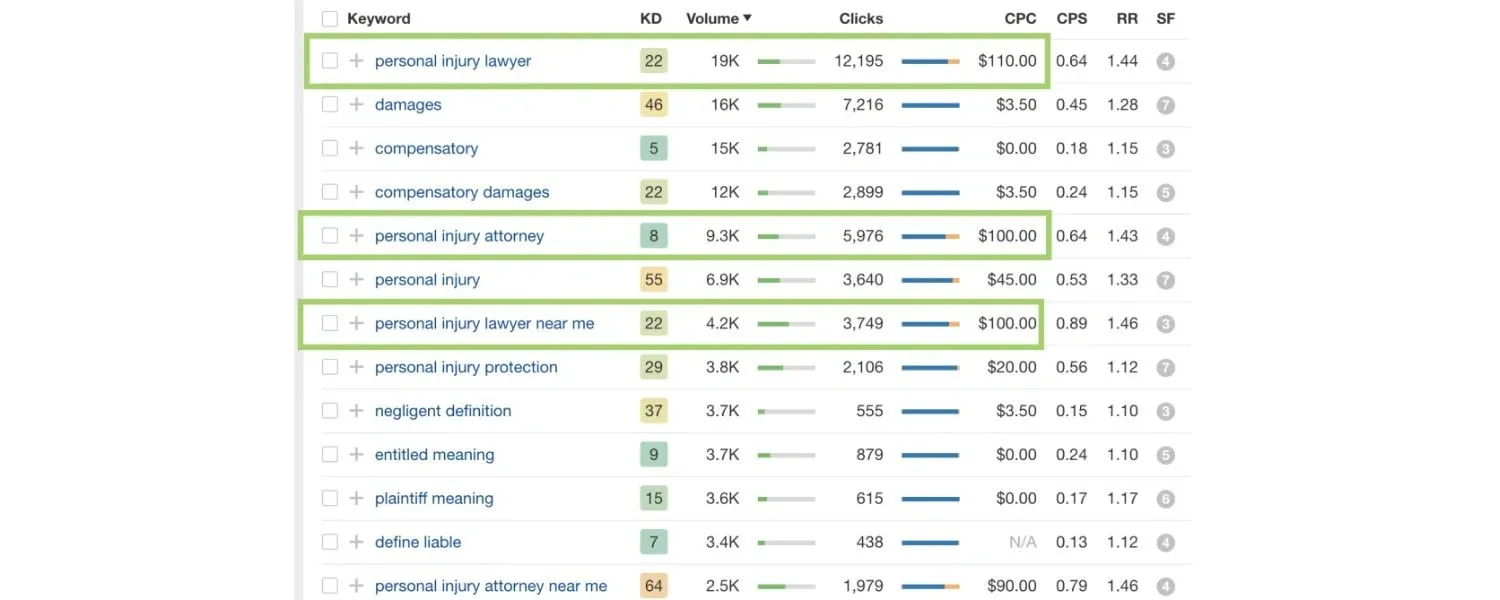
That is what advertisers are willing to pay for a single visit. For organic SEO, the same competitive pressure means agencies must produce exceptionally deep content and acquire links from top‑tier publications (there is no cheap shortcut).
- The correlation is simple: high CPC = high required SEO investment.
Agencies know that ranking for a $100 CPC keyword organically requires a monthly budget that reflects the value of that search result. A $500‑per‑month SEO package will never compete there.
👉 Understanding how CPC and keyword competition translate to real ad spend is easier with the right data. Tenet's Google Ads Statistics guide breaks down average CPCs by industry and shows exactly what competitive intent costs across different niches.
Reason 3: Strict Industry Regulations and E-E-A-T Content Compliance
Certain industries fall under Google’s "Your Money or Your Life" (YMYL) classification. This is not a niche; it's a set of industries where inaccurate information can cause significant harm, such as finance, legal, medical, and wellness
Google applies the strictest quality standards to these sites, evaluating them against Experience, Expertise, Authoritativeness, and Trustworthiness (E-E-A-T).
YMYL compliance directly increases SEO costs for several reasons:
- Content Creation: You cannot use generalist writers. You must hire subject matter experts (SMEs), such as doctors, lawyers, or certified financial planners.
A generalist writer charges $50‑$100 per article, whereas a subject matter expert with a medical or legal license charges $4,500 to $14,000 per piece in markets.
Adding an official expert review adds another $8,000 to $25,000 per article.
- SEO Audits: Specialized audits are required to verify citations, source credibility, and fact-checking protocols. This is a much deeper, more costly process than a standard SEO audit.
👉 Check out our SEO Services that are designed to build the kind of authoritative, compliant content profile that both Google and AI platforms require.
Reason 4: Discrepancies in Agency Expertise and Quality of Deliverables
Not all SEO work is equal, and you pay for what you get. The market has a clear and dramatic range of quality and price.
For instance, Low‑cost providers often rely on automated link building, templated content, and black‑hat tactics that can trigger Google penalties. Whereas High‑cost agencies invest in original research, custom outreach, and white‑hat link acquisition.
The table below shows what each price tier actually delivers.
Outsourcing to extremely low-cost providers can "wreck your rankings" because they rely on spammy tactics that violate Google's guidelines.
The difference between a $500 link and a $5,000 link often comes down to editorial integrity, niche relevance, and the publication's inclusion in AI-generated answers.
Reason 5: Website Scale, Architecture, and Technical Complexity
The size and structure of your website fundamentally impact the work required. An e-commerce site with 10,000 product pages is not the same as a 10-page brochure site.
There is one more thing to keep in mind: “Scale is not just about more pages”.
It introduces structural problems like crawl budget inefficiency, duplicate content across similar product variants, and internal linking that breaks as soon as you add new categories.
Each of these problems requires time from senior technical SEO specialists, and these costs both money and time because:
- For a small site, keyword research is done once per page.
Like, for an e‑commerce site with 10,000 products, you need keyword research for category pages, sub‑category pages, individual product pages, and filter pages. That is easily 100+ hours of work just for the initial audit.
- Enterprise technical audits cost $10,000 or more because they involve log file analysis, crawl budget optimization, and JavaScript rendering debugging. A smaller site's audit might be $1,000‑$3,000.
👉 Website architecture and number of active pages directly affects how well any SEO campaign can perform.
If your site structure, internal linking, or page hierarchy is broken, Tenet's Website Redesign services show how a structural overhaul can unlock the technical SEO ceiling that's holding your rankings back.
Reason 6: Targeted Geographic Reach and Local vs. Global Competition
SEO costs scale with geography because competition is not uniform.
Ranking for "plumber in Austin" requires a few local citations and a well‑optimized Google Business Profile, whereas ranking for "best accounting software" across the United States requires competing with national brands that have millions in marketing budgets.
Expanding to global markets multiplies the work: new languages, new search engines (Baidu, Yandex), and hreflang tag implementations. Each geographic layer adds a distinct cost.
Here is the table showing price tier and what’s actually delivered when it comes to geographically targeted SEO:
Agencies quote price for that extended timeline too as Local SEO often shows ROI in 3‑6 months (up to 3x faster than global campaigns) because the competitive field is small.
Whereas National campaigns take 9‑12 months and Global campaigns may take 12‑18 months before meaningful traction appears.
Reason 7: The Cost of High-Authority Backlink Acquisition in Competitive Niches
Backlinks are still among the strongest factors influencing search rankings. However, acquiring high-quality, relevant links is expensive, and the price is dictated by niche competition.
Mostly finance, insurance, legal, and gambling are known for having the highest link acquisition costs because the potential revenue from a single ranking keyword is enormous. Publishers know this and charge accordingly.
This reflects the time, relationships, and expertise required to secure placements on reputable, authoritative sites.
Reason 8: Average Customer Lifetime Value (LTV) and Industry Profit Margins
Businesses do not spend money on SEO for fun. They spend it because the customer acquired through organic search has a lifetime value that justifies the acquisition cost.
A common rule of thumb is that Customer Lifetime Value should be at least 3x the Customer Acquisition Cost (LTV: CAC ratio of 3:1).
Here is a visual demonstrating how the impact of lower to higher LTV & CAC ratio:
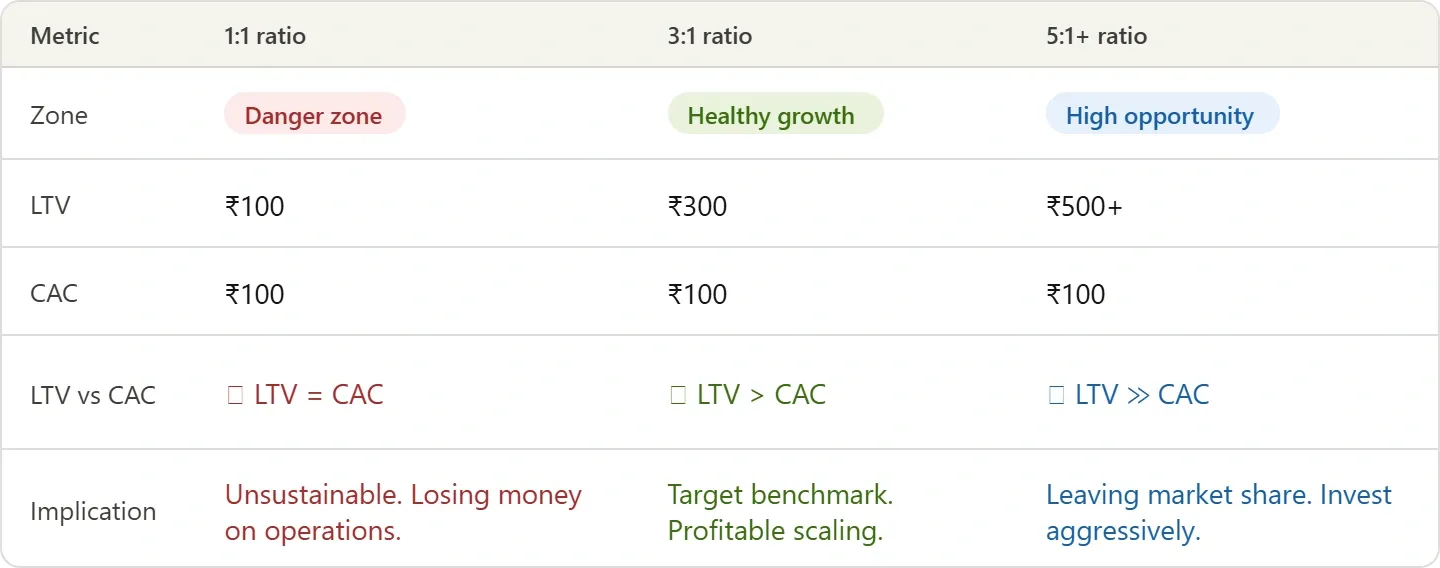
Usually, industries with high margins, such as SaaS, legal services, or B2B software, can afford a much higher CAC. SEO agencies know this and price their services based on the client's ability to pay and the long-term return.
Also, mature SEO campaigns for high-LTV businesses can deliver 500-1000% ROI or more when factoring in customer lifetime value. This justifies a significantly larger upfront SEO investment compared to a business with low margins and one-time sales.
SEO pricing reflects the client's ability to pay based on the long-term value of the customers they acquire.
👉 For businesses where improving conversion rate alongside SEO directly multiplies LTV, it's worth understanding what CRO actually costs at different business stages.
Reason 9: Aggressive Campaign Timelines and Desired Speed to Results
SEO is a long-term investment. The standard timeline to see significant organic growth is 6 to 12 months.
If a client wants to compress that into 3 or 4 months, the cost increases non‑linearly. To increase the “Speed” you would require parallel work streams: more writers, more link builders, more technical audits running at the same time.
It also requires paying premium prices for expedited link placements, because publishers charge more for fast turnaround.
That’s why most agencies charge a 30‑50% premium for a timeline that is half the standard length.
Reason 10: The Shift Toward Generative Engine Optimization (GEO) and AI Search Visibility
Search is no longer just about ranking blue links. AI‑powered search engines like Google's Search Generative Experience (SGE) and Microsoft Copilot now generate direct answers that cite sources.
A new practice called Generative Engine Optimization (GEO) has emerged to ensure your brand is cited within those AI answers.
This is not a replacement for traditional SEO. It is an additional layer of work that requires structured data optimization, entity management, and citation building across AI training data sources.
This graph shows the dramatic impact AI Overviews have on search engagement, leading to a significant drop in clicks across organic and paid results:
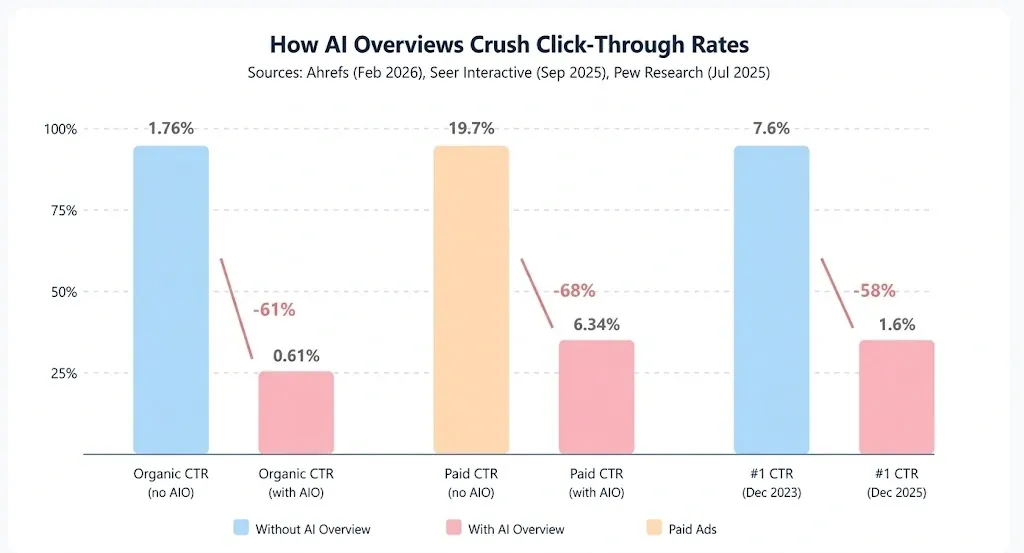
But this also means an added cost layer for several reasons, like:
- Agencies have introduced GEO as a distinct service. Ongoing GEO optimization retainers typically cost between $2,000 and $10,000 per month, on top of a traditional SEO retainer.
- GEO requires a different skill set, focusing on structured data, entity optimization, and citation-building rather than just keyword targeting.
- The AI search market is projected to grow from $43.63 billion in 2025 to $100+ billion by 2032. As this channel matures, the cost to secure and maintain AI citations will likely increase.
For businesses in information-driven niches, ignoring GEO could mean losing visibility in the future of search.
👉 For more details on this topic, you can check out Tenet's LLM SEO guide, which covers how this works in practice.
Get a customized SEO proposal from our experts
Tenet took on Yomly, an enterprise HR and payroll platform in the competitive GCC market. Yomly came to us with weak technical foundations and low organic visibility.
Within 6 months, the results were clear:
- First page keyword rankings: from 132 to 763
- Organic clicks: from 5,250 to 20,500
👉 Request a customized SEO proposal
Here is the image showing the organic growth of Yomly after working with Tenet:

- Monthly enterprise leads: from 6 to over 30
- AI visibility: gained citations across Google AI Overviews and LLM platforms
That is what happens when you match the right strategy to a difficult niche.
Your niche might be just as challenging, or maybe it is simpler. Either way, the only way to know what SEO should cost you is to look at your actual site, your actual competitors, and your actual goals.
That is exactly what Tenet's free proposal does. We will:
- Audit your domain authority.
- Map your keyword competition.
- Estimate your link-building budget.
- Flag any YMYL compliance risks.
And tell you whether GEO (Generative Engine Optimization) is becoming necessary for your industry.
Curious whether your niche is heading toward higher GEO costs or stricter YMYL rules? Feel free to reach out. We will show you what we did for Yomly and what we can do for you.
Get a customized SEO proposal tailored to your niche, competition, and growth goals.
Get a customized SEO proposal tailored to your niche, competition, and growth goals.





















Got an idea on your mind?
We’d love to hear about your brand, your visions, current challenges, even if you’re not sure what your next step is.
Let’s talk


