
10 Ecommerce Branding Strategies for D2C Brands
 By
By Share

Share
Get a quick blog summary with



Think of brands like Gymshark, Glossier, Liquid Death, or Oatly. You probably recognized them instantly, even before seeing their logo. That's because strong ecommerce brands don't just sell products. They build distinctive identities that customers remember.
To understand what makes those brands stand out, we studied leading D2C companies and broke down the branding decisions behind their growth, from visual identity and messaging to packaging and customer experience.
This guide brings together those insights into 10 ecommerce branding strategies every ecommerce business should learn from in 2026.

1. Build a Brand People Believe In
Many ecommerce brands compete on price, product features, or faster shipping. These factors may drive first-time purchases, but they rarely build long-term loyalty. The brands people remember stand for something bigger than the products they sell.
Patagonia is a great example. Its mission, "We're in business to save our home planet," shapes far more than its marketing.

The company also encourages customers to repair products through its Worn Wear program, supports environmental initiatives, and even launched the iconic "Don't Buy This Jacket" campaign to promote conscious consumption.
The following image is of Patagonia’s iconic "Don't Buy This Jacket" campaign:
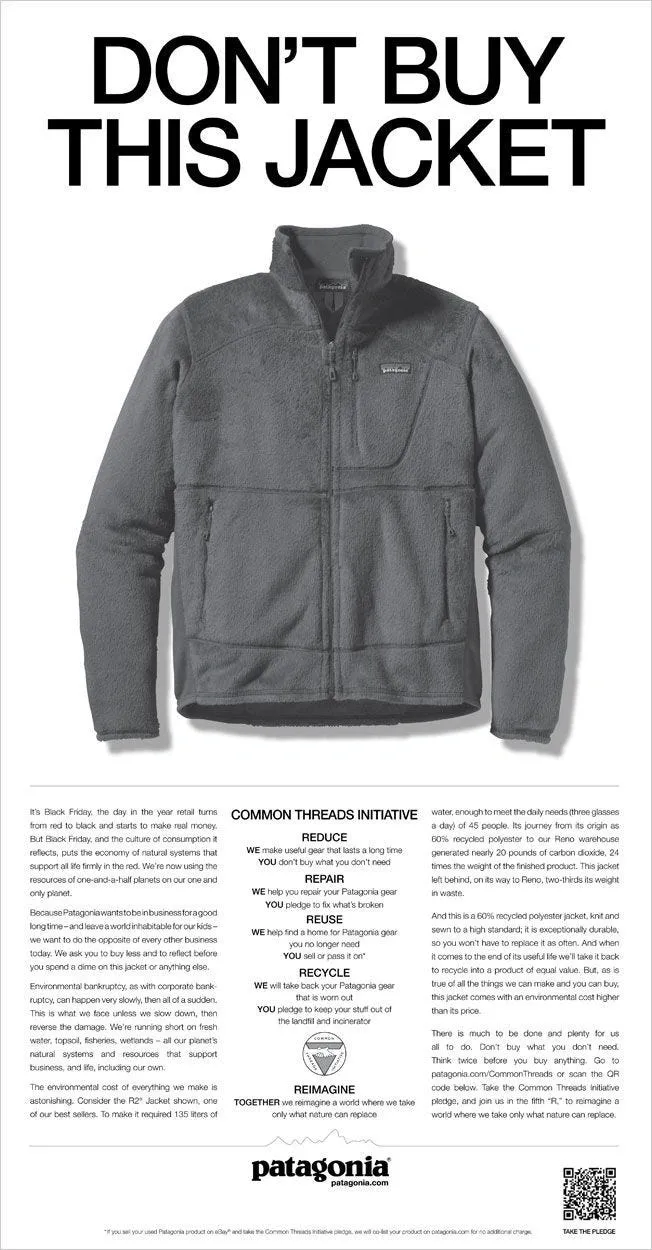
Every initiative reinforces the same belief, making Patagonia instantly recognizable beyond its products.
This shows that your brand doesn't need a global mission to create the same impact. It needs a clear belief that guides your decisions and is reflected consistently across your website, packaging, campaigns, and customer communication.
How to Apply This Strategy
- Identify one decision your brand is willing to make that most competitors wouldn't. For Patagonia, it was encouraging customers to repair products instead of replacing them.
- Identify the business decisions where your brand belief should be visible, such as packaging, returns, shipping, product design, or customer support.
- Remove campaigns or offers that contradict your brand, even if they could increase short-term sales.
- Turn your brand belief into a customer-facing initiative instead of limiting it to your website. This could be a repair program, a sustainability commitment, or a unique customer policy.
- During quarterly brand reviews, check whether new products, partnerships, and campaigns still reflect the same belief.
2. Create a Signature Visual Identity
Oatly stands out on a crowded grocery shelf because it has committed to a small set of distinctive visual choices. Its hand-drawn typography, matte packaging, monochrome illustrations, and playful layouts appear across its milk cartons, website, advertisements, and social media.

The important part is the repetition. Oatly does not create a completely different visual style for every product launch or campaign.
The same design choices appear again and again, making them strongly associated with the brand. Over time, customers can recognize Oatly before they even see the logo.

How to Apply This Strategy
- Start by reviewing the visual styles of your five closest competitors. Look at their colors, typography, photography, illustrations, packaging, and layouts to identify patterns that are already common in your category.
- Choose two or three distinctive visual elements that your brand can repeat across different formats. This could be a particular typeface, photography style, illustration treatment, or packaging detail.
- Create a simple one-page reference for anyone producing brand content. Show how your chosen elements should be used and include a few examples of what does not fit the brand.
- Apply the same visual choices across your website, packaging, product photography, email campaigns, social media, and paid advertising instead of creating a new look for every campaign.
- Test your visual identity by placing one of your recent creatives beside competitor ads and covering the logos. If the designs are difficult to tell apart, you may need stronger visual distinctions.
3. Show Customers How the Brand Gets Built
Customers usually see the finished product, but growing D2C brands can build a stronger connection by showing what happens before it reaches them. Product experiments, packaging decisions, manufacturing problems, customer feedback, and even failed ideas can give people a reason to follow the brand beyond the products themselves.
Gymshark has used this approach particularly well through founder Ben Francis and the company's content. His videos and social posts have shown product development, business decisions, setbacks, and the realities of scaling the company.

This gives customers more context around the brand and makes them feel like they're watching the business grow rather than simply being marketed to.
A founder doesn't need millions of followers to have the same impact. Consistently sharing the thinking behind your business, product development, and brand decisions helps customers connect with the people behind the company, making the brand feel more authentic and relatable.
How to Apply This Strategy
- Choose the parts of your business that customers would genuinely find interesting, such as product development, sourcing, packaging, manufacturing, or fulfillment, and make those the focus of your behind-the-scenes content.
- Show the actual process instead of only presenting the finished result. A failed prototype or a rejected packaging design can tell a more interesting story than a polished product photograph.
- Share customer feedback when it has directly influenced a product or business decision. This shows customers that their input can affect what the brand creates next.
- Give people access to the specialists behind the product by showing how your designers, manufacturers, product developers, or fulfillment teams solve problems.
- Build this content around real business milestones rather than creating artificial behind-the-scenes posts simply to maintain a posting schedule.
4. Give Your Brand a Voice Customers Recognize
Most ecommerce brands describe themselves with the same handful of words: premium, high-quality, thoughtfully designed, expertly crafted. After seeing these phrases across dozens of product pages, customers have little reason to remember one brand over another.
You can see how BarkBox writes for people who already have a very specific way of talking about their dogs. Its emails, product names, packaging, and shipping updates use words such as pupper, zoomies, and scritches.
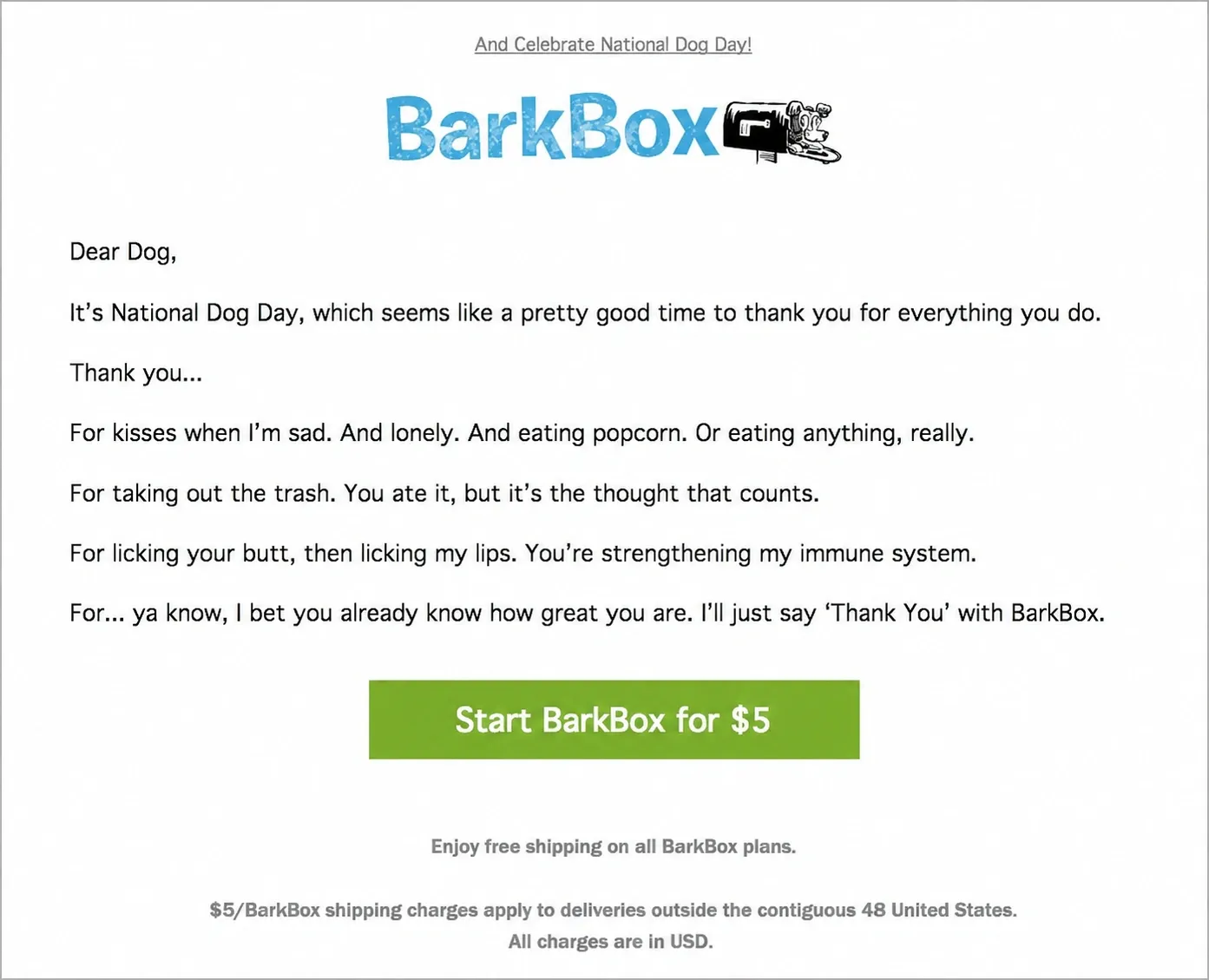
The language feels like it comes from the dog-loving community itself rather than from a marketing team trying to sound playful.
Your brand does not need to use slang or humor to stand out. Start by finding the words your customers naturally use to describe their problems, preferences, and experiences, then build those expressions into your brand's vocabulary.
How to Apply This Strategy
- Read customer reviews, social comments, support conversations, and community discussions to find the phrases people naturally use when talking about your products.
- Create a simple "This, not that" vocabulary guide for your writers. Replace phrases such as "elevate your routine" with specific language that explains what the product actually helps customers do.
- Look at transactional messages such as shipping updates, order confirmations, and delivery notifications, and use them as opportunities to introduce your brand's personality.
- Replace vague adjectives such as premium, innovative, and luxurious with concrete details that show customers what makes the product different.
- Read important copy aloud before publishing it. If it sounds like something your customers would never say, rewrite it in more natural language.
5. Design a Website That Feels Like Your Brand
Your ecommerce website does more than help customers find and buy products. The layout, photography, colors, typography, and even small interactions shape how people experience the brand. A store selling premium skincare, for example, should not feel like a generic product catalogue simply because it runs on Shopify.
When you open Glossier's website, you'll notice that every element reflects the same personality. Soft colors, generous white space, natural-looking photography, and simple product layouts create the same relaxed, approachable feeling associated with its physical stores and packaging.
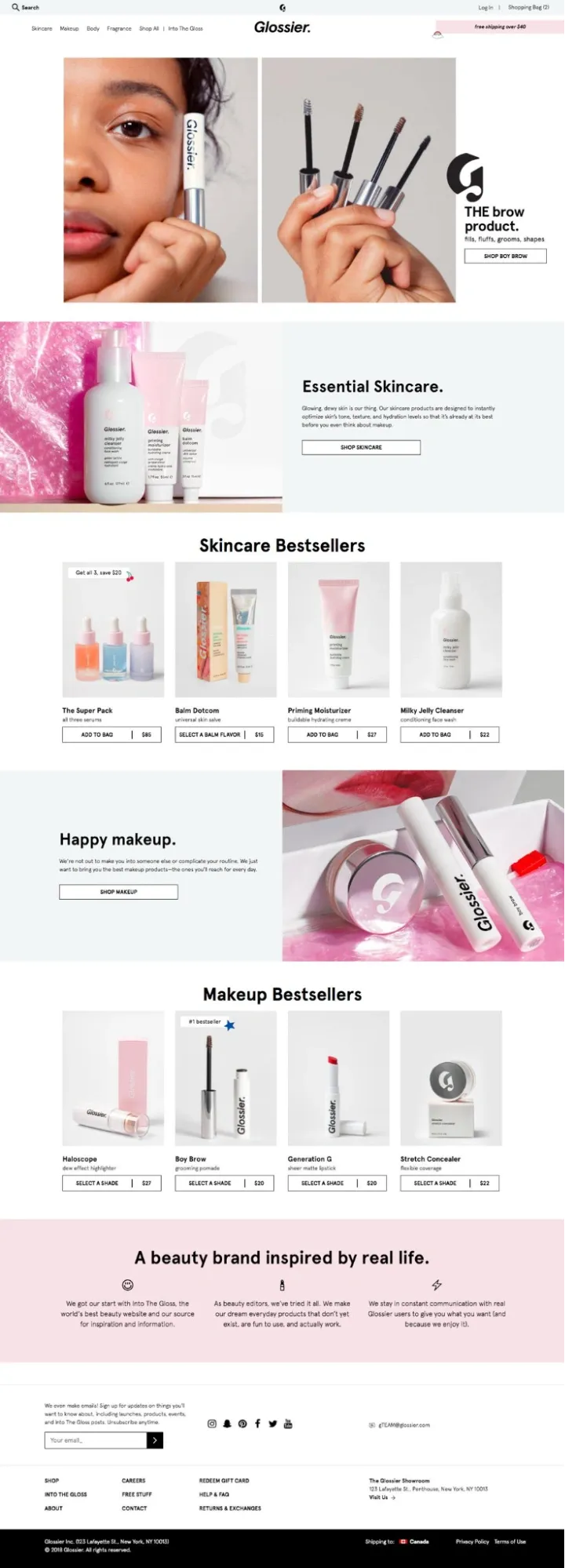
The website feels like part of the brand rather than a separate sales channel.
A well-designed ecommerce website should feel like a natural extension of your brand. Every page, interaction, and design choice should reinforce the same impression customers saw in your advertising, packaging, and social content.
How to Apply This Strategy
- Start by identifying the three or four qualities you want customers to associate with your brand, then check whether your website actually reflects them through its layout, imagery, colors, and interactions.
- Match the visual treatment of your website with your physical packaging and other customer-facing materials so the transition between channels feels natural.
- Use photography that reflects how you want customers to experience the product, rather than relying entirely on standard studio images or generic stock photography.
- Give small interface elements the same attention as larger visuals like buttons, icons, product cards, menus, and checkout messages should follow the same design choices as the rest of the site.
- Review the mobile version separately rather than assuming the desktop design will translate well. Navigation, product cards, spacing, and sticky elements can easily make a carefully designed brand feel like a generic ecommerce template.
- Before launching a new landing page or campaign, check it against the rest of the website because it’s important that even a page created for a single promotion should still look and sound like it belongs to the same brand.
6. Make Packaging Part of the Brand Experience
The package is often the first physical interaction a customer has with an e-commerce brand. If the website feels carefully designed but the order arrives in a generic plastic mailer, part of that impression is lost. Packaging gives brands another opportunity to carry their personality into the customer's home.
Ekatra keeps this experience closely tied to what it sells. Its products arrive in reusable cotton pouches with branded fabric tags and minimal packaging, which fits the brand's focus on craftsmanship and sustainability.

The materials serve a practical purpose while also making the delivery feel considered.
Good packaging does not have to mean expensive boxes, elaborate inserts, or unnecessary extras. The better approach is to choose materials and details that make sense for your product and give customers a reason to remember the experience.
How to Apply This Strategy
- Compare your packaging with your website and product photography, and carry over a few recognizable choices such as colors, typography, materials, or patterns.
- Choose packaging that customers can reuse, such as a cotton pouch, storage box, or product-care card, so it remains useful after the order is opened.
- Use the inside of the package for a short message, illustration, care instructions, or product story instead of filling it with generic promotional material.
- Select materials that match your brand's values and avoid packaging choices that contradict what you tell customers about your products.
- Order a few samples and open them yourself from the customer's perspective to identify anything that feels wasteful, confusing, difficult, or forgettable.
- Compare the cost of custom packaging elements with your average order value and shipping costs before deciding where additional spending will actually improve the experience.
7. Encourage Customers to Create Content
Most brands ask customers for reviews after a purchase and leave it there. A stronger approach is to give customers a reason and an easy format for sharing how they use the product. The best customer content can then become part of your product pages, social media, emails, and advertising.
GoPro has built this into its marketing through the GoPro Awards, which invite customers to submit their photos and videos for a chance to receive rewards and appear on GoPro's channels.

The company gets a steady stream of real footage while customers get recognition and the opportunity to have their work featured. More importantly, the content shows potential buyers what people actually do with the product.
You don't need a large rewards program to do this. A clear prompt, recognition from the brand, or a reason to share can be enough to get customers involved.
How to Apply This Strategy
- Give customers a specific idea for what to share instead of simply asking them to "tag us," such as showing how they use the product, their favorite feature, or a before-and-after result.
- Add the content prompt to a natural part of the customer journey, such as the package insert, post-purchase email, or product-care instructions.
- Create a dedicated space on your website where customers can see other people's photos and videos using the product.
- Ask customers for content after they have had enough time to use the product rather than immediately after delivery, since their experience will be more useful and genuine.
- Feature customer content across your product pages, email campaigns, and social media, and always get permission before using someone's content in paid advertising.
- Recognize customers whose content stands out by featuring them on your social channels, sending a small gift, or giving them early access to new products.
8. Build a Community Around the Product
A customer community becomes valuable when people have a reason to interact with one another, not just with the brand. That reason could be a sport, hobby, lifestyle, creative interest, or a shared goal that already exists among your customers.
Tracksmith has built its community around serious amateur running rather than treating runners simply as apparel buyers. Through the Hare AC, local events, training groups, race support, and community activities, the brand gives runners places to meet and participate beyond buying its products.
Here’s a glimpse from the Boston marathon weekend:

Another example is Gymshark, as it has built one of the strongest fitness communities in the D2C space.
Beyond selling apparel, the brand organizes Gymshark Run Club, Gymshark Lifting Club, and Gymshark Conditioning Club, along with community workouts and events in cities around the world.
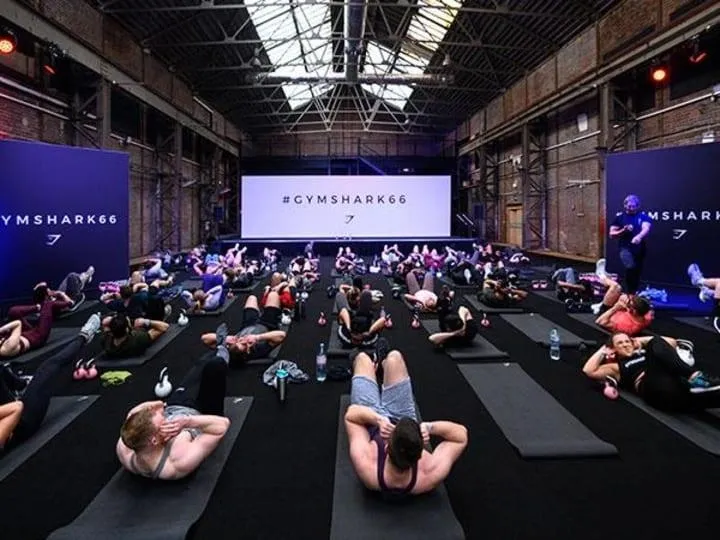
These initiatives bring customers together around fitness rather than focusing only on products. The result is a community that actively engages with the brand, both online and offline.
How to Apply This Strategy
- Build the community around an interest or goal your customers already share rather than creating a group that exists mainly to discuss your products.
- Start with a small group of your most engaged customers and give them a specific reason to participate, such as sharing progress, learning a skill, or testing upcoming products.
- Partner with existing local groups or communities instead of trying to attract everyone yourself, especially when there are already active clubs or meetups in your category.
- Give members opportunities to contribute by sharing advice, organizing activities, testing products, or helping other customers rather than making the brand the center of every conversation.
- Create recurring activities that give people a reason to return, such as monthly challenges, local events, workshops, or community discussions.
- Measure participation rather than membership alone by tracking how many members return, contribute, attend events, or interact with other customers.
9. Use Social Proof Where Customers Need Reassurance
Customers don't always need more information before buying. Sometimes they simply want to know whether other people had the same concern and still decided to purchase.
Reviews, customer photos, testimonials, and real experiences can answer those questions more convincingly than another paragraph of brand copy.
Obvi brings customer experiences into prominent parts of its website instead of leaving reviews at the bottom of product pages. Before-and-after photos, testimonials, customer messages, and other user content appear alongside product information, giving shoppers evidence from people who have already tried the products.
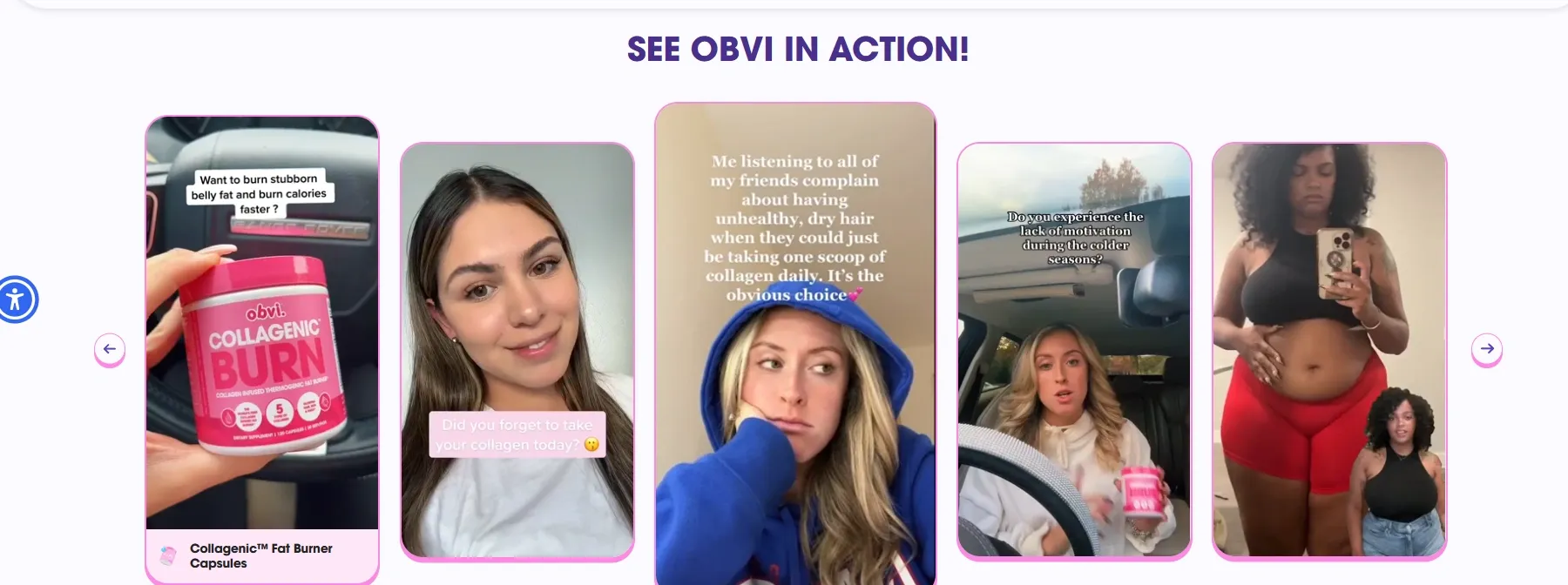
The useful approach is to match the evidence to the question customers are asking. Someone worried about fit needs a different review from someone questioning whether a product actually works, so showing the same five-star testimonials everywhere misses an opportunity.
How to Apply This Strategy
- Group your reviews by common customer questions, such as fit, quality, durability, taste, results, or delivery, so shoppers can quickly find feedback relevant to their concern.
- Place specific testimonials near the product information they support instead of putting every review into one section at the bottom of the page.
- Replace some polished product images with real customer photos or videos that show how the product looks and works in everyday situations.
- Ask customers to describe what they were trying to solve when requesting reviews, because specific experiences are more useful to future buyers than generic praise.
- Keep adding recent customer experiences so your website reflects what people are saying about the product now rather than relying on a small collection of old reviews.
- Use verified-purchase labels and customer photos where available, while clearly identifying sponsored or incentivized reviews.
10. Collaborate With Creators Who Understand Your Brand
A creator can have the right audience and still be the wrong partner for your brand. If they don't understand the product or regularly promote unrelated products, the collaboration can feel like another paid advertisement rather than a recommendation worth considering.
Seed takes creator education seriously. Before promoting its products, creators can go through Seed University, which teaches them about the science behind the products and gives them the information needed to discuss them accurately.
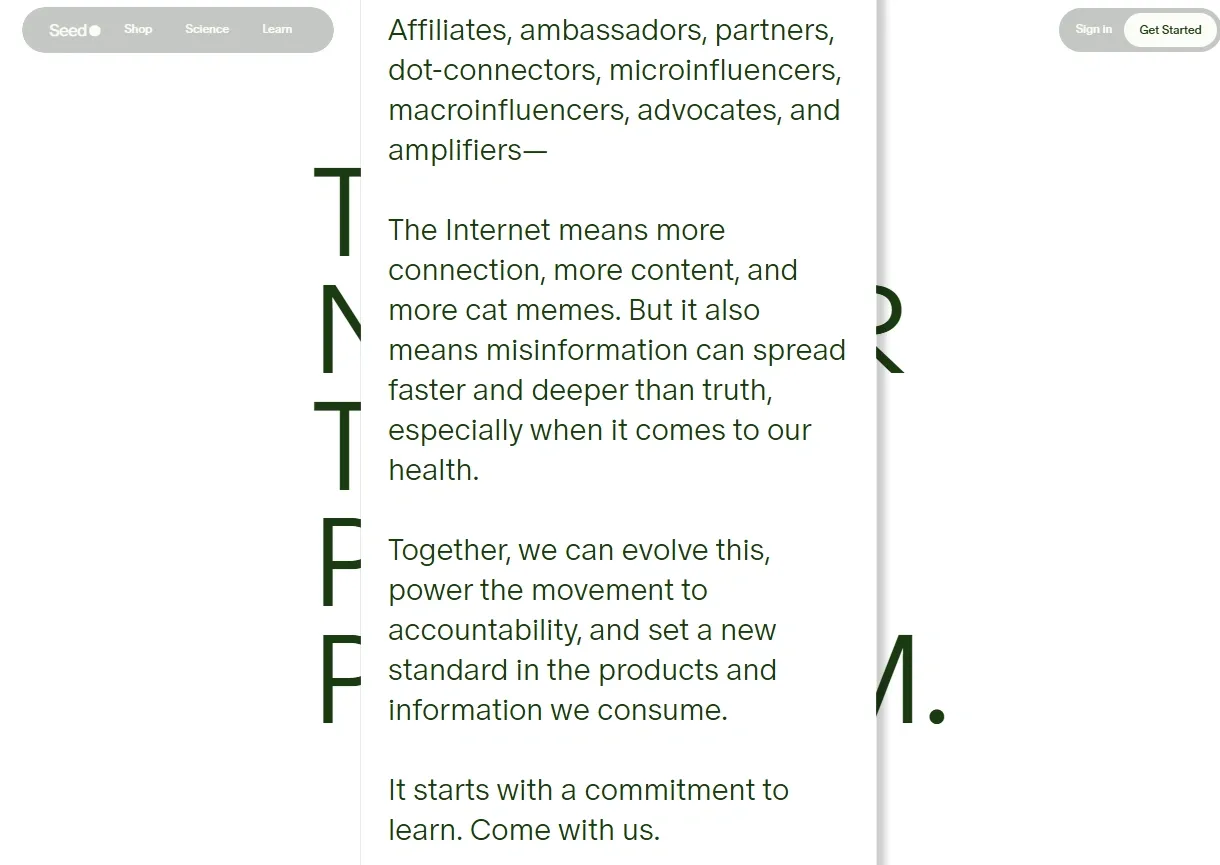
This gives creators more substance to work with than a typical campaign brief filled with product features and promotional lines.
The goal isn't to make every creator sound like your marketing team. It is to give them enough understanding of the product and the brand that they can explain it in their own way without losing what makes it distinctive.
How to Apply This Strategy
- Review a creator's recent content before reaching out and look for how often they promote competing or unrelated products, because frequent promotions can make another sponsored recommendation feel less credible.
- Give creators enough product knowledge to explain what they are recommending, especially when the product involves ingredients, materials, technology, or a specific process that customers may want to understand.
- Replace long lists of mandatory talking points with a short product guide that explains what matters, what claims they should avoid, and what makes the product different.
- Let creators use their own filming style, language, and format instead of forcing them to reproduce your brand's advertisements on their channels.
- Test longer partnerships with creators whose content performs well, so customers see the product as something the creator genuinely uses rather than a one-time sponsorship.
- Judge partnerships using the quality of the response as well as reach, paying attention to questions, conversations, saves, shares, and clicks from people who appear genuinely interested in the product.
💡 Check out these Ecommerce guides for future reference:
- E-commerce product page best practices
- Visual Branding Guide for 2026
- E-commerce CRO audit
- UI/UX design cost in 2026
How Tenet helped the Pazazz brand with branding
Building an e-commerce brand requires more than a memorable logo. Every interaction, from the visual identity to the online shopping experience, should reinforce the same brand promise and make it easier for customers to connect with the business.
For Pazazz, Tenet developed a complete brand identity and e-commerce website that reflected the company's vision and supported its growth in the athleisure market. Our work for Pazazz included:
- Conducting brand discovery workshops and market research to define the brand's positioning and identity.
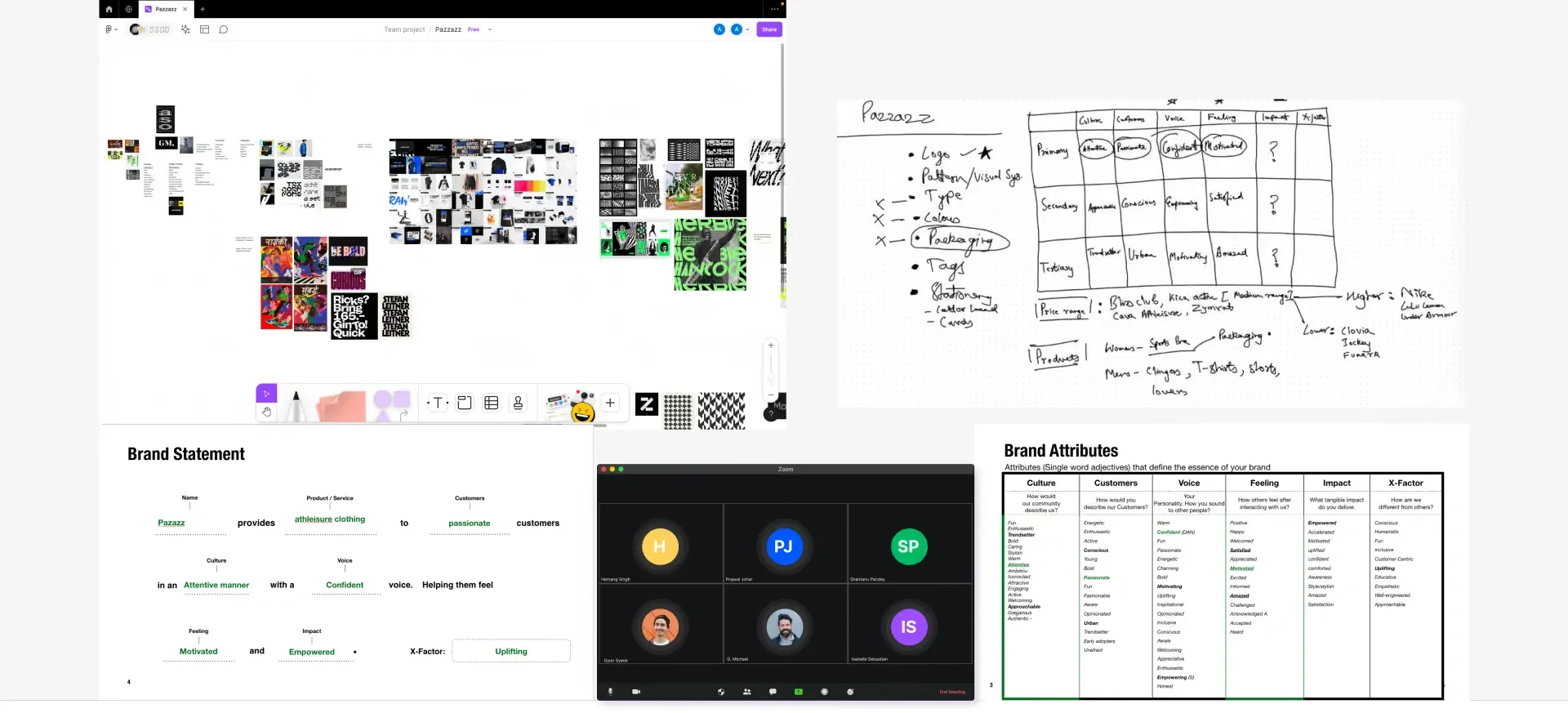
- Designing a visual identity system, including the logo, packaging, and supporting brand assets.
- Creating a cohesive design language that reflected Pazazz's core brand values across every customer touchpoint.
- Designing and developing a conversion-focused e-commerce website with AI-powered product recommendations.
- Implementing GA4 to help the team better understand customer behavior and continuously improve the shopping experience.
The result was a brand identity and e-commerce website that presented Pazazz in a clear, consistent, and modern way while supporting its long-term digital growth.
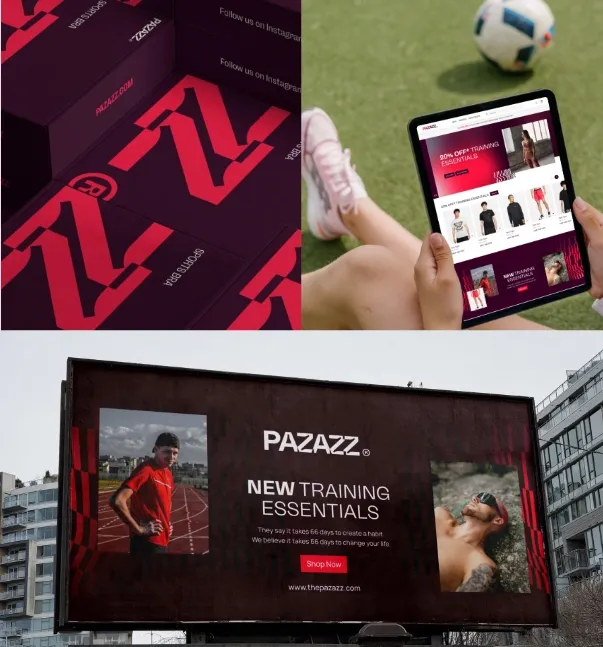
If you're building a new e-commerce brand or refreshing an existing one, we'd love to learn more about your business and explore how we can help.

👉 As a next step, Request a Branding Proposal and our experts will reach out to you in 24 hours.
Make your ecommerce brand more memorable and connect with customers through powerful branding.
Make your ecommerce brand more memorable and connect with customers through powerful branding.
























Got an idea on your mind?
We’d love to hear about your brand, your visions, current challenges, even if you’re not sure what your next step is.
Let’s talk


