
How Long Does it Take You to Develop a Website?
 By
By Share

Share

Get a quick blog summary with



Most websites take one week to six months to build. A small business site with simple pages takes one to four weeks. A custom site with unique layouts takes four to eight weeks. An e-commerce site or a web app with many features takes three to six months.
The timeline depends on the number of pages, design needs, the features you want, and how quickly the client provides content and feedback.
Here is a simple TLDR table that shows the average timeline for each type of website. This will help you set the right expectations before you start your project 👇
Below is a detailed breakdown to understand the website development timeline:
1. Simple Business or Portfolio Website
Duration: One to three weeks
Pages: Three to five pages, like Home, About, Services, Contact, and Blog
Work Involved: Basic page design, responsive layout, simple content upload, a contact form, and basic SEO setup.
Tools Used: WordPress, Wix, or custom HTML and CSS.
Factors that affect time:
Small delays in content delivery and design revisions can extend the timeline.
2. Custom Website (Designed from Scratch)
Duration: Four to eight weeks
Pages: Five to fifteen pages, depending on the design and layout needs
Work Involved: Full UI and UX design in tools like Figma, custom frontend development with HTML, CSS, JavaScript, or React, backend setup for forms or content sections, and device testing to confirm the design works well across devices.
Tools Used: Figma or similar design tools for layouts, and modern frontend and backend stacks for development.
Factors that affect time: Frequent design changes, unclear content, and long feedback cycles can extend the timeline.
3. E Commerce Website
Duration: Two to four months
Pages: Ten to fifty plus
Work Involved: Custom product pages, cart and checkout flow, payment gateway setup, inventory integrations, SEO work, and device-speed optimisation.
Tools Used: Shopify, WooCommerce, Magento, or a custom tech stack.
Factors that affect time: Product entry, payment approval, and long rounds of client feedback often extend the timeline.
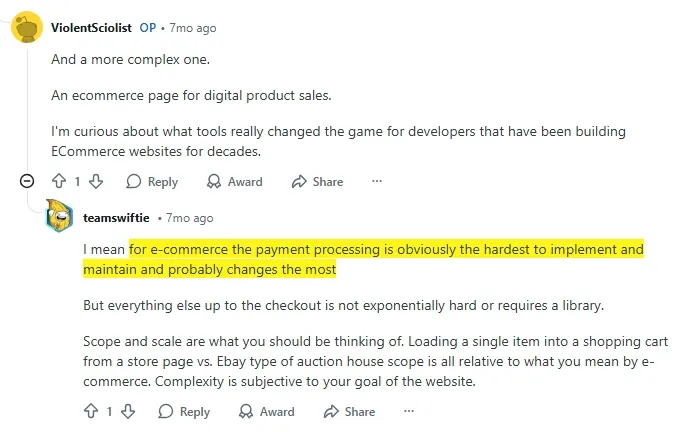
Here’s a conversation among website developers on Reddit, who shared that payment processing for an E-commerce website is the most time-consuming task.
4. Web Application or SaaS Product
Duration: Four to six months or longer
Pages: Many screens and user flows instead of normal pages
Work Involved: Custom frontend work using React, Vue, or Angular, backend setup for APIs and databases, user login and authentication, dashboards, real-time features, and deep testing across devices.
Tools Used: Modern frontend frameworks, custom backend systems, cloud databases, and API services.
Factors that affect time: Complex user flows, data handling, third-party integrations, and repeated version releases add more time to the build.
5. Landing Page Website
Duration: Three to seven days
Pages: One focused page built for a single offer, product, or campaign
Work Involved: A clear hero section, simple content sections, a mobile-friendly layout, tracking setup for analytics, and a strong call to action that supports conversions.
Tools Used: Webflow, WordPress builders, or custom HTML and CSS.
Factors that affect time: Frequent copy edits, design revisions, or unclear messaging can add extra days.
6. Blog or Content Website
Duration: One to three weeks
Pages: A home page, category pages, and a blog post template
Work Involved: CMS setup, content structure, layout styling for articles, category design, internal linking, and basic search and tagging features.
Tools Used: WordPress, Ghost, or a headless CMS with a frontend framework.
Factors that affect time: Large content loads, SEO driven refinements, or layout tweaks requested late in the process.
7. Membership Website
Duration: Six to twelve weeks
Pages: Public pages plus gated areas for members only
Work Involved: User registration, login system, role-based access, subscription plans, payment setup, protected content layouts, and a simple dashboard for members.
Tools Used: WordPress membership plugins, Webflow Memberships, or a custom backend.
Factors that affect time: Complex access rules, payment logic, and different membership tiers often extend the build time.
8. Booking or Appointment Website
Duration: Eight to twelve weeks
Pages: Main pages plus booking screens and confirmation pages
Work Involved: Calendar setup, time slot logic, staff scheduling, notifications, payment features, and backend tools to manage bookings.
Tools Used: Booking plugins for WordPress, Webflow booking tools, or a custom scheduling system.
Factors that affect time: Advanced scheduling rules, calendar syncing, and extra approval workflows can slow the setup and testing process.
What are the key factors that influence development time?
- Project scope: The number of pages and features decides how much work the team must do from start to finish.
- Design complexity: Custom layouts, detailed visuals, and advanced interactions take more time to create and test.
- Content readiness: The project slows down when text, images, or product data are not ready at the right stage.
- Client decisions and feedback: Fast approvals help the project move forward, while slow or unclear feedback creates long pauses.
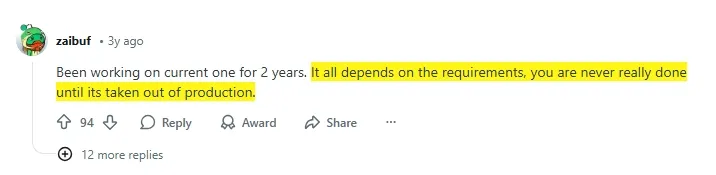
An expert shared on Reddit that website development time depends on the client's requirements.
- Third-party integrations: Payment systems, APIs, and external tools add extra time because each one needs setup and testing.
- Developer experience and workflow: Developers who reuse components and follow a clear process finish tasks much faster than those building everything from scratch.
- Technical issues and testing needs: Fixing bugs across different screens and running speed, security, and device tests adds more time to the build.
⚒️ Helpful tools for faster website building and testing:
- Test screen width and height across devices to plan responsive layouts correctly with what is my viewport checker.
- Ensure text and background colors meet accessibility standards and avoid redesign delays using color contrast checker.
- Review all indexed pages before launch to speed up SEO checks and sitemap audits with XML sitemap url extractor.
- Find broken links, redirects, and server errors that can slow down website delivery using HTTP status checker.
At Tenet, We Build Websites That Drive Growth, Not Guesswork
At Tenet, website development is not about speed or shortcuts. It is about depth, clarity, and delivering digital experiences that move your business forward. We begin every project with discovery, where we study your users, map their journey, and align every screen with your core goals.
Our team designs clean interfaces, builds fast, secure code, and validates every flow with real user feedback. This approach is why brands like G42 Healthcare, Angles, ASDAV, and IROS trust us to develop websites that do more than look good; they convert, scale, and drive measurable outcomes.
If you value research-led development and long-term partnership, connect with the Tenet team and get a free project proposal.
Boost your brand and conversions — Receive your free web design quote
Boost your brand and conversions — Receive your free web design quote



















Got an idea on your mind?
We’d love to hear about your brand, your visions, current challenges, even if you’re not sure what your next step is.
Let’s talk


