
How to Get Quality Natural Backlinks Every Month FREE
 By
By Share

Share
Get a quick blog summary with



Most link building still depends on active tactics such as outreach, guest posting, and citation building. These methods work, but they require ongoing effort and can be difficult to scale.
A more sustainable way to build a natural link profile is to create linkable assets that journalists, publishers, and industry experts can reference when they need useful data or information. These assets can help generate organic backlinks long after they are published.
In fact, we used the same approach on our own website, wearetenet.com, and generated thousands of backlinks from 300+ referring domains with DR above 10 and domain traffic above 1,000.
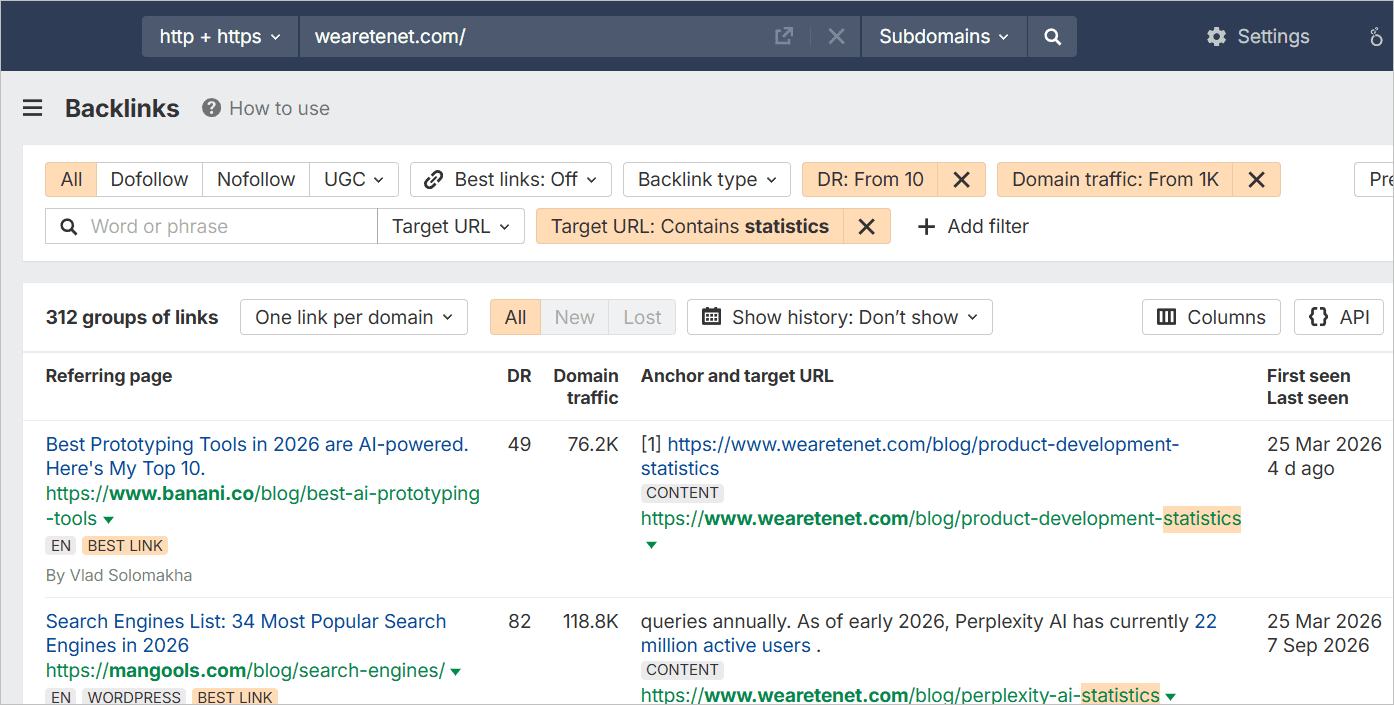
In this guide, we explain how we identify linkable opportunities, create the right assets, and structure them to generate organic backlinks over time.
Learn about our SEO approach behind the AI SEO services.
Types of link building methods
There are two ways we usually think about getting backlinks: active link building and passive link building.
1. Active backlinks
Active link building is when we go out and try to get the links ourselves. We reach out to websites, publish guest posts, build citations, submit to directories, contact resource pages, and do digital PR. The idea is simple: find a relevant website and convince them to link to our page.
There is nothing wrong with this. In fact, active link building can work very well. The problem is that it is difficult to scale. If you stop outreach, guest posting, and other link building activities, the flow of new backlinks usually slows down too.
This is where passive link building becomes interesting.
Passive or organic backlinks
Passive or natural backlinks are links that other websites add to their content without you directly asking them to link to your website. They usually happen when someone finds your content useful and references it as a source. This could be a journalist citing your research, a blogger referencing your statistics, or an industry expert linking to a tool or report that supports their point.
Here are some of the common ways to acquire organic natural backlinks:
- Original research and studies
- Industry reports and surveys
- Statistics articles
- Free tools and calculators
- Interactive maps and visualizations
- Useful templates and checklists
- Survey report
What’s missing in active link building methods
Both approaches have a place in an SEO strategy. However, most link building strategies tend to focus heavily on active acquisition.
This creates a problem with scalability. Active link building requires ongoing work. You need to keep finding prospects, sending outreach emails, publishing guest posts, building citations, and looking for new opportunities. When you reduce these activities, the number of new backlinks can also decline.
What is often missing is a system that can generate backlinks without requiring us to pursue every link opportunity ourselves.
This is where linkable assets come in.
Instead of using all of your content effort to create pages that target search queries, you can dedicate part of it to creating resources that people are likely to reference. A practical approach is to invest around 10% of your content effort into linkable assets.
These could include original research, public data analysis, annual industry reports, survey results, statistics pages, free calculators, interactive tools, maps, and other data driven resources.
For example, Redfin has built a large library of housing market reports using housing data and public records.
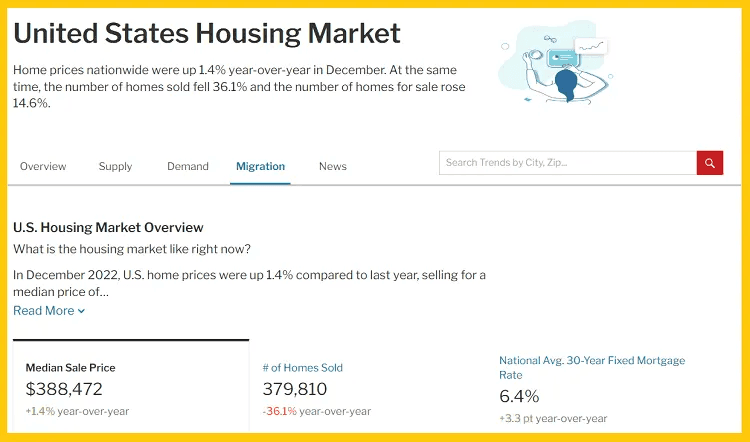
They also made these data and maps embeddable which makes it more link-worthy:
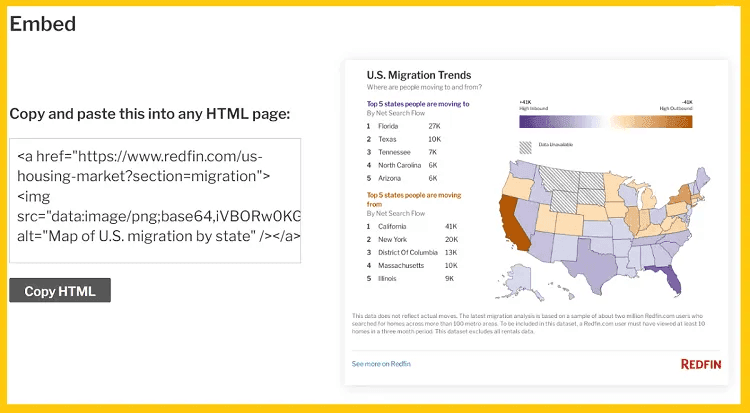
These reports give journalists, publishers, and other websites useful data they can reference when writing about the housing market.
The idea is not to replace active link building. It is to add a second source of backlinks to your strategy.
Active link building helps you acquire backlinks through direct effort. Linkable assets can create opportunities for websites to discover and reference your content on their own. Combining both gives you a more sustainable link acquisition system.
How to generate organic and natural backlinks through linkable assets
Creating a linkable asset starts with finding something that other people would genuinely want to reference. The right asset depends on the business, the data it has access to, the topic, and how easy we make the page to use as a source.
Here is the process we follow at Tenet SEO agency:
Understand the business type to find the leverage
The first step is to understand what type of business you are working with. Different businesses have access to different types of first hand information, and this can become the foundation of a strong linkable asset.
For example, a SaaS company may have data from thousands or even millions of users. Instead of creating another generic article about AI adoption, it could analyze its own user data and publish a report such as “What we learned about AI adoption from 100,000 users.”
A course provider or educational institute has access to a different type of data. It may know why students enroll, what careers they want to pursue, which skills they want to learn, or what their career goals are. This could become a study such as “What do students want to become in 2026? a survey of 1,000 learners.”
A marketing agency may not have a large product dataset, but it can conduct its own research. For example, it could survey 100 marketers about how they expect AI to change marketing and SEO.
Here’s how Ahrefs turned a survey into a data-rich article on how marketers are using AI content:
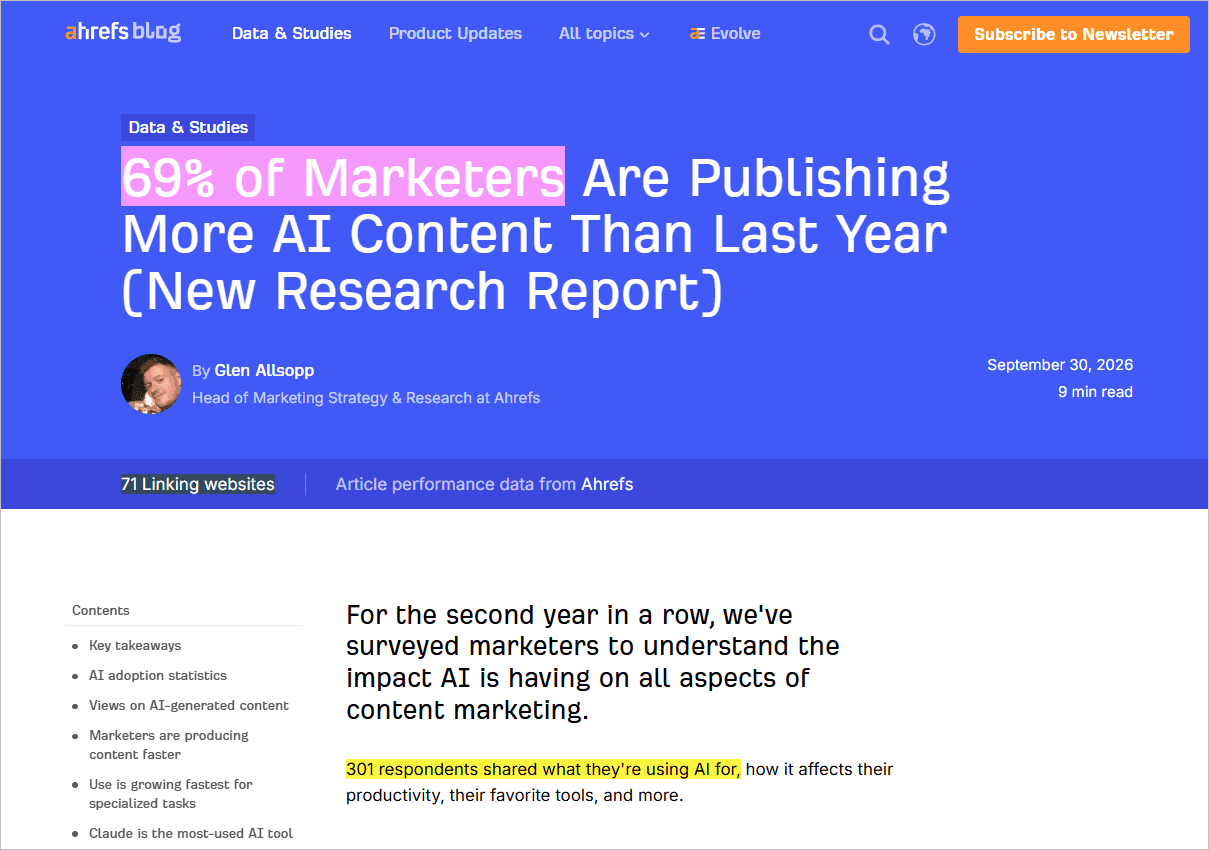
Because of unique data and insights coming from real marketers, the page already received backlinks from 71 unique domains.
This does not mean every business needs proprietary data. Some linkable assets work across almost every industry. Statistics pages, industry reports, original surveys, calculators, tools, datasets, and visualizations are common formats that can work for many businesses.
The important part is to first identify the leverage the business already has. Then decide which type of asset can make the best use of it.
Research topics that have proven link potential
Once you know what information you can create, the next step is finding the right topic.
Do not look only at search volume. Search demand tells you whether people are looking for the topic, but it does not tell you whether the topic can attract backlinks.
One useful way to assess this is to look at pages that already rank for related topics and check whether they have earned organic backlinks.
For example, if several statistics pages about AI have earned hundreds of referring domains, that is a useful signal. It shows that journalists, publishers, and other websites already use this type of content as a source.
You can then look for a better opportunity within the same topic. You may have newer data, first hand data, a larger dataset, a different geographical focus, or information that existing pages do not cover.
The idea is to find the intersection between search demand and link demand.
A topic with search demand can bring visitors. A topic where similar resources already attract backlinks can show that there is an existing reason for publishers to cite the information.
Prepare the page to be easy to link to
Once you decide what to create, build the page with one principle in mind: make it as easy as possible for someone to link to.
The format can be a research report, survey, statistics article, calculator, tool, dataset, or another type of resource. But the page structure should help people quickly find and use the information.
For a statistics article, put the most important statistics near the top of the page. Do not make a journalist read 2,000 words before they find the number they need.
For an original research report, show the key findings clearly. Include tables, charts, sample sizes, dates, and other information that helps someone understand the research quickly.
For a calculator or tool, focus on making the result useful beyond your own website. If possible, allow users to share their results or embed the tool on their own websites.
The same principle applies to other formats. Think about what information another website would want to reference and make that information easy to find.
Make the important information easy for journalists to scan
A journalist may visit your page because they need one statistic for an article. They are not necessarily interested in reading the entire page.
Structure the content around that behavior.
Put key statistics and findings near the top. Use clear headings, tables, short explanations, charts, and summary sections. Make it obvious which numbers are the main findings.
For example, if you publish “AI SEO Statistics 2026,” the page should not bury the most useful statistics halfway down the article. The key numbers should be visible and easy to understand.
In statistical roundup pages, we add a TL;DR section after the introduction in our statistical roundup articles, making it easy for journalists to scan the key statistics.
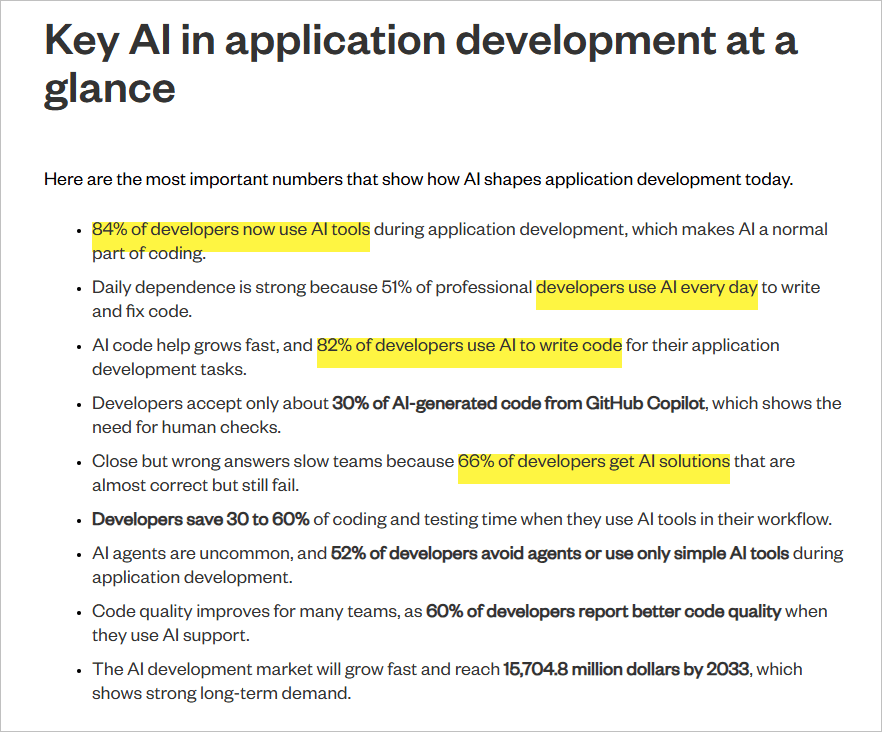
This also helps other writers, researchers, and subject matter experts who are looking for information they can reference quickly.
Make every claim verifiable
If you want people to cite your information, make it easy for them to verify it.
For statistics collected from third-party sources, provide the original source URL. For your own research, explain how you collected the data and include details such as the sample size, research period, methodology, and data sources.
If you survey 1,000 people, explain who participated, when the survey was conducted, and how the responses were collected.
This is why we always add a methodology section to our original research articles and mention the data sources at the bottom of the page.
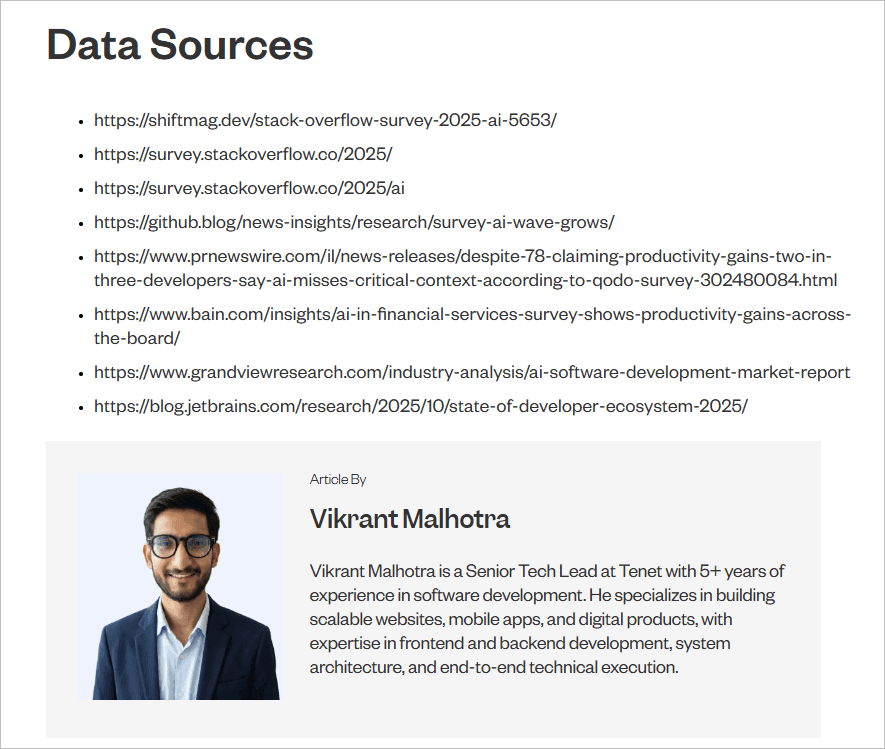
The easier it is to verify the information, the more confidence a journalist or publisher has in using it.
Make the asset shareable and embeddable
Some linkable assets can generate more opportunities when you make them easy to share.
For example, a calculator can include a shareable result or an embed option. A data study can provide charts that publishers can use with proper attribution. An interactive map can allow other websites to embed the visualization.
This gives publishers more ways to use the asset instead of simply linking to it.
It also creates a natural attribution opportunity. When someone embeds your calculator, chart, or visualization, you can provide a link back to the source.
Distribute the asset when it has something newsworthy
Passive link building does not mean you have to wait for people to discover the asset.
If the research contains an interesting finding, you can actively distribute it to journalists, publishers, and relevant industry websites.
For example, if your survey finds that 70% of marketers expect AI to change their SEO workflow within the next year, that finding can become the basis of a PR campaign.
You can email relevant journalists, share the research with industry publications, or create a press release around the most newsworthy findings.
The key distinction is that you are distributing an asset with a reason to be cited. You are not simply asking websites to add a backlink to an ordinary commercial page.
This combination of a strong linkable asset and targeted distribution is what helps create a link building flywheel. The initial promotion can help the asset get discovered, while the usefulness of the asset can continue generating organic backlinks after the initial campaign ends.
Explore some of the examples of our statistical articles:
- 50+ Shocking AI Adoption Statistics
- Shocking LLM Usage Statistics
- 40+ Updated Perplexity AI User Statistics Relevant
- 20+ Reddit Statistics: How Many People Use Reddit?
Want to get organic backlinks every month for free? Contact our link building experts
Want to build a steady flow of organic backlinks without relying only on outreach and guest posting? Our link building experts can help you identify linkable asset opportunities, create data-driven resources, and build a strategy that attracts relevant backlinks over time.
We use the same approach for our own website and have generated thousands of backlinks from 300+ referring domains.
👉 Get in touch with our team to discuss how we can build a similar strategy for your business.
Expertise Delivered Straight to Your Inbox
Expertise Delivered Straight to Your Inbox











Got an idea on your mind?
We’d love to hear about your brand, your visions, current challenges, even if you’re not sure what your next step is.
Let’s talk


