
50+ Personal Branding Statistics Backed by Research (2026)
 By
By Share

Share
Get a quick blog summary with



Personal branding is no longer a side activity reserved for influencers or public figures. It has become a measurable factor in hiring decisions, sales performance, trust building, and long term career growth.
As social platforms replace resumes and leadership visibility shapes buying behavior, individuals are now evaluated like brands.
This report compiles 50+ personal branding statistics curated from trusted academic studies, industry reports, and leading online research sources. Each statistic reflects real behavioral and business impact.
For full transparency, all data sources are listed at the end of this article, allowing readers to review and verify the research behind every insight.
Key personal branding statistics at a glance
- More than 50% of professionals say they understand the strategic importance of personal branding, yet the majority struggle to apply it meaningfully in practice.
- Leaders without a documented personal branding plan show near-zero engagement and lead generation, while those with structured plans perform significantly better on social platforms.
- 70% of consumers report feeling a stronger connection to brands whose leaders are active on social media.
- 57% of consumers say visible and authentic leadership directly influences their purchasing decisions.
- Among U.S. adults, 72% use at least one social media platform, making personal branding broadly accessible across professions.
- In the 18–29 age group, 76% use Instagram, 75% use Snapchat, and 55% use TikTok, showing how deeply personal branding behavior is embedded among younger professionals.
- Personal brand equity is measured using a 12-item validated scale built around 3 dimensions: brand appeal, brand differentiation, and brand recognition.
- Personal branding research spans multiple domains, including careers, social media, politics, health, entertainment, and the job market, confirming its cross-industry relevance.
- Generation Z research shows a measurable preference for authentic self-expression over perfection, with statistical links between identity exploration, self-presentation anxiety, and personal branding behavior.
- Gen Z respondents demonstrate higher engagement with personal branding but also higher pressure around visibility, consistency, and perceived judgment.
Personal Brand Equity and Career Outcomes
Academic research treats personal branding as a measurable construct rather than a vague career tactic. Instead of relying on self-reported opinions, researchers have focused on building and validating structured measurement models that quantify personal brand equity and test its relationship with career-related variables. Because outcome effect sizes are not always reported as simple percentages, the strongest numeric evidence in this area comes from sample size, scale structure, and validation depth rather than surface-level metrics.
- The personal brand equity framework has been empirically validated across 7 independent samples.
- The combined dataset used for validation includes 3,273 individuals, spanning students and working professionals.
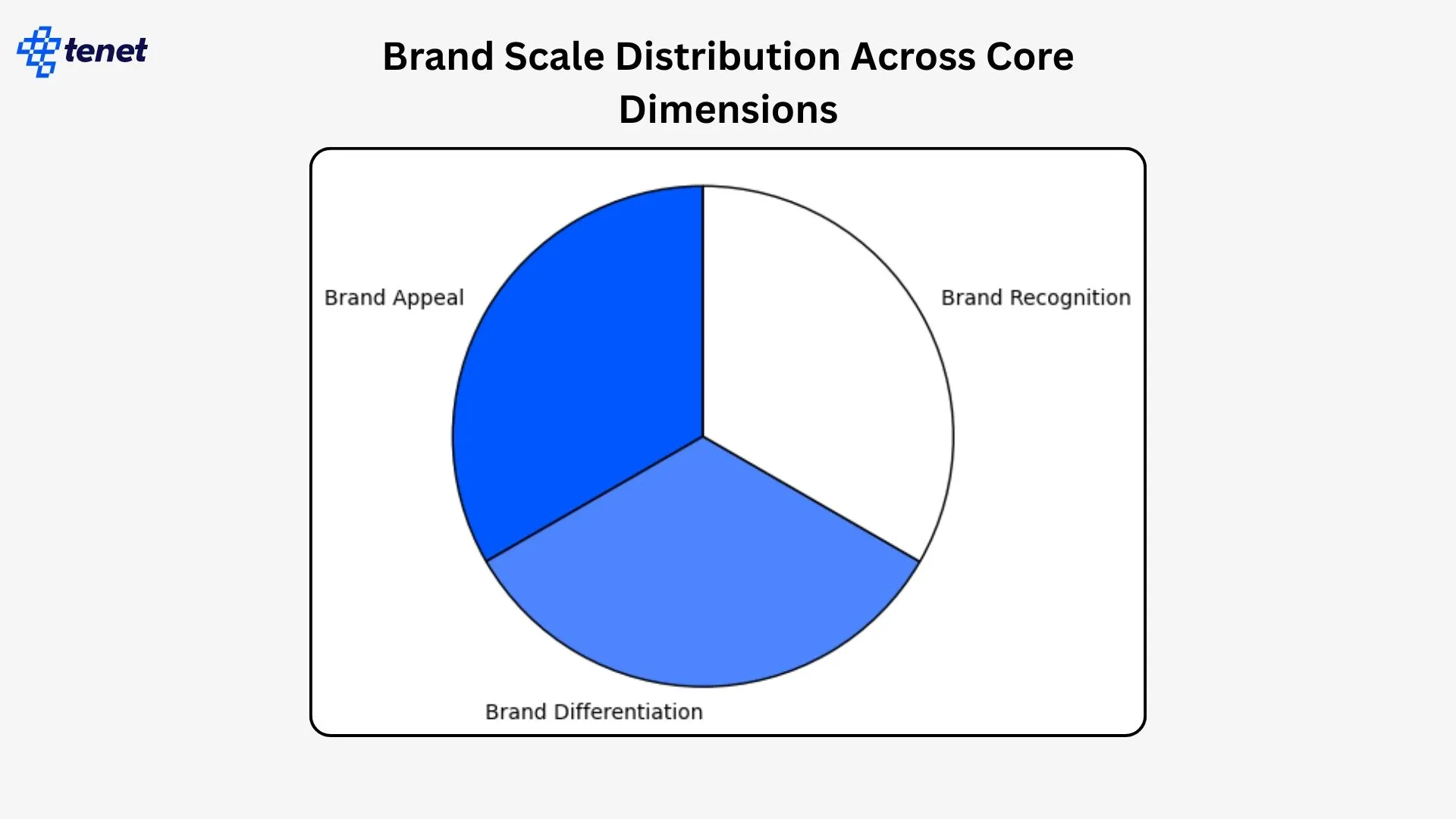
- Personal brand equity is measured using a 12-item validated scale designed specifically for individual-level branding assessment.
- The scale is structured around 3 core dimensions: brand appeal, brand differentiation, and brand recognition.
Impact of Personal Branding on Sales, Social Selling, and Deal Outcomes
Personal branding has become a measurable driver of sales performance, particularly in B2B environments where trust, credibility, and relationship-building play a central role in buying decisions.
As buyers spend more time researching online and engaging with individuals rather than corporate pages, sales outcomes are increasingly influenced by the visibility and reputation of people representing a business. Social platforms, especially LinkedIn, now function as active deal channels rather than passive networking spaces.
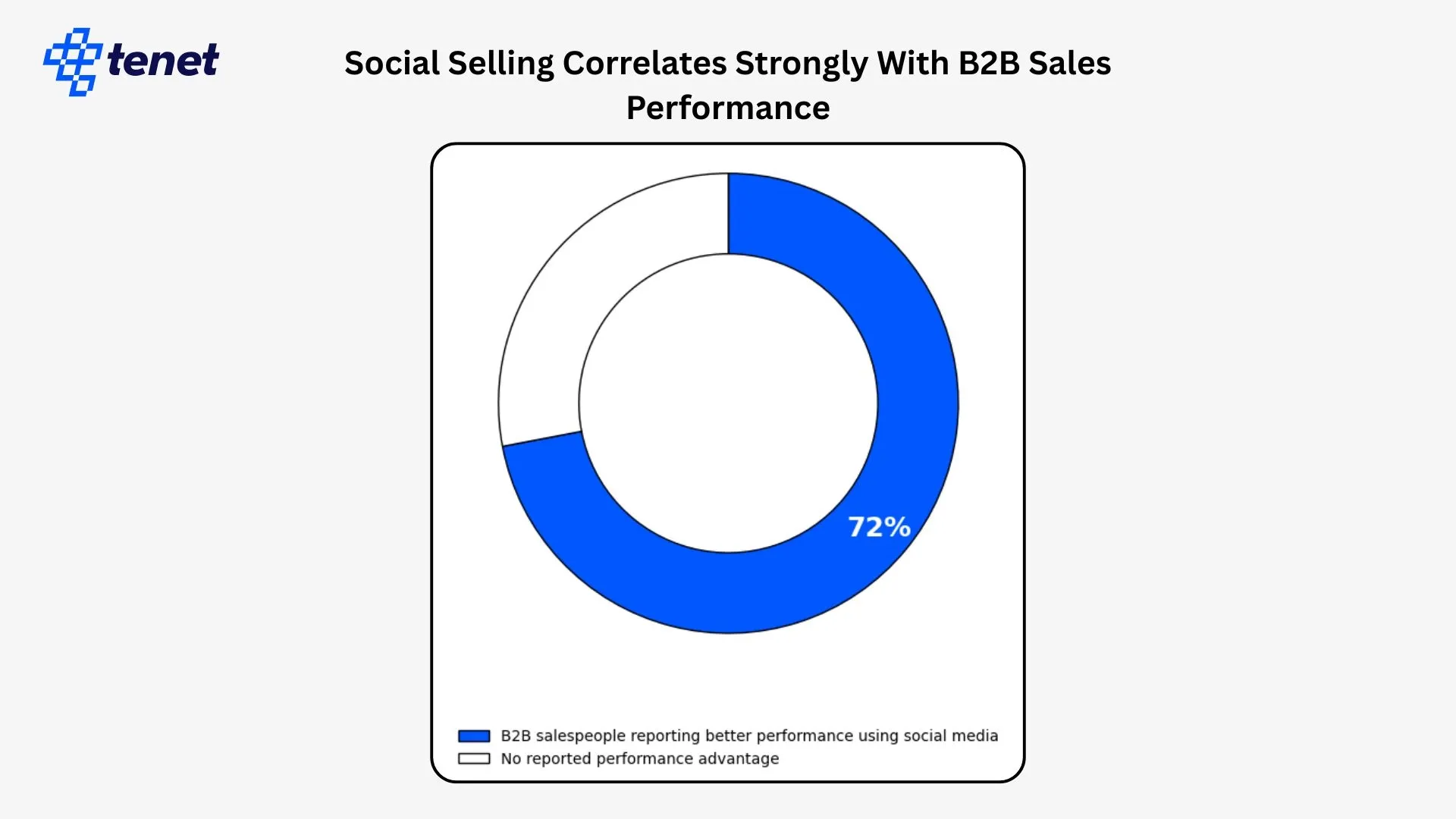
- 72% of B2B salespeople report that using social media leads to better performance compared to their peers.
- Over 50% of B2B respondents report closing deals directly through social media channels.
- 89% of B2B professionals use LinkedIn for professional purposes, making it the primary platform for personal-brand-driven selling.
- 67% of Americans say they are willing to spend more on products or services from companies whose founders’ personal brands align with their values.
- 82% of people are more likely to trust a company when its senior executives are active on social media.
- Financial audiences trust leaders with visible personal brands 6× more than leaders without one.
- Executives estimate that 44% of their company’s market value is directly attributable to the CEO’s reputation.
- 90% of employees agree that a company’s brand image improves when leadership is active on social media.

Trust, Authenticity, and Consumer Decision-Making
Personal branding now plays a direct role in how consumers evaluate trust, credibility, and emotional connection. As audiences become more skeptical of traditional advertising, they increasingly rely on authentic personal voices to decide who to engage with, who to trust, and who to buy from.
The data in this section shows that authenticity-driven personal branding influences not just perception, but real engagement, loyalty, and spending behavior.
- 53% of consumers say they trust businesses more when there is a strong, visible personal brand behind them, showing that individual credibility now directly supports brand-level trust.

- 62% of consumers report being more likely to engage with authentic content rather than highly polished or overly produced material, indicating a clear preference for realism over perfection.
- Among professionals actively working on authenticity, 80% report receiving inbound leads, linking authentic personal branding directly to opportunity generation.
- 77% of respondents believe personal branding has positively impacted their career, reinforcing the connection between trust, visibility, and professional growth.
- 65% of U.S. consumers report feeling emotionally connected to at least one brand or business, demonstrating how branding extends beyond functional value.
- Emotionally connected consumers are worth 50% more than highly satisfied but unconnected customers, highlighting the revenue impact of trust-based branding.
- 90% of American consumers say they buy from brands they trust, making trust the dominant factor in purchase decisions.
- 46% of consumers say they are willing to pay a premium for a brand name they trust, showing that credibility directly influences pricing power.
Content Formats, Video, and Visibility Preferences
Personal branding effectiveness is increasingly shaped by how people show up, not just where. Content format plays a measurable role in reach, engagement, and credibility, with video emerging as a dominant medium while execution quality remains uneven.
- 84% of respondents say video will be a core part of their personal branding efforts, signaling a strong belief in video as a visibility driver.

- Despite this, among the top 10 performers, only 2 out of 10 score well for consistently producing and publishing their own videos.
- Within the same top-performing group, just 3 out of 10 score well for using professionally produced video content.
- 59% of buyers report seeing nearly identical thought leadership content from at least two providers, highlighting content saturation and low differentiation.
- A brand requires 5 to 7 impressions for consumers to remember it, reinforcing the need for repeated, consistent content output.
- First impressions form in as little as 0.1 seconds, making visual presentation and format choice critical in personal branding contexts.
- 81% of respondents say personal style is incredibly important to their personal brand, linking visual identity directly to recognition and recall.
Thought Leadership, Credibility, and Decision Influence
Thought leadership has become one of the strongest measurable outcomes of personal branding, especially in high-consideration buying and career decisions. Rather than functioning as generic content, thought leadership now shapes trust, alignment among stakeholders, and willingness to engage with new providers or ideas.
- 99% of buyers say thought leadership is important or critical in their decision-making process.
- 73% of decision-makers trust thought leadership content more than traditional marketing materials when assessing a company’s capabilities.
- 70% of buyers say thought leadership helps multiple stakeholders align internally to move decisions forward.
- More than 75% of decision-makers report that a piece of thought leadership led them to research a product or service they were not previously considering.
- 66% of buyers say they would not work with a new provider if the provider’s thought leadership was poor.
- 59% of buyers believe they have seen nearly identical thought leadership content from multiple providers, signaling rising competition and content fatigue.
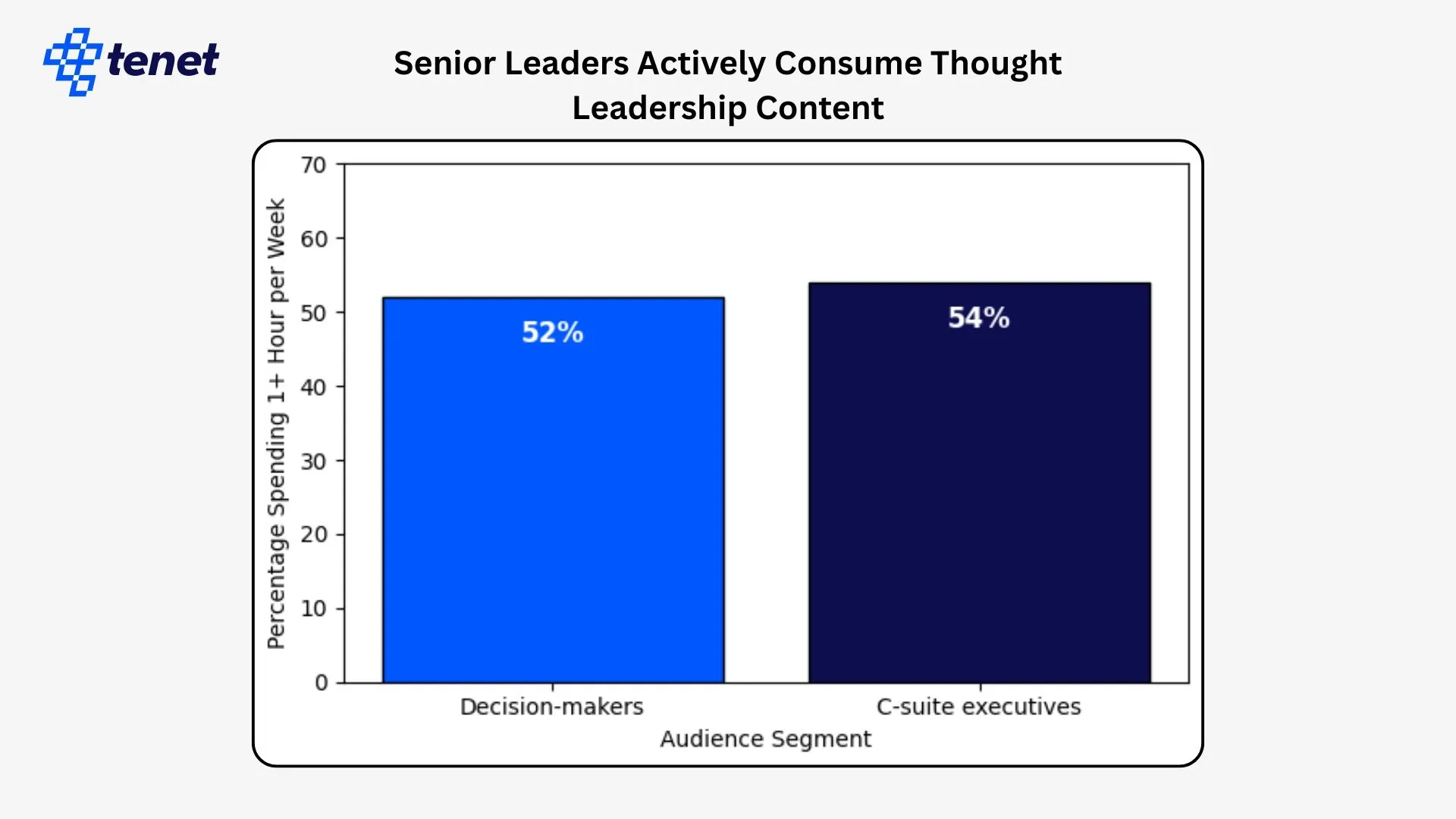
- 52% of decision-makers and 54% of C-suite executives spend an hour or more per week consuming thought leadership content.
Personal Branding Strategy Gaps and Execution Shortfalls
While belief in personal branding is widespread, execution remains uneven. Data consistently shows a large gap between people who say personal branding matters and those who actually apply strategy, structure, and consistency to it.
- 70% of respondents say personal branding is important, yet only 15% report having a clearly defined personal branding strategy, revealing a wide awareness-to-action gap.
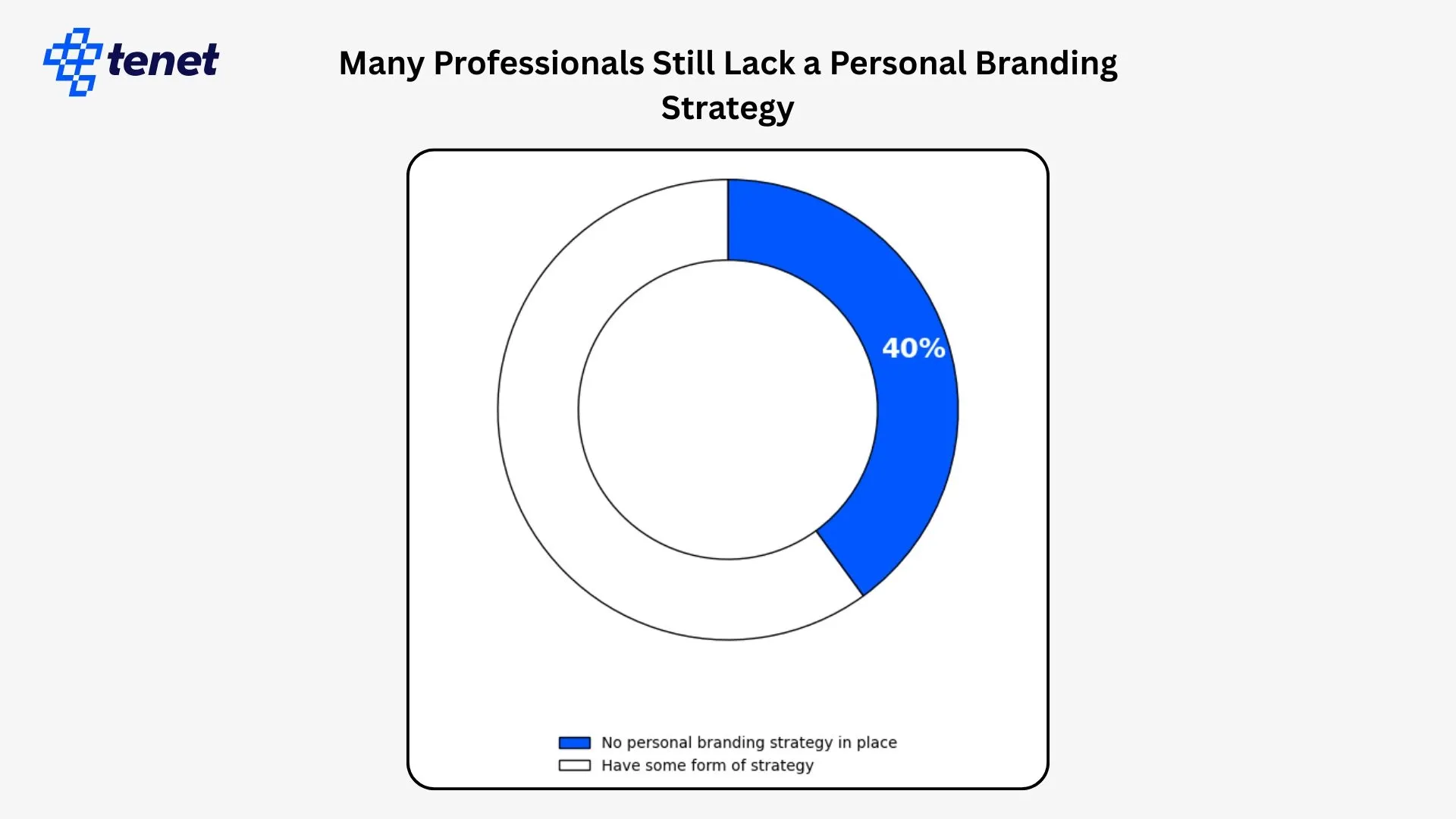
- 40% of respondents say they do not have any strategy in place to ensure their personal brand supports long-term business or career growth.
- Although 48% of respondents say they actively work on their personal brand, only 20% report regularly receiving leads from their online personal branding efforts.
- When scored on outcomes, just 37% of respondents achieve a score of 60 or higher on the metric “personal brand contributes to business growth.”
- Strategic clarity is even rarer, with only 16% of respondents scoring 60 or higher on “having a strategy for personal brand,” despite high stated importance.
Employee Personal Brands and Amplification Effects
Personal branding doesn’t operate in isolation. When employees build visible, credible personal brands, their reach and impact often exceed that of corporate channels.
Our research on employee advocacy shows that individual-led visibility significantly amplifies content distribution, engagement, and conversion outcomes, turning personal brands into measurable business assets.
- Branded messages shared by employees are 24× more likely to be reshared compared to the same messages shared through company channels.
- Leads generated through employees’ social media activity convert 7× more frequently than leads generated through other digital channels.
- Employees have, on average, 10× more connections than their company’s official page has followers, giving personal brands greater organic reach.
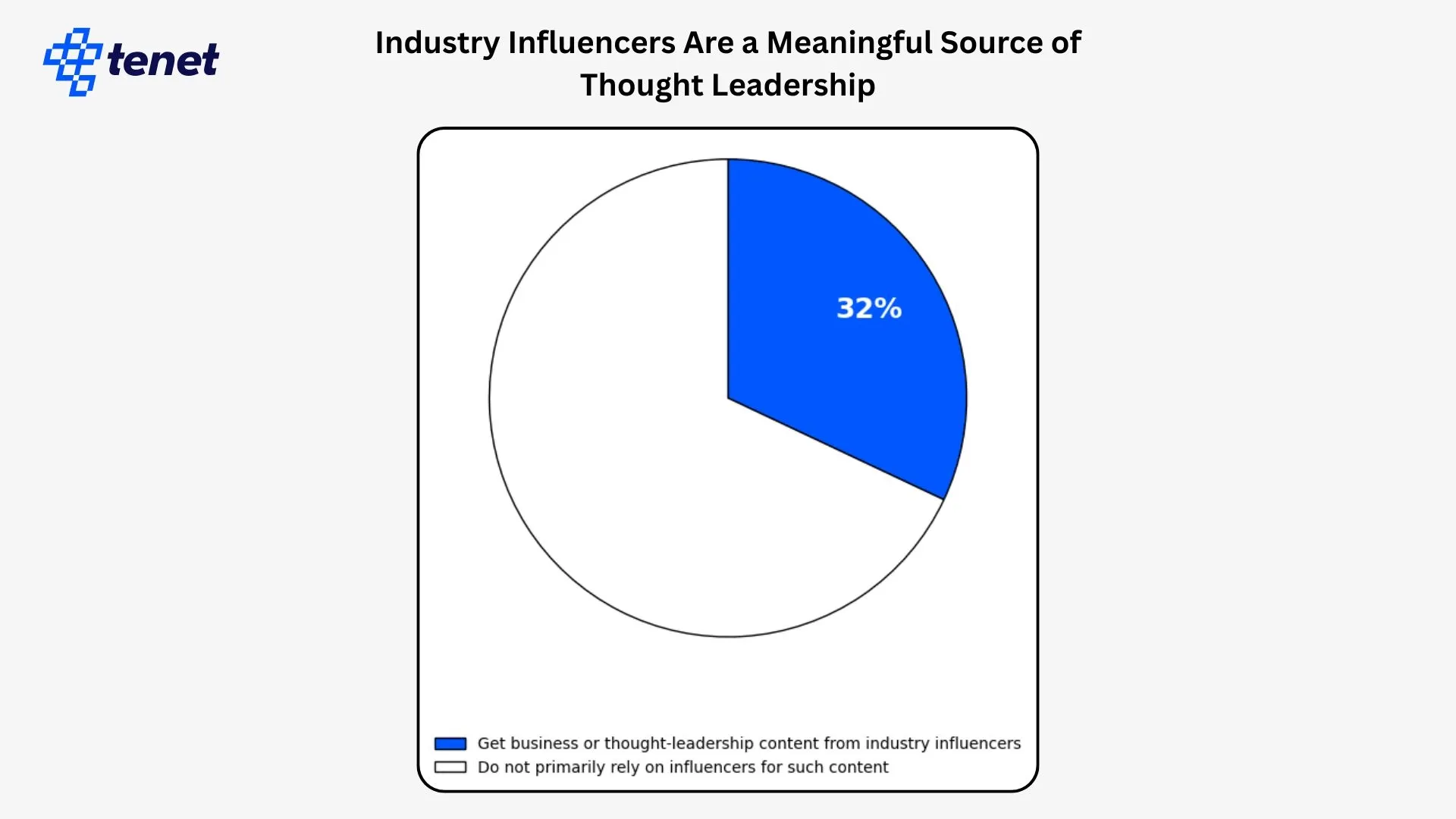
- 32% of professionals say they get business-related or thought-leadership content from influencers they follow within their industry.
- Employees with 5,000–10,000 LinkedIn connections generate stronger engagement than influencers with significantly larger followings, according to large-scale advocacy studies.
Visibility, Consistency, and Brand Recall Mechanics
Personal branding effectiveness is closely tied to how often and how consistently an individual appears in front of their audience. Research shows that visibility frequency, message repetition, and consistent presentation directly affect recognition, recall, and long-term influence.
- A brand forms a first impression in as little as 0.1 seconds, making initial visual and messaging cues critical.
- Consumers typically need 5 to 7 impressions before they remember a brand, highlighting the importance of repeated exposure.
- 59% of buyers say they have seen nearly identical content from at least two providers, indicating that consistency alone is not enough without differentiation.
- 33% of businesses report that maintaining consistent branding increases revenue by 20% or more, linking repetition and alignment directly to financial outcomes.
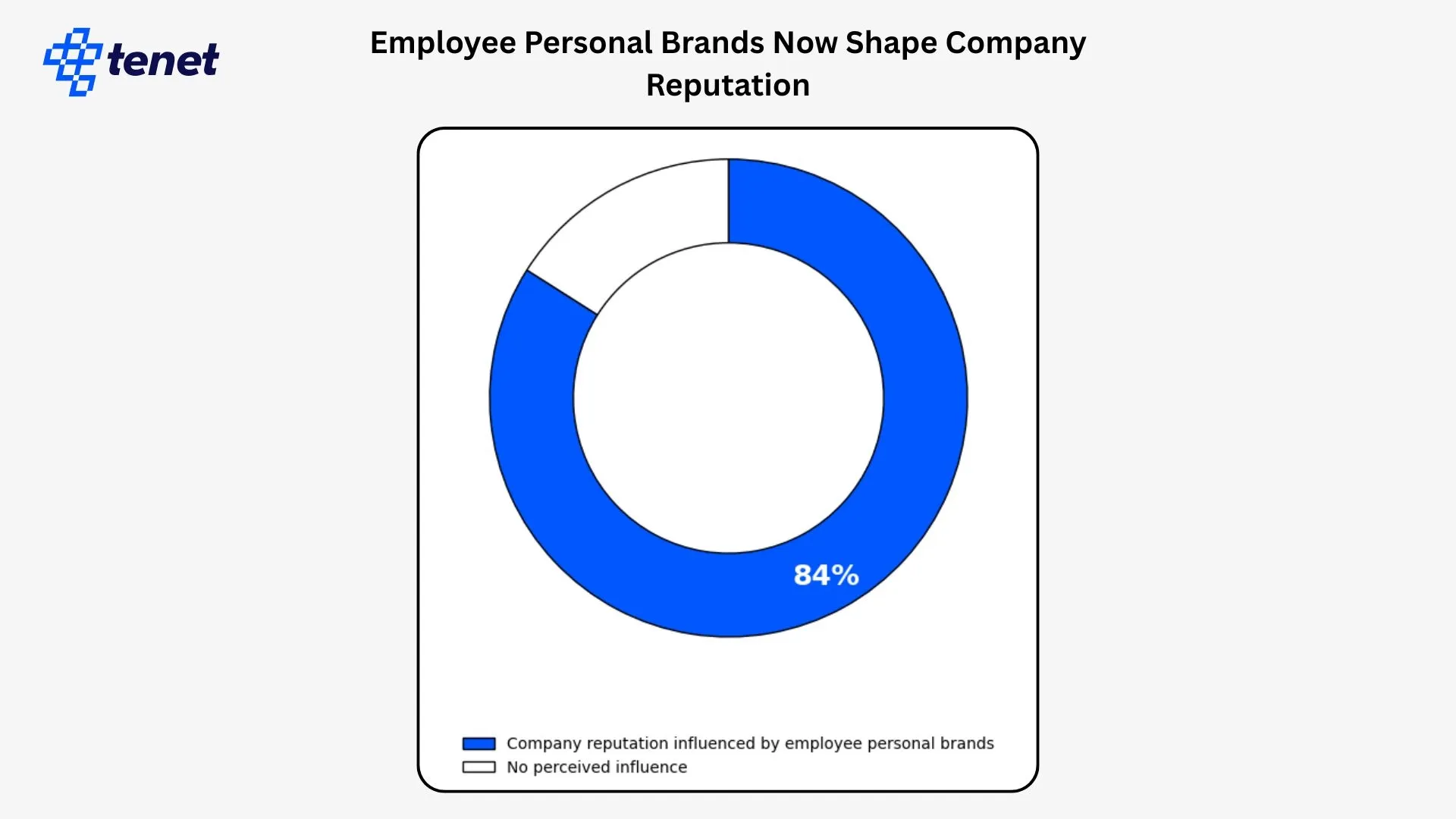
- 84% of consumers believe a company’s reputation is influenced by employee personal brands, reinforcing the role of repeated individual visibility.
- Upwards of 80% of Americans report loyalty to at least one brand, while 74% of consumers globally claim brand loyalty, showing the payoff of sustained recognition over time.
Final Words
Personal branding is no longer a soft skill or a nice-to-have. The data makes it clear that visibility, trust, and consistency now influence hiring decisions, sales performance, consumer trust, and long-term career outcomes. Across industries and roles, people are being evaluated not just on what they do, but on how clearly and consistently they show up online.
What stands out most is the gap between belief and execution. While a majority agree personal branding matters, far fewer apply strategy, maintain consistency, or convert visibility into real outcomes like leads, trust, or revenue.
At the same time, those who do invest in authenticity, thought leadership, and sustained presence see measurable advantages. Personal branding has become a compound asset. The longer it’s built deliberately, the more influence and opportunity it creates.
FAQs
1. Does personal branding actually impact hiring decisions, or is it just perception?
It directly impacts hiring. 98% of employers research candidates online, 47% are less likely to interview someone they can’t find online, and 44% have hired candidates based on positive personal branding content. Poor online presence has led 54% of employers to reject candidates outright.
2. Is personal branding more important than a resume today?
In many cases, yes. 70% of employers say a personal brand is more important than a resume or CV, and candidates with complete LinkedIn profiles are 40× more likely to receive job opportunities.
3. How does personal branding affect sales and revenue?
It has a measurable commercial impact. 72% of B2B salespeople report better performance using social media, and over 50% have closed deals directly through social platforms. Executive reputation alone is estimated to account for 44% of a company’s market value.
4. Why do so many people struggle to see results from personal branding?
Because execution is weak. While 70% believe personal branding is important, only 15% have a defined strategy. Even though 48% actively work on their brand, only 20% regularly receive leads from those efforts.
5. Does authenticity really make a difference, or is it just a buzzword?
It makes a measurable difference. 80% of respondents who focused on authenticity reported receiving leads, and 62% of consumers are more likely to engage with authentic content than overly polished material.
Data Sources
- https://www.sciencedirect.com/science/article/pii/S3051064326000567
- https://www.researchgate.net/publication/344170669_Personal_Brand_Equity_Scale_Development_and_Validation
- https://www.mdpi.com/2071-1050/15/1/148
- https://www.dsmn8.com/blog/personal-branding-statistics
- https://capitaloneshopping.com/research/brand-loyalty-statistics/
- https://www.edelman.com/sites/g/files/aatuss191/files/2024-02/_2024%20Edelman-LinkedIn%20B2B%20Thought%20Leadership%20Impact%20Report%20Final.pdf
- https://capitaloneshopping.com/research/branding-statistics/
- https://www.webershandwick.asia/wp-content/uploads/2019/02/WS-CEO-Reputation-infographicAPAC-FINAL.pdf
- https://www.ibm.com/think/topics/ai-for-employee-experience
- https://mslgroup.com/whats-new-at-msl/msl-study-reveals-racial-pay-gap-influencer-marketing
- https://www.careerbuilder.com/advice/blog/social-media-survey-2017
- https://momentumabm.com/value-of-thought-leadership-report
- https://capitaloneshopping.com/research/branding-statistics/
- https://www.edelman.com/sites/g/files/aatuss191/files/2024-02/_2024%20Edelman-LinkedIn%20B2B%20Thought%20Leadership%20Impact%20Report%20Final.pdf
Expertise Delivered Straight to Your Inbox
Expertise Delivered Straight to Your Inbox








Got an idea on your mind?
We’d love to hear about your brand, your visions, current challenges, even if you’re not sure what your next step is.
Let’s talk


