
5 SEO Lead Generation Strategies To Drive Qualified Leads
 By
By Share

Share
Get a quick blog summary with



Most SEO guides focus on increasing rankings and traffic. The problem is that traffic alone does not generate revenue. A website can attract thousands of monthly visitors and still struggle to generate qualified leads.
SEO lead generation takes a different approach. Instead of optimizing for clicks alone, it focuses on attracting visitors who are actively researching solutions, comparing providers, or preparing to make a purchase.
The goal is to turn organic traffic into measurable business outcomes such as demo requests, consultation bookings, contact form submissions, free trial signups, and sales.
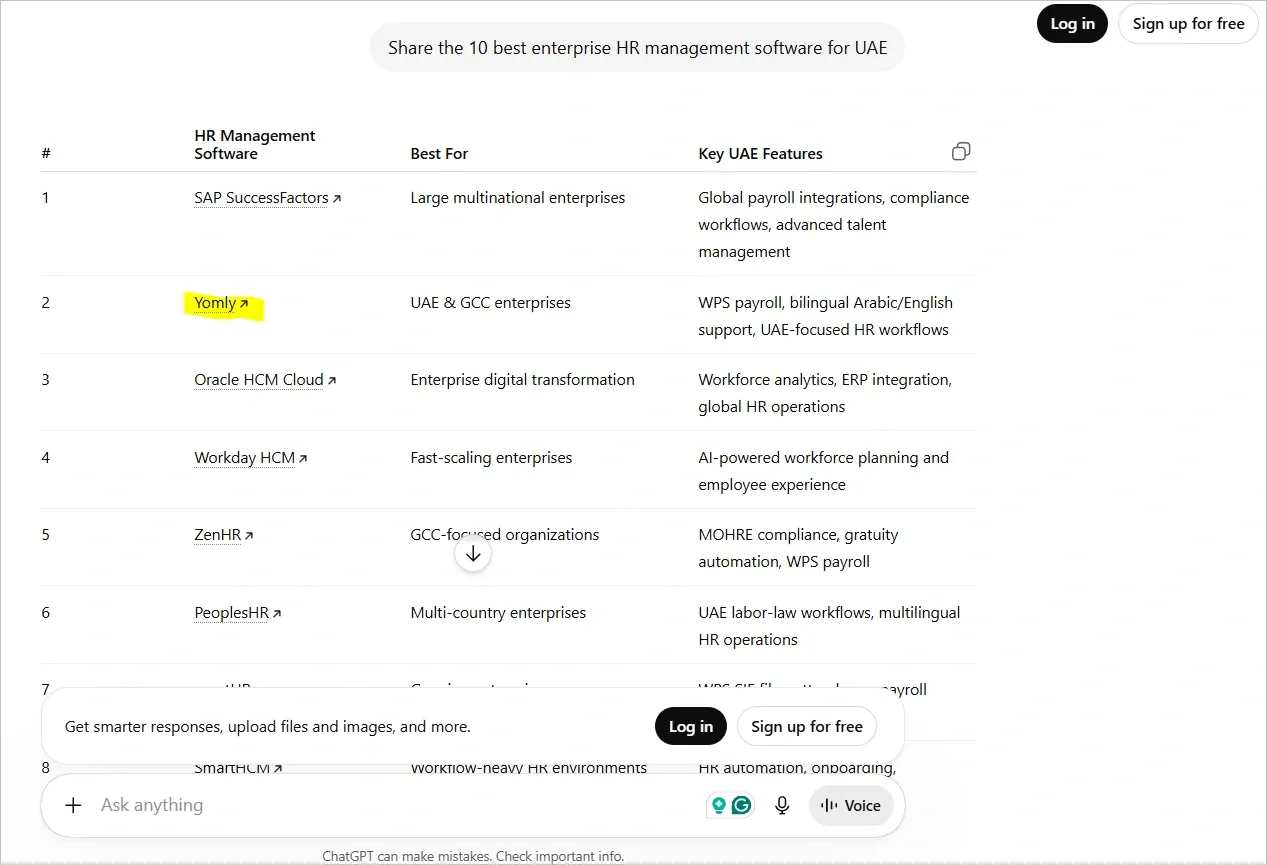
At Tenet, we have helped businesses achieve exactly that. For example, we helped Yomly, an enterprise HR and payroll software provider, grow from generating 6+ organic leads per month to consistently generating 30+ monthly leads through a targeted SEO strategy.
In this guide, we'll break down five proven SEO lead generation strategies that can help turn your organic visibility into a predictable source of qualified leads and revenue.
What is SEO lead generation?
SEO lead generation is an SEO approach that focuses on driving business results, not just website traffic. Instead of measuring success by rankings or visits alone, it prioritizes actions that contribute to revenue, such as lead form submissions, product demo requests, phone calls, free trial signups, and online sales.
The goal is to attract visitors who are most likely to become customers and guide them toward a specific business outcome. In other words, SEO lead generation treats qualified leads, conversions, and sales as the ultimate measure of SEO success.
Here is an example of why SEO lead generation focuses on conversions rather than traffic alone.
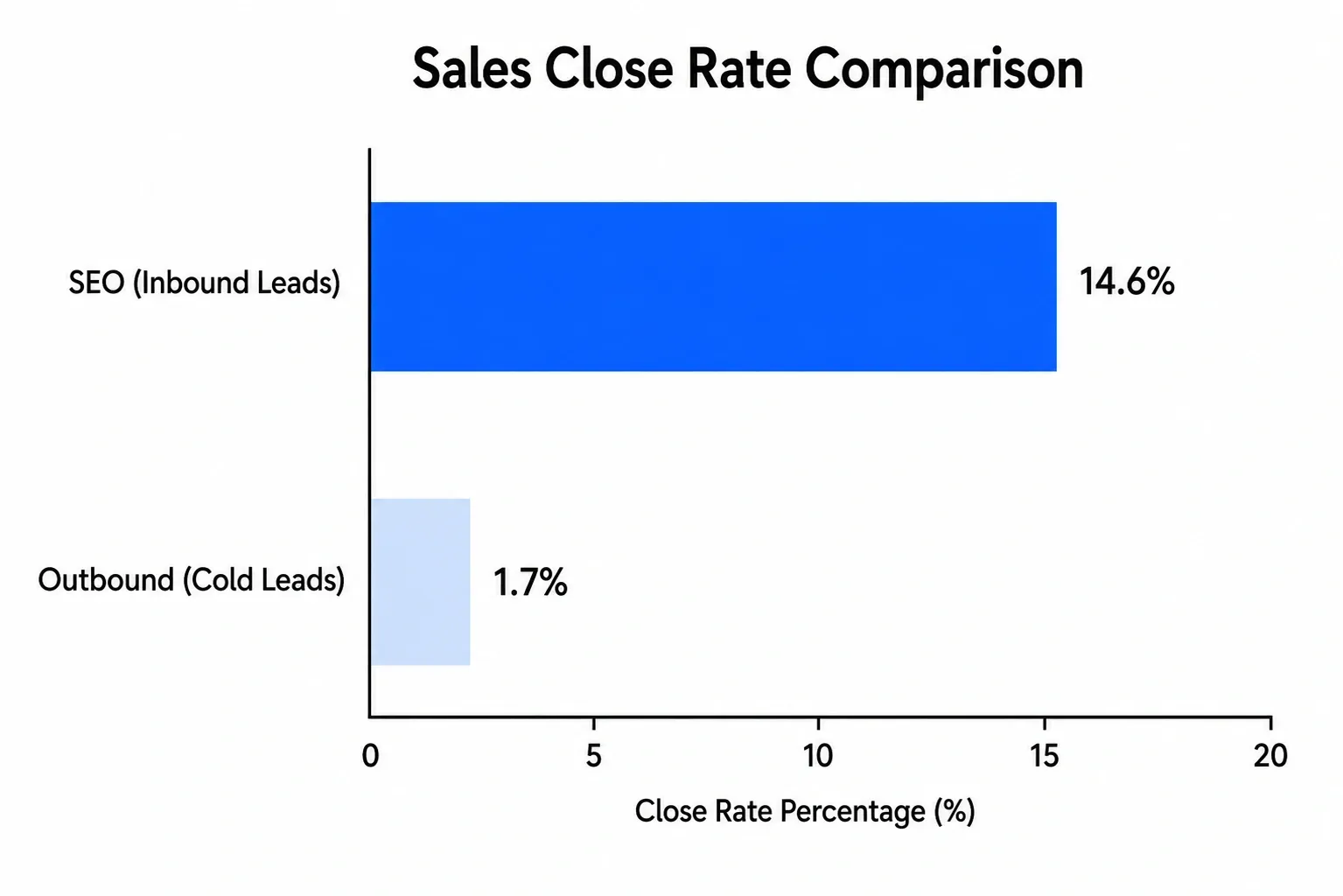
Inbound leads generated through SEO close at an average rate of 14.6%, compared to just 1.7% for outbound cold leads.
This gap exists because SEO attracts people who are actively searching for solutions, products, or services, making them more likely to submit a lead form, request a demo, book a consultation, or make a purchase.
👉 Need help in featured in LLM platforms and generate qualified leads? Get your free AI SEO proposal:
At Tenet, we have branches in various cities. Get personalized AI SEO proposals for Dubai (UAE), London (UK), Noida (India)
Here are the top lead generation strategies using SEO
The following are the five proven methods to help you capture high-quality leads.
1. Prioritize keywords with business value over search volume
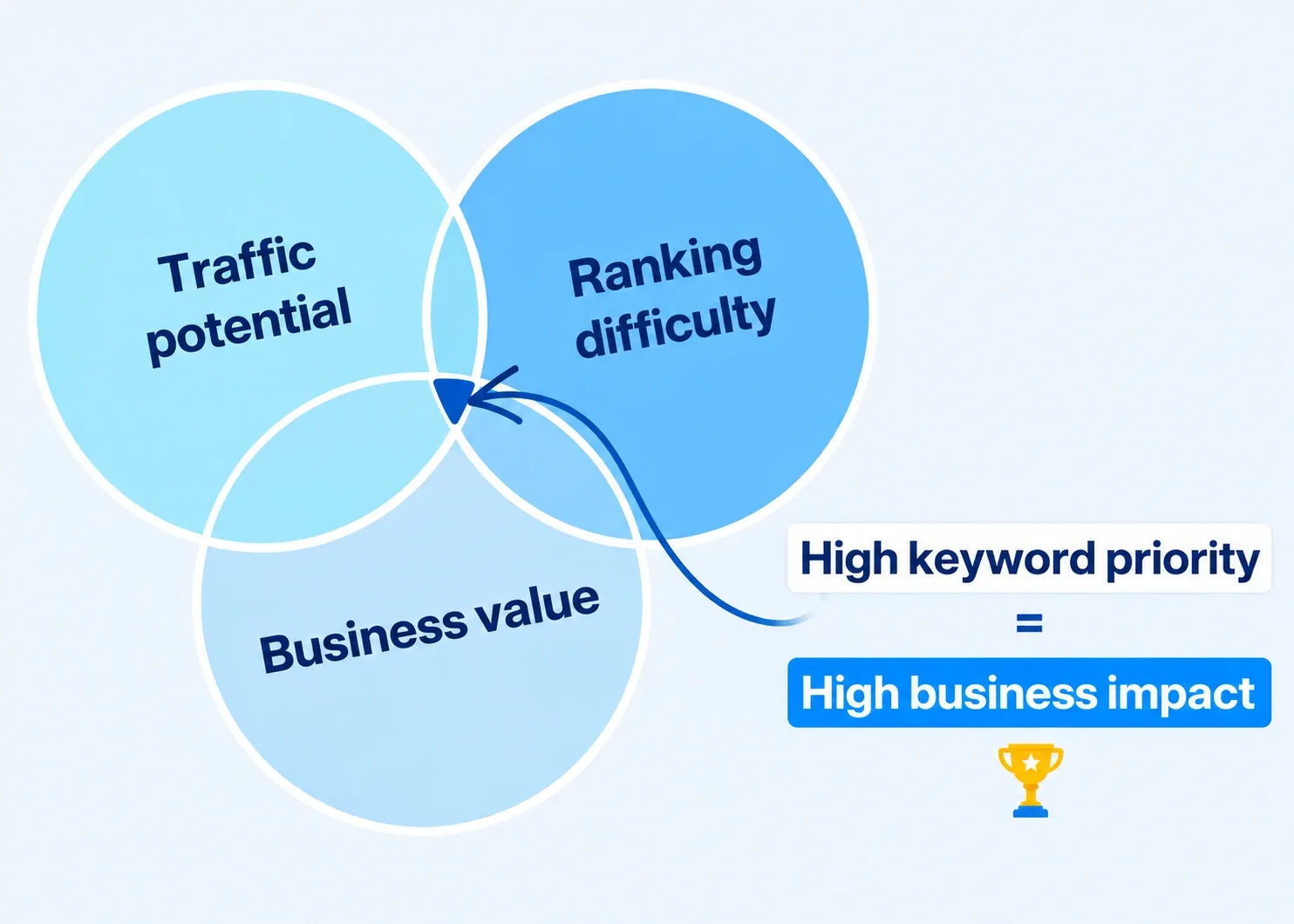
Many SEO strategies focus on search volume and keyword difficulty, which often leads to traffic growth without a meaningful increase in leads. To generate more inquiries and sales opportunities, prioritize keywords based on their ability to attract potential buyers.
A keyword with 50 monthly searches from decision makers actively looking for a solution can be more valuable than a keyword with 5,000 searches from users seeking general information. The goal is not to maximize traffic. The goal is to maximize qualified leads.
How to implement:
- Score keywords based on Business Value. Ask yourself how closely a keyword relates to your product or service. Keywords directly connected to what you sell should receive the highest priority.
- Evaluate Lead Intent. Determine whether the searcher is researching a problem or actively comparing solutions. Searches for pricing, alternatives, demos, and service providers usually indicate stronger buying intent.
- Assess Ranking Difficulty manually. Review the search results to identify whether smaller businesses are ranking and whether you can create a better page than the current competitors.
- Prioritize comparison and evaluation keywords. Terms such as "[competitor] alternatives," "[product A] vs [product B]," and "[service] pricing" often attract users who are close to making a purchase decision.
- Create conversion focused pages. Build landing pages that answer buying questions and include clear calls to action such as demo requests, consultations, quote forms, or contact inquiries.
- Align content with the buyer journey. Use informational content to build awareness, but dedicate most resources to keywords that attract users evaluating solutions.
- Measure leads instead of traffic. Track demo requests, contact form submissions, booked meetings, and sales opportunities generated from organic search to identify your highest value keywords.
2. Optimize Your Blog Design for Lead Generation
Attracting a visitor to your page is only the first step; the layout must then convert that interest into a measurable action. Most blogs fail because they are designed for reading rather than results.
So, if your blog looks like a cluttered textbook, readers will consume your information and leave without ever knowing how you can help them. To generate leads, your blog must function as a sales tool that happens to provide educational content.
How to implement:
- Strategically Place CTAs: Place a prominent CTA "above the fold" (visible without scrolling) to grab attention immediately and include a secondary CTA at the end of each post for readers who have finished the content.
For longer posts, repeat the same CTA throughout to provide multiple conversion points.
- Use compelling Lead Magnets like offer gated content such as e-books, whitepapers, or checklists in exchange for an email address or use pop-ups or slide-ins triggered by intent (like exiting the page) to offer these rewards.
- Optimize lead capture forms by only asking for essential information (e.g., name and email) to reduce friction and increase conversion rates and For longer inquiries, break the form into chunks with a progress bar to keep users engaged.
- Enhance User Experience (UX) and visuals through:
- Mobile Responsiveness: Ensure your blog is fully optimized for mobile devices, as over half of web traffic occurs on phones.
- Improve Load Speed: Aim for a load time under 2.5 seconds to prevent visitors from bouncing before they even see your content.Incorporate
- Social Proof: Display testimonials, logos, and case studies to build credibility and trust.
- Include Video: Use videos for product demonstrations or expert explainers, which can increase lead generation by up to 80%.
- Regularly use tools like Google Analytics to track conversion paths and bounce rates.
- Conduct A/B testing on headlines, CTA colors, and form layouts to identify what resonates best with your audience.
3. Get Featured in ChatGPT and Other LLM Platforms
People who ask ChatGPT or similar tools for recommendations usually have buying or hiring intent. They type queries such as "best companies for [service] in [city]" or "who should I hire for [specific problem]".
When an LLM recommends your brand, it often carries more trust than a regular search result because it feels like a direct, reasoned suggestion. This traffic converts at a noticeably higher rate than most Google visitors.
Here’s an example where we helped Yomly rank for a commercial search query over ChatGPT:
How to implement:
Audit Your Current LLM Visibility
Search for commercial queries that your potential customers use in ChatGPT, Perplexity, Claude, and Gemini.
Look for searches such as "best [service] companies," "[product] alternatives," or "top providers for [industry]." Record whether your brand appears, how it is described, and which competitors receive recommendations.
Earn Mentions on Trusted Third Party Websites
Secure placements on reputable review platforms, industry directories, comparison websites, and expert listicles. LLMs often rely on these sources when generating recommendations, making them important trust signals for your brand.
Maintain Consistent Brand Information Everywhere
Keep your company name, services, location, and positioning consistent across your website, LinkedIn profile, review sites, and directory listings. We saw from our testing that consistent brand positioning helps AI systems connect mentions from different sources and build confidence in your brand.
Structure Content for AI Readability
Use clear headings, short paragraphs, FAQ sections, schema markup, and logical page structures. Place key information near the top of the page so AI crawlers can easily find and understand your content.
🔎 Free GEO Readiness Checker for AI Search
Publish Content That Supports Recommendations
Create comparison pages, service pages, pricing content, buyer guides, and industry-specific landing pages. Support your claims with real examples, customer outcomes, and detailed case studies that demonstrate expertise.
Build Strong Authority Signals
Collect customer reviews, publish success stories, earn industry mentions, and secure backlinks from respected websites. These signals help position your business as a credible option that AI platforms are more likely to recommend.
Monitor and Improve Visibility Regularly
Test important buying intent queries across major LLM platforms every month. Next, identify which competitors appear most often, analyze their strengths, and update your content with fresher information, stronger proof points, and better answers.
4. Drive more traffic and visibility to your high-converting pages
Attracting massive organic traffic to informational hub pieces means nothing if that visibility remains trapped on non-transactional assets.
Most businesses suffer from a critical structural disconnect: their top-ranking blog posts capture extensive traffic, while their core bottom-of-funnel service pages suffer from a lack of visibility.
To build a self-sustaining pipeline, you must establish an explicit path that actively funnels equity and visitors out of standard informational guides and straight into your highest-converting pages.
How to implement:
Identify Your Highest Traffic Pages
Use Google Search Console and Google Analytics to identify the blog posts and resource pages that generate the most organic traffic. These pages already have strong visibility and authority, making them ideal assets for directing visitors toward service pages and lead generation opportunities.
Connect Informational Content to Commercial Pages
Map every high-traffic article to a relevant service page, pricing page, product page, or lead magnet. The goal is to create a clear journey that moves users from researching a problem to evaluating a solution.
Add Contextual Internal Links
Place internal links naturally within the content where users are most engaged. Use descriptive anchor text that explains the destination page and encourages visitors to continue their buying journey.
Increase Visibility of Conversion Pages
Prominently feature service pages, consultation pages, and lead magnets within your highest traffic content. Callout boxes, resource sections, comparison tables, and recommendation blocks can help increase clicks to commercial pages.
Pass Authority to Priority Pages
Use internal links from older, authoritative pages to newer or lower visibility service pages. This helps distribute page authority across your site and improves the ranking potential of pages that generate leads.
5. Adopt a Product-Led SEO Content Approach
Most companies write blog content about their industry in general. They publish tips, trends, and best practices that apply to anyone using any tool.
What it means:
Product-led content integrates your product or service naturally into educational content. Instead of mentioning the product only in a CTA, the content demonstrates how the product helps solve the problem being discussed.
Example: Shopify
Shopify’s article about starting an eCommerce business goes beyond explaining the process. Throughout the guide, it positions Shopify as a practical solution for launching and managing an online store.
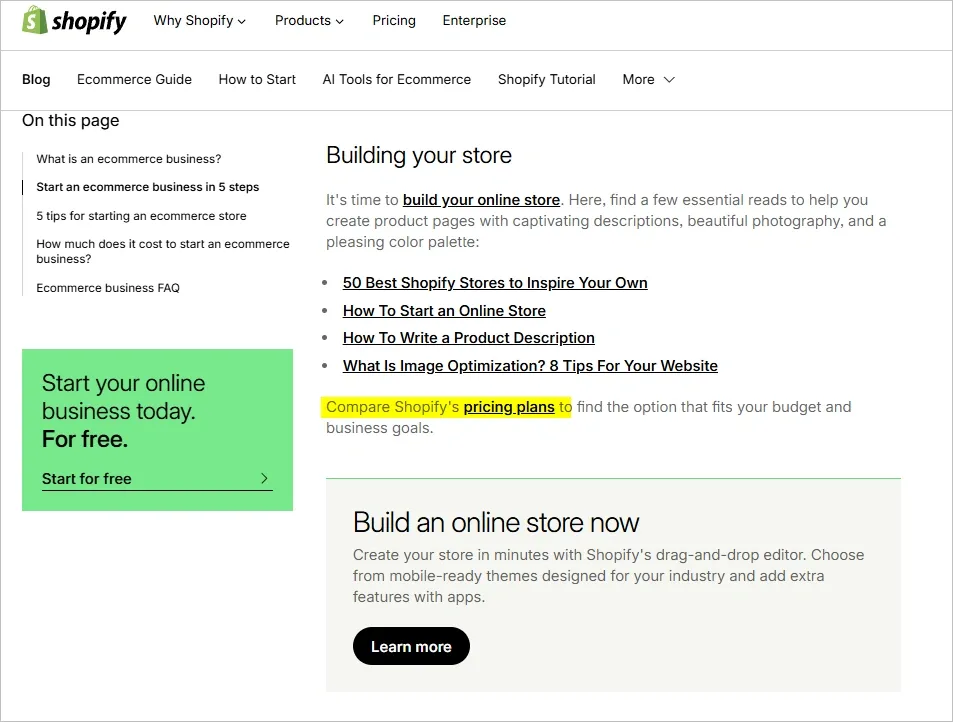
For example, readers are encouraged to start their ecommerce journey using Shopify, and the platform is introduced as part of the setup process itself. This allows users to see how the product helps them achieve their goal while they are learning.
How to implement:
- Audit your entire editorial calendar to ensure that every planned topic allows your service or software to be featured naturally as the primary solution.
- Map the specific functionalities of your offering directly to the individual pain points and transactional queries your audience searches for online.
- Write comprehensive tutorials and actionable guides that use your own platform or service workflows as the visual and contextual examples.
- Try to increase content conversions and narrative integration through:
- In-Context Showcasing: Insert dedicated text blocks that explicitly contrast with the background to demonstrate how your service resolves the problem currently being read about in the text.
- Product-Led Conclusions: Replace generic, low-converting summary conclusions with explicit, actionable closing sections that outline how to execute the entire strategy using your tools or team.
- Contextual Imagery: Include annotated interface screenshots, workflow diagrams, or video walkthroughs of your service in action to show immediate time-to-value rather than just writing about concepts.
How Tenet Generated 6000+ Platform Signups for a POD Platform
Tenet partnered with a leading print-on-demand (POD) platform in India that helps D2C brands and online sellers start custom businesses without holding inventory.
Despite having a large library of educational content,their visitor growth had stopped increasing, and their content wasn't bringing in new signups.
The Challenge
The platform struggled with "keyword cannibalization" (multiple pages competing for the same search terms) and lacked a tracking system to see which blog posts were actually driving signups.
Here is how Tenet helped:
- Combined Competing Content: We merged articles that covered the same topics into single, stronger pages so they could rank higher.
- Updated Top Articles: We refreshed the 10 most popular posts that brought in 70% of their traffic to make them more helpful and relevant.
- Organized by Topic: We grouped content into four main categories (POD, Dropshipping, Custom Printing, and eCommerce) to show Google the site was an expert in these areas.
- Added Conversion Tracking: We implemented a full tracking system to measure every button click and signup generated by organic search.
The Results
- 6,000+ new platform signups generated from organic search traffic.
- 200,000+ clicks on calls-to-action (CTAs) in a single month.
- 800+ keywords moved into the top 10 positions on Google.
- 14% increase in total website visitors within the first 90 days.
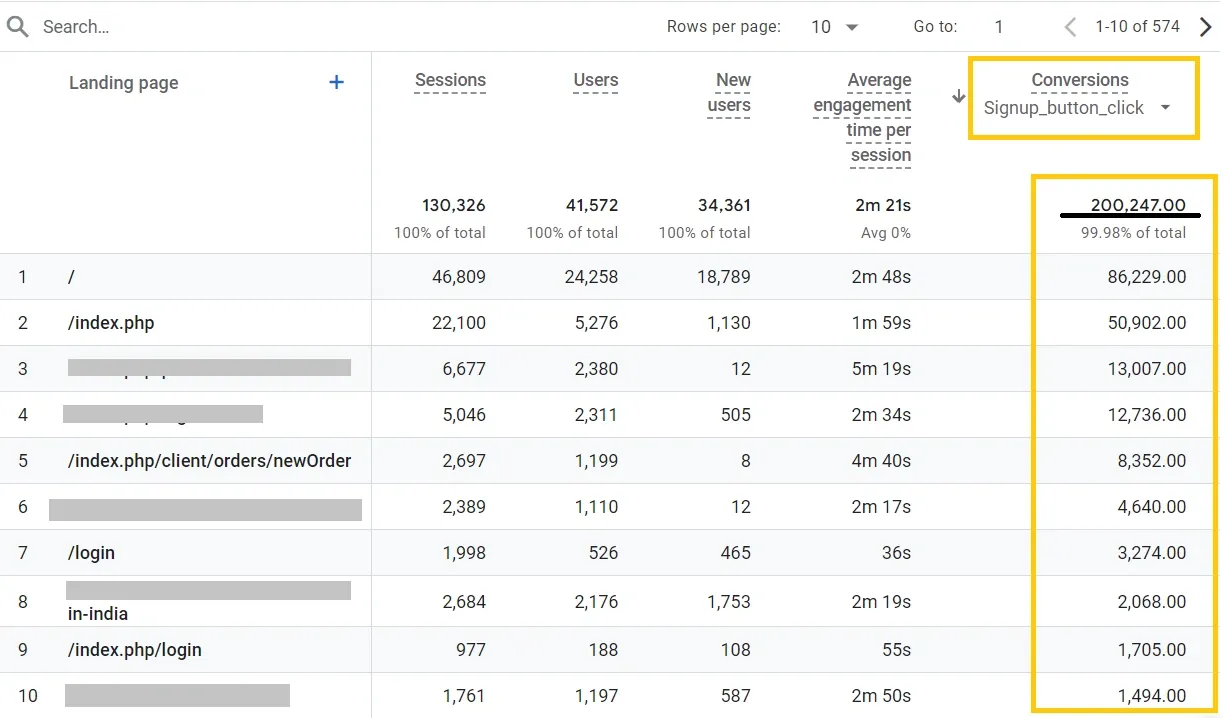
If your current strategy isn't delivering the 14.6% close rate we discussed earlier, it’s time for a new approach. Get in touch with us to see how we can help you achieve results like Yomly and our other partners.
Get a Custom SEO Lead Generation Strategy
Get a Custom SEO Lead Generation Strategy















Got an idea on your mind?
We’d love to hear about your brand, your visions, current challenges, even if you’re not sure what your next step is.
Let’s talk


