
7 Enterprise Marketing Strategies For a Predictable Pipeline
 By
By Share

Share
Get a quick blog summary with



Why are $100K+ enterprise pipelines still unpredictable even after a year of effort?
Teams run ads, host webinars, and book demos. Yet revenue forecasts remain uncertain.
The real challenge starts after the demo. More stakeholders join. Finance asks for numbers. Legal reviews contracts. Leaders want clear proof they can defend internally.
At this stage, buyers do not need more content.
They need comparisons, validation, and clear answers. When marketing steps back, sales carries the burden alone, and deals slow down or stall.
We have seen this across enterprise SaaS and B2B campaigns. Fixing post demo gaps has moved 20 to 30% of stalled deals back into active pipeline within one quarter.
This guide explains what actually helps enterprise buyers move forward after the demo.
1. Target the keywords that enterprise buyers actually search
Most enterprise companies try to rank for obvious commercial keywords such as:
- Project management software
- HR platform
- CRM tool
These broad keywords often signal strong buying intent, but they are highly competitive and difficult to rank for in SEO.
A smarter approach is to target narrower keywords that closely match specific search intent and face less competition. For example, an enterprise in the UAE might search for:
- HRMS with SAP integration for large enterprises
- Payroll compliance software UAE 500 employees
- Workday alternative for mid market HR
These searches usually have lower volume but much higher intent. They are also easier to rank for, even if your website does not have strong domain authority.
Here are ways to brainstorm enterprise keywords that bring conversions:
1.1 Industry Based Keywords
Start with the industries you serve best. Enterprise buyers often search for solutions tailored to their sector. Instead of targeting a broad term like “HR software,” think in terms of “HR software for healthcare companies” or “payroll system for manufacturing firms.” Industry specific keywords reflect real operational needs and reduce competition.
1.2. Company Size Modifiers
Enterprise searches often include employee count or market segment. Buyers may search for solutions built for “500 employees,” “1000+ employees,” “large enterprise,” or “mid market.” These modifiers signal serious evaluation. A term like “payroll software UAE 500 employees” is more targeted and easier to rank for than a generic product keyword.
1.3. Integration Focused Keywords
Enterprise tools must integrate with existing systems. Buyers frequently search with integration intent. Phrases like “HRMS with SAP integration,” “CRM with Salesforce integration,” or “API integration payroll software” show that the buyer is planning implementation.
These keywords usually convert better because they reflect deeper technical consideration.
1.4. Compliance and Region Specific Keywords
In regulated markets, compliance drives buying decisions. Enterprise buyers often include legal or geographic terms in their searches. Examples include “UAE labour law compliant payroll software” or “GDPR compliant CRM.” These keywords reflect urgency and strong purchase intent, especially in industries with strict regulations.
1.5. Use Case Driven Keywords
Enterprise buyers search based on operational challenges. Instead of searching for a product category, they search for solutions to specific problems. Keywords like “multi country payroll solution,” “HR software for multi location workforce,” or “shift scheduling software for hospitals” reflect clear business triggers and higher intent.
1.6. Competitor Alternative Keywords
When buyers compare vendors, they often search for alternatives. Terms like “Workday alternative for mid market” or “[competitor_name] alternatives” show that the buyer is already evaluating options. These searches may have lower volume but typically signal strong buying intent.
One more thing worth noting: many enterprise buyers now start their research in AI tools like ChatGPT or Perplexity rather than Google.
Building content that answers specific, detailed questions, not just optimising for keywords, makes you more likely to be cited in AI-generated answers too.
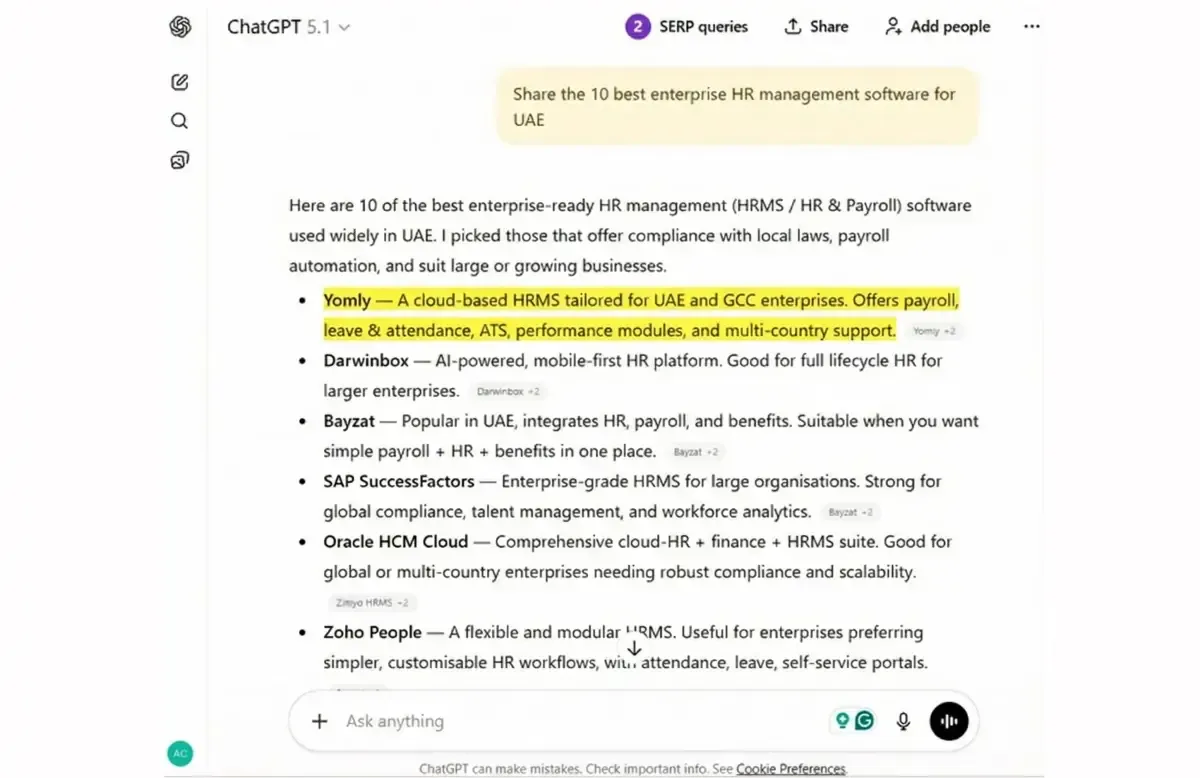
CASE STUDY:
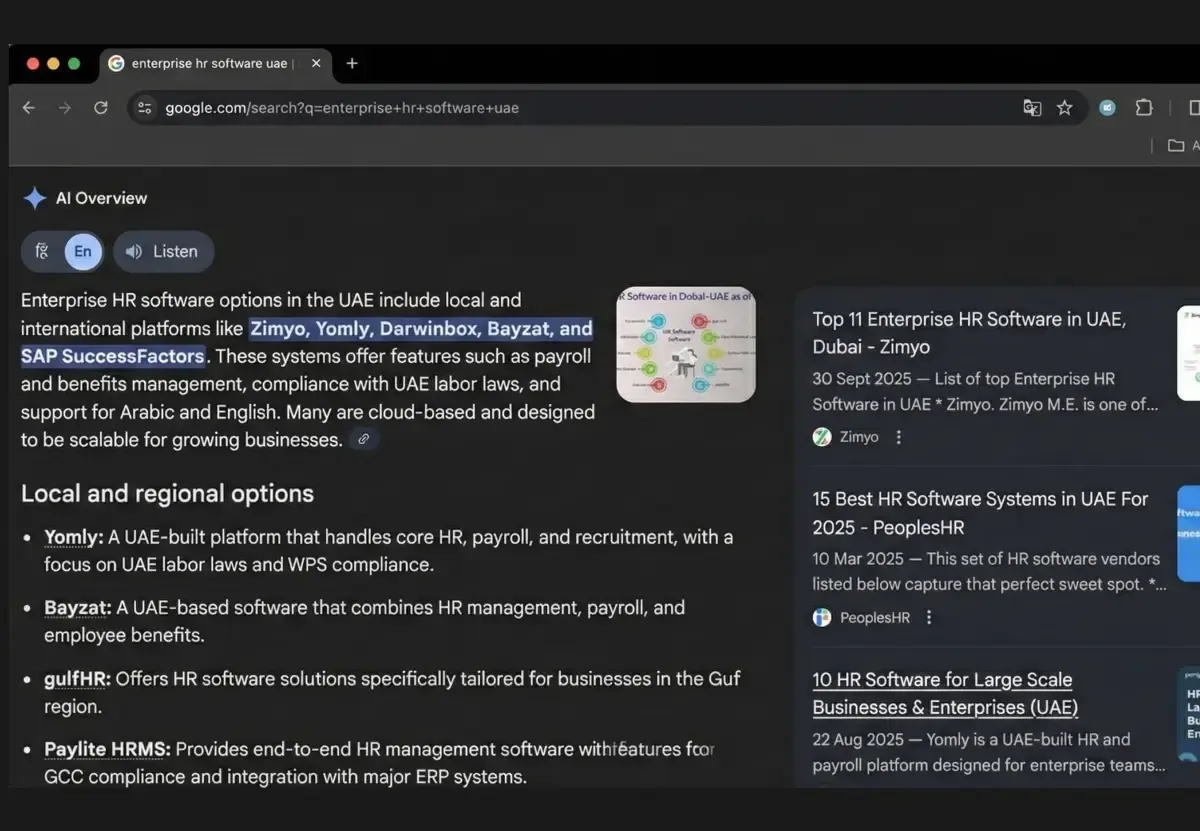
The following pictures show how Tenet has helped Yomly to gain visibility in the AI overview and AI-generated answers:
Here is another example:
2. Build landing pages for every industry, region, and use case
A homepage introduces your company. It does not answer the specific concerns of an enterprise buyer. When someone from a large organisation lands on your site, they want to know immediately if this is built for their industry, region, and operational complexity.
Think of it this way: an HR director at a hospital in Abu Dhabi and an HR director at a logistics company in Riyadh have very different problems, even if they're evaluating the same software. Generic pages serve neither well.
The most effective enterprise landing page architecture covers three dimensions:
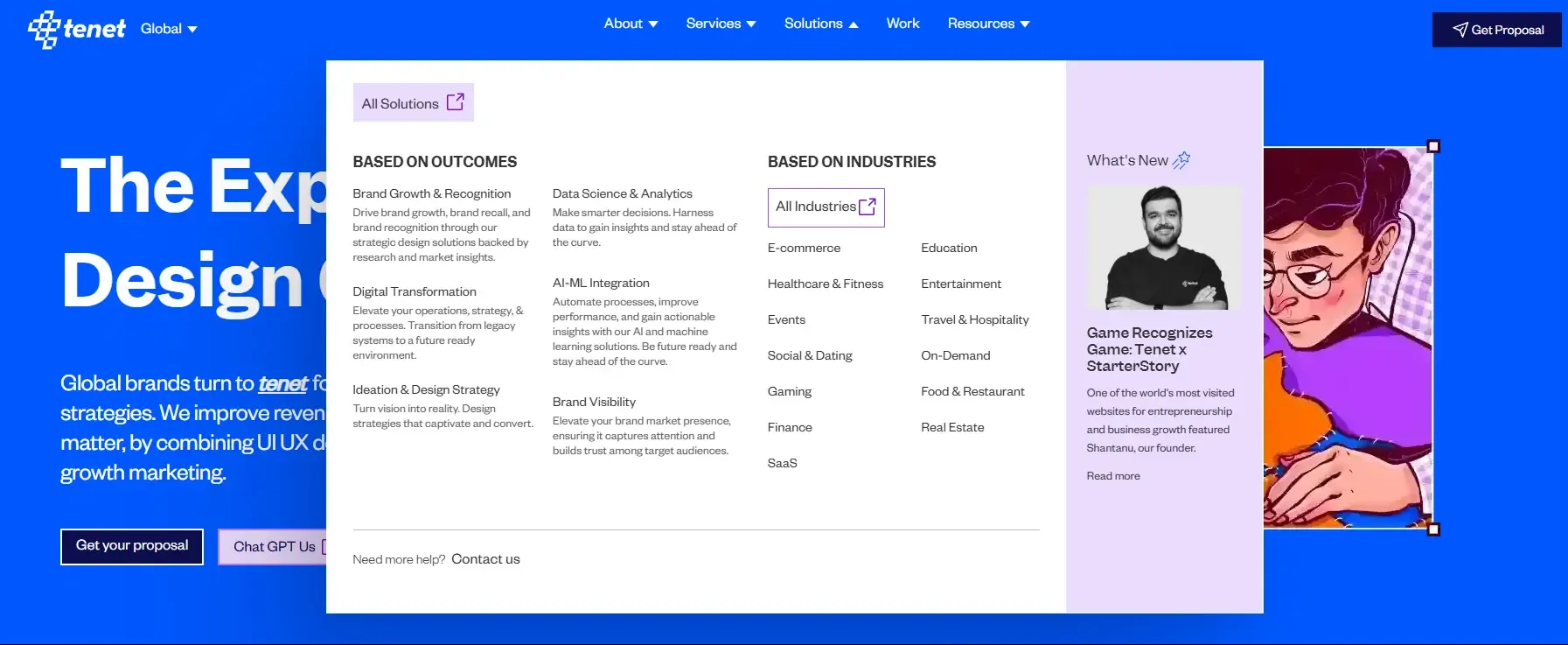
- Industry pages that focus on vertical-specific challenges such as healthcare, manufacturing, hospitality, logistics, retail, and construction.
Each page addresses the HR, compliance, and operational problems unique to that sector using the language buyers recognise.
Here is an example of how we planned and created service pages targeting different industries:
More importantly, they reassure buyers that you understand local labour laws, tax structures, compliance requirements, and data regulations relevant to their country.
👉 If Industry and regional pages are structured right, but the page itself doesn't convert, you're leaving qualified traffic on the table; that's exactly the gap Tenet's CRO audit services are built to close.
3. Create competitor comparison pages that enterprise evaluators trust
Someone searching "[Your Tool] vs [Competitor]" has already decided to buy. They have a budget, they have a shortlist, and they need help making the final call. If you control that page, you influence how the comparison is framed.
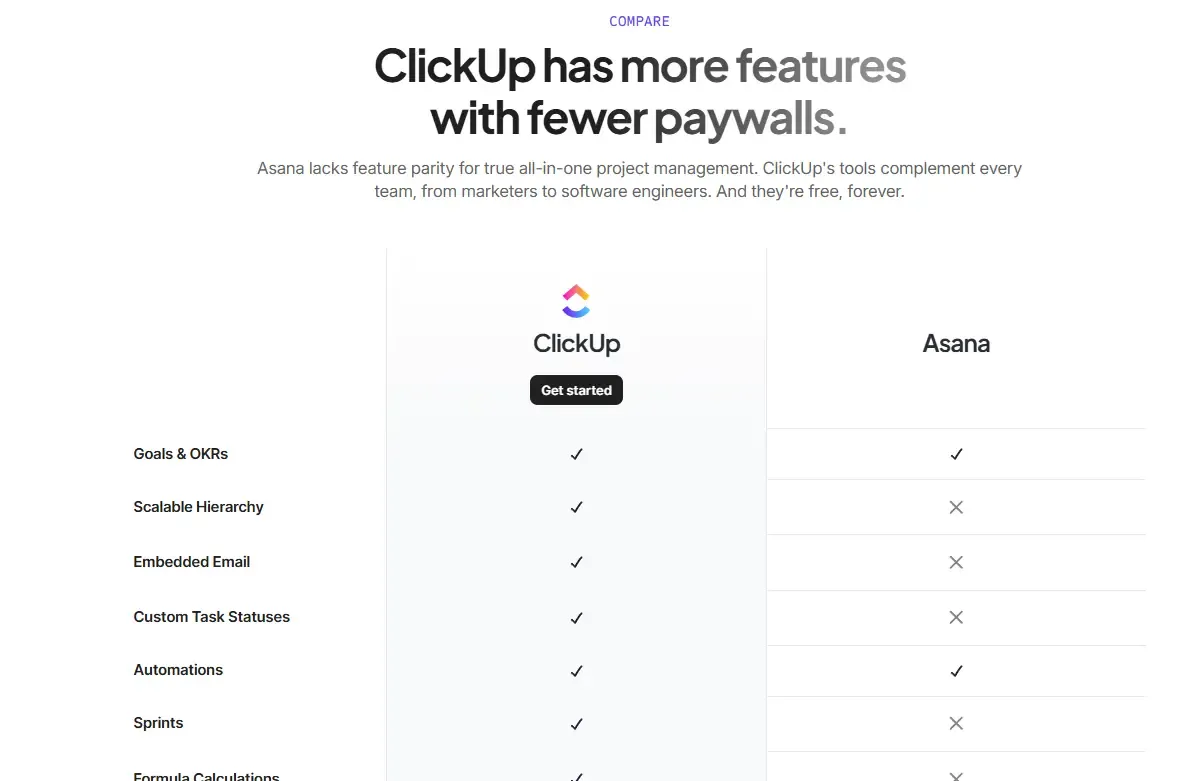
Take ClickUp as an example. The company has dedicated comparison pages for competitors like Asana, Monday.com, Trello, Notion, and Jira.
Their “ClickUp vs Asana” page does not rely on bold claims. It clearly explains who each product is best suited for, includes a structured feature comparison table, and ends with a focused call to action. It is direct, transparent, and built for buyers who are ready to decide.
This image shows ClickUp's comparison page intercepts bottom-of-funnel buyers who are already in evaluation mode, one of the highest-converting page types in B2B SaaS:
How to build one that actually converts
- Use a clear URL structure such as /compare/your-tool-vs-competitor. This keeps the page crawlable, keyword aligned, and easy to scale as you add more comparisons.
- Don't just say you're better. Be transparent about where the competitor may be stronger. The recommended way is to validate your claim with customer reviews and testimonials.
CASE STUDY:
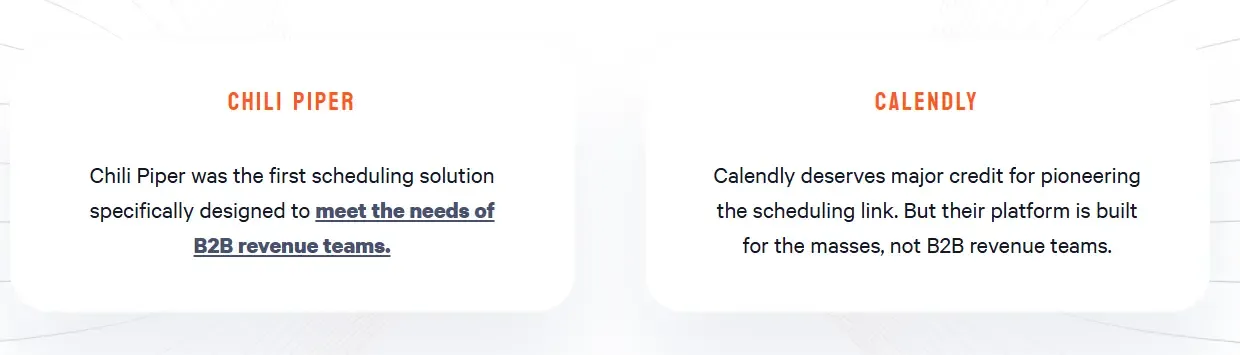
Chili Piper does this well in its comparison with Calendly by openly stating that for basic scheduling needs, Calendly may be sufficient. That level of honesty builds credibility with enterprise buyers.
- Cover what enterprise buyers actually care about: integration depth, security and compliance certifications, pricing transparency, onboarding and support, scalability, and regional support.
- Support your positioning with independent validation. Reference G2 ratings, Gartner Peer Insights reviews, or customer testimonials that directly address the comparison. Third-party proof strengthens trust more than self-promotion.
👉 Competitor comparison pages are one of the fastest ways to intercept buyers who are already in evaluation mode, and when they're paired with a strong PPC strategy, they compound results significantly.
4. Run retargeting campaigns that match the buyer's stage
Enterprise retargeting is the practice of adjusting your ads based on how deeply someone has engaged with your site and whether their company is a priority account. Instead of showing the same message to everyone, you change the message based on intent and account value.
This is important because enterprise decisions rarely happen in one visit. A buyer might read a blog post in January, review integrations in March, and only consider booking a demo months later. If you keep showing the same “Book a demo” ad to all of them, you waste budget and risk annoying serious buyers.
A strong enterprise retargeting setup has two parts:
- Behavioural segmentation based on what someone did on your site
- Account targeting based on who they are and which company they work for
When these two are combined, your ads become more relevant and more efficient.
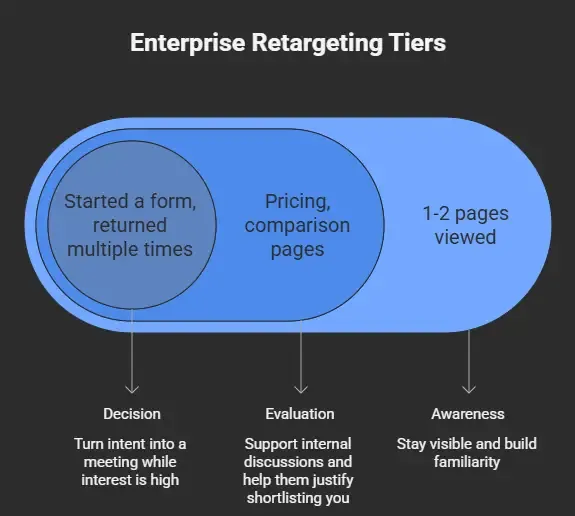
Here are 3 retargeting tiers that work for enterprise
- Awareness tier includes visitors who viewed one or two pages and left. These buyers are still defining the problem, so the message should offer useful content such as industry research, practical guides, or event invitations.
- Evaluation tier includes visitors who reviewed pricing, comparison pages, integrations, or multiple product sections. These buyers are actively comparing vendors, so the message should focus on proof such as relevant case studies, competitor comparisons, and third-party validation.
- The decision tier includes visitors who started a form, returned multiple times, or spent extended time on high-intent pages. These buyers are close to taking action, so the message should be direct and conversion-focused, such as a demo invitation or a technical consultation.
Here is a visual that shows the above content quickly for the tl;dr readers:
5. Get visibility on the platforms enterprise buyers use to shortlist vendors
Enterprise buyers don't only search Google. Before a vendor is formally evaluated, many buyers are discovered through platforms such as G2, Gartner Peer Insights, Capterra, or app marketplaces like Salesforce AppExchange and HubSpot App Marketplace.
These platforms capture buyers at a critical stage: they have already decided on a software category, created a shortlist of 3–5 vendors, and are seeking validation. A strong presence here converts at a high rate because you are influencing the decision when intent is highest.
What to optimize in third-party directory listing:
- Make sure your profile has recent reviews, because buyers pay more attention to fresh feedback than old ratings. Ask satisfied customers to leave reviews after onboarding, project milestones, or quarterly business reviews.
- Encourage reviewers to include details about company size, industry, geography, and specific use cases so that buyers can see how your solution applies to their situation.
- Fill out every section of your profile, including integrations, security certifications, deployment timelines, supported regions, and available support. Missing details can create hesitation.
- Respond to all reviews professionally, especially critical ones. Thoughtful replies show that you handle issues responsibly and value customer feedback.
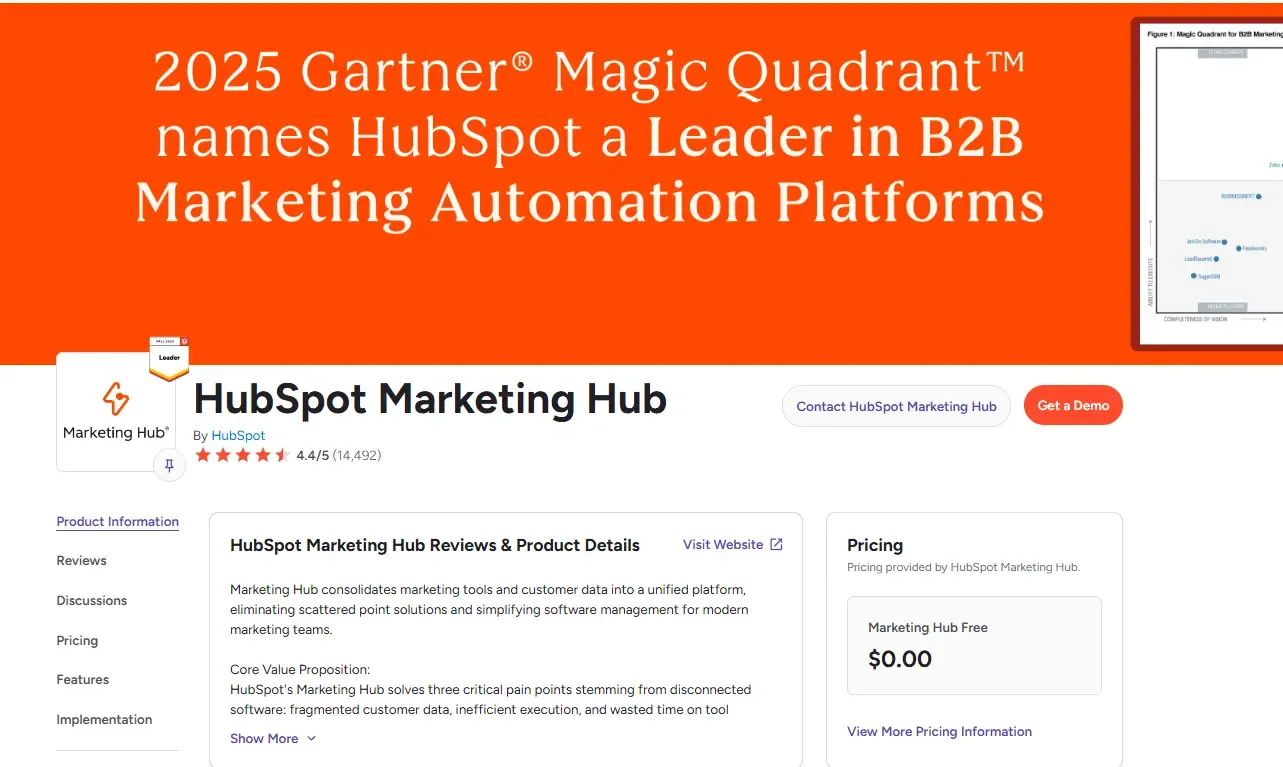
Hubshot is one of a perfect example of a G2 profile:
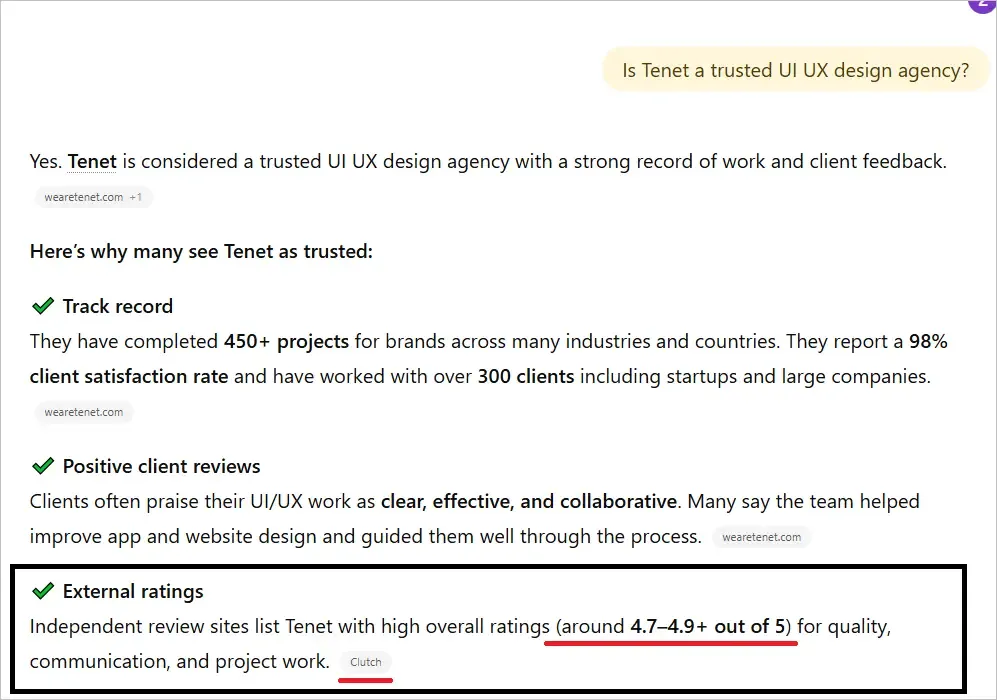
In fact, directory listing on G2 or other alternatives can help you win AI citations in LLM platforms. Here’s one such example where our clutch profile is being cited by ChatGPT:
6. Attend and Structure B2B Enterprise Industry Events for Deal Acceleration
Enterprise events should support pipeline, not just brand visibility.
Start by selecting events where your ideal accounts attend. Check attendee lists, speaker lineups, and sponsor profiles. If your target buyers are not there, do not invest.
Before the event, align marketing and sales on target accounts. Build a short list of companies to engage. Run LinkedIn ads to those companies two to three weeks before the event. Invite them to a roundtable, private demo, or executive dinner. Pre-booked meetings convert better than booth traffic.
At the event, capture context, not just contacts. Record role, buying stage, and current challenges in your CRM. Tag them properly for post-event campaigns.
After the event, launch a structured follow-up sequence. Send personalized emails, retargeting ads, and relevant case studies based on their industry and stage. Event leads should enter nurture tracks that match their intent, not generic drip campaigns.
7. Create High-Value Lead Magnets for Enterprise Buyers
Enterprise buyers do not exchange their details for generic ebooks. They download assets that help them make decisions or justify budgets internally.
Strong lead magnets include annual industry reports, benchmark studies, implementation guides, compliance checklists, and ROI tools. These assets attract mid to late stage buyers who are actively researching.
A good example is HubSpot’s annual industry benchmark reports.
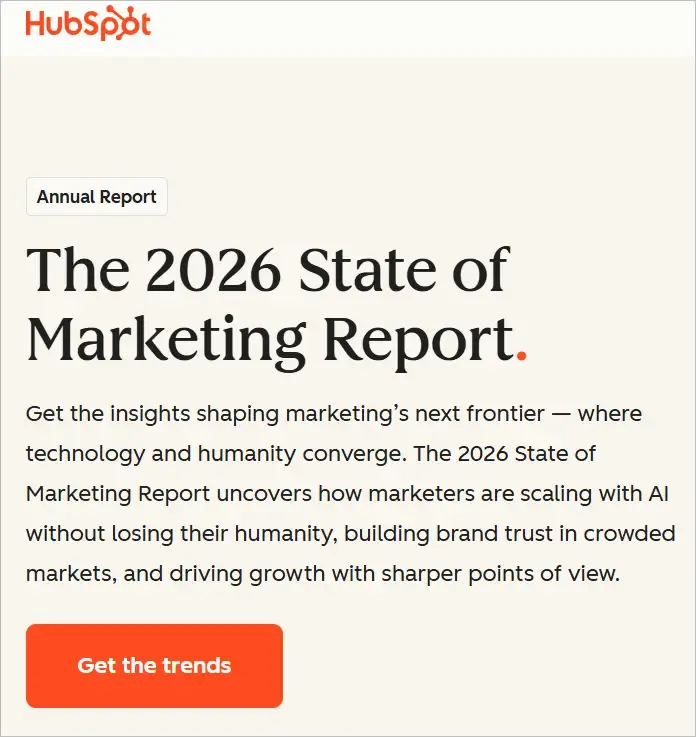
Their reports provide real data on marketing performance, conversion rates, and trends across industries. Buyers use this data in internal meetings, which increases both downloads and brand authority.
You can also create practical tools such as salary calculators, compliance checklists, HR templates, or downloadable whitebooks that explain complex topics in depth.
The key is to build assets that provide measurable value. When your lead magnet becomes reference material inside an organisation, it generates higher-quality enterprise leads.
Here are enterprise-focused lead magnet templates you can use:
- Annual Industry Benchmark Report
- State of the Industry Survey Report
- ROI Calculator Tool
- Cost Savings Estimator
- Compliance Checklist by Region
- Enterprise Implementation Guide
- Buyer’s Evaluation Checklist
- Vendor Comparison Worksheet
How Tenet helps enterprise companies generate leads
At Tenet, we help enterprise companies generate qualified leads by focusing on intent, positioning, and conversion.
We start by defining your ideal customer profile by industry, company size, region, and buyer roles. Then we build high intent SEO systems targeting commercial, comparison, and region specific keywords that attract real decision makers.
We create focused landing pages aligned with buying triggers and redesign websites to improve credibility, reduce friction, and increase demo requests. We also strengthen authority through structured content and linkable assets.
The result is predictable enterprise demand, not just more traffic.
⭐ You can explore our real client results and case studies here.
If you want to build a scalable enterprise lead engine, book a strategy call with us today.
Turn Enterprise Traffic Into Qualified Leads and Revenue
Turn Enterprise Traffic Into Qualified Leads and Revenue







Got an idea on your mind?
We’d love to hear about your brand, your visions, current challenges, even if you’re not sure what your next step is.
Let’s talk


