
How to Calculate Website ROI in 2026? Metrics & Strategies
 By
By Share

Share
Get a quick blog summary with



Most websites don’t return the value teams expect. They convert poorly, attract low-quality traffic, and fail to support sales. At Tenet, we see this across 450+ digital projects we’ve redesigned for global brands.
Website ROI shows whether your site is driving revenue or wasting budget.
When you track it the right way, you know what to fix and how to turn your website into a true growth engine.
In this guide, you’ll learn how to measure website ROI correctly and turn your website into a real growth driver.
What Website ROI Really Means?
Website ROI (Return on Investment) measures how much value your website generates compared to the money spent building, designing, and maintaining it. It shows whether your website is simply a cost or a revenue-generating asset for your business.
Think of it this way: you spend money to build and run a website. Over time, that website brings in customers, sales, or leads. Website ROI tells you if the money you made is more than the money you spent. A positive ROI means your website is profitable. A negative ROI means you're spending more than you're earning.
👉 In other words, it’s not just “how much your website costs,” but how much it earns back for every rupee (or dollar) you invest.
The standard formula to calculate website ROI is:
Website ROI = [(Revenue Generated from Website – Total Website Cost) ÷ Total Website Cost] × 100

Consider a real example: A SaaS company invests $25,000 in a website redesign and pays $2,000 annually for hosting and maintenance. Over one year, the redesigned site has generated $150,000 in customer subscriptions.
The calculation looks like this: ($150,000 - $27,000) / $27,000 × 100 = 455%
This means every $1 spent returned $4.55 in value.
(A positive ROI indicates your website is a profitable business asset. A negative ROI signals that costs exceed returns, requiring strategy adjustments.)
👉 A high performing website starts with strong UX, clarity, and a conversion-focused structure. Our website design services help you create a site built for real business results (get a free project proposal).
How much does it cost to develop a website in 2026?
Website development costs range from $3,000 to $150,000+, depending on complexity, features, and your development partner.
On average, small business websites fall in the lower range, while larger eCommerce or enterprise platforms can scale significantly based on design, integrations, and functionality.
Here’s a concise breakdown of typical website types, their average costs, and development time:
👉 You can check our detailed guide on digital product design cost that will help you set realistic budgets that align with your ROI goals.
What metrics to consider to calculate the ROI of website investment
Here are the key technical metrics to assess your website’s financial performance:
1. Conversion Rate
Conversion rate measures the percentage of website visitors who complete a desired action, such as making a purchase, submitting a contact form, or signing up for a newsletter.
Formula: (Number of Conversions / Total Number of Visitors) × 100

Example: If your website receives 5,000 visitors in a month and 150 complete a purchase, your conversion rate is (150 / 5,000) × 100 = 3%.
This indicates that 3% of your traffic converts to customers.
How to Track: Use Google Analytics 4 (GA4) to set up conversion goals. Tag key actions like form submissions, email signups, or purchase completions as events.
Set up conversion funnels to see where visitors drop off before completing actions. Most e-commerce platforms automatically track purchase conversions.
Why it matters: A 3% conversion rate on e-commerce sites is considered average, while 5% to 10% is strong performance. Even small improvements to conversion rate directly impact revenue without requiring more traffic.
2. Cost Per Lead (CPL)
Cost per lead measures how much you spend in marketing and advertising to generate one qualified lead from your website.
Formula: Total Marketing and Sales Expenses / Number of Leads Generated
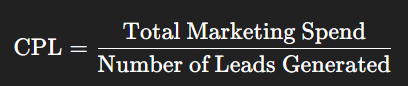
Example: If you spend $10,000 on paid ads and organic marketing in a month and generate 200 leads, your CPL is $10,000 / 200 = $50 per lead.
How to Track: Track total marketing spend across all channels (Google Ads, Facebook, LinkedIn, email, and content). Use marketing automation tools (HubSpot, Marketo) or CRM systems to log all leads generated from your website. Divide total spend by leads to calculate CPL monthly or quarterly.
Why it matters: Lower CPL means your website and marketing channels are efficiently attracting prospects. Tracking this over time helps identify which channels deliver the cheapest leads and which require optimization.
👉 See how an integrated approach of combining SEO and PPC helps attract qualified traffic effectively while optimizing acquisition costs.
3. Customer Acquisition Cost (CAC)
Customer acquisition cost is the total sales and marketing expenses required to acquire one new paying customer through your website.
Formula: (Sales + Marketing Expenses) / Number of New Customers Acquired

Example: If you spend $30,000 on combined marketing and sales efforts in a quarter and acquire 300 new customers, your CAC is $30,000 / 300 = $100 per customer.
How to Track: Combine marketing spend data with CRM records of closed deals. Tag customers in your CRM with the acquisition source (organic, paid search, referral).
Calculate CAC by dividing total sales and marketing expenses by the number of new customers acquired in that period. Use dashboards in tools like Looker Studio or Tableau to monitor CAC by channel.
Why it matters: CAC directly impacts website ROI. If your average customer spends $500, a CAC of $100 is healthy. If CAC exceeds customer lifetime value, your website investment isn't profitable.
4. Customer Lifetime Value (CLV)
Customer lifetime value is the total revenue an average customer generates during their entire relationship with your business.
Formula: (Average Purchase Value × Average Number of Purchases) × Average Customer Lifespan

Example: If customers spend $250 per purchase, make 4 purchases per year, and remain customers for 3 years, CLV = (250 × 4) × 3 = $3,000.
How to Track: Analyze your transaction history in your CRM or accounting software. Calculate the average purchase value by dividing the total revenue by the total transactions.
Determine average purchase frequency and customer lifespan from historical data. Use Excel or BI tools to update CLV calculations quarterly as you collect more data, segment CLV by customer type or acquisition channel for deeper insights.
Why it matters: Compare CLV to CAC to determine profitability. If CLV is $3,000 and CAC is $100, your website generates positive long-term ROI. The higher the ratio between CLV and CAC, the more profitable your website investment.
5. Traffic to Commercial Pages
This metric measures how much of your total website traffic reaches pages designed to convert visitors into leads or customers (product pages, pricing pages, contact forms, checkout pages).
Formula: Traffic to Commercial Pages / Total Website Traffic × 100

Example: If your website receives 10,000 monthly visitors but only 2,000 visit your pricing or product pages, your commercial traffic is 20%.
How to Track: In GA4, segment traffic to specific landing pages or page categories. Create a custom report grouping all products, pricing, and checkout pages.
Compare this traffic segment to total website traffic. Set up funnel visualization to track the path users take from landing pages to commercial pages.
Why it matters: High overall traffic means little if visitors don't reach pages where conversions happen. This metric identifies whether your website structure and navigation guide users toward conversion opportunities.
6. Bounce Rate and Time on Page
Bounce rate is the percentage of visitors who leave your website without taking any action or visiting another page. Time on page measures how long visitors spend on individual pages, indicating content engagement.
Formula: (Sessions with Single Pageview / Total Sessions) × 100

Example: If 100 users visit a product page but 45 leave immediately without clicking anything, your bounce rate is 45%.
How to Track: GA4 provides bounce rate and engagement metrics automatically for each page. Set up custom events to better understand whether a visitor scrolled through content or took meaningful actions before leaving.
Track time on the page through session duration metrics. Compare bounce rates across different page types (product pages vs. blog posts) to identify problem areas.
Why it matters: High bounce rates on commercial pages signal that content, design, or messaging doesn't match visitor expectations.
Low time on page suggests content isn't engaging. Both metrics highlight where your website needs optimization to improve conversions.
7. Marketing Qualified Leads (MQLs)
A marketing qualified lead is a prospect who has engaged with your website content—downloaded a resource, attended a webinar, or filled out a form, and shows a higher likelihood of becoming a customer.
Formula: Leads Generated / Total Website Visitors × 100

Example: If your website generates 200 leads monthly from 5,000 visitors, and your sales team qualifies 80 as marketing qualified leads, your MQL percentage is 80 / 200 = 40%.
How to Track: Define MQL criteria in collaboration with your sales team (what behaviors or information qualify someone as MQL). Use your marketing automation platform or CRM to track lead scoring.
Tag leads as MQL when they meet your criteria. Report on the MQL rate monthly by tracking (MQLs / Total Leads) × 100.
Why it matters: MQLs represent higher-quality traffic than general visitors. Tracking the percentage of leads that become MQLs helps your marketing and sales teams focus on the most promising prospects, improving your website's efficiency at generating qualified business opportunities.
8. Revenue Per Visitor
Revenue per visitor measures the average revenue generated from each person who visits your website, combining conversion rate and order value into a single metric.
Formula: Total Revenue / Total Number of Visitors Or Conversion Rate × Average Order Value
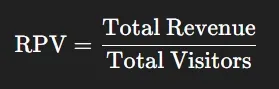
Example: If your website generates $50,000 in revenue from 10,000 visitors, your RPV is $50,000 / 10,000 = $5 per visitor.
How to Track: Connect your e-commerce platform or payment processor to GA4 using enhanced e-commerce tracking.
Track total revenue in your accounting or e-commerce dashboard. Divide monthly revenue by monthly visitors. Segment RPV by traffic source, device type, and geographic region to identify high-value visitor segments.
Why it matters: RPV directly reflects website profitability. Increasing RPV through better conversion optimization, higher average orders, or improved traffic quality directly improves website ROI. Tracking RPV by traffic source reveals which channels deliver the most valuable visitors.
9. Average Order Value (AOV)
Average order value measures the average revenue generated per transaction on your website.
Formula: Total Revenue / Total Number of Orders

Example: If your e-commerce site generates $100,000 in revenue from 500 orders, your AOV is $100,000 / 500 = $200 per order.
How to Track: Most e-commerce platforms (Shopify, WooCommerce, BigCommerce) calculate AOV automatically in their analytics dashboards.
Track this metric monthly or quarterly. Segment AOV by product category, customer source, or marketing channel. Compare AOV between new and returning customers to understand which segments generate higher revenue per order.
Why it matters: AOV directly impacts revenue and ROI. Increasing AOV through product bundling, upselling, or premium offerings can significantly increase website revenue without increasing traffic. A 10% increase in AOV often requires less effort than a 10% increase in traffic.
10. Sales Qualified Leads (SQLs)
A sales-qualified lead is a prospect who has been vetted by both marketing and sales teams and is ready for direct sales engagement. SQLs have demonstrated buying intent and meet specific criteria set by your sales team.
Formula: Number of SQLs / Total Leads Generated × 100

Example: If your website generates 200 leads monthly and your sales team qualifies 60 as sales qualified leads, your SQL conversion rate is 60 / 200 = 30%.
How to Track: Define SQL criteria with your sales team (budget, authority, need, timeline). Use your CRM to track lead scoring and progression through the sales funnel.
Tag prospects as SQL once they meet all criteria and are handed off to sales. Monitor the SQL rate monthly by dividing total SQLs by total leads. Track conversion rate from SQL to customer to measure sales team effectiveness.
Why it matters: SQLs represent prospects closest to purchase. A higher SQL-to-lead ratio indicates your website attracts visitors with genuine buying intent.
The conversion rate from SQL to customers directly impacts revenue and ROI. Tracking SQLs separately from MQLs helps identify bottlenecks between marketing and sales alignment.
Expert tips to increase your website design and development ROI
1. Optimize Page Speed and Core Web Vitals
Page speed strongly influences user experience and search rankings. Faster websites keep visitors engaged, while delays lead to lost conversions and higher bounce rates.
Research shows that just a one-second delay can significantly reduce conversions by 7%, and sites taking longer see many users leave before the page even fully loads.
In 2025, aiming for a Largest Contentful Paint (LCP) under 2.5 seconds and a total page load under 3 seconds is recommended to meet Google’s Core Web Vitals standards and maximize ROI.
Implementation steps:
- Compress images and videos without sacrificing quality.
- Enable browser caching to reduce repeat load times.
- Minify JavaScript, CSS, and HTML files.
- Use a content delivery network (CDN) to serve content from locations closer to users.
- Remove unnecessary plugins and redirect chains.
- Monitor Core Web Vitals (LCP, FID, CLS) using Google PageSpeed Insights and address issues systematically.
ROI impact: Improving page speed can increase organic traffic by up to 20% through better rankings and lower bounce rates, directly reducing customer acquisition costs.
2. Implement A/B Testing for Continuous Improvement
A/B testing removes assumptions by comparing two website variations to determine which performs better. Test individual elements like button color, CTA text, form fields, or entire page layouts to identify changes that improve conversions.
Run tests for two weeks to one month (shorter if you have high traffic). Split traffic 50/50 between variants. Measure results against your primary conversion goal, not vanity metrics.
What to test:
- Button colors and CTA text to increase click-through rates.
- Form fields (reduce from 10 fields to 5 to improve completion rates).
- Page layout and content positioning.
- Headline variations to test messaging clarity.
- Product recommendations and upsell placement.
ROI impact: Companies using A/B testing programs see continuous improvements in conversion rates.
Small, incremental gains compound; a 1% conversion increase on 10,000 monthly visitors with $200 average order value adds $20,000 in annual revenue.
3. Prioritize Mobile Responsiveness
Most web traffic now comes from mobile devices. A mobile-responsive website adapts smoothly to different screen sizes and improves both user experience and SEO rankings, as Google prioritizes mobile-friendly sites.
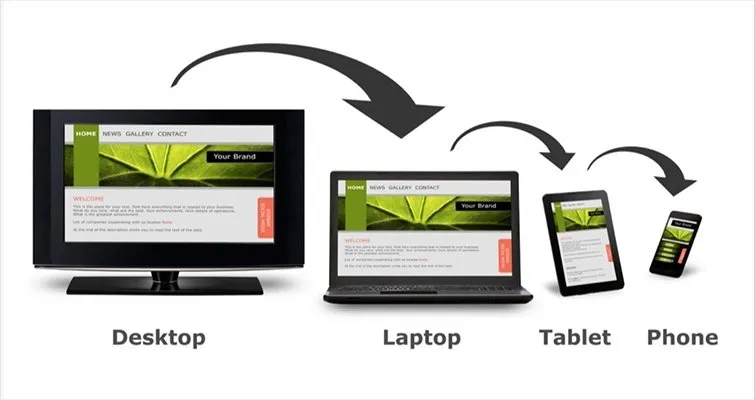
Test your website across various devices and screen sizes to ensure a consistent experience. Use responsive design principles so layouts adjust fluidly.
Ensure tap targets (buttons, links) are large enough for mobile users. Reduce load times on mobile networks by removing heavy assets.
ROI impact: Mobile optimization directly reduces bounce rates and improves conversion rates, particularly for e-commerce sites where mobile represents 50%+ of traffic.
4. Simplify Navigation and Reduce Friction
Intuitive navigation helps users find what they need quickly. When your site has a clear structure, simple labels, and visible calls to action, people feel less stressed and move smoothly toward what you want them to do. Keep your navigation menu tight with 5 to 7 main categories.
Also, use descriptive links instead of vague text like “Click here.” Make sure your main call to action is always visible above the fold. Avoid too many pop ups or elements that distract users from taking action.
ROI impact: Less friction means lower bounce rates, longer sessions, and higher conversion rates, which improves your overall customer acquisition performance.
👉 Learn detailed website navigation best practices that help in increasing both SEO and conversions.
5. Implement Personalization and Dynamic Content
Personalized experiences increase engagement and conversion rates. Use browsing history, past purchases, and user behavior to display customized content and product recommendations.
Use AI-powered recommendation engines to suggest products based on user behavior. Display "Frequently Bought Together" bundles to increase average order value.
The picture below shows how Amazon’s “Frequently Bought Together” section suggests complementary products, encouraging easy bundle purchases.

Show personalized product recommendations on the homepage and category pages. Use dynamic content blocks that change based on traffic source or user segment.
ROI impact: Personalization can increase conversion rates by 10-20% by improving relevance. Bundled product recommendations directly increase average order value without acquiring new traffic.
6. Create High-Intent Landing Pages
Landing pages built for specific campaigns or traffic sources perform much better than generic pages. They work because each page speaks to one audience, offers one clear value, and drives one simple action.
The message on the page should match the ad or search term that brought the visitor in. When people see the same promise they clicked on, they feel they are in the right place. Keep the page focused by removing navigation menus and anything that pulls attention away from the goal. Use benefit-focused copy so visitors understand what they gain, not just what you offer.
ROI impact: Optimized landing pages can double conversion rates compared to generic pages, directly reducing cost per acquisition and improving website ROI.
7. Implement Clear and Strategic Calls-to-Action (CTAs)
CTAs are the bridge between interest and action. Effective CTAs use action-oriented language, stand out visually, and appear strategically throughout your site.
Use specific, benefit-driven CTA text like "Schedule a Demo" or "Start Free Trial" instead of generic "Submit" buttons.
Make CTAs visually distinct (contrasting color, larger size). Repeat CTAs on long pages (top, middle, bottom). Test button color, text, size, and placement through A/B testing.
ROI impact: Well-designed CTAs can increase conversion rates by 15-25% by removing ambiguity about the next step.
8. Optimize for High-Intent Keywords and Traffic Quality
Not all traffic is equal. Attracting visitors searching for your specific solutions drives higher conversion rates than generic brand traffic.
Focus your SEO efforts on keywords showing purchase intent (e.g., "best project management software for agencies" vs. "project management software"). Use paid search to target high-intent keywords.
Avoid chasing vanity metrics like total traffic; prioritize qualified visitors matching your ideal customer profile. Measure quality through conversion rates by traffic source, not just volume.
ROI impact: High-intent traffic converts 2-5x better than generic traffic. Focusing on quality over quantity reduces CAC and improves website ROI significantly.
9. Use Social Proof and Trust Elements
Trust signals reduce purchase hesitation and increase conversion rates. Social proof includes customer reviews, ratings, testimonials, case studies, and security badges.
Display customer reviews and ratings on product pages. Include case studies showing real results from existing customers.
The following is Tenet’s website, demonstrating customer reviews:

Add trust badges (SSL certificate icons, payment security logos). Feature customer testimonials with photos and company names. Show "Recently Purchased" notifications to create FOMO (fear of missing out).
ROI impact: Adding customer reviews strategically can increase conversion rates by 20-30% by reducing buyer uncertainty.
10. Analyze User Behavior with Heat Maps and Session Recordings
Understanding how users interact with your site reveals optimization opportunities. Tools like Hotjar and Crazy Egg provide heat maps showing where users click, scroll, and spend time, plus session recordings showing user behavior.
This image describes the meaning and impact of each colour in the heatmap:
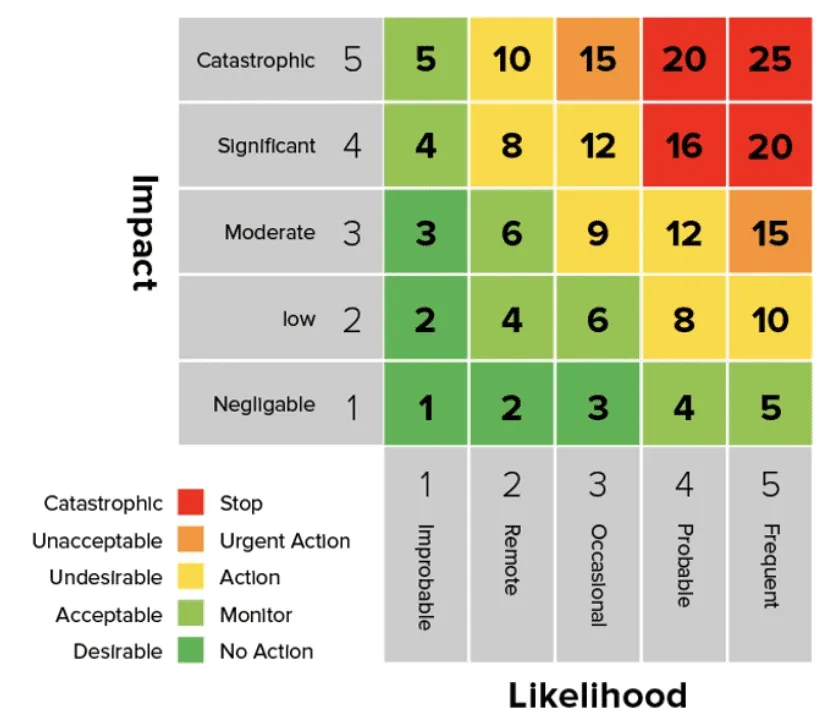
Identify page sections where users spend the most time. Find areas where users drop off without converting. Discover clicks on non-clickable elements (indicating user confusion). Watch session recordings to understand where users struggle.
ROI impact: Behavior analysis reveals quick fixes that improve conversion rates without major development work, offering fast ROI with minimal cost.
👉 To transform your website into a powerful revenue driver, explore our website design and development services.
What is a good ROI for a website?
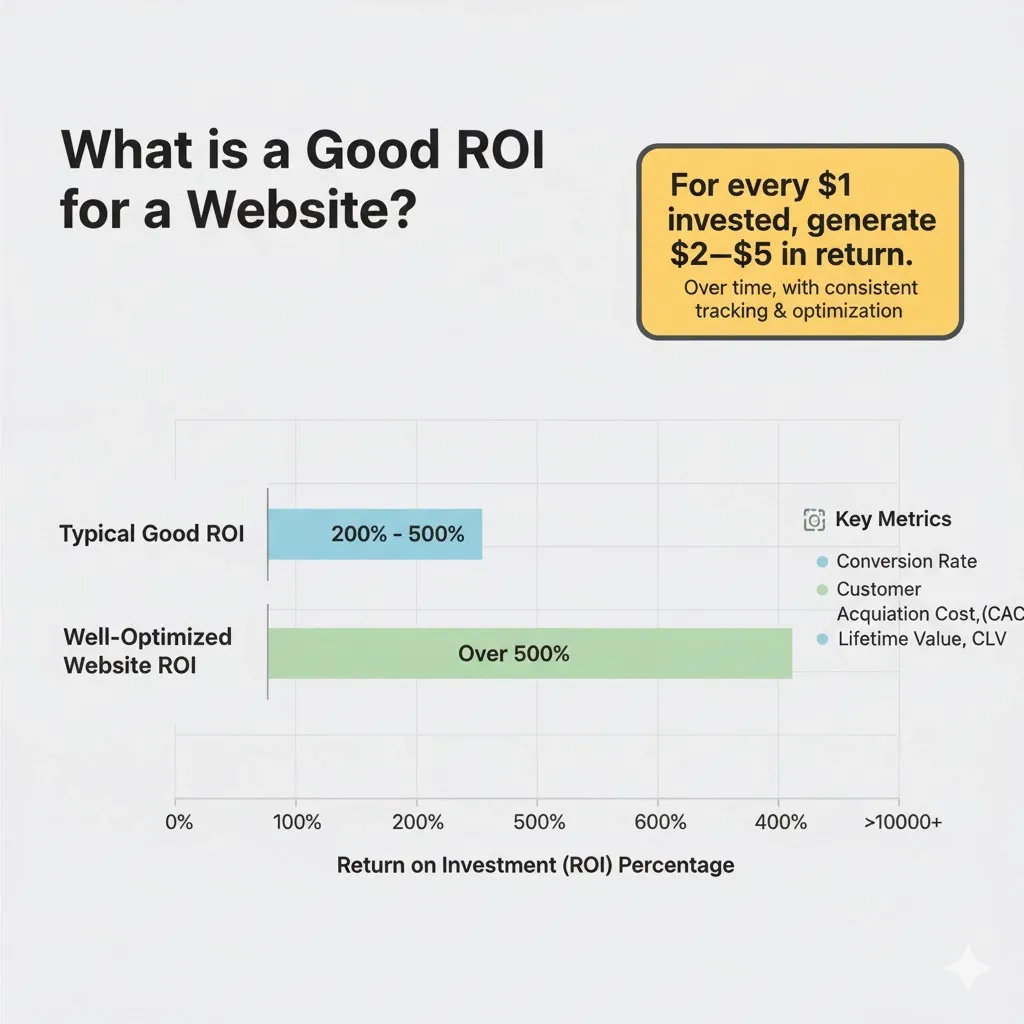
A good ROI for a website typically ranges between 200% and 500%, depending on the business model and goals.
This means for every $1 invested, you should generate $2–$5 in return. However, ROI varies by industry, conversion funnel, and traffic quality.
A well-optimized website (built for user experience, SEO, and conversions) can even exceed 1,000% ROI over time.
The key is consistent performance tracking through metrics like conversion rate, customer acquisition cost (CAC), and lifetime value (CLV) to measure true profitability.
Below given picture shows Good vs. Well-Optimized website ROI:
How is ROI measured differently in B2B vs B2C?
ROI measurement differs significantly between B2B and B2C websites due to differences in sales cycles, customer journeys, and buying behaviors.
In B2B, ROI is measured over a longer timeframe since deals involve multiple decision-makers and higher-value transactions. Metrics like Marketing Qualified Leads (MQLs), pipeline contribution, Customer Lifetime Value (CLV), and sales cycle length are key indicators.
B2B ROI focuses on how effectively the website nurtures leads, supports account-based marketing efforts, and drives revenue through conversions and demo requests.
In B2C, ROI is measured through faster, high-volume transactions. Key metrics include conversion rate, average order value (AOV), cart abandonment rate, and revenue per visitor. B2C websites focus on immediate conversions, user experience, and repeat purchases to maximize short-term profitability.
In short, B2B ROI reflects long-term relationship value, while B2C ROI measures instant transactional efficiency.
How Long Does It Take to See ROI from a New Website?
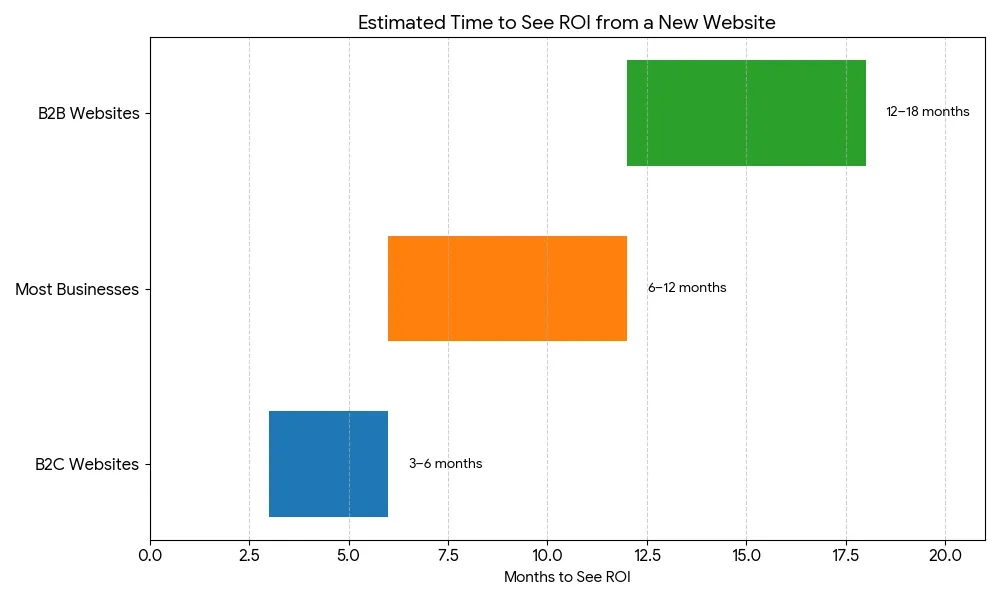
Most businesses start seeing ROI from a new website within 6 to 12 months after launch. However, the timeline depends on factors like SEO maturity, traffic volume, conversion optimization, and marketing efforts.
For B2B websites, it may take longer, up to 12–18 months, due to longer sales cycles. In contrast, B2C sites can see measurable returns within 3–6 months if they drive consistent traffic and sales.
Here is a graph showing the estimated time to see ROI for different types of websites:
IROS Website Design ROI Success Stories from Tenet
When it comes to proving the ROI of website design and brand transformation, real-world results speak the loudest.
At Tenet, we’ve helped 450+ organizations grow through research-led digital experiences. One example is IROS, the UAE’s first Clinical Research Organization, which needed a brand and website that reflected its scientific leadership.
The Challenge
IROS had low brand recognition, inconsistent messaging, generic visuals, and an outdated website that did not convert. They needed a clear identity and a digital presence that showed their innovation and credibility.
Tenet’s Approach
We began with stakeholder interviews and brand workshops to define the positioning “Catalyzing Breakthroughs,” built on Innovation, Collaboration, Commitment, and Precision.
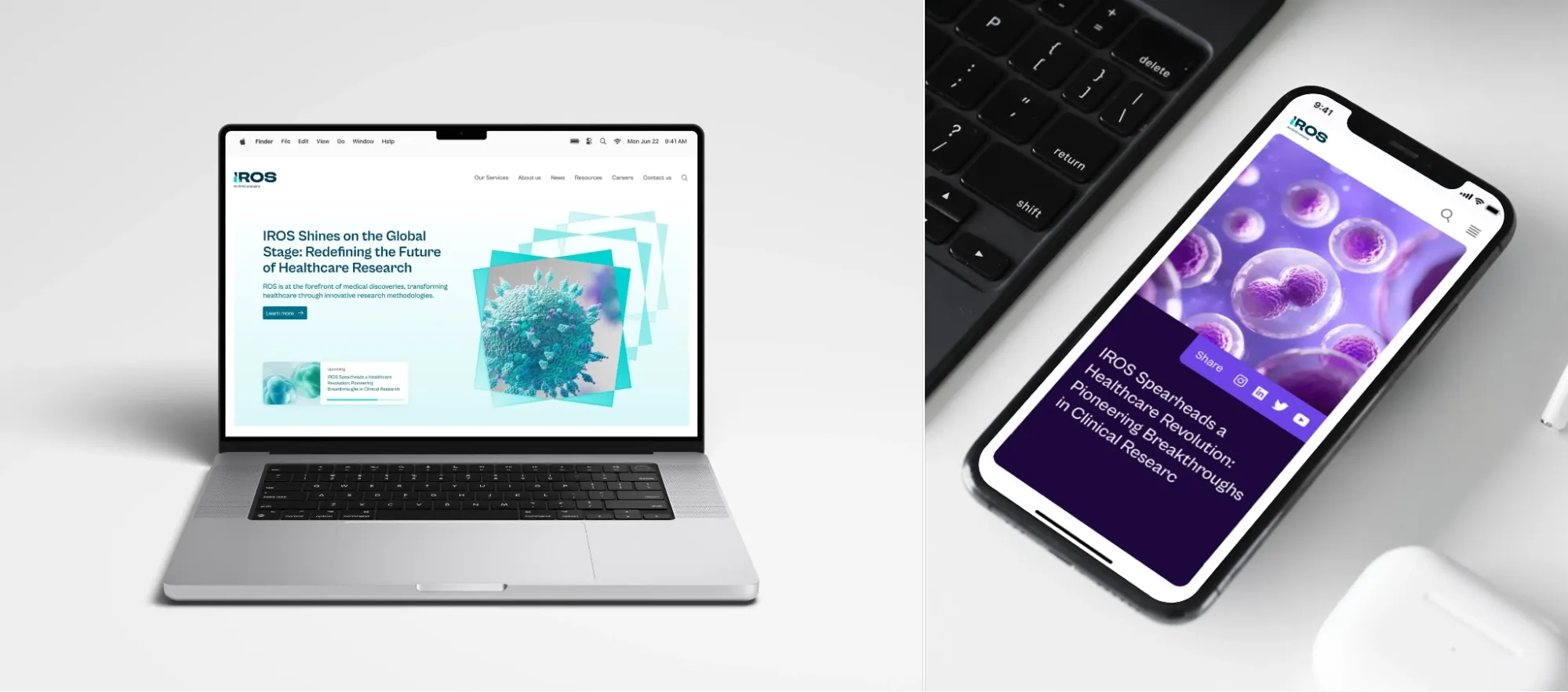
We refreshed their visual identity with a modern logo, a turquoise palette, and the dynamic “Formix” system. We then redesigned the website with a cleaner structure, better navigation, and stronger conversion paths.
Here is the website and mobile app design that we created for IROS:
The Results
The transformation repositioned IROS from a functional player to a strategic leader in healthcare research.
Key outcomes:
- Stronger brand recognition and global presence
- Unified messaging across all communication channels
- Higher website engagement and improved visitor conversion paths
- Recognition as part of M42, a leading healthcare group formed through G42 Healthcare and Mubadala Health
👉 Check out the full case study here: IROS Case Study.
If you’re rethinking how your digital presence can better reflect your brand’s potential, we’d love to connect & help you uncover the next breakthrough.
Boost your brand and conversions — Receive your free web development quote
Boost your brand and conversions — Receive your free web development quote

















Got an idea on your mind?
We’d love to hear about your brand, your visions, current challenges, even if you’re not sure what your next step is.
Let’s talk


