
Marketing Collateral Design Pricing: How Much Does It Cost?
 By
By Share

Share
Get a quick blog summary with



Key Highlights
Key Highlights
- Marketing collateral now includes every buyer-facing asset that supports evaluation and purchase decisions.
- Costs vary by asset scope, strategy input, visual complexity, and revision cycles.
- Pitch decks, whitepapers, and video assets cost more because they carry higher business risk.
- Reusable templates, brand systems, and multi-channel assets increase upfront cost but improve long-term value.
Most brands invest heavily in their product, website, and demand generation. Marketing collateral, however, is often treated as something to “fix later.”
Sales decks are rushed before important pitches.
Case studies are created only when deals slow down.
One-pagers and launch assets are built in isolation, without a clear system.
The common assumption is simple: “It’s just design. We’ll fix it later.”
At Tenet, we have scaled marketing collateral for SaaS, enterprise, and growth brands, including 7+ Fortune 1000 companies, with a repeat client rate of 45%.
Our experience shows the true cost isn't design fees but long-term ownership and revenue impact. That perspective is what this article is based on.
It breaks down what brands actually pay for marketing collateral, why costs vary, the trade-offs involved, and how to evaluate ROI beyond appearance.
Use the following table to plan a budget, choose the right assets, and prioritize high-impact materials.
What Counts as Marketing Collateral Today?
Marketing collateral once meant brochures, business cards, and trade show banners. That definition no longer holds.
Today, marketing collateral includes every asset a buyer sees, shares, or uses to evaluate your product and justify a decision. If it represents your brand during a buying moment, it is collateral. This includes:
- Website assets: Hero banners, product pages, feature callouts, comparison grids, testimonial blocks, CTA modules
- Sales enablement: Pitch decks, one-pagers, leave-behinds, proposal templates, ROI calculators, demo follow-up PDFs
- Paid media: LinkedIn carousel ads, Google Display assets, retargeting banners, landing page creative
- Product marketing: Feature announcements, release notes, integration guides, use case breakdowns, customer onboarding decks
- Investor and partnership materials: Fundraising decks, partnership proposals, co-marketing templates
What connects all of these assets is their role in the buying process.
In modern B2B journeys, marketing collateral is not supporting material. It is the primary way buyers understand value, align stakeholders, and gain confidence before committing.
👉 Explore our digital product design process to ensure consistency across all touchpoints.

Key Factors That Influence Marketing Collateral Design Pricing
Marketing collateral design costs vary because the work itself ranges from surface-level execution to deep strategic enablement. The difference in pricing reflects how much responsibility the asset carries in the buying journey.
Here are the main factors that drive differences in cost, with realistic ranges based on current market data:
Factor 1: Scope of the Asset
The type, length, and purpose of the asset directly affect how much work is required.
Short, single-purpose materials like a one-page flyer involve less research, fewer design options, and faster turnaround.
In contrast, multi-page pitch decks or brochures require structuring a narrative, designing data visualizations, and ensuring cohesion across multiple pages, which adds to both time and cost.
The more content and functionality included, the more hours a designer or agency must invest.
Impact on cost
- ↑ High when the asset is long, reusable, or serves multiple purposes
- ↓ Low when the asset is short, single-use, and narrowly focused
Factor 2: Level of Strategic Input
Design costs increase when the work goes beyond execution and into decision-making.
Execution-only projects follow existing copy, structure, and direction. The designer focuses on layout and visuals, not on shaping the message.
Strategy-led projects are different.
The designer helps decide what to say, what to highlight, and how the story should flow for different audiences. This includes organizing information, prioritizing messages, and using visuals to guide attention and understanding.
Because this work influences how buyers interpret value, it requires deeper thinking, senior expertise, and more time for research, iteration, and alignment, which directly impacts pricing.
Impact on cost
- ↑ High when strategy, messaging, and story flow are part of the scope
- ↓ Low when content and direction are already finalized
Factor 3: Visual Complexity
The sophistication of the design elements directly impacts cost.
Simple layouts with standard imagery are quicker to create and easier to finalize.
Custom illustrations, branded infographics, and interactive elements take more time because they require specialized skills, careful execution, and additional refinement. These visuals also tend to go through more review cycles to ensure accuracy, clarity, and consistency with the brand.
As visual complexity increases, so do design hours, revisions, and overall cost.
Impact on cost
- ↑ High with custom visuals, illustrations, or interactive elements
- ↓ Low with simple layouts and minimal visual customization
Factor 4: Reusability and Multi-Channel Adaptation
Collateral that works across multiple channels takes more thought and planning.
Single-use assets like a one-off PDF are easy to create, but multi-channel pieces must adapt to email, web, social, and print while staying consistent.
Designers need to build flexible layouts, test formats, and ensure the brand looks right everywhere. This extra effort upfront increases cost, but it makes the asset far more versatile and impactful over time.
Impact on cost
- ↑ High when the asset must be adapted across multiple channels
- ↓ Low when it is designed for a single use or format
Factor 5: Review Cycles and Stakeholders
Who sees and approves your collateral can change the entire project. More stakeholders usually mean more feedback, and more feedback means more revisions.
Each round of changes takes time and careful coordination to ensure the design stays on brand and the message remains clear.
Projects with complex review processes cost more because every additional perspective adds effort but this investment ensures the final asset actually works for all teams involved.
Impact on cost
- ↑ High with multiple teams and approval layers
- ↓ Low with one or two decision-makers
Factor 6: Brand Maturity and Design Systems
Brands with a clear design system ( colors, fonts, icons, and templates ) save time because many visual decisions are already set. Designers can focus on execution rather than experimenting with layouts or styles.
Early-stage brands or those without guidelines need more foundational work to define visual identity and templates.
This extra effort takes time and increases cost, but it also sets up a consistent look and feel that pays off across all future collateral.
Impact on cost
- ↑ High when brand guidelines or templates are missing
- ↓ Low when a strong design system already exists
👉 Learn how our brand strategy services define visual identity before creating marketing materials.
Factor 7: Risk and Business Impact
Some assets carry real consequences.
An investor deck that miscommunicates your story could lead to missed funding. A client-facing sales presentation with unclear messaging might slow deals or confuse prospects.
High-stakes projects require extra attention.
Senior designers review every slide, multiple iterations refine visuals and messaging, and every detail is carefully checked for accuracy.
The higher the risk, the more time, expertise, and cost are involved, but this ensures the asset delivers impact and avoids costly mistakes.
Impact on cost
- ↑ High for revenue-driving or investor-facing assets
- ↓ Low for internal or low-risk materials
Marketing Collateral Design Cost Breakdown (By Asset Type)
1. Pitch Decks
Pitch decks are essential marketing tools that help secure investors, build client confidence, and align internal teams.
Creating a deck is more than design. It requires telling a story, visualizing data and making every slide clear and persuasive.
Longer decks or versions for multiple audiences take more time. They require senior-level input, careful review, and several rounds of revisions, which increases cost.
This is an example of a structured pitch deck where storytelling, data, and visual hierarchy work together to guide investors and stakeholders.
Typical Cost Range
- 10 to 20 slides: $1,500 to $5,000
- 20 to 40 slides with custom visuals, interactive elements, or multiple versions: $5,000 to $10,000+
Cost Drivers
- Planning and storyboarding for the slides
- Custom charts, icons, and illustrations
- Multiple versions for investors, partners, or internal teams
- Number of revisions and stakeholder approvals
👉 Check out these guides to see types of pitch decks & what slides to have in a pitch deck.
2. Brochures
Brochures are used for events, sales materials, client education, and digital campaigns. Creating a high-quality brochure is more than arranging text and images. It requires careful layout, design consistency, and attention to branding.
Costs rise with page count, design complexity, and whether the brochure is for print, digital, or both.
Multi-language or multi-channel versions take additional time and effort.
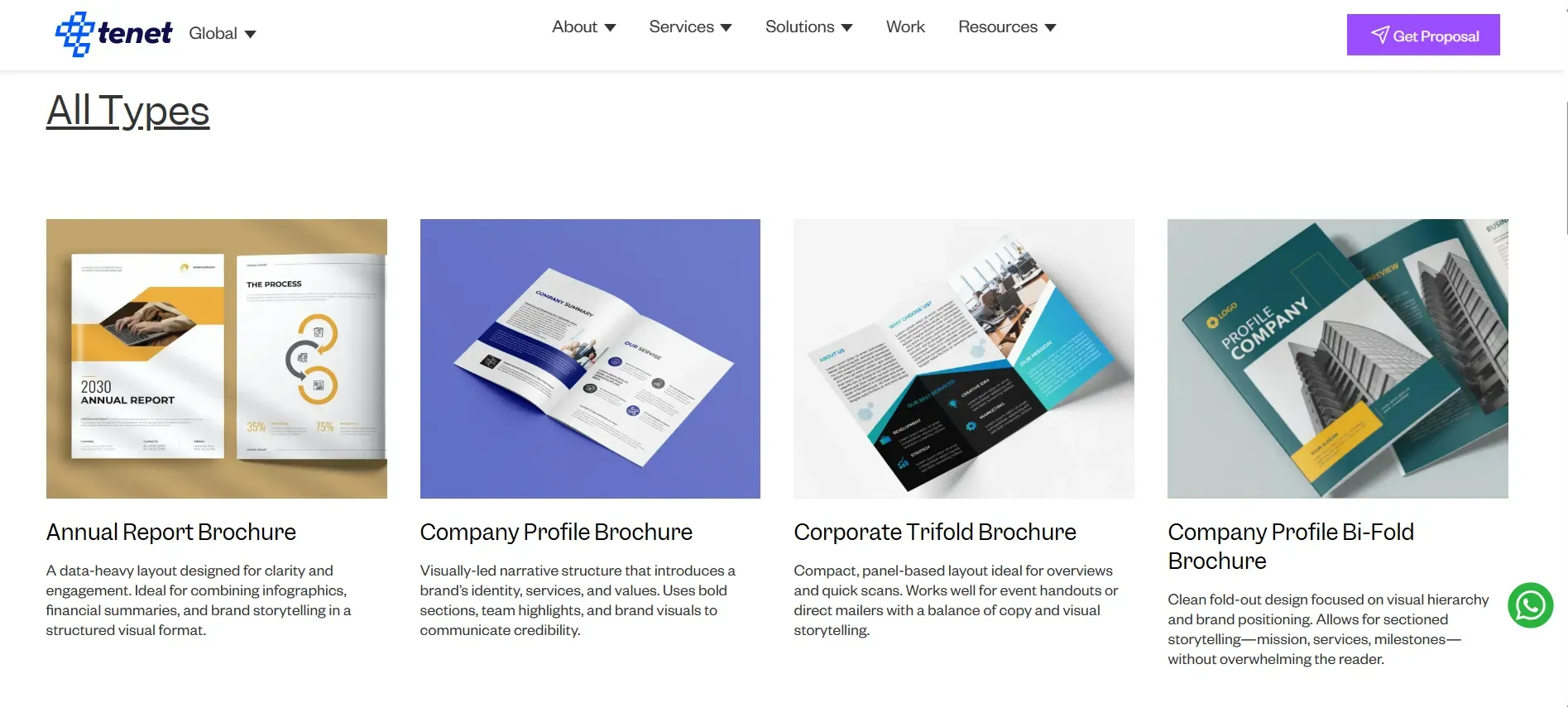
Here are some brochure design template ideas by Tenet:
Typical Cost Range
- 2 to 4 pages: $800 to $2,000
- 8 to 16 pages with custom visuals or multi-channel formats: $2,000 to $6,000
Cost Drivers
- Number of pages and layout complexity
- Custom illustrations or photography
- Print preparation and digital optimization
- Multi-language versions or localized adaptations
3. Sales One-Pagers
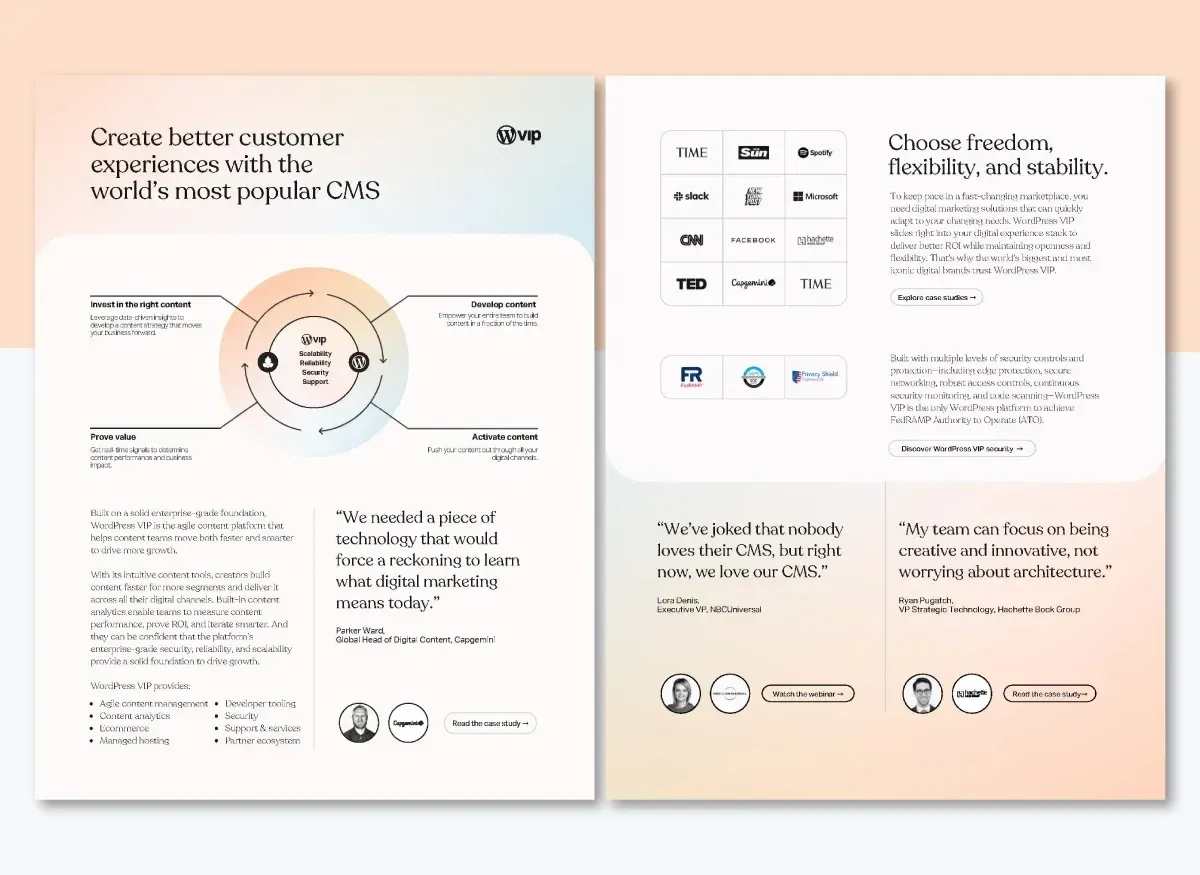
Sales one-pagers are powerful tools that deliver a product or service’s value at a glance. They help prospects understand benefits quickly, support sales conversations, and can even shorten decision-making cycles.
The design has to guide the reader’s attention, highlight key points, and make complex ideas easy to grasp. Even small details like layout, visuals, and typography can influence whether a prospect takes action.
Typical Cost Range
- Freelancers: $300 to $1,500+ per one-pager
- Agencies: $3,000 to $10,000+ per one-pager
Agencies charge more because they offer strategy, multiple rounds of refinement, and full-team support, while freelancers focus mostly on execution.
Cost Drivers
- Custom illustrations versus existing assets
- Copywriting and content refinement
- Number of versions and brand alignment
4. Infographics
Infographics are used to present data, comparisons, or processes in a format that can be quickly understood without reading long explanations. They are commonly used in blogs, sales enablement, reports, and campaigns where clarity and speed of understanding matter more than depth.
They help teams simplify dense information and make key points easier to remember.
From a cost perspective, pricing increases when the infographic includes larger data sets, multiple sections, custom visuals, or interactive elements, since more time is required for structuring, design, and revisions before the final asset is ready.
Typical Cost Range
- Basic infographic with stock elements and limited data: $800 to $2,500
- Standard infographic with some custom visuals and moderate data depth: $2,500 to $7,500
- Complex infographic with detailed data visualization and multiple sections: $7,500 to $20,000+
- Interactive or animated infographic: $5,000 to $30,000+
Cost Drivers
- Research and verification of data
- Custom illustrations and icons
- Interactive elements or animations
- Multiple versions or translations
5. Social Media Graphics
Social media graphics are short-lived visual assets created to support posts, ads, and campaigns across platforms like LinkedIn, Instagram, and X. Their purpose is to communicate a single idea quickly while fitting strict size, format, and platform guidelines.
They help teams stay visually consistent while publishing at speed.
Costs usually increase when graphics are produced in batches, require multiple sizes for different platforms, or need several variations for A/B testing, since each version adds design time, reviews, and coordination across the campaign.
Typical Cost Range
- Single graphic: $50 to $200
- Pack of 5 to 10 campaign graphics: $250 to $1,000
Cost Drivers
- Level of customization (templates versus full design)
- Platform-specific dimensions and formatting
- Number of variations for the campaign
6. Interactive PDFs
Interactive PDFs are used when static documents are not enough. They combine content with clickable sections, links, forms, or embedded media to guide readers through information in a more engaging way.
Here are two gifs that shows Shoptify’s and Workflow’s interactive pdfs:

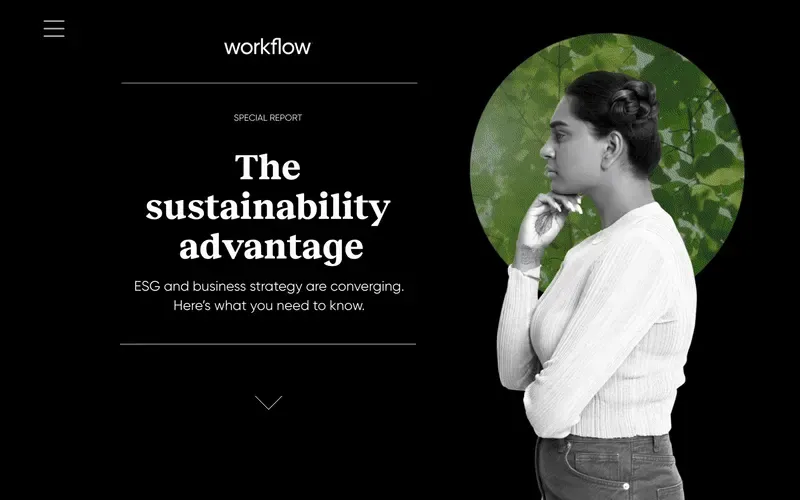
These assets are common in lead magnets, sales enablement, and onboarding, where user interaction matters. They help teams control how information is consumed instead of leaving it to scrolling.
Usually, the costs for these increase because interactive elements need planning, testing across devices, and careful review to ensure everything works smoothly before distribution.
Typical Cost Range
- Simple interactive elements: $1,500 to $3,000
- Fully interactive PDFs with multiple media elements: $3,000 to $7,000+
Cost Drivers
- Number of interactive elements like buttons and links
- Embedded media, such as videos or forms
- Testing across devices and platforms
- Alignment with content strategy and analytics integration
7. Case Studies / Customer Stories
Case studies work best when they feel like a story, not a testimonial. They need to balance narrative, proof points, and visuals so the outcome feels credible and easy to understand at a glance.
The level of effort depends on how much shaping the story needs.
This visual highlights Hotspot’s case study format, balancing storytelling, proof points, and supporting data.
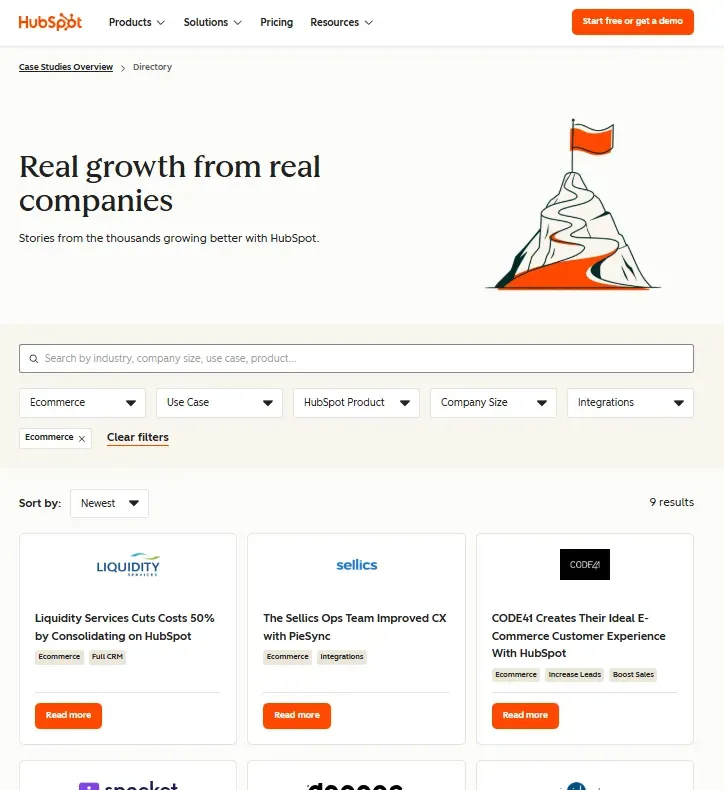
A short, straightforward success story is quicker to produce, while multi-page case studies with charts, quotes, and versions for sales, website, and events require deeper structuring and refinement. That difference in effort is what drives the range in design investment.
👉 Discover how brand research identifies the right stories to tell and audiences to target.
Typical Cost Range
- Single-page case study: $500 to $1,500
- Multi-page case study with visuals and data charts: $1,500 to $4,000
Cost Drivers
- Data visualization and charts
- Custom graphics or illustrations
- Copywriting and content organization
- Number of versions for print or digital distribution
8. Whitepapers / Research Reports
Whitepapers and research reports are meant to be read slowly and referenced often. They require a clear structure that helps readers move between sections without losing context.
The following picture shows a white paper of Recruitment Guru showing structured sections, consistent design, and data visualization.
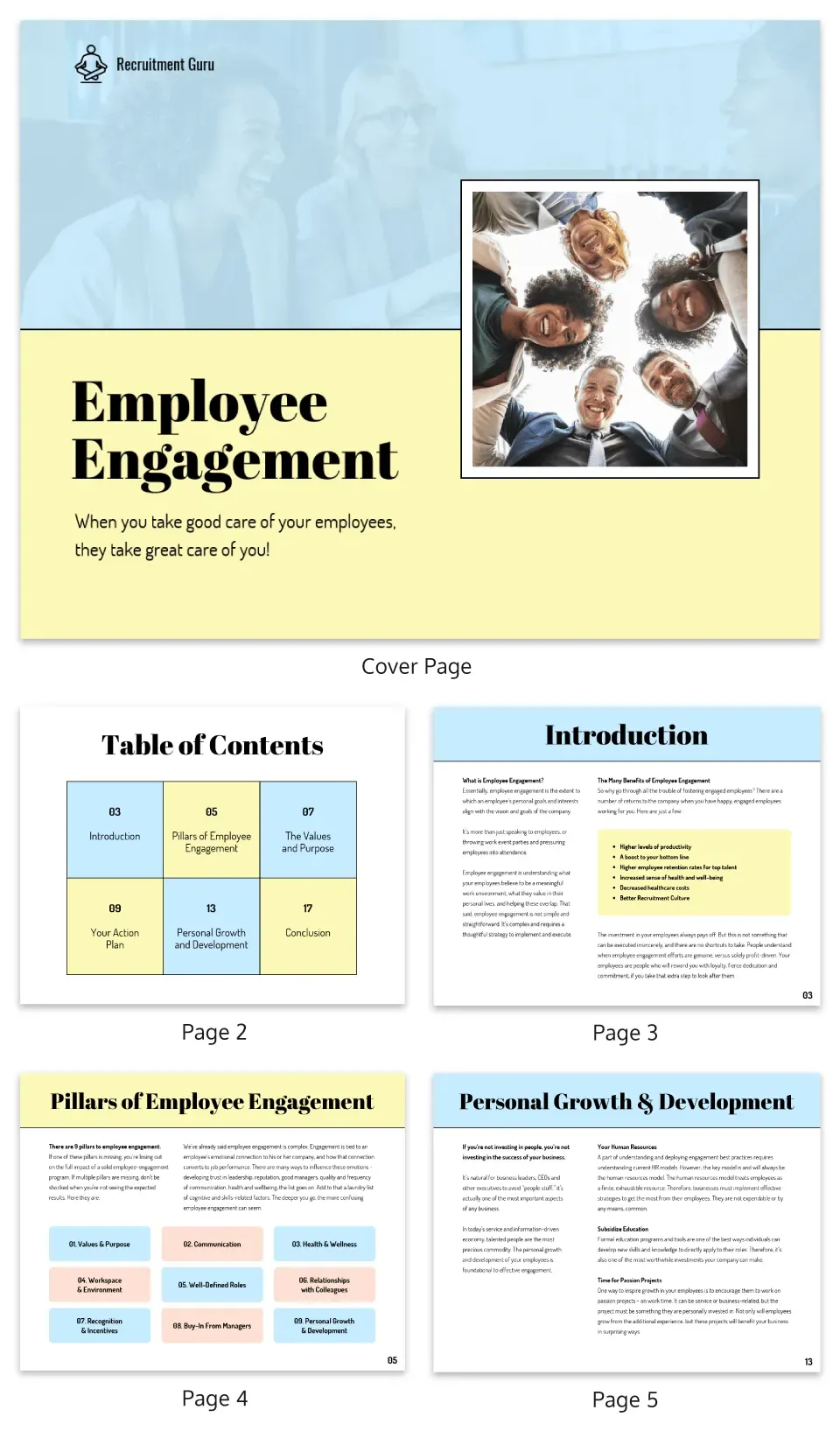
Shorter reports with limited visuals are easier to execute, but longer documents with dense data, custom charts, and consistent layouts across many pages demand more coordination and review.
That depth of work is what separates lower-effort documents from more involved investments.
Typical Cost Range
- Short whitepaper (5–10 pages): $2,500 to $5,000
- Long-form report (10–20 pages) with visuals and custom design: $5,000 to $7,500+
Cost Drivers
- Length and complexity of content
- Custom charts, diagrams, or illustrations
- Design consistency and page layout complexity
- Multiple revisions or versions for digital and print
9. Email Templates / Campaign Designs
Email templates need to work across devices, inboxes, and screen sizes while staying visually consistent with the brand. What looks simple on the surface often involves careful attention to spacing, hierarchy, and responsiveness so the message stays clear everywhere it appears.
When a campaign uses one simple template, the work stays limited. When the same campaign needs different layouts, variations for audiences, or reusable sections, more time goes into setting things up properly and testing them.
That extra setup is what makes some email design projects larger than others.
Typical Cost Range
- Single email template: $150 to $600
- Set of 5 to 10 templates for a campaign: $600 to $2,500 +
Cost Drivers
- Number of templates and variations
- Responsive design for different devices
- Custom visuals or icons
- Alignment with brand and content guidelines
10. Landing Pages / Microsites
Landing pages are built to guide visitors toward a specific action, like signing up, booking a demo, or downloading a resource. Every section, visual, and interactive element is designed to make the experience clear and engaging.
A single-page layout with standard sections comes together quickly. On the other hand, pages with multiple sections, custom visuals, or interactive features need more planning and review to ensure everything flows smoothly.
That extra work is what makes larger landing page projects more involved and costly.
Typical Cost Range
- Single landing page with standard layout: $500 to $3,000
- Multi-section or interactive landing page: $3,000 to $5,000+
Cost Drivers
- Number of sections and content elements
- Custom graphics, icons, and layout complexity
- Interactive features such as forms or animations
- Review cycles and content updates
11. Event Materials
Event materials, including banners, signage, and handouts, put the brand in front of large audiences. They must capture attention, be easily readable, and maintain brand consistency in a high-stakes environment.
Producing a complete event kit with multiple sizes, formats, and print-ready files involves planning, quality checks, and version coordination. The breadth of work required for these comprehensive packages is what defines the overall level of effort and investment.
Typical Cost Range
- Single banner or poster: $200 to $800
- Complete event package including multiple banners, signage, and handouts: $500 to $3,000
Cost Drivers
- Number and size of assets
- Custom graphics or illustrations
- Print preparation and file formatting
- Rush timelines or multiple revisions
12. Video Assets / Motion Graphics
Videos and motion graphics turn ideas into experiences. From product demos to animated social content, they help audiences grasp complex information in minutes, making engagement and retention higher.
Here is a sample from motion graphics that combine visuals, animation, and messaging for higher engagement.

The process can range from simple animations to multi-scene explainer videos with voiceover, music, and motion design.
Longer or highly polished videos involve more specialists, detailed storyboarding, and multiple review stages. Naturally, projects with richer visuals and advanced production call for more time, collaboration, and overall investment.
Typical Cost Range
- Short animated social video (30–60 seconds): $2,000 to $5,000+
- Product demo or motion graphics video (1–3 minutes): $5,000 to $15,000+
Cost Drivers
- Script and storyboarding
- Animation or motion graphics complexity
- Voiceover, sound design, or music
- Number of revisions and review cycles
13. Internal Presentations / Training Materials
Internal decks do more than share information; they guide teams, train employees, and align stakeholders around strategy. They turn internal communication into a visual and interactive experience that’s easier to understand and remember.
Some presentations may only need clean layouts and stock visuals. Others involve interactive modules, custom icons, or multiple versions for different departments.
The broader the scope and level of polish, the more planning, design effort, and testing are required, reflecting in the overall resources dedicated to the project.
Typical Cost Range
- 10–20 slides: $500 to $1,500
- 20–40 slides with custom visuals or interactive elements: $1,500 to $4,000
Cost Drivers
- Number of slides and content complexity
- Custom graphics, icons, or illustrations
- Interactive elements for engagement
- Multiple versions for different teams or departments
14. Print Collateral
Print collateral includes flyers, posters, direct mail pieces, and other physical assets that represent the brand in real-world touchpoints. These materials help attract attention, communicate messages clearly, and maintain brand consistency offline.
Here are a few examples from Tenet’s work that showcase what print collateral looks like:

Producing multiple pieces, especially with complex layouts, custom illustrations, or print-ready specifications, involves extra coordination, file preparation, and quality checks.
The extent of work involved for high-quality print collateral is what determines the level of investment.
Typical Cost Range
- Single flyer or poster: $200 to $800+
- Package of multiple pieces or direct mail campaign: $500 to $1,500+
Cost Drivers
- Number of pieces and layouts
- Print-ready formatting and color management
- Custom graphics or illustrations
- Multiple revisions or rush timelines
15. Branded Templates
Branded templates include PowerPoint decks, Google Slides, documents, or Canva kits that can be reused internally or externally. They help teams work efficiently while maintaining consistent branding across presentations and documents.
Designing templates with multiple layouts, interactive features, or custom visuals requires upfront planning, careful design, and testing to ensure flexibility. The effort to create a versatile, high-quality template package naturally influences the resources and investment required.
Typical Cost Range
- Single template with basic layouts: $500 to $1,500
- Complete template set with multiple layouts and interactive features: $1,500 to $3,000
Cost Drivers
- Number of layouts and content variations
- Custom graphics, icons, or brand elements
- Interactive elements such as clickable sections or media
- Revisions and alignment with brand guidelines
👉 Check out our UI/UX design services for building consistent templates across all touchpoints.
Pricing Models Used by Agencies for Marketing Collateral
Agencies use different pricing models to structure marketing collateral design projects. The choice of model depends on asset complexity, number of revisions, timelines, and agency expertise.
Understanding these models helps founders and marketers anticipate marketing collateral design pricing and select the right approach for their project or budget.
1. Hourly Rates
Hourly rates are charged based on the actual time spent on a project, including design, revisions, and strategy discussions. This model is most common for smaller projects or work with uncertain scope.
The table below summarizes typical costs, key factors, and when hourly billing works best.
2. Fixed Project Fees
Fixed project fees are based on an agreed total cost for the entire project. This model is suitable when the scope and deliverables are clearly defined.
The table below highlights typical pricing, cost factors, and recommended use cases.
3. Retainer Models
Retainer agreements involve a recurring monthly fee for a set number of hours or deliverables. This model works best for ongoing design work and recurring marketing needs.
Here is a table below that outlines typical costs, main factors, and when retainers are most effective.
4. Value-Based Pricing
Value-based pricing charges clients based on the perceived business impact of the deliverable rather than hours worked. It is often used for high-stakes or strategic projects.
The following table summarizes how this model works, typical pricing considerations, and the type of assets suited for it.
5. Subscription Packages
Subscription packages provide a recurring set of design services or assets under a fixed monthly fee. This model works well for teams that need ongoing marketing collateral regularly.
This table represents typical subscription pricing, key factors, and recommended use cases.
How Tenet Approaches Marketing Collateral Design (Our Approach)
Tenet has delivered over 300 marketing collateral projects for startups, SMBs, and enterprise clients, including pitch decks, brochures, and interactive PDFs. This hands-on experience shapes every design decision and ensures high-quality, impactful assets.
Our process begins with a discovery and research phase, reviewing brand guidelines, existing assets, and competitor materials. This ensures each project aligns with the client’s goals, audience, and business context, and supports accurate marketing collateral design pricing.
Next, we focus on asset prioritization, identifying materials that deliver the highest impact. For example, investor pitch decks often require more custom visuals and iterations than social media graphics, and pricing reflects this difference.
Design is iterative and collaborative, with early drafts, structured review cycles, and continuous feedback. Brand consistency is maintained across all assets, ensuring layouts, colors, and typography are unified while maximizing ROI.
👉 Explore our trusted marketing collateral design services.
If you are planning new marketing collateral or rethinking what you already have, our team can help you identify the right assets and design them for long-term impact.
Design Marketing Collateral That Supports Your Growth
Design Marketing Collateral That Supports Your Growth

















Got an idea on your mind?
We’d love to hear about your brand, your visions, current challenges, even if you’re not sure what your next step is.
Let’s talk


