
D2C Branding: Our Branding Experts Shared All Secrets
 By
By Share

Share
Get a quick blog summary with



In 2012, Dollar Shave Club launched a video with a budget of $4,500, featuring its founder walking through a warehouse and joking about overpriced razors. The video almost instantly went viral, crashed the company’s servers, and generated 12,000 orders within 48 hours.
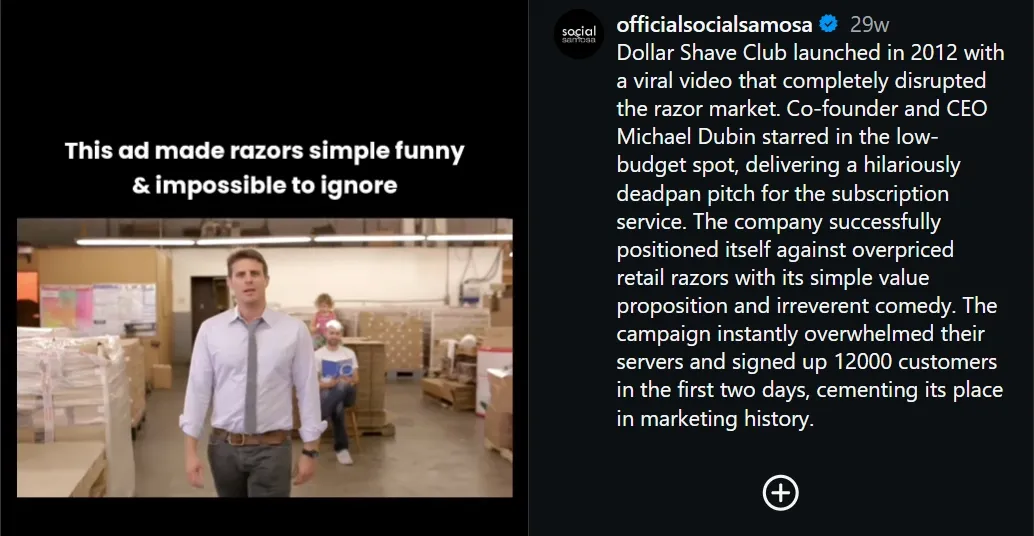
The product mattered, but the brand did the heavy lifting. It gave people a clear reason to care in a category that already had established giants. For D2C brands, that is often the difference between being noticed and being ignored.
In this guide, we will explore how to build a D2C branding strategy that helps your business stand out, connect with customers, and grow sustainably.
What is D2C branding?
D2C branding or direct-to-consumer branding, means a company sells its products straight to the end buyer. By skipping middlemen like wholesalers, department stores, and supermarkets, businesses can share their stories and control their prices directly through their own websites and social channels.
This gives brands the ability to:
- Control how their products are presented and perceived
- Build direct relationships with customers instead of depending on third-party retailers
- Learn from customer behavior and feedback in real time
- Create consistent experiences across their website, packaging, content, and support
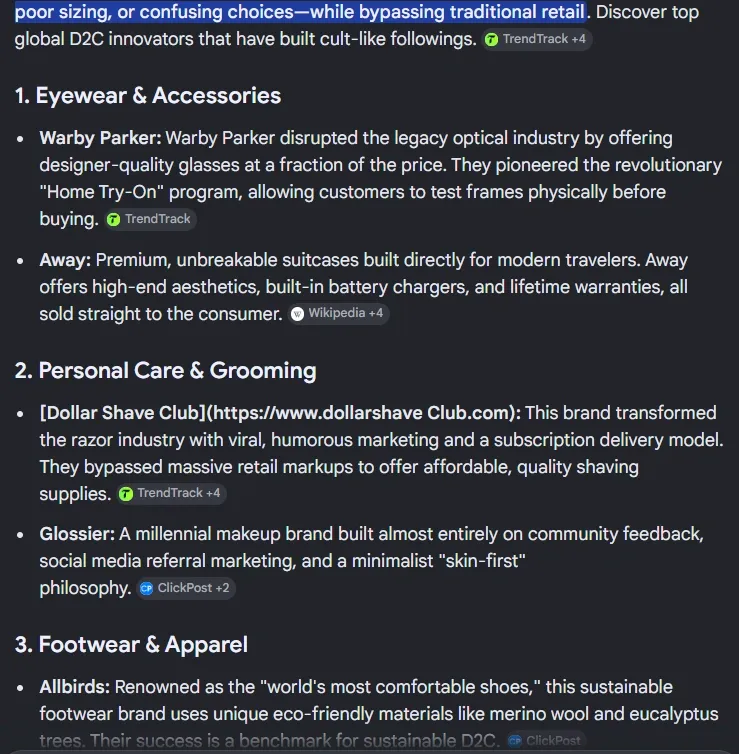
Brands like Glossier, Warby Parker, Dollar Shave Club, and Allbirds are often cited as successful D2C brands because they built clear brand personalities, spoke directly to their target audiences, and delivered consistent experiences across their websites, packaging, customer service, and marketing. This helped them create stronger customer relationships and stand out in highly competitive markets.
Here is the visual that proves what’s said in the above para:
How to Build a D2C Brand?
1. Identify a Market Gap
Start by observing real, everyday problems people complain about within specific product categories instead of chasing broad trends. Look at reviews on Amazon or discussions on Reddit across areas like skincare, apparel, or home goods, and identify repeated frustrations.
Like here in the screenshot, you can see how someone is pointing towards an issue related to skincare product’s formulation:
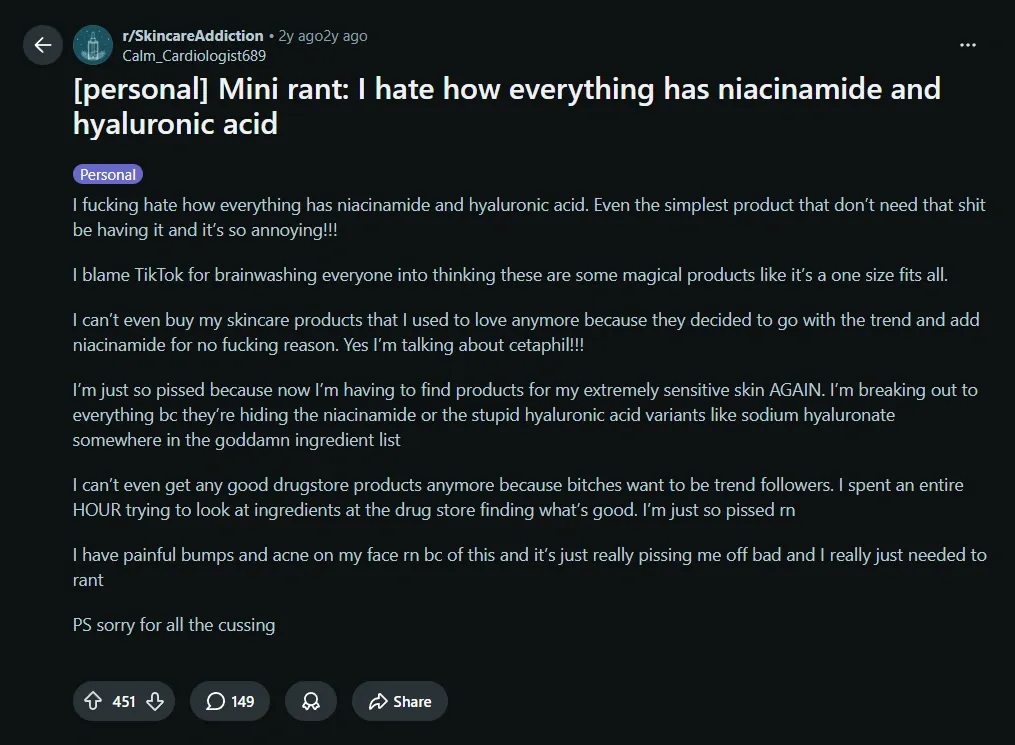
For instance, razors that dull quickly and feel overpriced led to the rise of Dollar Shave Club, while slow, expensive eyewear services created an opportunity for Warby Parker.
Next, speak directly to 50–100 potential customers through surveys, calls, or informal conversations. Focus on what they currently use, what frustrates them, and what they would actually pay more for if it solved their problem better.
You can also validate gaps using data from Shopify reports, sales trends, or niche research to identify underserved segments, such as climate-specific apparel needs across regions or sustainability-driven preferences among certain age groups.
Finally, test demand before scaling by pre-selling a minimum viable product or running simple surveys and social media polls.
2. Define Your Target Audience
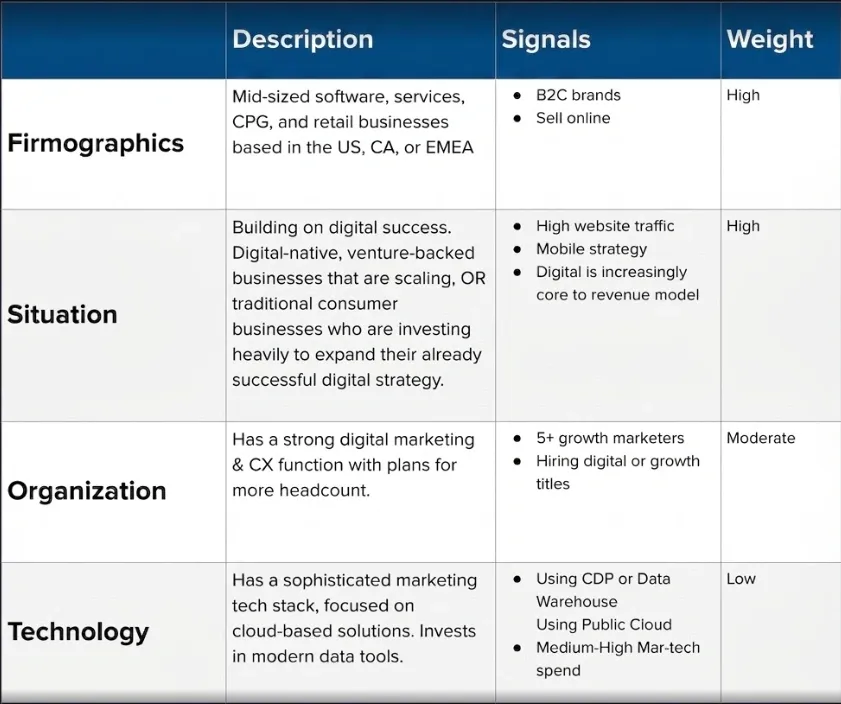
Go beyond basic demographics and identify the specific people most likely to buy from you. Build 2–3 clear customer profiles based on their behaviors, routines, preferences, and challenges rather than just age or income.
This visual is a perfect example of how you can make things out:
Also, try to use tools like Google Analytics, social media insights, surveys, and customer interviews to understand where your audience spends time, what content they engage with, and what drives their purchase decisions.
Then validate your assumptions through small ad tests on platforms like Meta, LinkedIn or Instagram. Track which messages perform best, and refine your focus to the 1–2 segments that show the strongest interest.
3. Develop a Unique Value Proposition
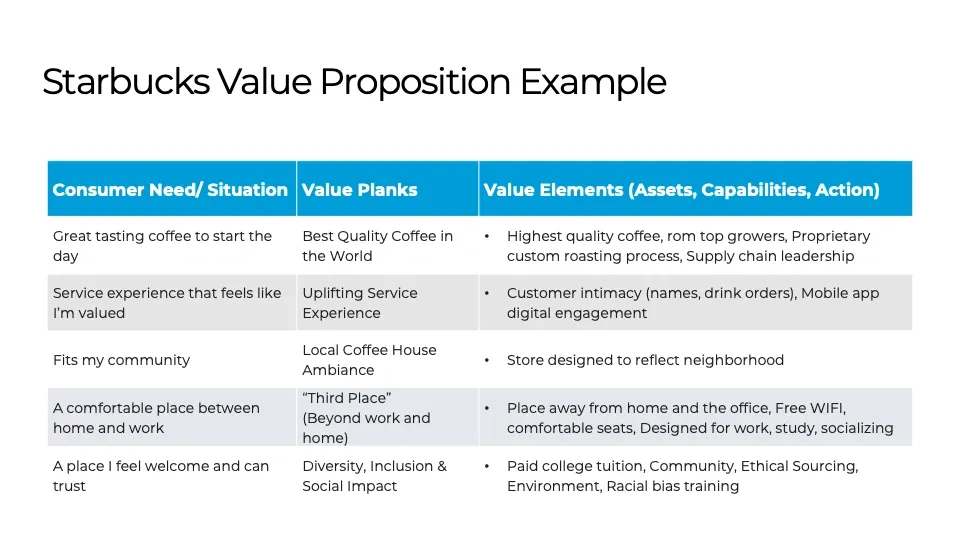
Identify one or two clear benefits your product delivers better than alternatives, backed by real, tangible differences. This could come from formulation (such as a rare local ingredient with clinically tested faster results), a service model (like home try-on kits with free returns), or transparency (such as full ingredient traceability via QR codes).
Take this Starbucks Value proposition as an example of how you can figure out the UVP for your brand:
Test your value proposition by explaining it in one sentence to potential customers and observing their reaction. Then compare it directly with competitors, if others charge $50 for a basic version, show how your product lasts longer or includes added benefits that reduce long-term cost.
At the end, you just need to refine the message based on feedback until it feels clear and compelling. For example, Warby Parker positioned itself around affordable, stylish eyewear paired with a try-at-home model that removed the hassle of store visits.
4. Build a Memorable Brand Identity
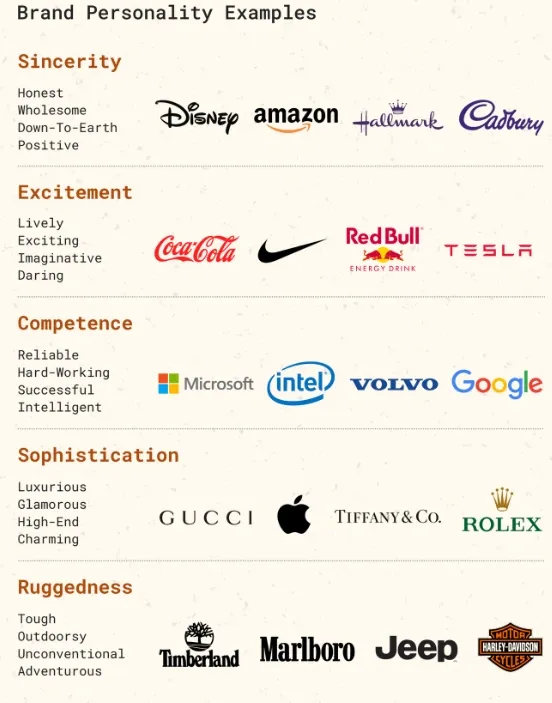
Start by choosing a name, visual style, tone of voice, and brand story that feel consistent and human. Your visuals, including colors, fonts, and photography, should reflect your audience's world, whether that's clean minimalism for busy professionals or earthy tones for eco-conscious buyers.
Alongside the visuals, create a short origin story explaining why you started the brand. This could be inspired by a problem you personally faced or a gap you noticed in the market.
This image shows some brand personality examples which is a major part of creating the brand identity:
Apart from the examples here is the whole checklist that would help you create a remarkable brand identity:
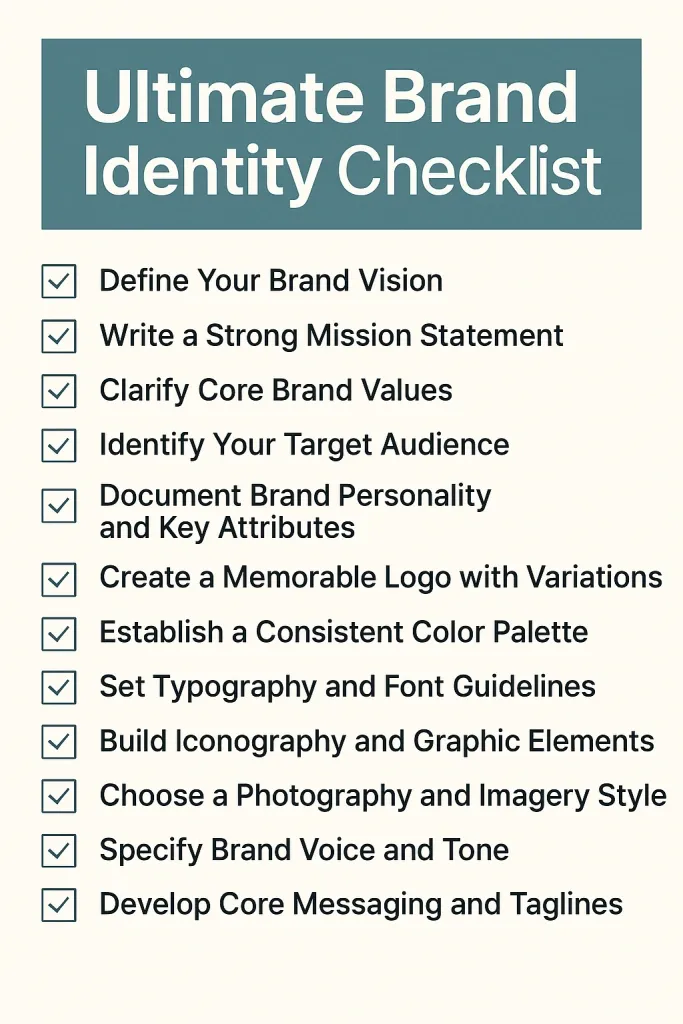
Once defined, apply these elements consistently across every customer touchpoint, including packaging, your website, emails, social media posts, and ads. You can also test different brand elements with small groups to measure recall and appeal before rolling them out at scale.
5. Develop a High-Quality Product
Before expanding into different variants, focus on making your core product consistently reliable. Start by carefully vetting suppliers or manufacturers and ordering samples, testing durability, and gathering feedback from 20-30 target users to identify issues before launch.
Once you've finalized the product, establish clear quality benchmarks, such as ingredient purity levels, material standards, or packaging requirements. At the same time, maintain tight control over your supply chain to minimize stockouts, delays, and product defects that can damage customer trust.
After that, calculate pricing based on production, packaging, shipping, returns, and marketing costs, then build in margins that support sustainable growth while remaining competitive.
Rather than placing large inventory orders immediately, launch in small batches. This allows you to collect customer reviews, identify improvement areas, and refine the product with each production run.
In a D2C business, where there is no retailer acting as a buffer between the brand and the customer, product quality plays a direct role in driving repeat purchases and long-term retention.
6. Create Your Digital Storefront
To succeed in D2C, you must build a clean, mobile-optimized website that loads quickly and makes checkout simple because research proves that even a tiny 0.1-second speed boost increases retail conversions by 8.4%. Several platforms like Shopify help to make setup faster with ready-made templates, especially for D2C brands starting out.
After the setup, once users land on your site, your product pages need to be detailed and easy to scan. You can achieve this by including high-resolution images from multiple angles, clear descriptions, size charts, and full material lists.
You can further build consumer confidence by adding trust signals across the site, such as secure payment badges and clear shipping policies.
Once all this is done, test the entire purchase flow yourself and with a few others to remove any remaining friction before launch. You should aim for a smooth, minimal, one-page checkout flow, especially since a complex process directly drives up the average global 70% cart abandonment rate.
At this stage, you can also integrate email capture tools to automatically recover those potentially lost sales.
7. Build Trust Through Social Proof
Collect and display real customer feedback as early as possible. Start with friends and family for initial reviews, then encourage honest feedback after purchases through small incentives or follow-ups.
Showcase user-generated content such as photos or videos of customers using the product. If relevant, include before-and-after results or visible outcomes directly on product pages. Like this,
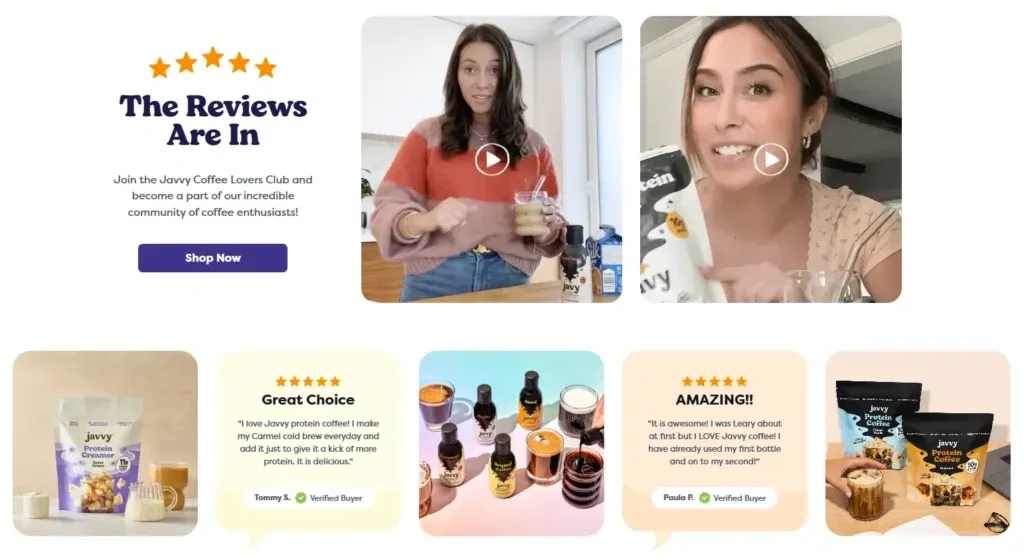
Work with micro-influencers in your niche to build authentic endorsements instead of relying only on big creators. Prioritize testimonials that mention specific benefits, such as “these lasted twice as long as my previous ones.”

Strengthen credibility with clear numbers like “over 1,200 five-star reviews” or “92% reorder rate.” These signals help reduce skepticism toward new online-first brands and improve conversion rates.
8. Launch and Promote Your Brand
Plan a focused launch by building anticipation in advance through email lists or social media teasers a few weeks before going live. This helps create early interest and a warm audience ready to convert on day one.
Here are some examples of social media teasers that went live before launch:
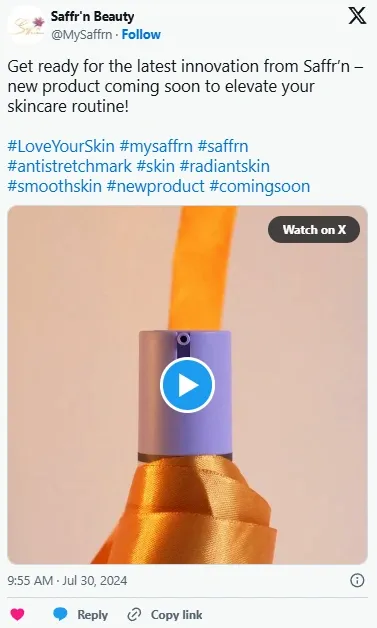

Run targeted ads on platforms where your audience is most active, such as Instagram, Meta, or Google, using clear entry offers like first-purchase discounts. Support this with content formats like how-to videos or problem-solution posts that show the product in action.
Track performance closely by comparing ad creatives, audience segments, and timing to understand what drives the best response. Combine paid campaigns with organic efforts such as PR outreach to niche blogs or collaborations with relevant creators.
Focus first on generating sales from warm audiences, including early subscribers and engaged followers, before scaling cold traffic.
9. Deliver an Exceptional Customer Experience
In the early stages, handle every customer interaction personally. Respond to inquiries quickly, ideally within 24 hours, send proactive shipping updates, and ensure packaging feels thoughtful and consistent with your brand.
Make returns and exchanges simple and hassle-free so customers feel safe buying from you. After delivery, follow up to ask for feedback and understand their experience.
Also, use order data to personalize future interactions, such as recommending related products based on past purchases. As shown in the image below:
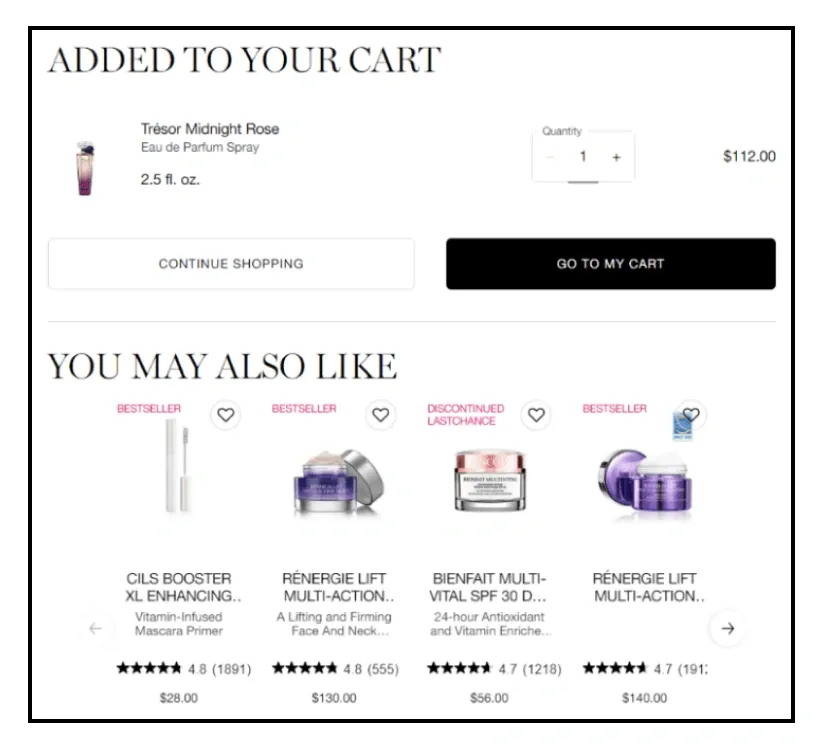
For consumable products, consider subscription options or simple loyalty rewards to encourage repeat buying. Like here you can see how the customer is subscribing:
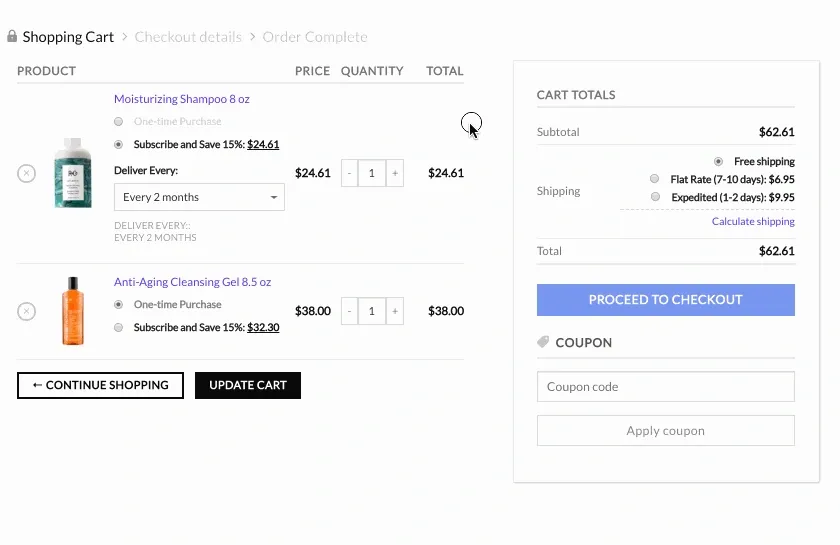
Most importantly, resolve issues quickly and use complaints as input for improvement. Strong customer experience leads to repeat purchases and referrals, which reduces long-term acquisition costs.
10. Analyze Performance and Optimize for Growth
Set up tracking from day one using tools like Google Analytics, platform dashboards, and simple spreadsheets to monitor key metrics such as customer acquisition cost, repeat purchase rate, and lifetime value.
Here is the Google Analytics view to track the necessary metrics:
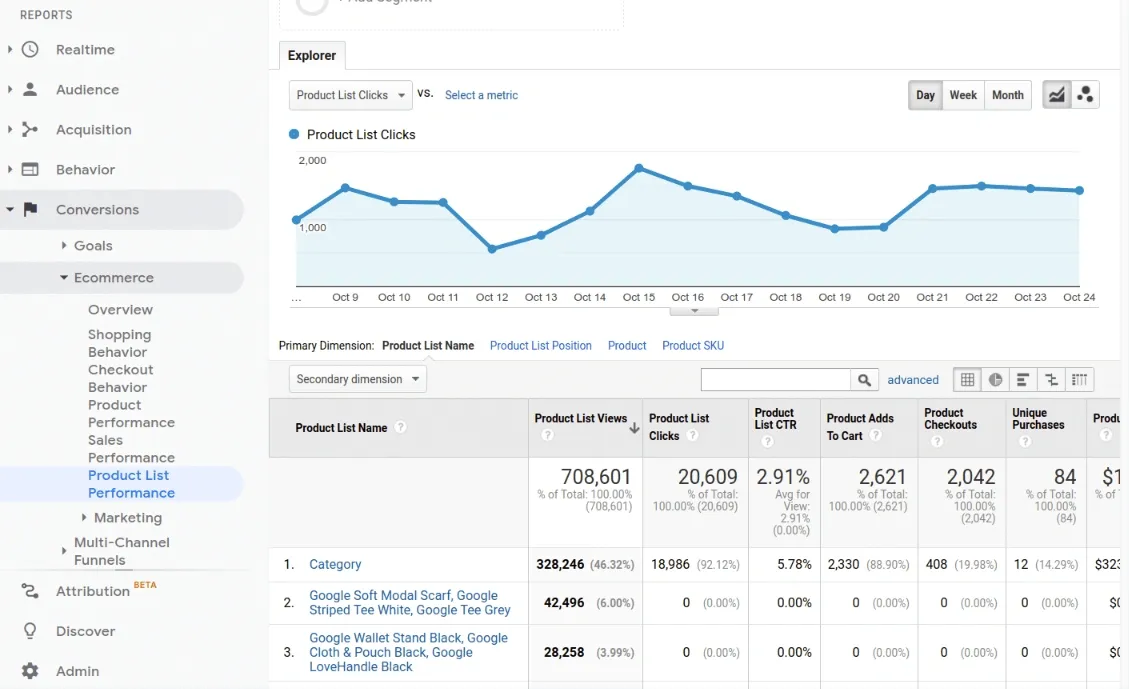
Review performance weekly to understand what is working and what is not. Look at best-selling products, where users drop off in the funnel, and which ads are converting.
After that, run small, focused experiments by changing one variable at a time such as headlines, images, or offers, and measure the impact. Combine this with customer surveys to get qualitative feedback on buying decisions.
Reinvest profits into channels that consistently perform well and cut back on underperforming ones. Scale gradually by adding new products or expanding into new markets only after your core system is stable. This data-driven loop helps turn early traction into sustainable growth.
Here are 3 examples of successful D2C brands
1. Mamaearth
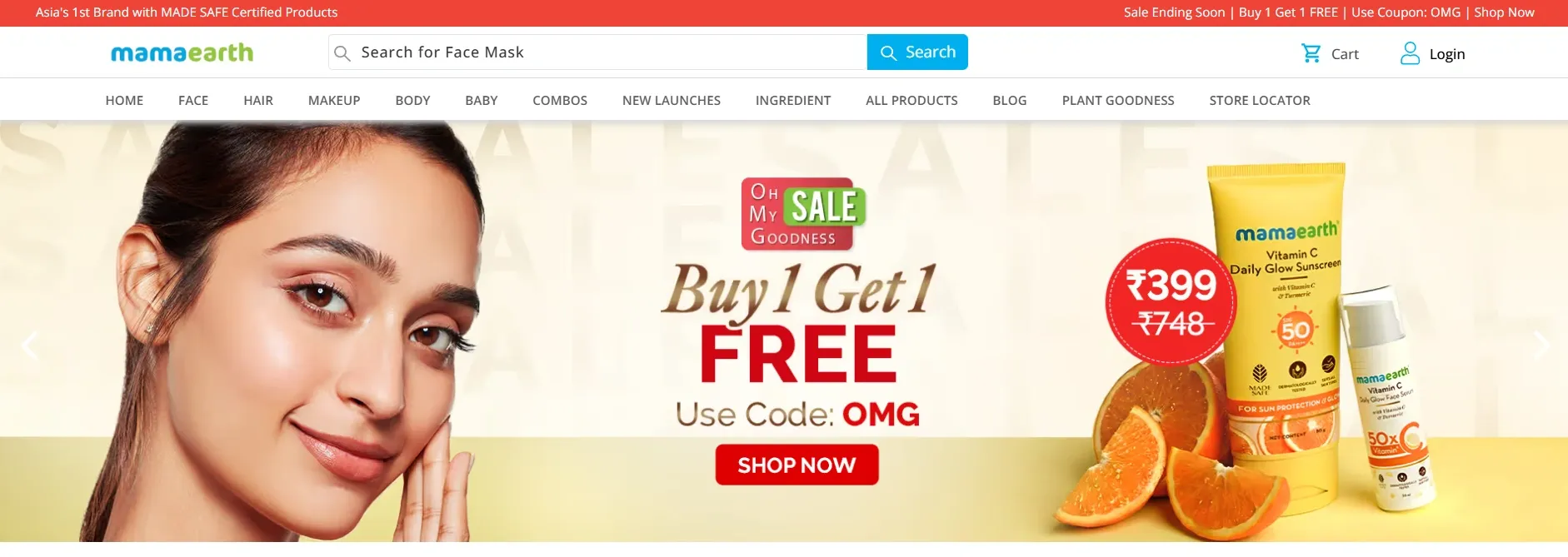
Founded in 2016 by husband-and-wife duo Ghazal and Varun Alagh, Mamaearth was born out of personal frustration. As young parents, they struggled to find safe, toxin-free skin and baby care products in India. Recognizing a massive gap in the market for certified safe personal care, they launched a brand tailored to safety-conscious consumers.
The Growth Strategy
- By becoming Asia’s first brand to receive the "Made Safe" certification, Mamaearth differentiated itself from competitors and strengthened consumer trust in a market crowded with chemical-laden alternatives.

- Instead of relying on expensive television campaigns, the brand leveraged micro-influencers and beauty vloggers to create authentic social proof, helping drive awareness and high-converting traffic through social media.
- A lean product development cycle enabled the company to respond quickly to customer preferences, turning feedback and market insights into successful ingredient-focused product lines such as Onion, Vitamin C, and Ubtan.
Key Takeaway for Entrepreneurs
- Identify a clear consumer pain point that established FMCG brands have been slow to address.
- Build trust through transparency, quality standards, and credible third-party certifications.
- Create products that directly solve the problem rather than competing on price alone.
- Use customer feedback to refine offerings and respond quickly to emerging trends.
- Encourage satisfied customers and early adopters to share authentic experiences online.
- Turn trust and word-of-mouth into sustainable growth before investing heavily in large-scale advertising.
2. boAt
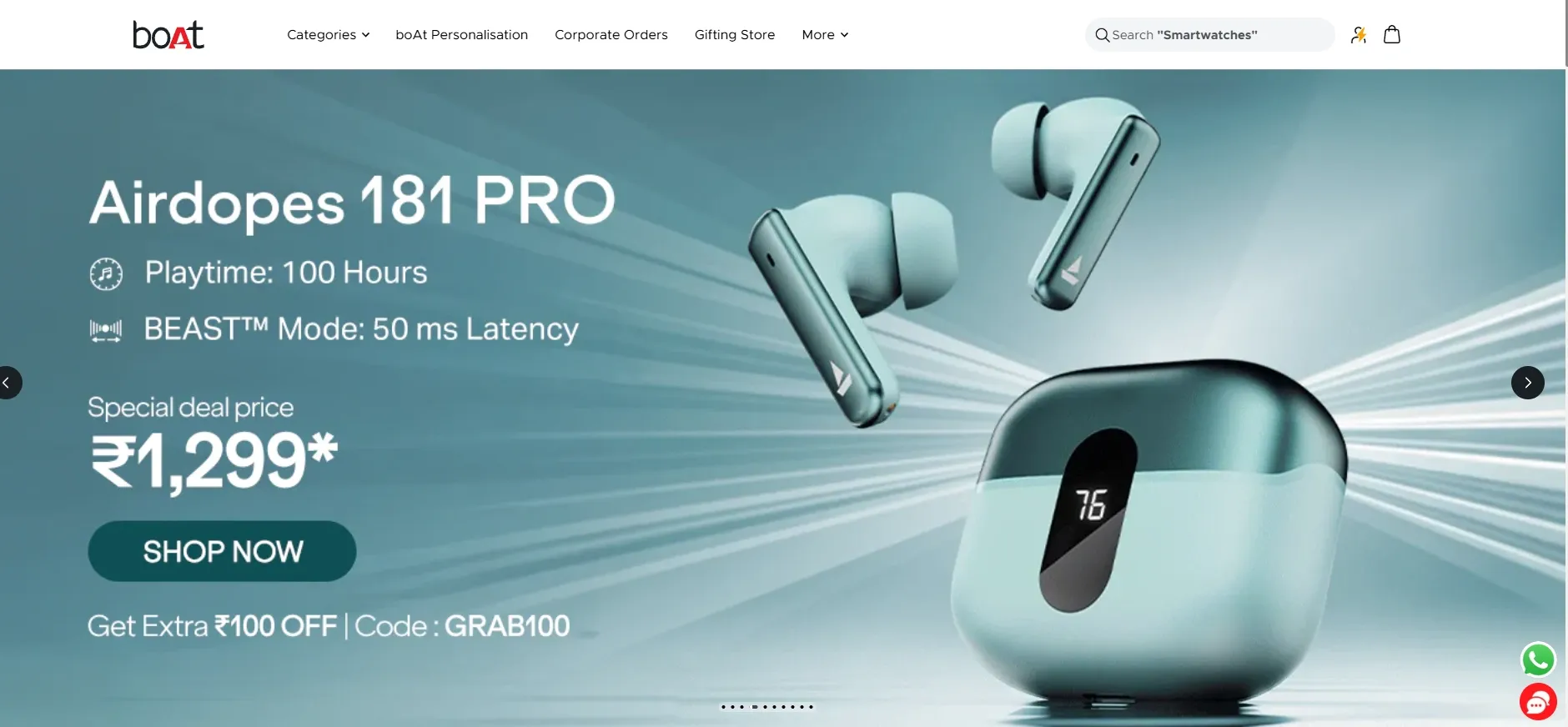
Before boAt Lifestyle arrived in 2016, the Indian audio market was deeply fragmented. Consumers had to choose between cheap, generic products that broke easily or expensive, premium global brands. Co-founders Aman Gupta and Sameer Mehta found a sweet spot right in the middle: high-quality, durable audio gear that young consumers could actually afford.
The Growth Strategy
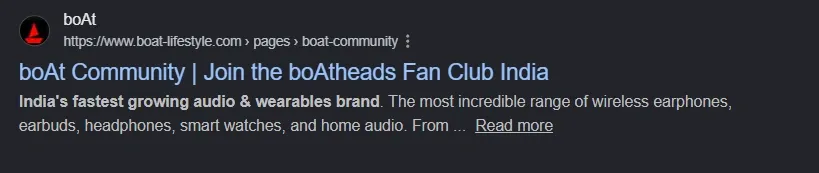
- boAt positioned its headphones and earphones as lifestyle accessories rather than purely technical gadgets, using vibrant colors and modern designs that resonated with millennial and Gen Z consumers.
- The brand focused on the sub-₹2,000 segment, making premium features such as active noise cancellation, long battery life, and sweat resistance accessible to price-conscious buyers.
- By creating the "boAtheads" community, boAt transformed customers into members of a lifestyle-driven brand culture, further strengthening this identity through partnerships with leading cricketers and popular music artists.
Key Takeaway for Entrepreneurs
- Look for utility products that consumers use every day but feel little emotional connection toward.
- Differentiate through design, branding, and lifestyle positioning rather than technology alone.
- Make the product aspirational without making it unaffordable.
- Offer features customers value most at a price point that appeals to the mass market.
- Build a brand identity that customers want to associate with and talk about.
- Remember that market leadership often comes from better positioning and accessibility, not just better technology.
3. Licious
The meat and seafood retail market in India has historically been highly unorganized, relying heavily on local open-air wet markets with inconsistent hygiene standards. In 2015, Abhay Hanjura and Vivek Gupta founded Licious to fix this broken supply chain and provide a reliable, clean, and premium fresh meat buying experience.
The Growth Strategy
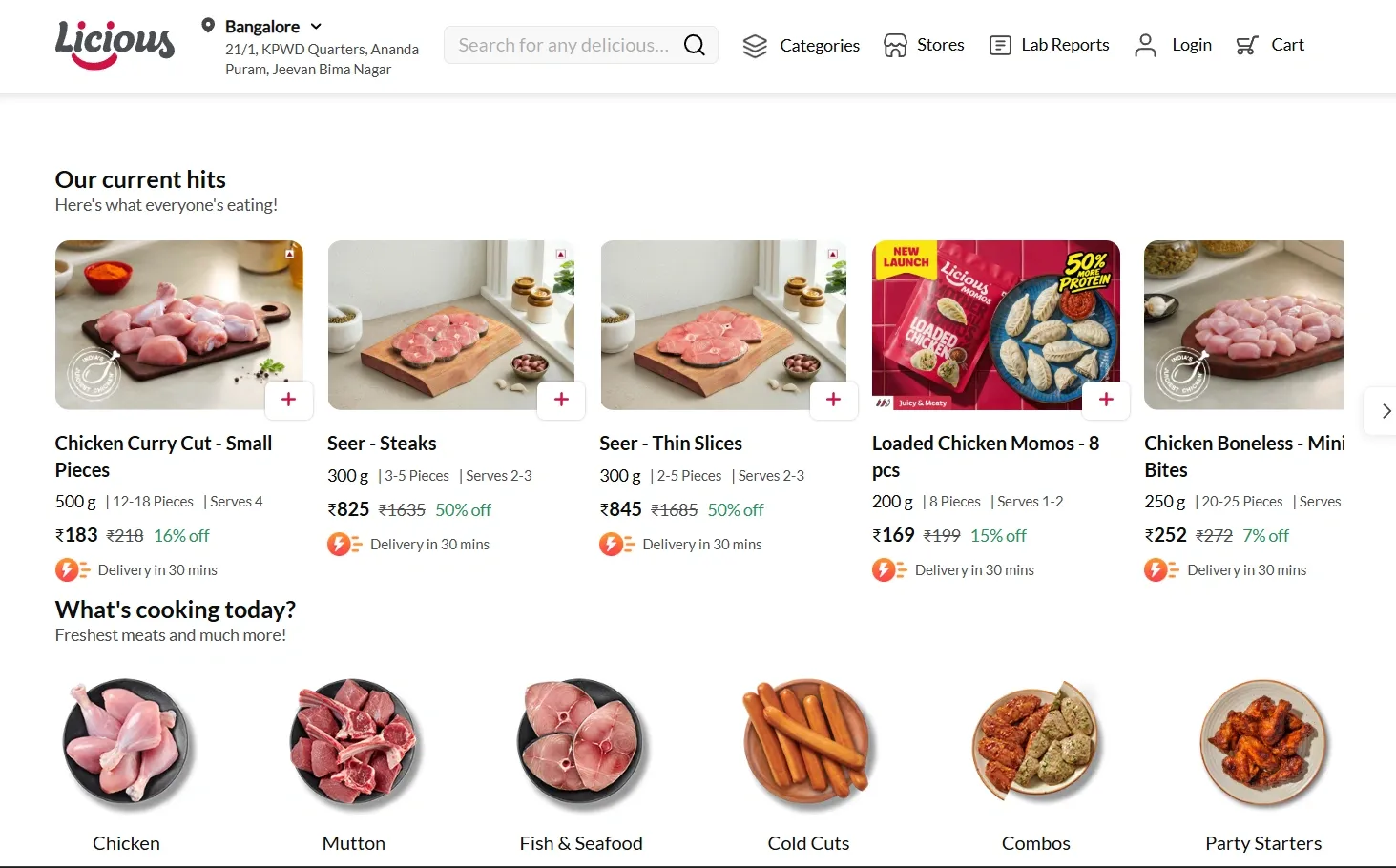
- The brand invested heavily in a proprietary cold chain network, maintaining strict temperature control from sourcing to delivery to preserve freshness without relying on artificial preservatives.
- By implementing more than 150 quality checks and delivering meat that was cleaned, precisely cut, and vacuum-sealed, the company removed many of the hygiene and convenience concerns traditionally associated with meat purchases.
- Recognizing the growing demand for convenience among urban consumers, the brand expanded beyond raw meat to offer pre-marinated products, spreads, and ready-to-eat snacks, helping increase both order value and customer retention.
Key Takeaway for Entrepreneurs
- Identify industries where inconsistent quality and inefficient logistics create poor customer experiences.
- Focus on solving operational challenges that established players have accepted as normal.
- Invest in systems and processes that deliver a consistent experience every time.
- Use technology to improve visibility, quality control, and supply chain efficiency.
- Turn reliability and convenience into key differentiators for customers.
- When customers can trust your product quality every time, they are often willing to pay a premium.
How Tenet helps you in your journey of building the next D2C brand
At Tenet, we engineer this exact blend of emotion and performance. We work with founders to build scalable digital experiences through three core pillars:
- Strategic Brand Identity: We conduct deep research and craft authentic positioning, messaging, and visual identity that help you stand out in competitive markets.
- High-Conversion Digital Platforms: We design intuitive, emotionally resonant websites and apps focused on seamless user journeys, fast checkout, and a premium feel.
- Data-Driven Growth: From Day One, we integrate SEO, performance marketing, and CRO strategies to drive visibility and sustainable revenue.
A perfect example of this approach in action is our work with MyBabyBabbles, where we transformed a functional website into an emotional, high-converting platform.
The Challenge
MyBabyBabbles, a premium baby and parenting ecommerce platform, had a functional website, but it struggled to create the trust and emotional clarity needed in a high-consideration category like parenting products.
The Tenet Solution
We reworked the experience to better align with how parents browse and decide online.
- Refined Emotional Design: Introduced a softer, trust-led visual language aligned with the category
- Improved Navigation Flow: Simplified discovery to help users find essentials faster
- Scalable Architecture: Built a backend and frontend setup designed for performance and growth
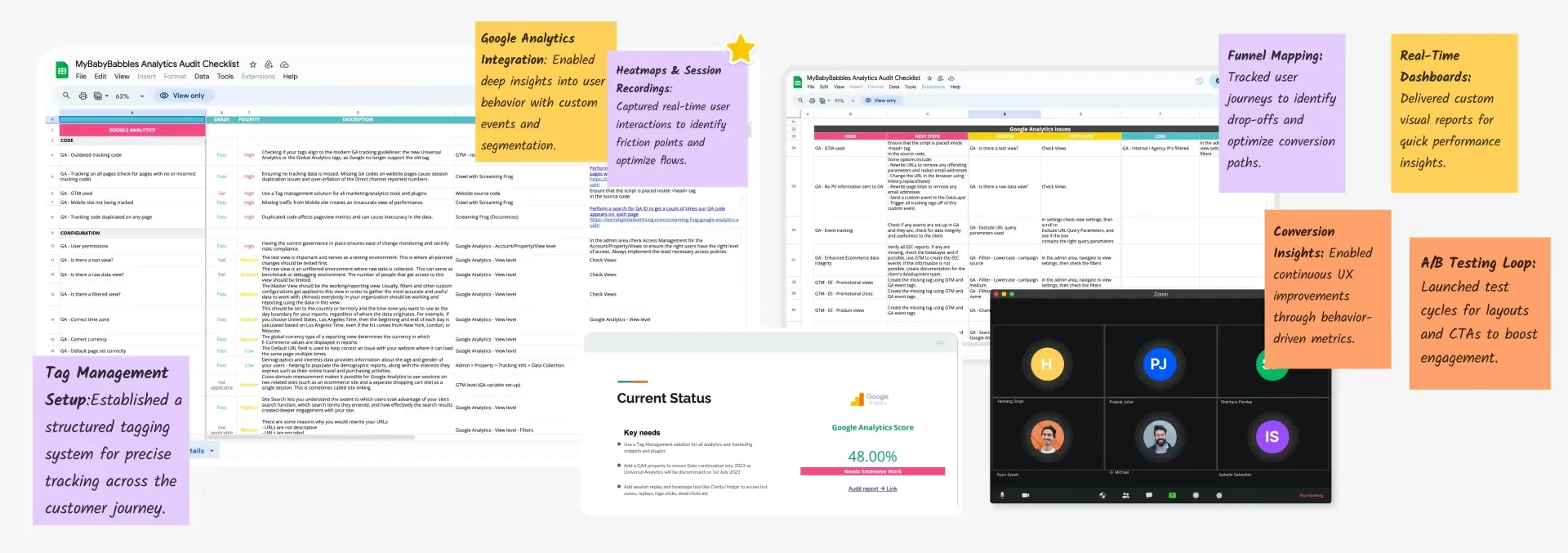
Here is a quick glimpse of how our team mapped out everything from design to performance for MyBabyBabbles:
The Outcome
The platform evolved from a standard e-commerce site into a more intuitive, trust-driven shopping experience, enhancing usability and customer engagement.
Have a D2C idea or challenge? Learn about our branding research services, or send us an email, and we’ll help you shape a strong digital experience.
Get expert guidance to create a D2C brand customers trust and remember.
Get expert guidance to create a D2C brand customers trust and remember.











Got an idea on your mind?
We’d love to hear about your brand, your visions, current challenges, even if you’re not sure what your next step is.
Let’s talk


