
8 PPC Budget Allocation Methods for Maximum ROI
 By
By Share

Share
Get a quick blog summary with



Is your PPC budget optimized for the way people actually buy, or are you just "renting" clicks? There is a fundamental difference between capturing demand on Google Search and building it on Meta or YouTube.
While high-intent search terms are expensive (often costing 10 to 20 times more than social media clicks) they are often the most profitable because the user is ready to buy right now.
At Tenet, we've managed PPC across 300+ clients, helping drive over $1.54 billion in client revenue, so we know exactly how to allocate budget between capturing demand and building it.
This guide, drawn from that experience, explains how to split your budget across the entire funnel, ensuring you are both finding new customers and closing the ones who are already looking for you.
Consider these 7 factors to allocate your PPC budget effectively
Before we discuss PPC budget allocation, it's important to understand that budget alone does not drive results. At Tenet, we help businesses plan, manage, and optimize PPC campaigns through audience research, keyword strategy, landing page optimization, and continuous performance monitoring to maximize ROAS and business growth.
👉 Get a free proposal for our PPC ad management services.
1. Campaign Goals & Objectives
Your PPC budget should always align with your campaign goals, because different objectives require different bidding models, channels, and spending strategies. Like for,
Brand Awareness
Campaigns focused on awareness prioritize visibility and audience reach. These typically use CPM (Cost Per Mille) models, where advertisers pay for every 1,000 impressions. Channels like YouTube, display ads, and social media are commonly used at this stage.
Lead Generation & Sales
These campaigns focus on driving direct action, such as form submissions, purchases, or demo bookings. Budgets are usually allocated toward high-intent keywords using CPC (Cost Per Click) or CPA (Cost Per Acquisition) models to maximize conversions.
Retention & Upselling
Retention campaigns target existing customers through remarketing, email campaigns, or loyalty initiatives to encourage repeat purchases and increase customer lifetime value.
2. Keyword Competitiveness & Average CPCs
The cost of keywords is dynamic and depends heavily on how many other advertisers are bidding for them. In high-intent industries like Legal Services or Finance, CPCs can exceed ₹3,000 or $10 due to high potential revenue per client.
This image shows how Google Keyword Planner helps identify keyword intent, search demand, and CPC data to prioritize high-converting opportunities more effectively.
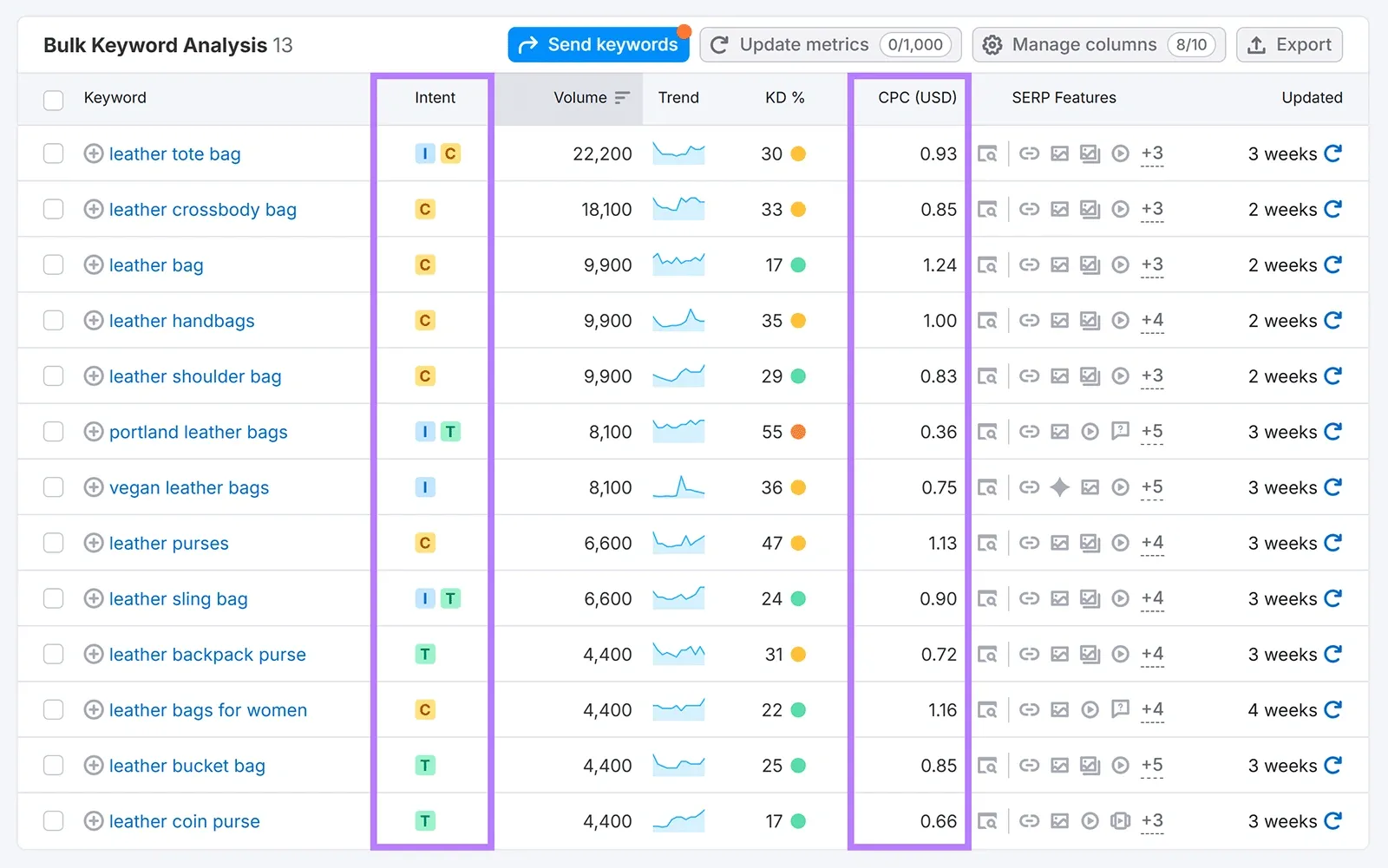
On the other hand, long-tail keywords, which are more specific search phrases, usually face less competition and come at a lower cost, making them a better fit for tighter budgets.
At the same time, pricing is influenced by auction dynamics. You do not simply pay your maximum bid, but just enough to outrank the advertiser below you. This means cost is always relative to competition and demand.
3. Historical Conversion Rate & ROI
Past performance is one of the most reliable indicators when setting your budget. Instead of making assumptions, you use real data to understand what has already worked and where your money is generating the best returns. This helps you allocate budget with more confidence and less risk.
One of the first metrics to look at is conversion rate (CVR), which shows how effectively your clicks turn into customers.
Alongside this, ROI or ROAS helps you understand profitability. For example, if a campaign delivers a 5:1 ROAS, it means every ₹1 spent generates ₹5 in revenue. This signals that the campaign is not just converting, but doing so profitably.
4. Customer Lifetime Value (LTV)
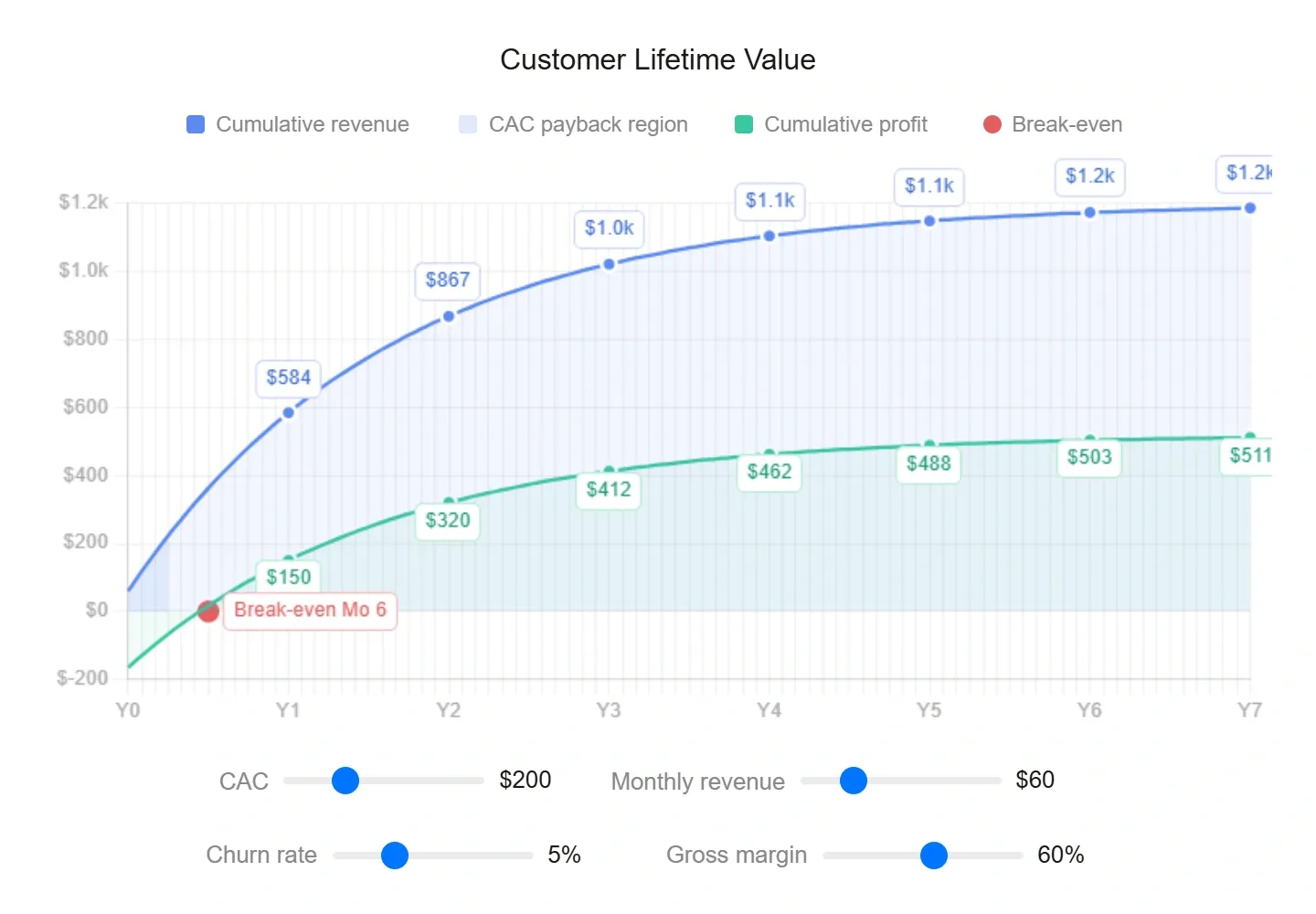
Customer Lifetime Value (LTV) estimates the total revenue a single customer is likely to generate over their entire relationship with your brand. Instead of focusing only on the first purchase, it helps you understand the long-term value each customer brings.
This directly impacts how much you can afford to spend on acquiring a customer. If your LTV is high, such as in subscription-based businesses where customers stay for months or years, you can justify a higher cost per acquisition (CPA) because the revenue comes in over time.
To keep this sustainable, most businesses aim for a healthy LTV to CPA ratio of around 3:1. This means for every ₹1 spent on acquiring a customer, you should ideally generate ₹3 in return. When this balance is maintained, your growth remains both scalable and profitable.
5. Seasonality & Market Trends
External factors often have a direct impact on both search demand and advertising costs. During certain periods, demand can rise sharply, which increases competition and drives up cost per click. This makes it important to plan your budget around when your audience is most active.
Like, this Google Trends comparison shows how search interest for seasonal keywords like “Christmas gifts” and “Mother’s Day gifts” spikes during specific times of the year, helping businesses plan campaigns around peak demand.
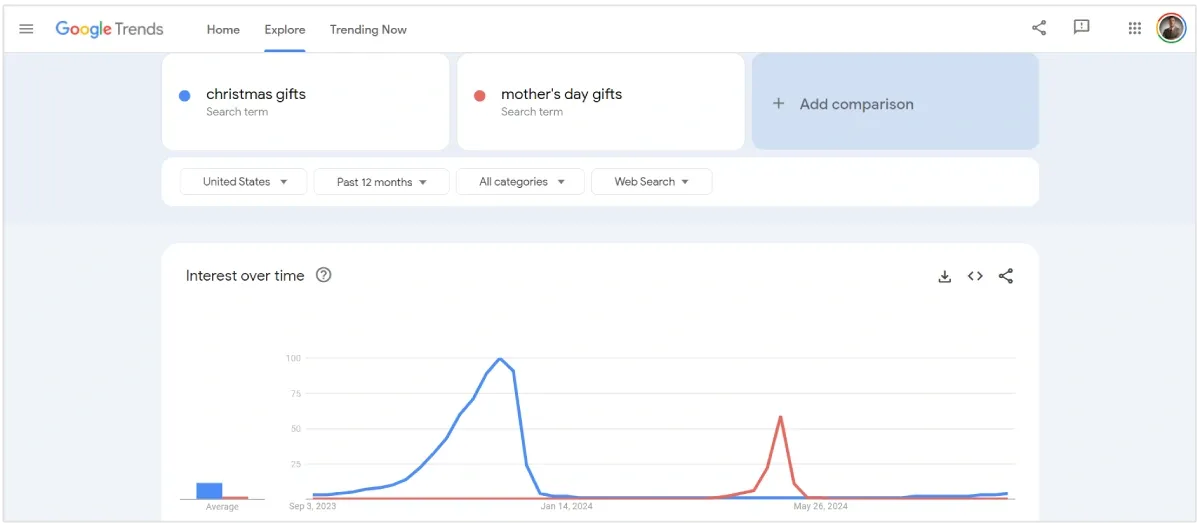
In simple terms, aligning your budget with market demand ensures you invest more when it matters most and hold back when returns are likely to be lower.
6. Geographic Targeting & Location Cost
Geographic targeting affects both advertising costs and conversion efficiency, which is why, instead of running one campaign across all locations, performance should be broken down by region to understand how CPC, conversion rate, and CPA vary. This prevents you from averaging performance and overspending in low-return areas.
For example, a keyword like “plumbing services in New York” might have a CPC of $15 in a major city with a 4% conversion rate, but $5 in a smaller town with a 1.5% conversion rate.
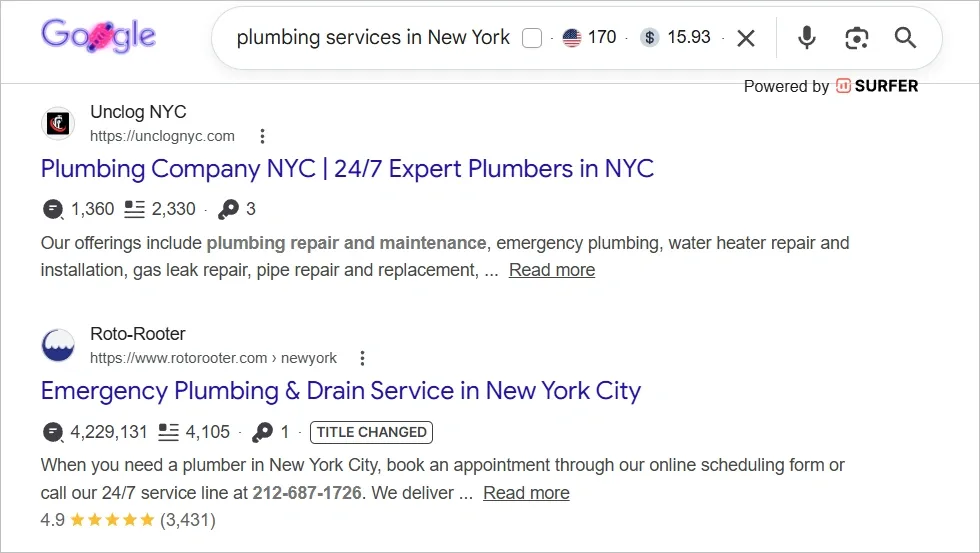
This is why budget decisions should focus on CPA and ROAS rather than CPC alone. To act on this, campaigns are often segmented by location, with bid adjustments applied based on regional performance and profitability.
7. Platform & Network Performance
Not all advertising platforms deliver the same level of intent or cost efficiency, so PPC budgets should be allocated based on actual performance rather than evenly split across channels.
Search campaigns usually attract high-intent users actively looking for a solution. While CPCs are often higher, these campaigns typically generate stronger conversion rates and better ROI.
In contrast, display and social campaigns are more effective for awareness and audience reach. They generally offer lower CPCs but may drive fewer direct conversions.
Performance also differs by platform. Google Ads is commonly used for intent-driven traffic, while LinkedIn Ads helps target specific B2B audiences by industry, job role, and seniority.
PPC Budget Allocation Models
1. The 70/20/10 Rule
The 70/20/10 model is a PPC budget allocation strategy designed to balance stability, growth, and experimentation. Popularized by companies like Google and Coca-Cola, this framework helps businesses reduce risk while still testing new opportunities.
- 70% (Proven Campaigns): Most of the budget goes toward campaigns with a strong performance history and predictable ROAS. These are typically evergreen campaigns, such as branded search ads or high-intent Product Listing Ads (PLAs) that consistently drive conversions.
- 20% (Scaling Opportunities): This portion is used to expand campaigns that are showing promise but still need optimization. For example, if a Performance Max campaign recently generated positive returns, businesses may gradually increase spend to test scalability.
- 10% (Experimentation): The remaining budget is reserved for testing new platforms, ad formats, or creative strategies. This could include channels like Reddit Ads or experimental campaign types. Even if some tests fail, the insights gained help improve future PPC decisions.
2. Full-Funnel Allocation Model
The Full-Funnel Allocation Model distributes PPC budget across every stage of the customer journey instead of focusing only on conversions. This approach helps brands build awareness, nurture leads, drive purchases, and improve long-term customer retention.
- Top of Funnel (TOFU): Awareness
At the awareness stage, the goal is to introduce your brand to a broader audience and educate potential customers. Since users may not yet be actively searching for a solution, campaigns focus on visibility and engagement through channels like YouTube, display ads, social media, and SEO content.
Metrics: Impressions, reach, branded search volume, and website traffic.
- Middle of Funnel (MOFU): Consideration
This stage targets users who already know your brand and are comparing solutions. Businesses use retargeting ads, webinars, case studies, and email nurturing to build trust and keep prospects engaged.
Metrics: Engagement rate (how users interact with your content), click-through rate (CTR), lead scoring (quality of leads), and cost per lead.
- Bottom of Funnel (BOFU): Conversion
BOFU campaigns focus on high-intent users who are ready to take action. These campaigns typically use high-intent search keywords, conversion-focused landing pages, remarketing campaigns, and personalized offers to improve conversions.
Metrics: Conversion rate, return on ad spend (ROAS), cost per acquisition (CAC), and sales velocity (how quickly leads convert into customers).
- Post-Funnel (Retention/Advocacy):
After conversion, the focus shifts to retaining customers and increasing lifetime value. Email marketing, loyalty programs, customer success initiatives, and community-building campaigns help encourage repeat purchases and referrals.
Metrics: Customer lifetime value (CLV), churn rate, and net promoter score (NPS).
3. Objective-Driven or Goal-Back Model
Also known as the Objective-and-Task method, this approach starts with your end goal and works backward to determine the necessary spend.
Which means instead of guessing your budget based on past spend or industry averages, this data-first approach starts with a concrete business target (like revenue or number of sales). It forces clarity on your key performance metrics before you spend a single dollar.
This is a basic formula used in this model for calculation:

Here is how the calculation is done:
Let’s say your target is 100 customers, your conversion rate is 2% (0.02), and your CPC is ₹20. First, calculate the required traffic: 100 ÷ 0.02 = 5,000 visitors.
Then calculate the budget: 5,000 × ₹20 = ₹1,00,000. This is the estimated spend needed to achieve your target.
4. The 60/40 Brand vs. Performance Model
Rooted in decades of marketing effectiveness research by Binet & Field, this model argues that over-investing in short-term sales activation at the expense of brand building actually hurts long-term profitability.
It provides a specific, evidence-backed ratio to balance emotional, broad-reach brand ads with rational, immediate-response performance ads.
- The 60% (Brand Equity): This spend is focused on "Mental Availability." You want your brand to be the first thing a person thinks of when they are ready to buy.
This is broad, emotional, and measured by Brand Lift and Search Volume, not immediate sales.
- The 40% (Sales Activation): This spend is the "harvest." It captures the demand created by the 60% brand spend.
It is rational, offer-led, and measured by CPA and ROAS.
5. Platform-Specific Allocation Model
Rather than spreading your budget evenly across all channels, this model recognizes that each advertising platform has a unique strength in capturing a specific type of user behavior or intent.
In this model, you allocate more budget as follows:
- Search Engines (Google/Bing): These get the budget for “Active Intent”. When a user types a query, they are "pulling" information.
- Social Platforms (Meta): These get the budget for Passive Discovery. They "push" your brand into the user's feed based on their interests and behaviors.
- Professional Networks (LinkedIn): This budget is siloed for high-value B2B decision-makers where the cost-per-click is higher, but the Life-Time Value (LTV) of the customer justifies it.
6. Efficiency-Based Model
This purely mathematical approach treats budget allocation as a continuous optimization problem: move money toward whatever campaign or channel delivers the lowest cost per acquisition or highest return on ad spend at any given moment.
It explicitly accounts for diminishing returns, automatically pulling spend from campaigns that have hit a saturation point (where each additional click becomes too expensive) and reallocating to fresher, more efficient opportunities.
Here you don't just look at the average return; you look at the incremental return. If a campaign is at ₹1,00,000 spend with a 5x ROAS, but increasing it to ₹1,10,000 only brings in ₹500 more in revenue, that campaign is inefficient.
Also, in this model the funds are moved weekly or even daily from any campaign that falls below a "Floor ROAS" and shifted to any campaign that is above the "Target ROAS."
7. Dynamic or Flexible Budgeting Model
Unlike traditional fixed monthly budgets that stay constant regardless of opportunity, this model treats your budget as a fluid resource that expands and contracts in real time based on performance signals, seasonality, or competitive moves.
It is particularly useful during high-stakes periods like Black Friday or when launching a new product, where aggressive spending upfront can capture market share before competitors react.
In this model, if your competitors suddenly stop bidding or if a news event makes your product relevant overnight, this model allows you to "burst" your spend to capture the opportunity.
Note: It ignores the "spend 1/12th of the budget every month" rule. You might spend 5% of your annual budget in a slow month like May, but 25% in a peak month like November.
8. Shared Budget Model
This is a specific platform-level setting (most commonly in Google Ads) where you define a single daily budget that multiple campaigns draw from collectively, rather than assigning each campaign its own individual cap.
The main advantage is efficiency: the platform's algorithm automatically directs funds to whichever campaign has the most traffic or conversion potential on any given day.
Like, if you have five regional campaigns (North, South, East, West, Central), a Shared Budget lets the platform's AI decide which region has the most "auction opportunities" at any given hour.
However, the major risk is that one aggressive campaign ( with high CPCs or unexpectedly high volume ) can unintentionally consume the entire shared pool, leaving your other important campaigns with zero spend.
How to Calculate Your PPC Budget
Calculating a PPC budget involves either starting with a high-level financial goal (top-down) or building up from keyword costs and conversion rates (bottom-up). A well-balanced budget often merges these two approaches.
1. Top-Down Budgeting (Goal-Based)
This approach starts with the desired revenue and works backward to determine how much you need to spend to achieve it. It is ideal for ensuring profitability because it forces you to consider your actual unit economics before setting a budget.
Steps to Calculate:
- Start with your target monthly revenue
- Calculate how many customers you need to hit that goal
- Estimate the number of leads required based on your sales conversion rate
- Calculate how many website clicks are needed to generate those leads
- Multiply the required clicks by your estimated Cost Per Click (CPC)
Top-Down Formula:

Example:
A B2B software company wants to generate $20,000 in monthly revenue through Google Ads.
- Average Order Value (AOV): $500
- Sales Conversion Rate: 10%
- Website Conversion Rate: 5%
- Estimated CPC: $2.50
To generate $20,000 in revenue, the company needs 40 customers. With a 10% sales conversion rate, it would need 400 leads. If 5% of website visitors convert into leads, the campaign would need 8,000 clicks. At an average CPC of $2.50, the estimated monthly PPC budget becomes $20,000.
2. Bottom-Up Budgeting (Data-Based)
This approach looks at available market data from tools (like Google Keyword Planner) to see how much it will cost to capture a reasonable share of existing search traffic. It is ideal for new campaigns where you do not have historical performance data yet.
Steps to Calculate:
- Select high-intent keywords related to your product or service
- Estimate monthly search volume using keyword research tools
- Decide your target impression share, or how often you want your ads to appear
- Estimate clicks based on expected click-through rate (CTR)
- Multiply expected clicks by your estimated CPC
Bottom-Up Formula:

Example:
A local plumbing business targets keywords such as “emergency plumber” and “drain cleaning.”
- Monthly Search Volume: 5,000
- Target Impression Share: 60%
- Estimated CTR: 4%
- Estimated CPC: $15
With a 60% impression share, the ads could appear in around 3,000 searches each month. At a 4% CTR, the campaign may generate about 120 clicks. Multiplying those clicks by a $15 CPC results in an estimated monthly PPC budget of $1,800.
Here’s a typical PPC budget allocation by channel for a B2B
A typical B2B PPC budget prioritizes high-intent lead generation, with most spend allocated to channels that drive qualified conversions instead of large traffic volumes. Businesses commonly start with a monthly budget of $10k–$15k to gather meaningful performance data.
Here is a typical B2B PPC budget breakdown:
Google Search (40%–50%): Focused on high-intent keyword searches to capture buyers actively looking for solutions.
LinkedIn Ads (30%–40%): Used for precise targeting based on job title, seniority, company size, and industry.
Paid Social & Retargeting (10%–20%): Supports brand awareness and retargeting across Meta, Google Display, and similar platforms.
Testing & Experimentation (5%–10%): Reserved for exploring channels like Reddit, YouTube, or niche industry websites.
Key Considerations for B2B Allocation:
- B2B budgets focus on high Cost-Per-Click (CPC) and high-value conversions, differing from B2C.
- If focusing on lead generation, prioritize LinkedIn and Google search, while brand awareness efforts should favor display and social media.
- Successful B2B programs often reallocate budgets based on performance, for example, if LinkedIn offers a lower Cost Per Acquisition (CPA) than search, budget shifts accordingly.
A common strategy is the 70/20/10 rule: 70% to proven campaigns (e.g., search), 20% to scaling channels (e.g., LinkedIn), and 10% for testing new opportunities.
Let our experts plan your PPC budget effectively and generate a high ROAS
Tenet’s experts maximize Return on Ad Spend (ROAS) by focusing on profitability instead of vanity metrics like clicks. Our profit-first campaign structure ensures PPC budgets are aligned with real business growth and contribution margins.
👉 Explore Our Recent PPC Case Studies
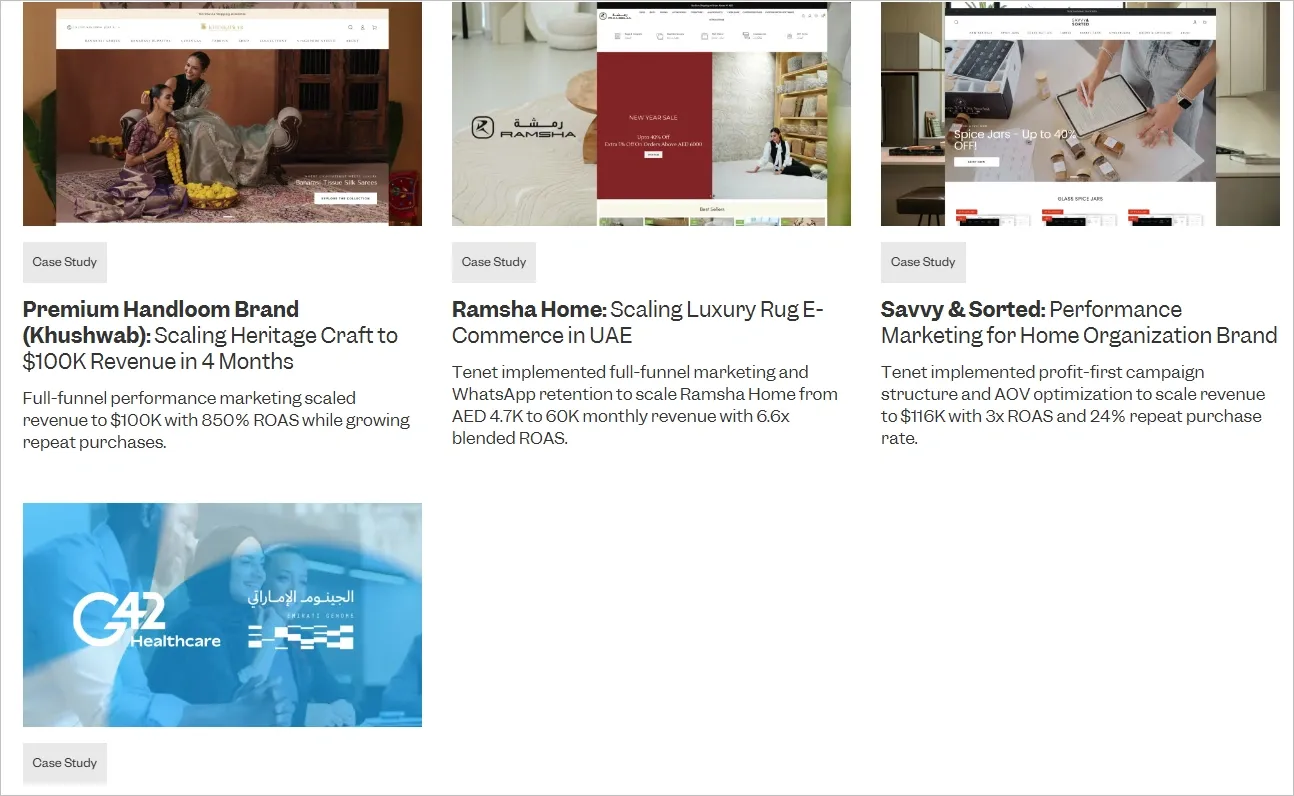
How We Optimize PPC Budgets:
- Align budgets with target CPA, lifetime value, and ROAS goals
- Focus on high-intent audiences through keyword research and audience segmentation
- Use negative keywords to eliminate irrelevant traffic
- Optimize landing pages and creatives through continuous A/B testing
- Integrate Google Ads and Meta Ads to build a stronger conversion funnel
Here is how Tenet applied this methodology for home organization brand Savvy & Sorted:
The Challenge: The brand needed to scale revenue profitably but required a strategy that looked beyond just "ad spend vs. revenue."
The Strategy
- Implemented a profit-first campaign structure to track contribution margins
- Increased Average Order Value through strategic product bundling
- Built an email retention system to improve repeat purchases and customer lifetime value
The Results
- Scaled revenue to $116,000
- Achieved a 3x ROAS
- Increased repeat purchase rate from 8% to 24%
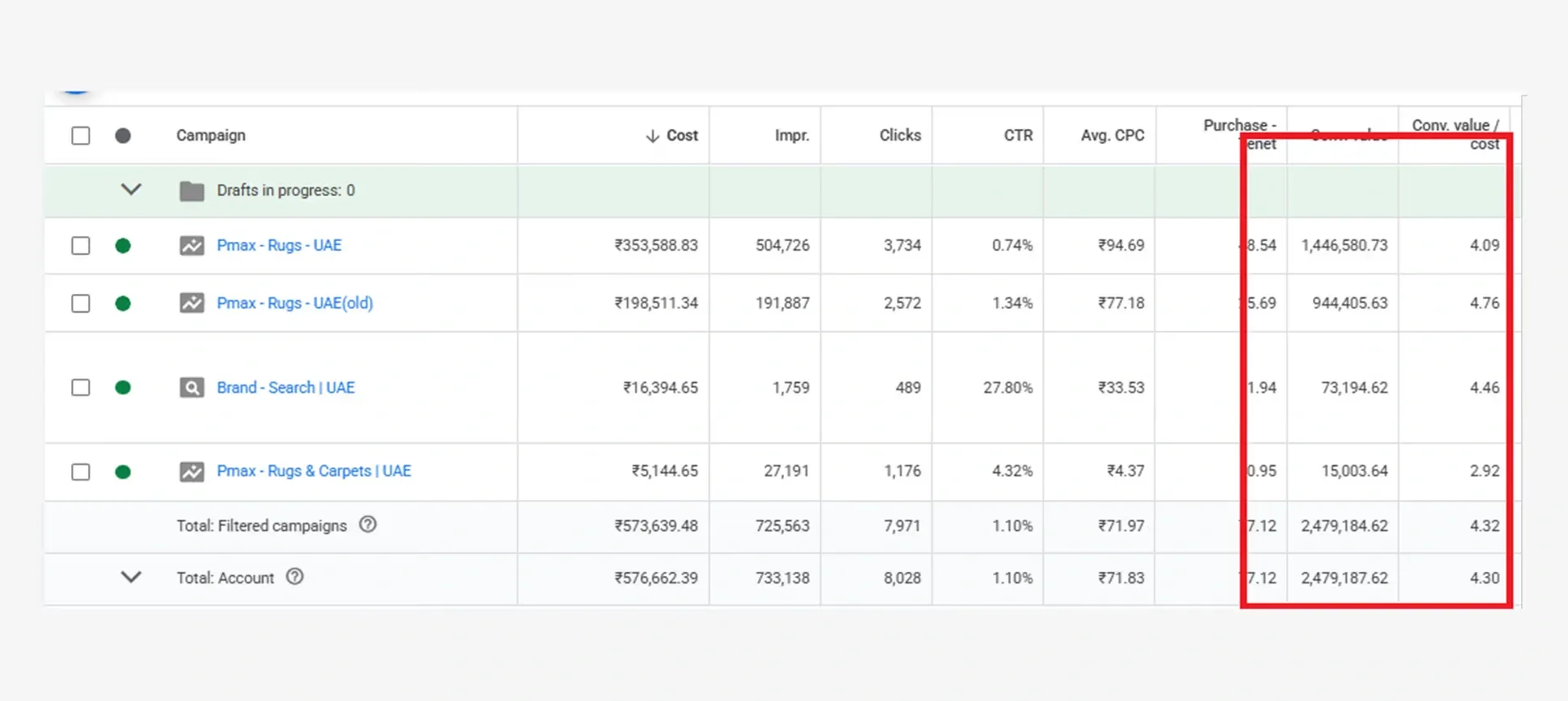
Here is an image showing the scale in revenue & the ROAS that Tenet achieved for Savvy & Sorted:
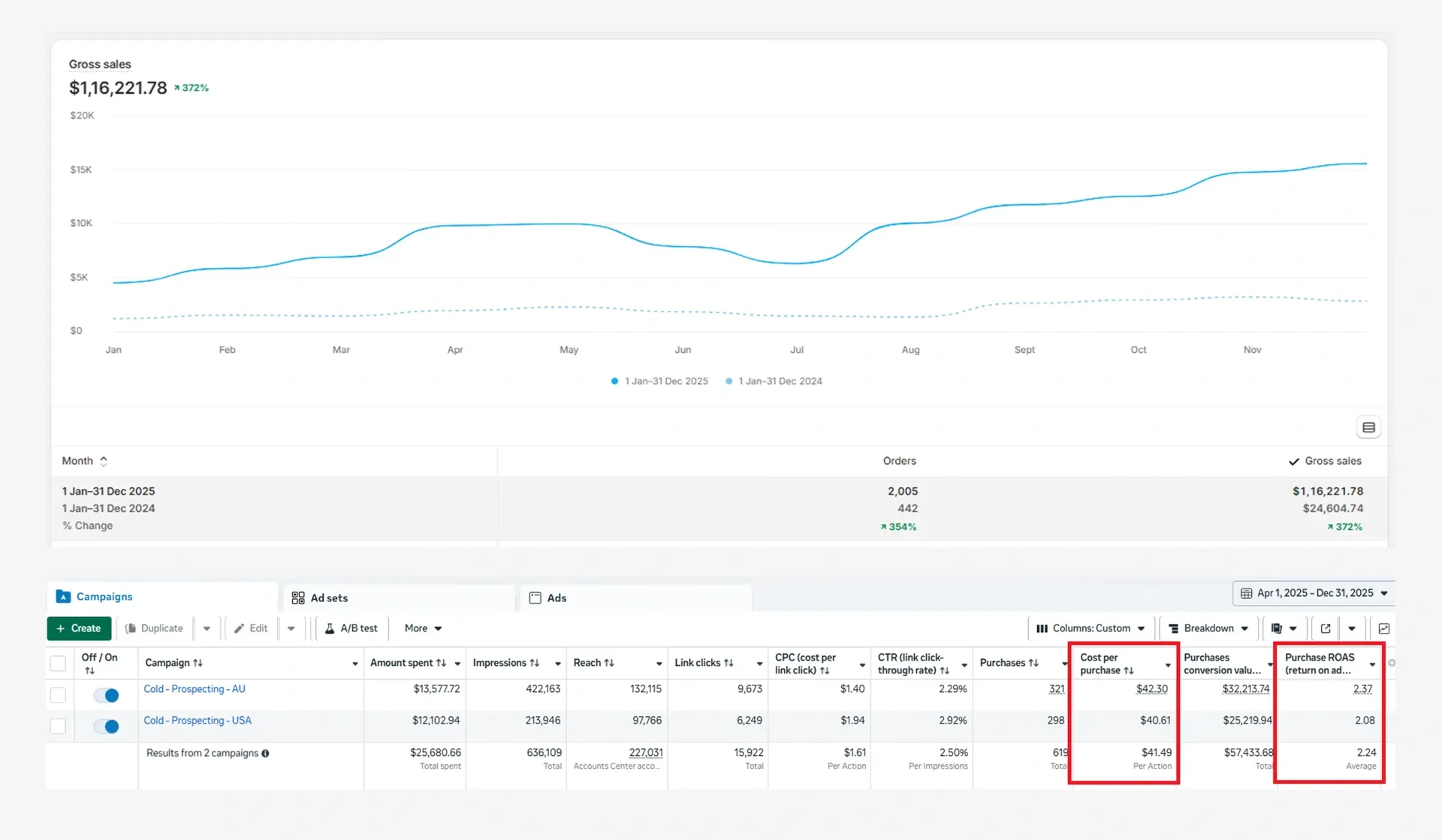
This is another image demonstrating the cost, impressions, conversion value, etc. of the Savvy & Sorted PPC campaign:
Want to see how this strategy can work for your brand? Connect with our team today.
Get a customized PPC budget plan that aligns with your goals, improves ROAS, and drives profitable growth. Speak with our PPC experts today
Get a customized PPC budget plan that aligns with your goals, improves ROAS, and drives profitable growth. Speak with our PPC experts today


















Got an idea on your mind?
We’d love to hear about your brand, your visions, current challenges, even if you’re not sure what your next step is.
Let’s talk


