
SaaS Website Hero Section Best Practices [Based on 20+ SaaS]
 By
By Share

Share
![SaaS Website Hero Section Best Practices [Based on 20+ SaaS]](/_next/image?url=https%3A%2F%2Fd3us4ynq1qsik6.cloudfront.net%2Fuploads%2FSaa_S_Website_Hero_Section_Best_Practices_90a220b200.webp&w=1920&q=75)
Get a quick blog summary with



Many SaaS websites lose users in the first few seconds. The hero section looks good, but the message is unclear, the CTA is weak, or the product value is confusing. This hurts sign ups and demos.
To understand what actually works, we studied 28 popular and fast growing SaaS websites. We manually reviewed each site and collected data across these parameters:
- Hero title clarity within 5 seconds
- Presence of CTA in the hero section
- Number of CTAs in the hero section
- Presence of social proof in the hero section
- Number of social proof elements
- Use of featured image in the hero section
- Type of featured image used
- Number of header menu items
- Number of CTAs in the header
We then combined this data to identify clear patterns and practical best practices for SaaS hero sections.
Many SaaS websites lose users in the first few seconds. The hero section looks good, but the message is unclear, the CTA is weak, or the product value is confusing. This hurts sign ups and demos.
To understand what actually works, we studied 28 popular and fast growing SaaS websites. We manually reviewed each site and collected data across these parameters:
- Hero title clarity within 5 seconds
- Presence of CTA in the hero section
- Number of CTAs in the hero section
- Presence of social proof in the hero section
- Number of social proof elements
- Use of featured image in the hero section
- Type of featured image used
- Number of header menu items
- Number of CTAs in the header
We then combined this data to identify clear patterns and practical best practices for SaaS hero sections.
How many CTAs do SaaS websites use in the hero section?
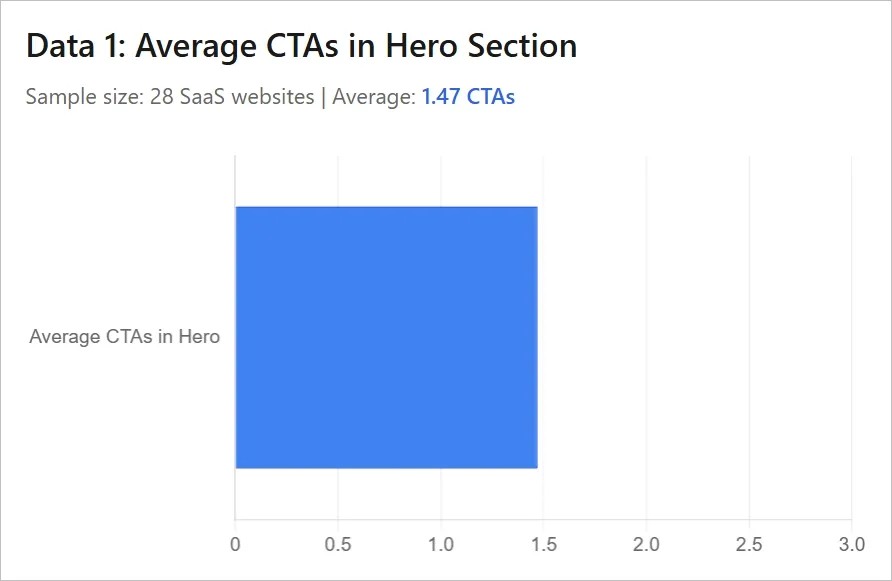
On average, SaaS websites use ~ 1.4 CTAs in the hero section, based on a study of 28 SaaS websites. Most pages include one primary CTA and sometimes one secondary CTA. Pages with many CTAs in the hero are rare.
This shows that SaaS teams understand focus. Too many CTAs confuse users and split attention. A single main action helps users decide faster. A secondary CTA works only when it serves a different intent, such as learning more instead of signing up.
Need help planning or designing your SaaS website for conversion? Explore our services:
👉 SaaS Development Services (Book a free consultation call)
Do SaaS hero titles explain the product within 5 seconds?
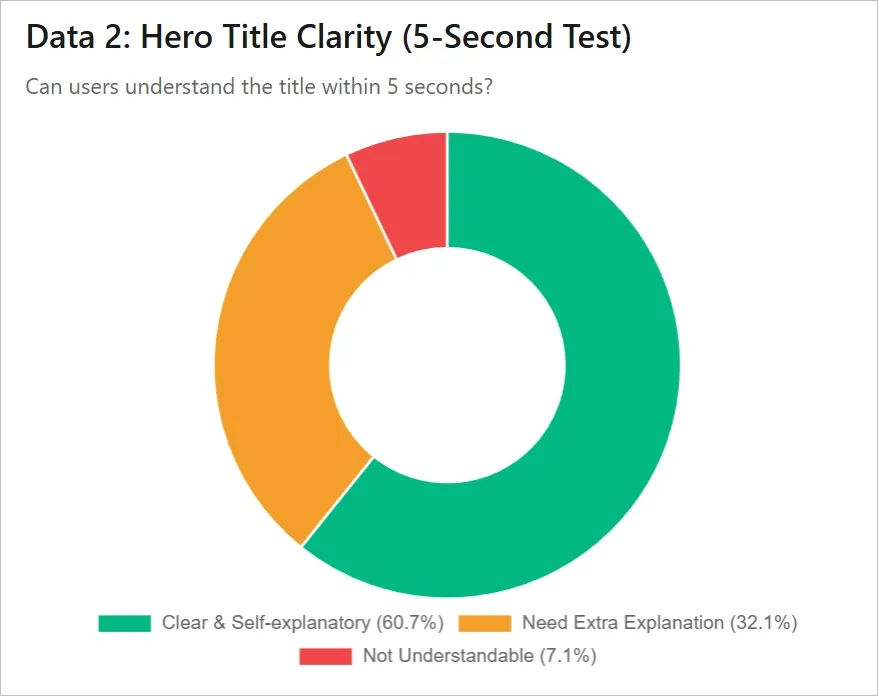
Around 60.7% of SaaS websites have hero titles that users can understand within 5 seconds. However, 32.1% need extra explanation, and 7.1% are not understandable from the title alone.
This means nearly 4 out of 10 SaaS websites fail the first clarity test. Users should not guess what a product does. A clear title reduces friction, improves trust, and keeps users from bouncing early.
Do SaaS websites include a clear CTA in the hero section?
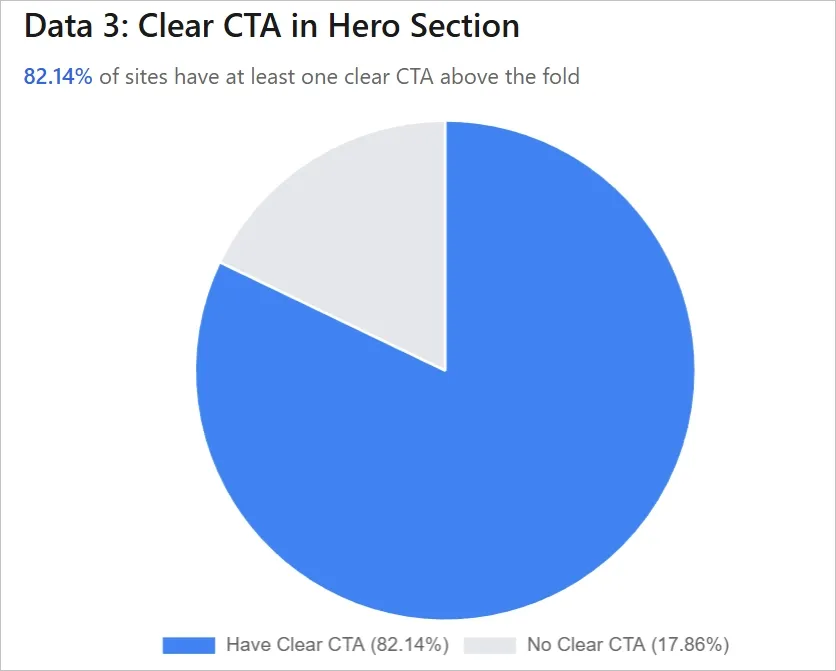
82.14% of SaaS websites include at least one clear CTA in the hero section. That equals 23 out of 28 websites. The remaining 17.86%, or 5 sites, do not show a clear CTA above the fold.
This matters because users need direction. When a hero section lacks a clear CTA, users do not know what to do next. Even strong messaging fails without a visible action step.
How often do SaaS websites use social proof in the hero section?
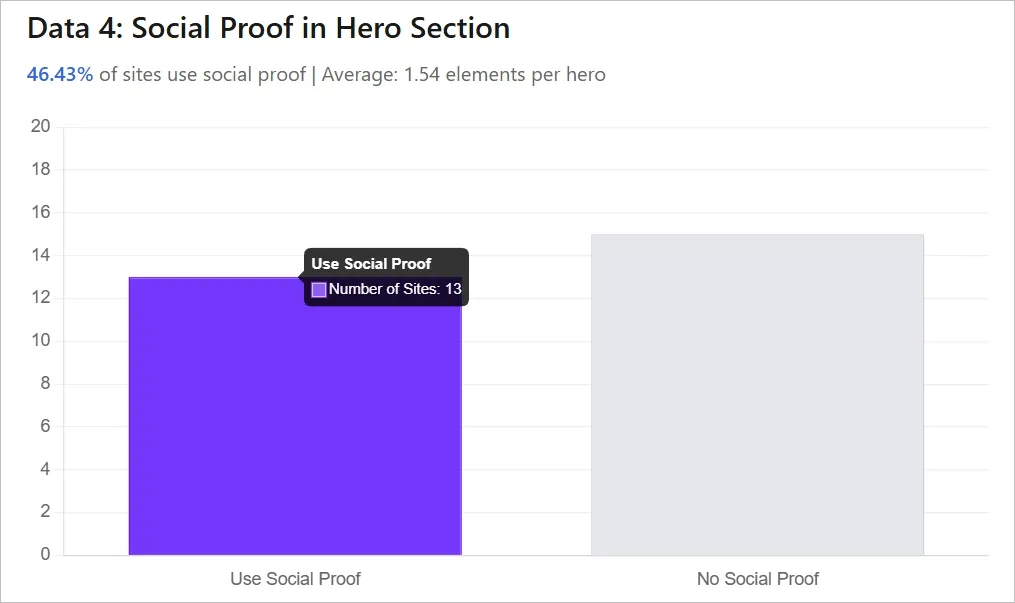
Only 46.43% of SaaS websites include social proof in the hero section. That means just 13 out of 28 sites show trust signals above the fold. Among these sites, the average is 1.54 social proof elements per hero section.
This shows that most SaaS teams underuse social proof early. Social proof builds instant trust and reduces doubt. One or two strong signals work better than many weak ones. Too much proof can distract users.
Do most SaaS websites use a featured image in the hero section?
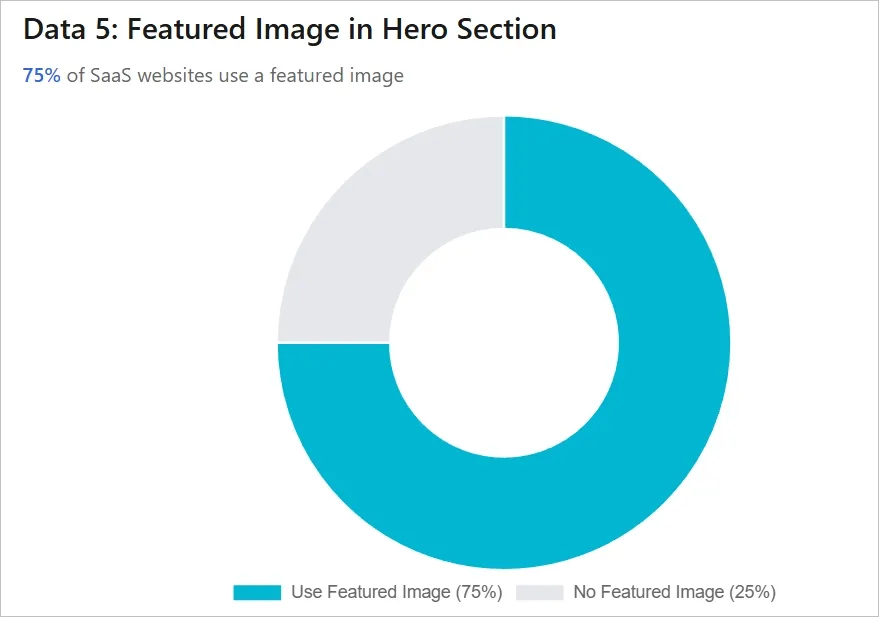
Yes. 75% of SaaS websites, or 21 out of 28, use a featured image in the hero section. Most teams rely on visuals to support the main message.
Visuals help users understand the product faster than text alone. A good image can explain context, product value, or use case in seconds. However, images should add clarity, not act as decoration.
What type of featured images do SaaS websites use in hero sections?
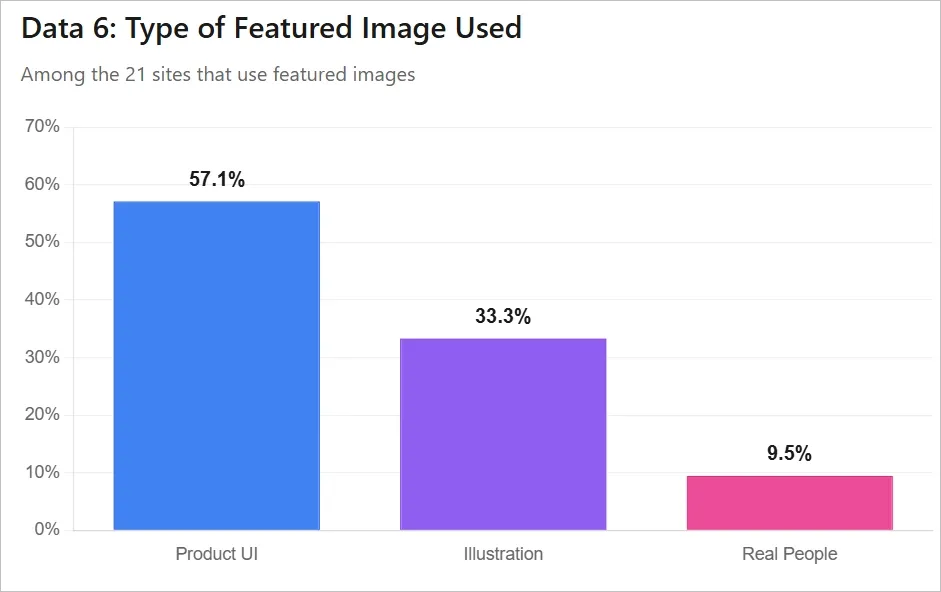
Among the 21 websites that use featured images, 57.1% show product UI in action. 33.3% use illustrations, while only 9.5% use real people.
This clearly shows a preference for showing the product itself. Product UI builds clarity and trust because users see what they will get. Illustrations work when the product is complex. Images of people are rare and mainly used for brand trust
How many header menu items do SaaS websites usually have?
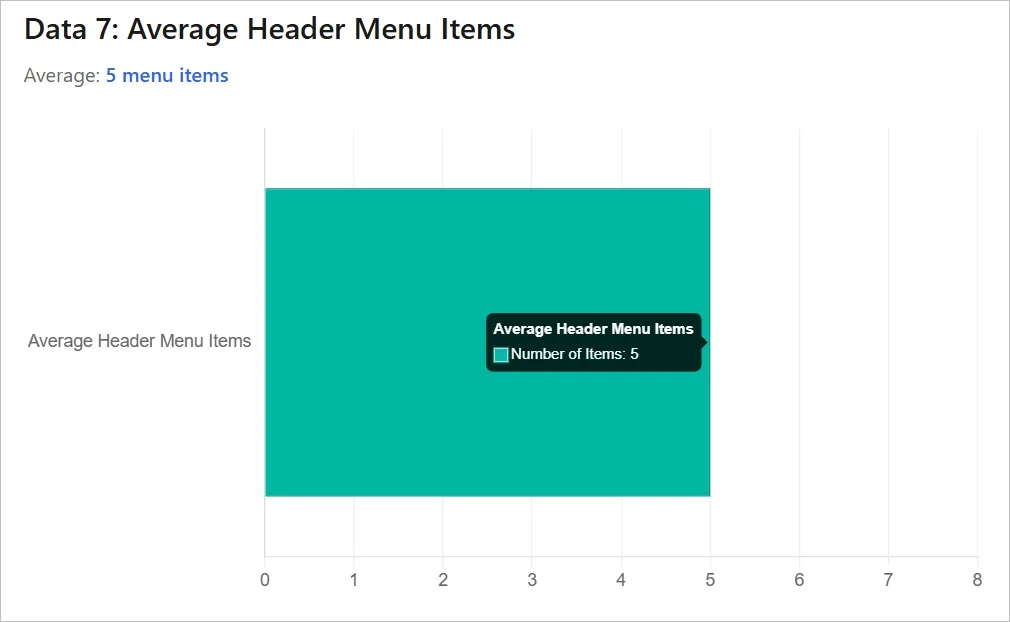
On average, SaaS websites include 5 header menu items. Most sites avoid long or crowded navigation menus.
This shows a clear intent to reduce choice overload. Fewer menu items help users scan faster and stay focused on the hero section. Complex menus often distract users from the main value message.
How many CTAs appear in SaaS website headers?
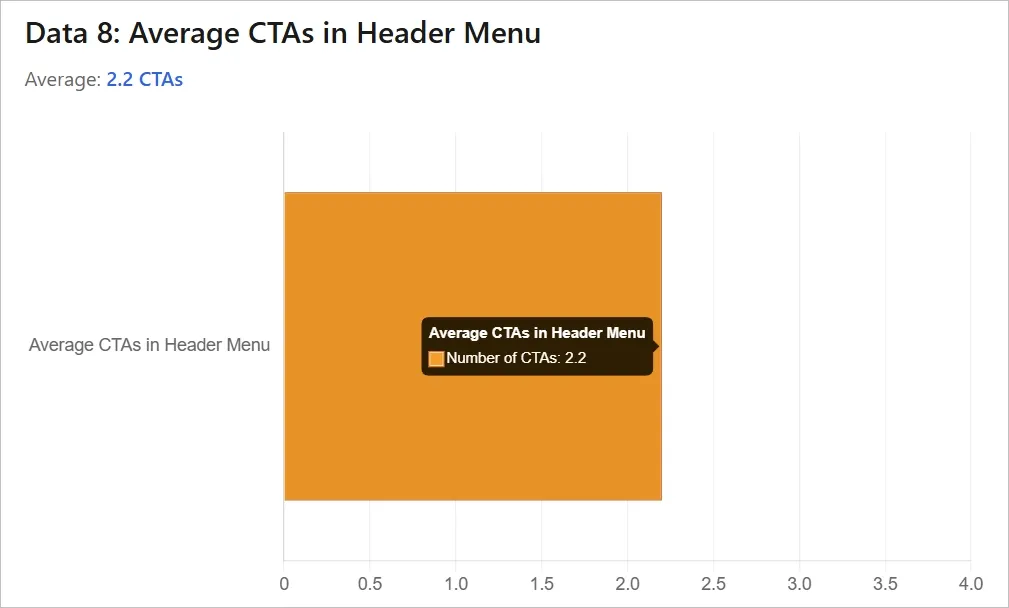
On average, SaaS websites include 2.2 CTAs in the header menu. These usually include actions like sign up, book a demo, or contact sales.
This indicates that headers still push actions, but in a controlled way. Too many header CTAs can compete with the hero CTA. The best setup uses one primary header CTA and supports it with the hero section.
Further resources 👇
- 10 Best SaaS Development Companies to Scale Your Product
- Use These 20 SaaS Landing Page Examples as a Benchmark
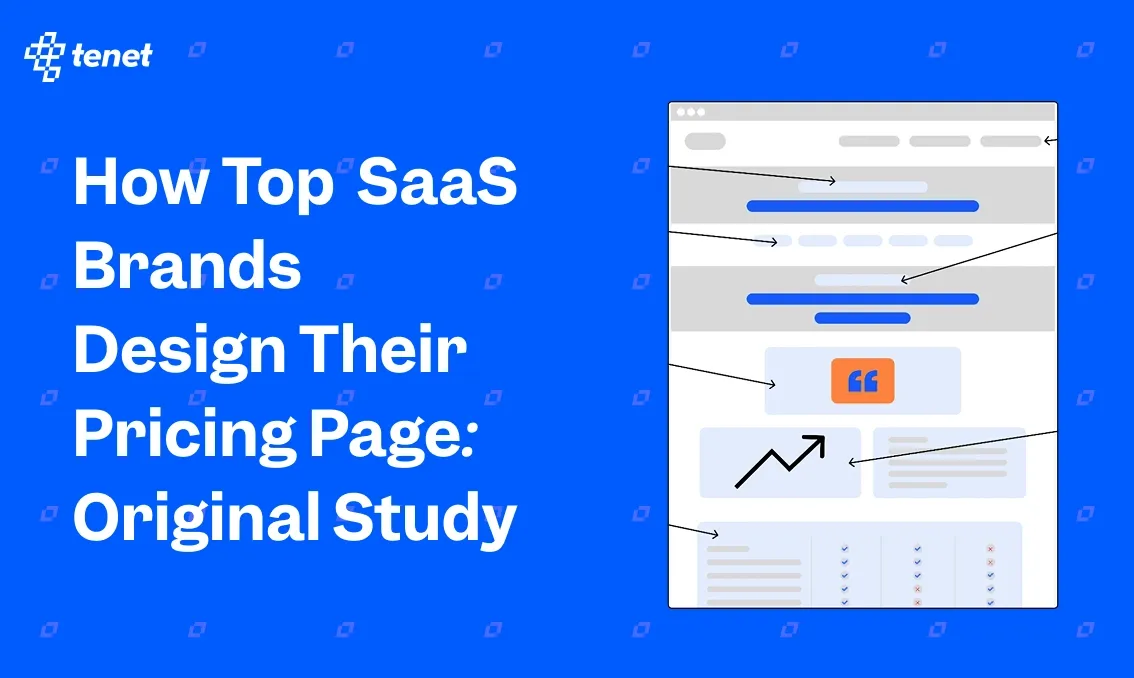
- What To Include in Your SaaS Pricing Page? (Original Study)
SaaS website Hero section optimization best prtactices based on our study
Avoid competing CTAs in the header
Pick one main action in the header and make it clear. Everything else should feel secondary. When users land on your site, they should not have to decide between many equally strong buttons right away.
This matters for SaaS because people scan fast. If the header throws too many choices at them, they pause or skip all of them. A clear primary CTA makes the path forward feel simple and confident.
Keep the header navigation simple
Keep your header clean and focused. Include only the links a new visitor actually needs. If a link does not help users understand the product or move closer to trying it, it probably does not belong in the header.
For SaaS websites, the header shapes how users explore the page. Too many links distract them. A simple header helps users stay focused on what the product does and why it matters.
Show the product UI in action
If you can show the product, do it. A real screenshot or short UI preview tells users more than a clever headline ever will. It helps them instantly see what they are signing up for.
For SaaS, transparency matters. Showing the real product removes doubt and helps users feel comfortable taking the next step.
Add social proof directly in the hero section
Bring trust signals into the hero section instead of hiding them further down the page. A few strong proof points near the top help users feel more comfortable right away.
This matters for SaaS because people are cautious. They want to know others trust your product before they do. Social proof removes doubt early and makes users more willing to take the next step.
💡 Explore further SaaS resources:
- 15 SaaS Marketing Strategies That Work
- 7 SaaS UX Design Best Practices For Growth (+Real Examples)
- What To Include in Your SaaS Pricing Page?
- SaaS App Development Cost: Complete Price Breakdown
Final thoughts
A strong SaaS hero section is not about clever design or catchy words. It is about clarity. Users should understand what the product does, see what it looks like, trust it, and know what to do next without effort.
The best hero sections stay focused. They use simple navigation, one clear action, real product visuals, and early trust signals. When these pieces work together, the hero section does its job. It turns visitors into users instead of making them think or hesitate.
Need help planning or designing your SaaS website for conversion? Book a call.
Need help planning or designing your SaaS website for conversion? Book a call.







Got an idea on your mind?
We’d love to hear about your brand, your visions, current challenges, even if you’re not sure what your next step is.
Let’s talk


