
Corporate Branding Strategy: 7 Proven Tactics
 By
By Share

Share
Get a quick blog summary with



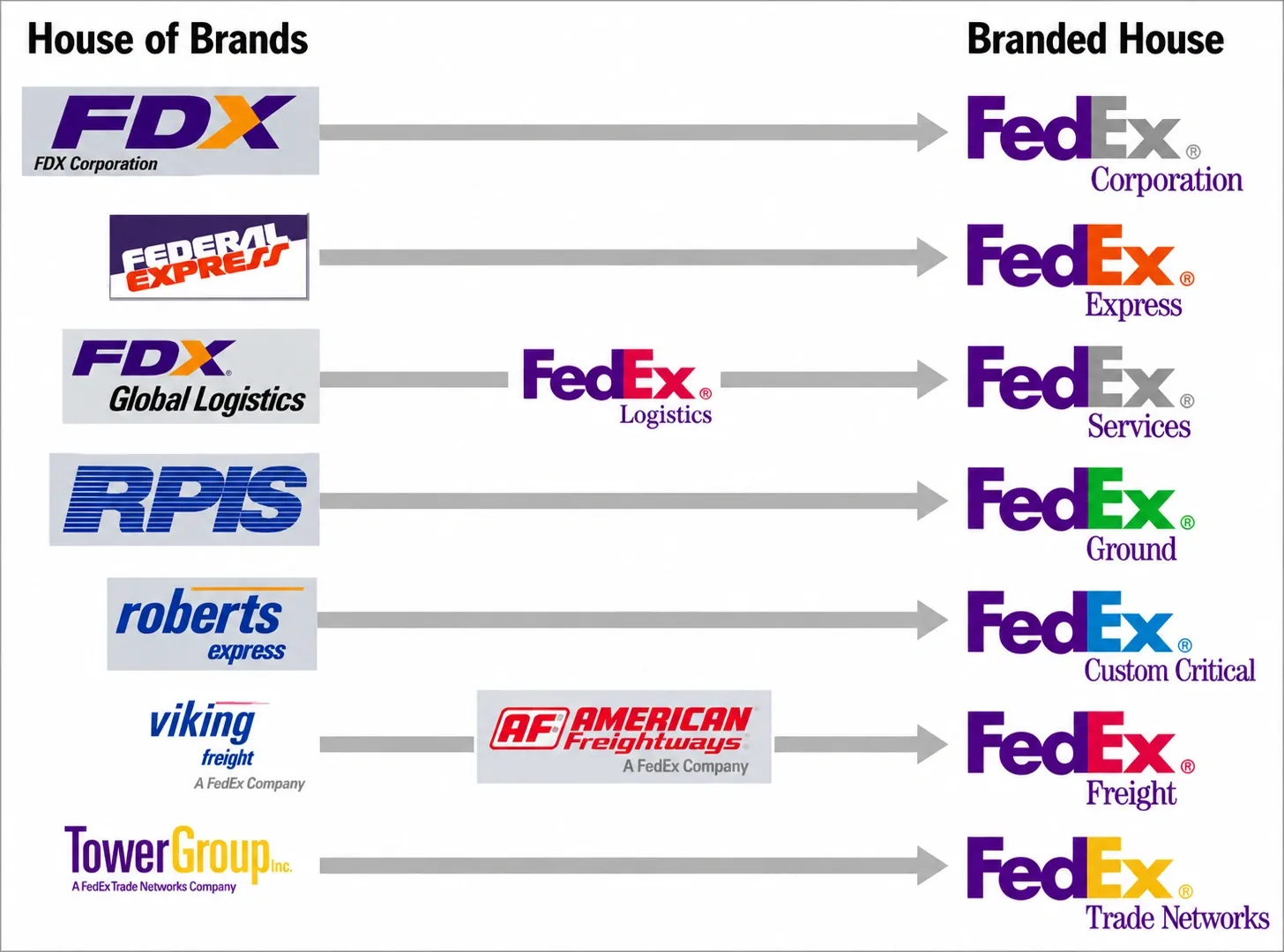
FedEx's growth shows why corporate branding matters. As the company expanded through acquisitions and new services, customers found it harder to understand how its businesses were connected.
FedEx solved this by bringing its portfolio under one clear brand architecture while maintaining distinct service identities. The example below shows this transformation.
After delivering 450+ branding and digital projects across 15+ countries, we has seen how a well planned corporate branding strategy helps businesses build trust, simplify complex brand portfolios, and support long-term growth.
So, this guide explains the most effective corporate branding strategies, real examples, and practical steps we used at Tenet to build a stronger corporate brand.
What is Corporate Branding Strategy?
A corporate branding strategy is a long-term plan for shaping how people perceive your company as a whole. Rather than focusing on a specific product or service, it focuses on the business behind it.
Put simply, it defines what the company stands for, how it communicates, what experience it wants to create, and what reputation it wants to build over time.
Why is branding so important for companies seeking long-term growth?
The diagram below summarizes the eight core ways a strong brand identity directly accelerates and protects a company's long-term commercial growth.
1. Lower Customer Acquisition Costs
When a corporate brand is familiar and respected, marketing efforts become inherently more efficient. Paid advertisements do not have to spend time introducing the company or establishing elementary credibility.
As a result, prospects convert faster because initial trust already exists. This organic pull drastically reduces your blended customer acquisition cost (CAC) and allows your advertising budget to stretch much further
2. Maximizing Customer Lifetime Value and Retention
Most businesses focus heavily on acquiring customers, but long-term growth is often determined by how many customers stay. That’s where consistent corporate positioning helps to build structural familiarity, which acts as a powerful psychological retention mechanism.
When buyers develop an authentic emotional connection with an identity, customer churn drops significantly. This continuous retention maximizes the total customer lifetime value (LTV), turning single sales into highly predictable, multi-year revenue streams.
3. Supports Expansion Into New Markets and Offerings
Entering a completely new vertical or geographic territory normally requires immense promotional expenditure to overcome consumer skepticism. A recognizable corporate brand gives your business immediate permission to expand.
Because target buyers recognize the parent name, that established brand equity serves as a structural bridge, accelerating product adoption and compressing your overall time-to-market.
4. Creates Differentiation Beyond Product Features
In many industries, competitive advantages based solely on features are short-lived. New capabilities can be replicated, pricing models can be matched, and product gaps can eventually be closed.
Branding creates differentiation at a deeper level by influencing how customers perceive the company itself. It shapes perceptions around expertise, reliability, innovation, customer experience, and long-term vision.
These factors often become decisive when buyers are comparing solutions that appear similar on paper.
5. Increases Pricing Flexibility and Protects Margins
Businesses with strong brands compete on value rather than price alone. When customers associate a company with expertise and reliability, they become less sensitive to cost comparisons.
This reduces dependence on discounts and helps protect margins over time.
6. Attracts Better Talent and Reduces Hiring Costs
Corporate branding influences how potential employees perceive a company just as much as it influences customers.
Skilled professionals increasingly evaluate factors such as reputation, culture, leadership, and long-term vision before applying for a role. Companies with strong employer brands often attract more qualified applicants and generate greater interest through referrals and organic awareness.
👉 Refer to our guide on how to design brand identity? (6 key steps)

what are the corporate branding strategies to apply in 2026
1. Brand Positioning Strategy
Brand positioning is the process of defining the unique space your company occupies in the market relative to competitors. It clarifies what your business stands for, who it serves, and why customers should choose it over available alternatives.
Why It Matters
Clear positioning helps customers understand your value quickly, reduces direct price competition, and creates a foundation for consistent messaging across marketing, sales, and customer experience.
How to Implement It
- Conduct a competitive analysis to understand how competitors position themselves, what value propositions they emphasize, and where opportunities for differentiation exist.
- Research customer priorities through interviews, surveys, reviews, and sales conversations to identify the factors that most influence purchasing decisions.
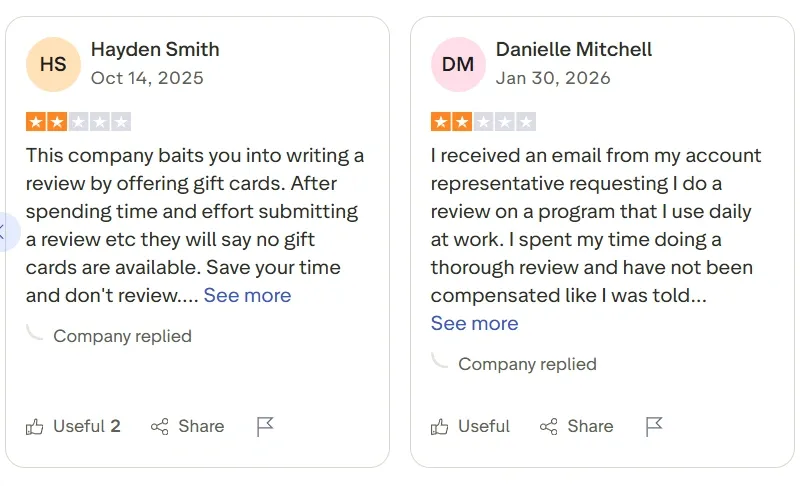
Check out negative G2 or Trustpilot reviews for your rivals as they show you exactly what customer pain points you need to solve better. Like this:
- Identify a defensible differentiator that reflects a genuine strength of the business, such as industry expertise, customer experience, innovation, speed, or specialization.
- Create a positioning statement that clearly defines your target audience, market category, key differentiator, and supporting proof points.
- Align marketing campaigns, sales messaging, customer support, product experiences, and pricing strategies with the chosen market position to ensure consistency across every touchpoint.
2. Thought Leadership Branding
Thought leadership branding is the practice of establishing a company or its executives as trusted experts within a specific industry. Instead of relying solely on promotional messaging, the brand builds credibility by sharing original insights, research, and informed perspectives that help audiences make better decisions.
Why It Matters
In industries with long sales cycles or complex buying decisions, expertise often becomes a competitive advantage. Buyers are more likely to trust and engage with companies that consistently demonstrate a deep understanding of their market and challenges.
How to Implement It
- Identify subject matter experts within the organization, including executives, consultants, researchers, engineers, or product specialists who can provide credible industry insights.
- Define three to four content pillars that align with your expertise, customer challenges, and industry trends. These topics should remain consistent over time.
- Invest in original research through surveys, benchmark reports, market analyses, customer studies, or proprietary data to create insights competitors cannot easily replicate.
- Develop a multi-format content strategy that includes articles, whitepapers, webinars, podcasts, videos, speaking engagements, and industry commentary.
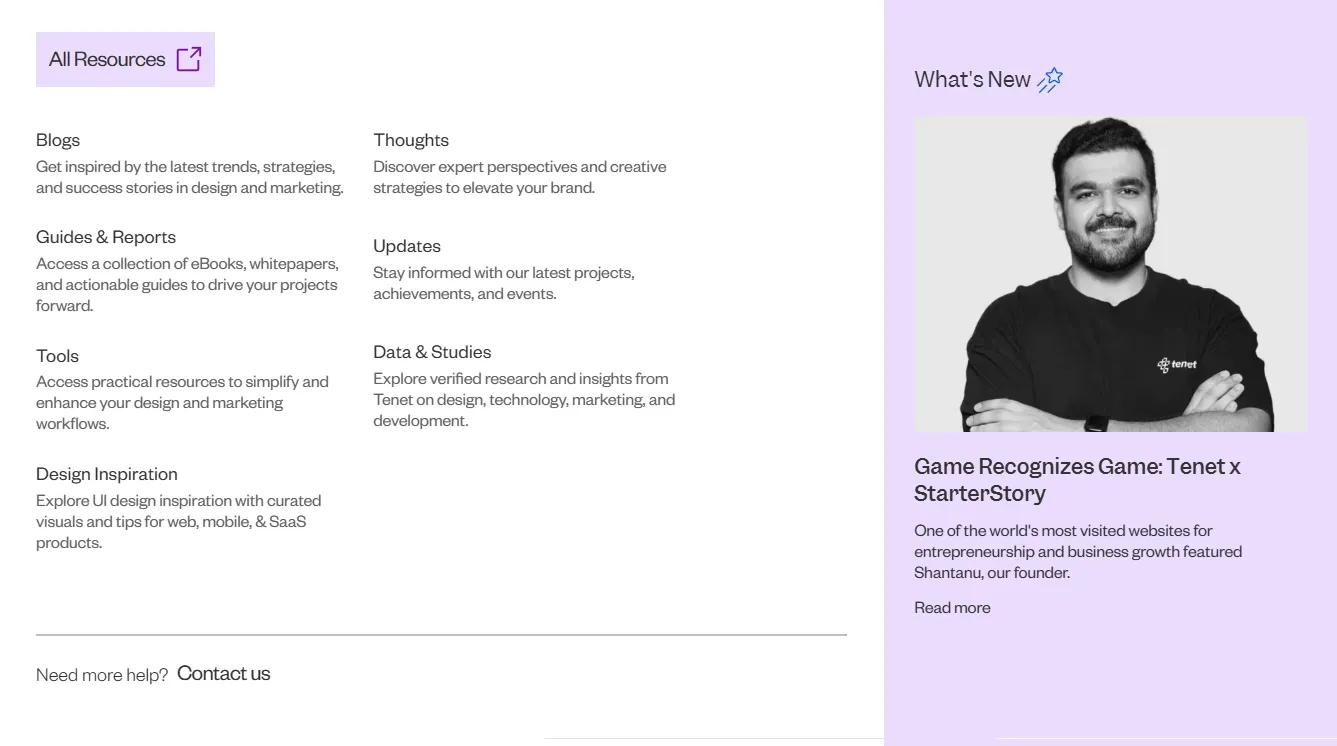
Example of a multi-format resource hub showcasing a unified mix of guides, tools, thought leadership, and PR features.
- Distribute content through owned channels, industry publications, conferences, professional communities, and executive social media profiles.
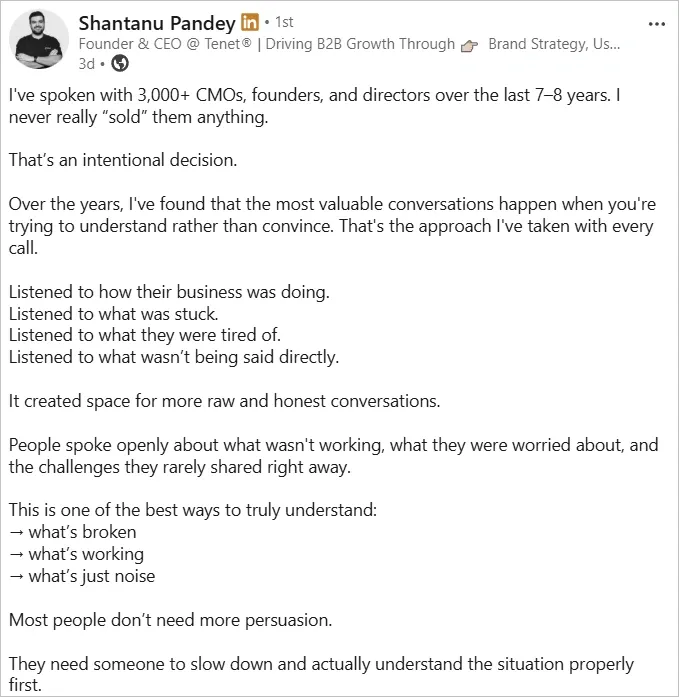
For example, Tenet’s founder, Shantanu Pandey, actively publishes content sharing his experience, journey, and achievements on social media. Read the thought leadership post →
- Maintain consistency by publishing educational and research-driven content regularly rather than only during product launches or marketing campaigns.
3. Employee Advocacy Branding
Employee advocacy branding is the practice of empowering employees to represent and promote the company through their professional networks, industry conversations, and personal content. It transforms employees from internal stakeholders into credible brand ambassadors.
Why It Matters
People tend to trust individuals more than corporate accounts. Employee advocacy helps companies expand their reach, strengthen employer branding, and build credibility through authentic voices rather than traditional marketing messages.
How to Implement It
- Develop clear social media guidelines that help employees participate confidently while protecting the company's reputation and confidential information.
- Create a centralized content library containing company updates, industry insights, event announcements, and shareable assets employees can customize for their own audiences.
- Provide training on personal branding, content creation, professional networking, and responsible social media engagement.
- Encourage employees to share genuine experiences, lessons learned, project milestones, and industry perspectives instead of relying solely on pre-written corporate content.
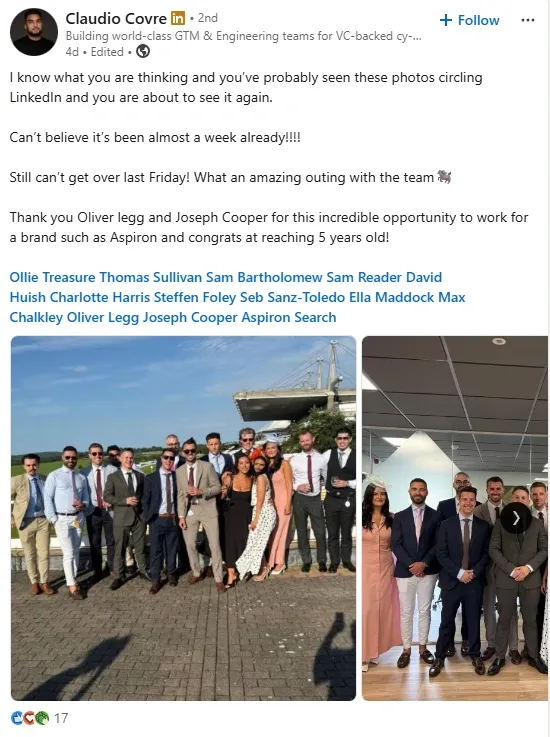
Here is a LinkedIn post from an employee sharing a genuine behind-the-scenes team milestone to build an authentic corporate culture brand.
- Recognize and reward active participants through internal recognition programs, career development opportunities, incentives, or leadership visibility.
- Measure participation and impact using metrics such as employee share rates, organic impressions, engagement levels, referral traffic, and recruitment referrals.
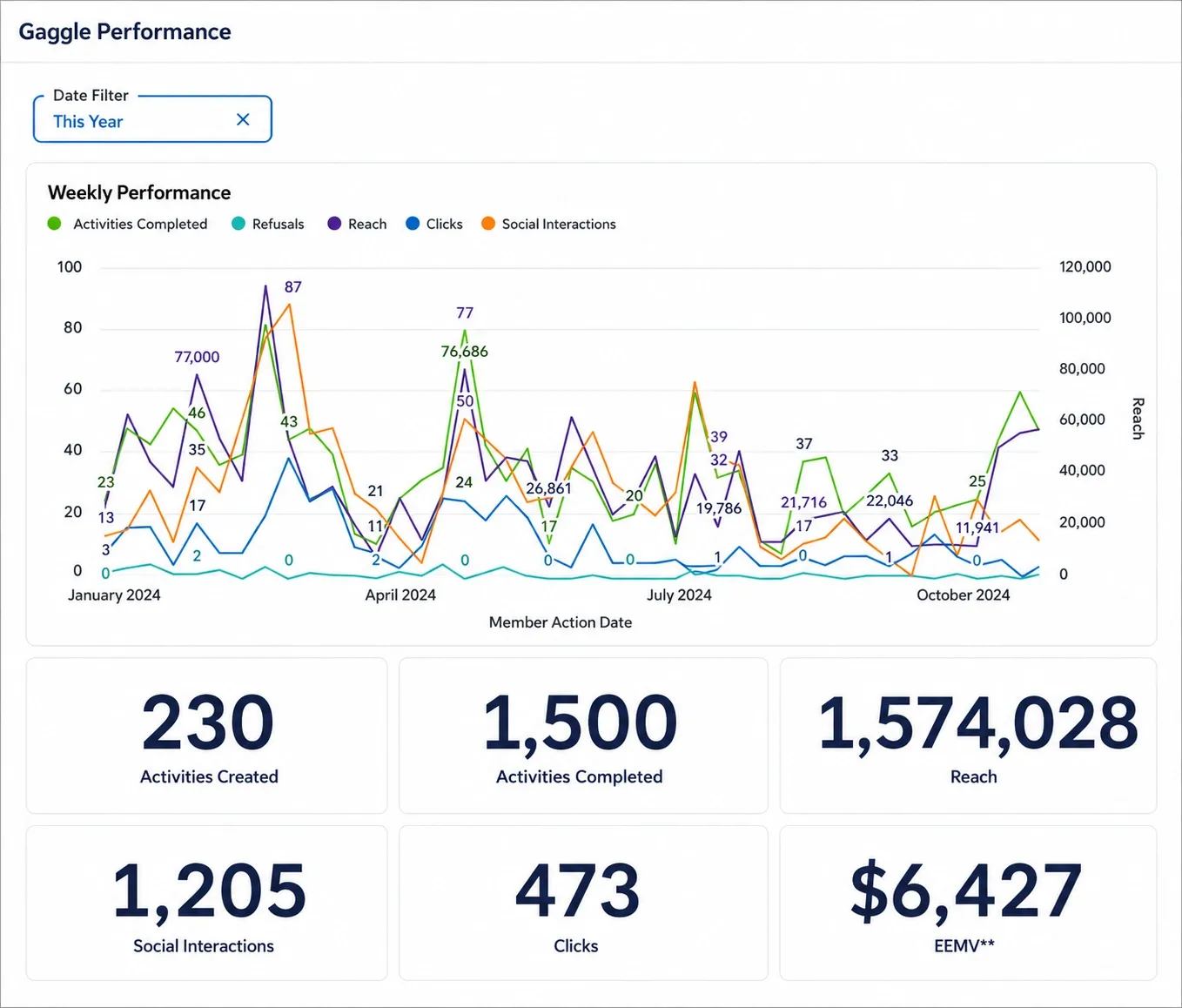
This visual shows GaggleAMP an employee advocacy analytics dashboard tracking campaign performance, total reach, and team participation rates.
4. Customer Experience-Led Branding
Customer Experience-Led Branding is a strategy that builds brand perception through the quality of customer interactions rather than through marketing alone. It recognizes that every touchpoint, from product discovery and onboarding to customer support and renewal, shapes how people perceive the company.
Why It Matters
Customers rarely judge a brand based on its messaging alone. They judge it based on how easy it is to buy, use, and receive support from the company. Consistently positive experiences strengthen loyalty, increase referrals, and reinforce brand trust.
How to Implement It
- Map the entire customer journey, from the first brand interaction to post-purchase support, and identify moments that influence customer perception.
- Audit every touchpoint to uncover friction points such as confusing navigation, lengthy onboarding processes, slow response times, or inconsistent communication.
- Establish customer experience standards that align with the brand's positioning and values.
- Empower frontline teams with the authority, training, and resources needed to resolve issues quickly without excessive approvals or escalation processes.
- Design memorable customer experiences that exceed expectations and reinforce the brand's promise.
- Collect customer feedback through surveys, reviews, support interactions, and customer effort metrics to identify opportunities for continuous improvement.
- Track experience-related KPIs such as customer satisfaction (CSAT), Net Promoter Score (NPS), retention rate, churn rate, and average resolution time.
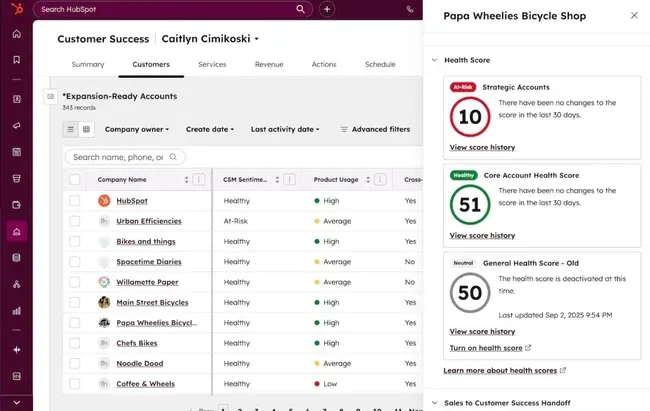
The following image shows a customer success dashboard tracking health scores and sentiment metrics to predict retention and prevent customer churn.
5. Community-Led Branding
Community-Led Branding is a strategy that strengthens brand loyalty by creating spaces where customers, users, and advocates can connect, learn, and contribute. Instead of relying solely on company-driven communication, the brand grows through interactions between community members themselves.
Why It Matters
Communities create stronger relationships than traditional marketing channels. When customers invest time in a community, they become more likely to remain loyal, share knowledge, recommend the brand, and contribute to its long-term growth.
How to Implement It
- Select a platform that aligns with your audience's preferences, whether it is a dedicated forum, Slack workspace, Discord server, Circle community, or an in-app community hub.
- Define a purpose that extends beyond product promotion. The most successful communities help members achieve professional, educational, or personal goals while naturally incorporating the brand.
- Identify highly engaged users and empower them as moderators, ambassadors, mentors, or community leaders.
- Create opportunities for participation through discussions, networking events, webinars, workshops, AMAs, product previews, and beta-testing programs.
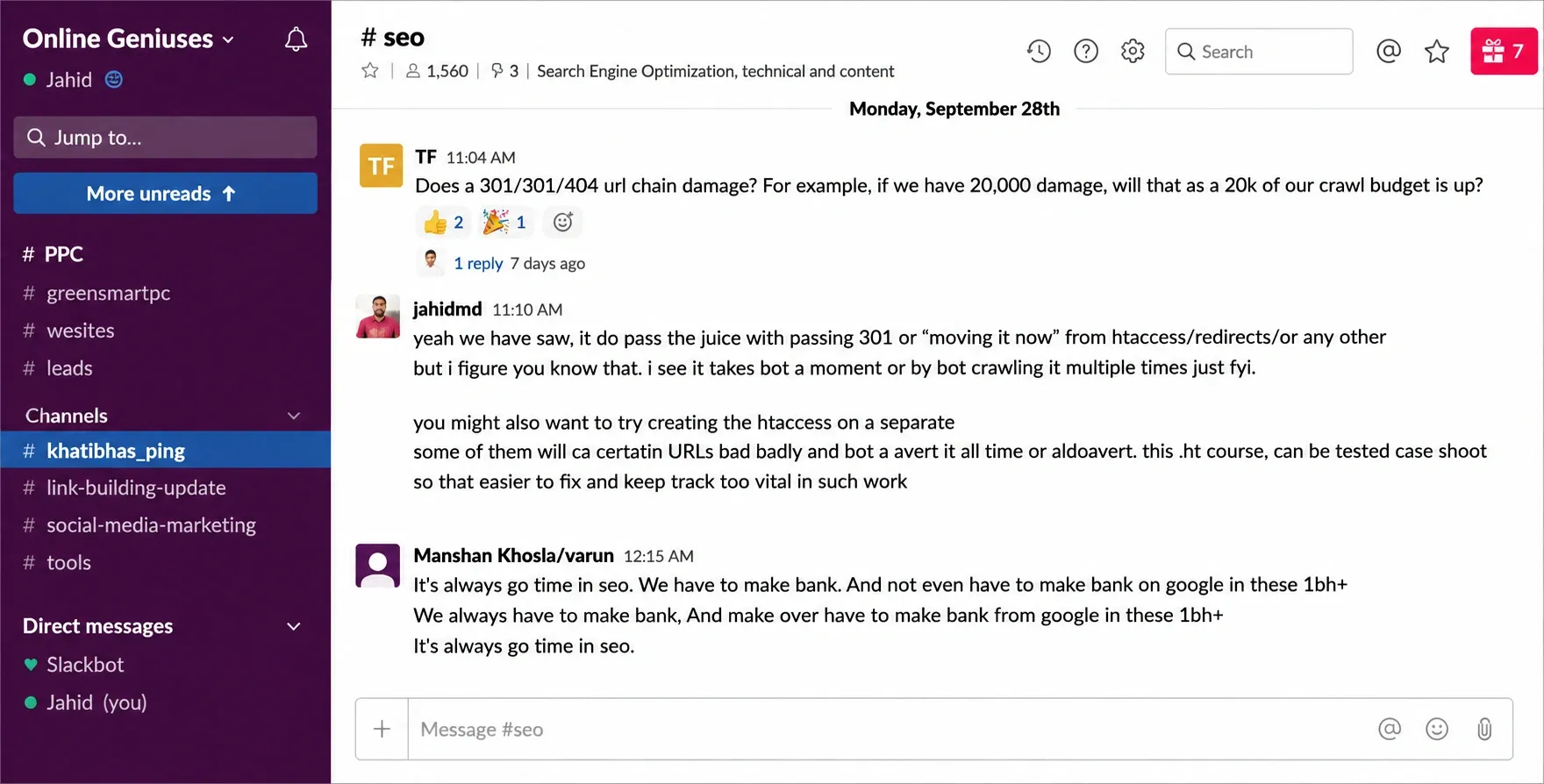
- Encourage members to share best practices, resources, success stories, and solutions that can benefit the broader community.
Below is a visual showing a Slack-based community platform where members actively exchange industry solutions and share technical best practices.
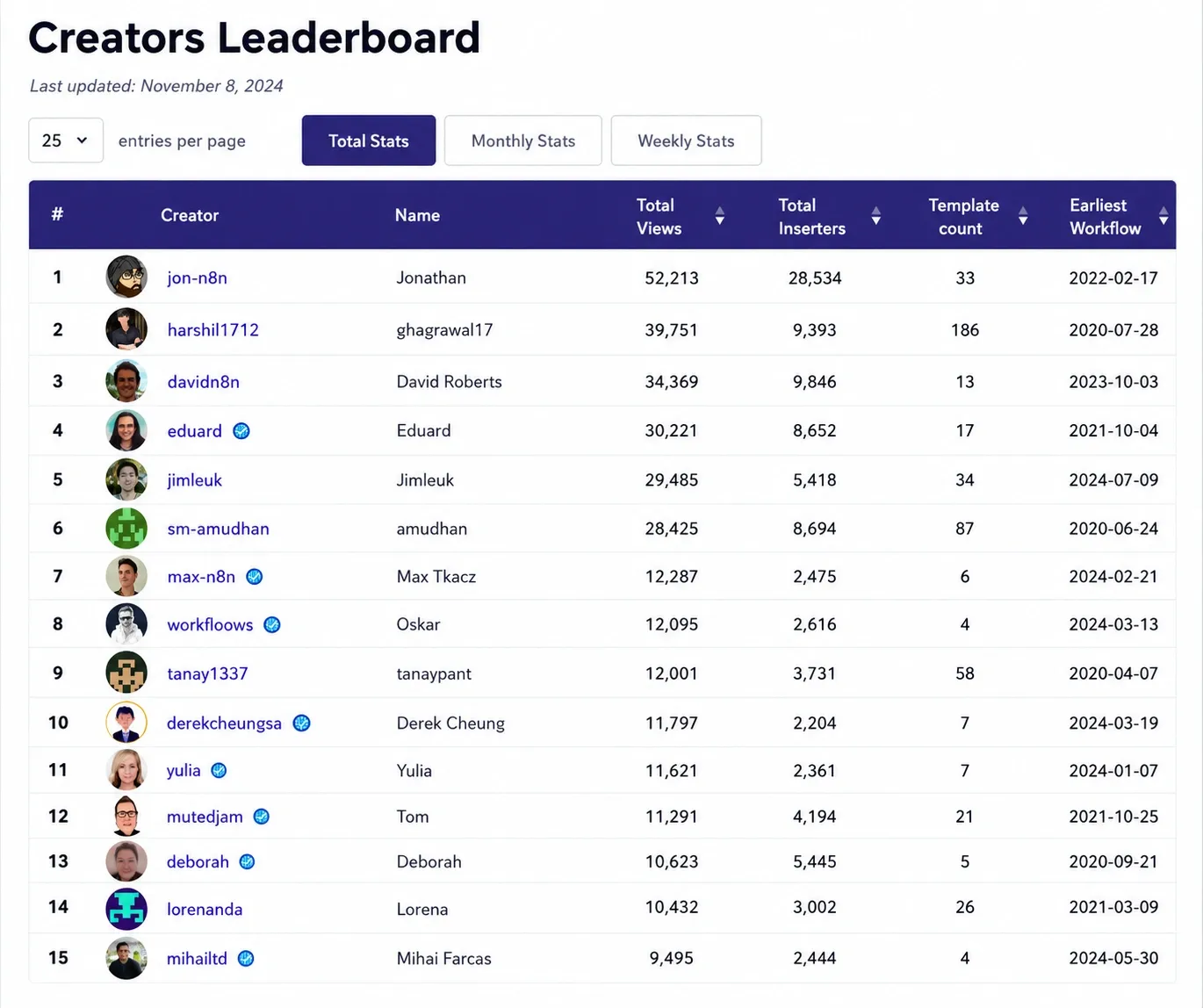
- Recognize and reward active contributors through badges, certifications, featured member spotlights, exclusive access, or leadership opportunities.
This dashboard image is a perfect example of a public creator leaderboard used to recognize, rank, and reward active community contributors based on their template creations and total views.
- Gather feedback from community conversations and use it to inform product development, customer experience improvements, and future brand initiatives.
6. Corporate Reputation Management
Corporate Reputation Management is the practice of actively shaping and protecting how stakeholders perceive a company. It focuses on building trust through consistent actions, transparent communication, and responsible business conduct rather than relying solely on marketing messages.
Why It Matters
A strong reputation can take years to build and only moments to damage. Companies with a positive reputation often find it easier to attract customers, retain talent, secure partnerships, and maintain stakeholder confidence during periods of uncertainty.
How to Implement It
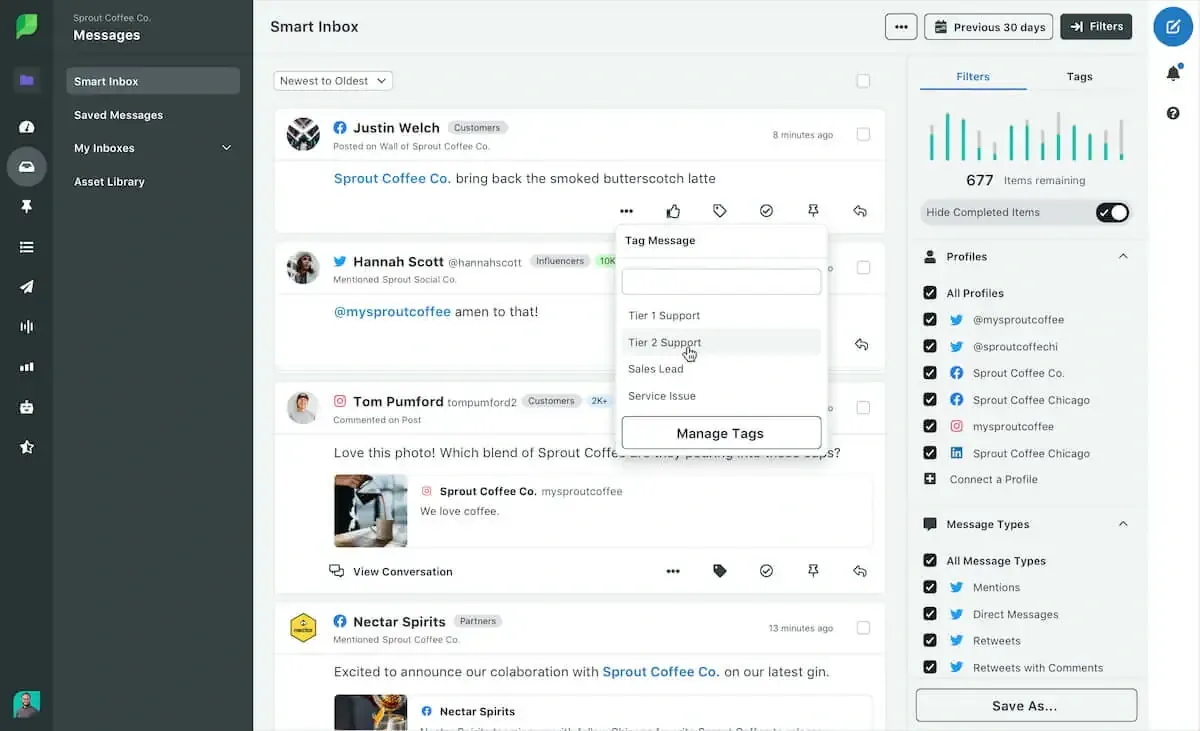
- Monitor brand mentions across news outlets, review platforms, social media channels, and industry publications to understand how the company is being perceived.
You can use Real-time audience monitoring tools to track brand sentiment and filter customer mentions across multiple digital channels simultaneously. Like this:
- Establish crisis communication plans that define response procedures, approval workflows, spokesperson responsibilities, and communication channels before an issue arises.
- Ensure that public claims about sustainability, diversity, ethics, governance, or social impact are supported by measurable actions and documented progress.
Here is a visual illustration of a public-facing ESG scoreboard that tracks carbon footprints, energy sources, and corporate performance to eliminate greenwashing.

- Respond to mistakes, service disruptions, security incidents, or customer concerns with transparency rather than attempting to minimize or ignore them.
- Maintain regular communication with key stakeholders through reports, updates, earnings calls, community initiatives, and leadership communications.
- Conduct periodic reputation audits to identify gaps between how the company wants to be perceived and how stakeholders actually perceive it.
- Track reputation-related metrics such as media sentiment, customer trust scores, employee satisfaction, brand perception studies, and stakeholder feedback.
7. Brand Architecture Strategy
Brand architecture is the framework used to organize and manage a company's portfolio of brands, products, services, and business units. It defines how different offerings relate to one another and how much visibility the corporate brand should have across the portfolio.
Why It Matters
As companies expand through new product launches, acquisitions, and market diversification, brand architecture helps maintain clarity for customers while ensuring brand equity is managed efficiently across the entire portfolio.
How to Implement It
- Audit the existing portfolio to understand how customers perceive the relationship between brands, products, and services.
- Identify overlap between offerings that may create confusion or dilute marketing investments.
- Evaluate whether the organization would benefit more from a Branded House, House of Brands, or Endorsed Brand model based on business goals and customer expectations.
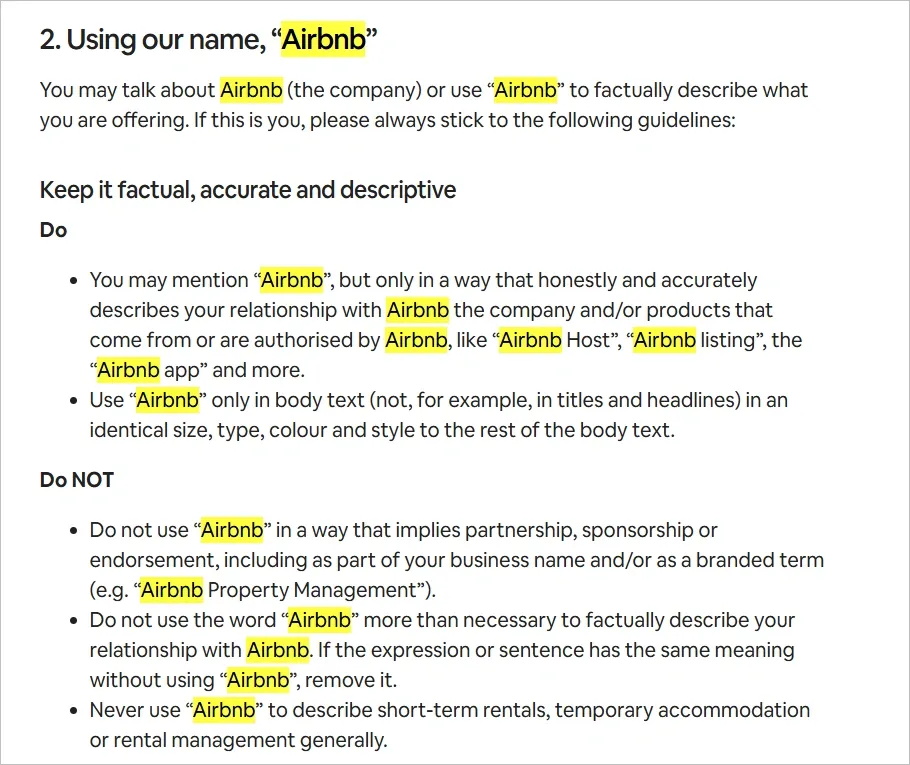
- Define clear naming conventions and visual identity standards for current and future offerings.
The image below shows how Airbnb has made it clear even how to write the word “ Airbnd”:
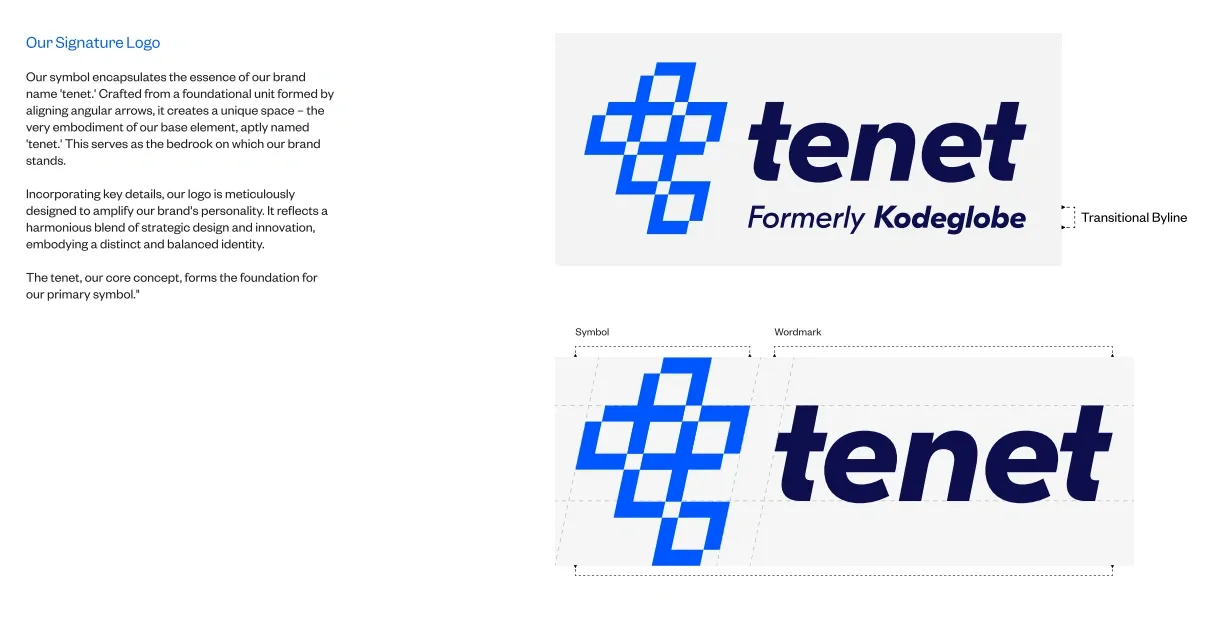
Here is another example showing Tenet’s guidelines about their signature logo:
- Establish guidelines for acquisitions, partnerships, and new product launches to ensure consistency within the chosen architecture.
- Align marketing, sales, and customer experience teams around the architecture so customers encounter a clear and logical brand structure.
- Review the architecture periodically as the business expands into new markets, launches additional products, or acquires new brands.
💡 Relevant branding resources:
- Branding for Startups: 9 ACTIONABLE Steps
- 50+ Branding Statistics That Explain Brand Loyalty
- B2B SaaS Branding Guide with Brand Transformation Examples
- 7 Most Important Rebranding Strategies (+ Real Examples)
How Tenet helps you in creating your unique brand identity
True brand identity is about how your business thinks, speaks, and connects with its audience. Tenet cuts through the noise with branding services.
With a track record of delivering over 450 projects across 15+ countries, Tenet shapes your unique identity through a proven, four-step framework:
- Data-Driven Strategy: They analyze market trends and competitor gaps to position your brand in an untapped space.
- Core Identity Architecture: They build your brand pillars from the ground up, defining your voice, mission, and personality.
- Cohesive UX Alignment: They bridge the gap between design and tech, ensuring your brand story translates seamlessly across apps and websites.
- Scalable Brand Guidelines: They deliver strict, forward-thinking style guides that maintain visual consistency as your business grows.
Explore how Tenet can help you establish a strong brand:
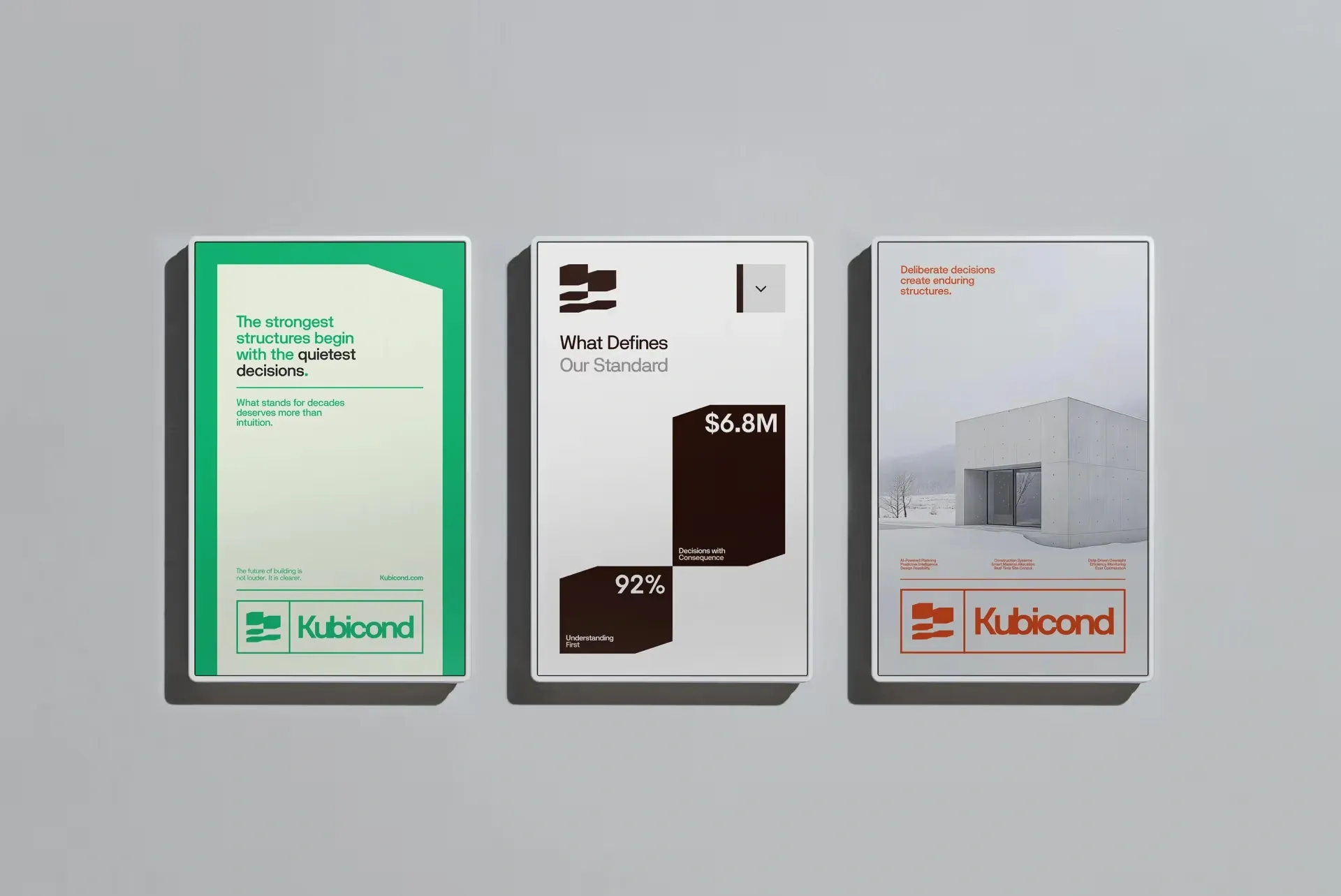
A strong example of this framework in action is Kubicond, an AI intelligence engine built for the construction industry. Their original identity leaned heavily on technical jargon, making it difficult for traditional enterprise buyers to connect with the brand immediately.
Tenet refined the identity by simplifying the visual system and introducing a structured, geometric design language.
The result was a brand that communicated intelligence through restraint. Instead of feeling like an experimental tech product, Kubicond now presents itself as a mature, enterprise-grade infrastructure solution.
Here is an image showing the geometric design language and minimalist layout developed for Kubicond, reflecting an enterprise-grade solution built on intelligence and restraint.
If you're looking to build a stronger brand identity, you can connect with our team to explore how we can help.
Turn your business into a trusted, memorable brand with a corporate branding strategy built for long-term growth.
Turn your business into a trusted, memorable brand with a corporate branding strategy built for long-term growth.













Got an idea on your mind?
We’d love to hear about your brand, your visions, current challenges, even if you’re not sure what your next step is.
Let’s talk


