
SEO Ranking Drop: Know What Caused Your Site’s Traffic Drop
 By
By Share

Share
Get a quick blog summary with



Organic traffic drops can put real pressure on a marketing team, especially when leads, sales, or revenue depend on search.
The difficult part is figuring out whether the decline came from a Google update, a technical issue, a migration, content decay, or simply a change in search demand.
At Tenet, we have worked with dozens of brands whose organic performance was affected by Google core updates, incorrect website migrations, technical issues, and content-related problems.
Based on patterns we have seen across these 60+ SEO projects, combined with Google's own guidance and our SEO analysis process, we have prepared this guide to help you diagnose an SEO ranking drop, identify the likely cause, and decide what to check and fix next.
What does an SEO ranking drop mean?
An SEO ranking drop is a measurable decline in where your pages appear in Google's search results for the keywords they used to rank for, usually accompanied by a fall in organic clicks and impressions.
It can show up in a few different ways:
- A position drop: a page that used to sit at position 3 for "corporate gifting ideas" now shows up at position 14.
- A visibility drop without a position drop: your ranking barely moved, but a new SERP feature (AI Overview, shopping carousel, featured snippet) pushed your listing further down the visible page, so clicks fell anyway.
- A traffic drop without a ranking drop: your position is stable, but demand for the query itself has dropped, so fewer people are searching it.
- A site-wide drop: dozens or hundreds of pages lose position simultaneously, often tied to an algorithm update or a technical fault.
- A page-level drop: one or two important pages lose visibility while the rest of the site is unaffected, usually a content, intent, or competition issue specific to those pages.
Note that not every traffic drop is a ranking problem, and not every ranking drop is a penalty.
How to know your Google SEO ranking really dropped
Most people's first move is opening a third-party rank tracker (Ahrefs, Semrush, or a dedicated SERP tracking tool) and treating whatever number it shows as gospel. That's a mistake to avoid making your first move.
Third-party tools estimate rankings by scraping Google from their own servers, often from a single location, with their own crawl schedule. When Google changes how it renders or personalizes results, trackers can lag behind or misreport for a few days until they catch up.
The more reliable source is Google's own data: Search Console and Google Analytics.
- Google Search Console (Performance report) shows the actual clicks, impressions, average position, and CTR Google recorded for your site, not an estimate. This is the ground truth for whether your rankings and visibility genuinely changed.
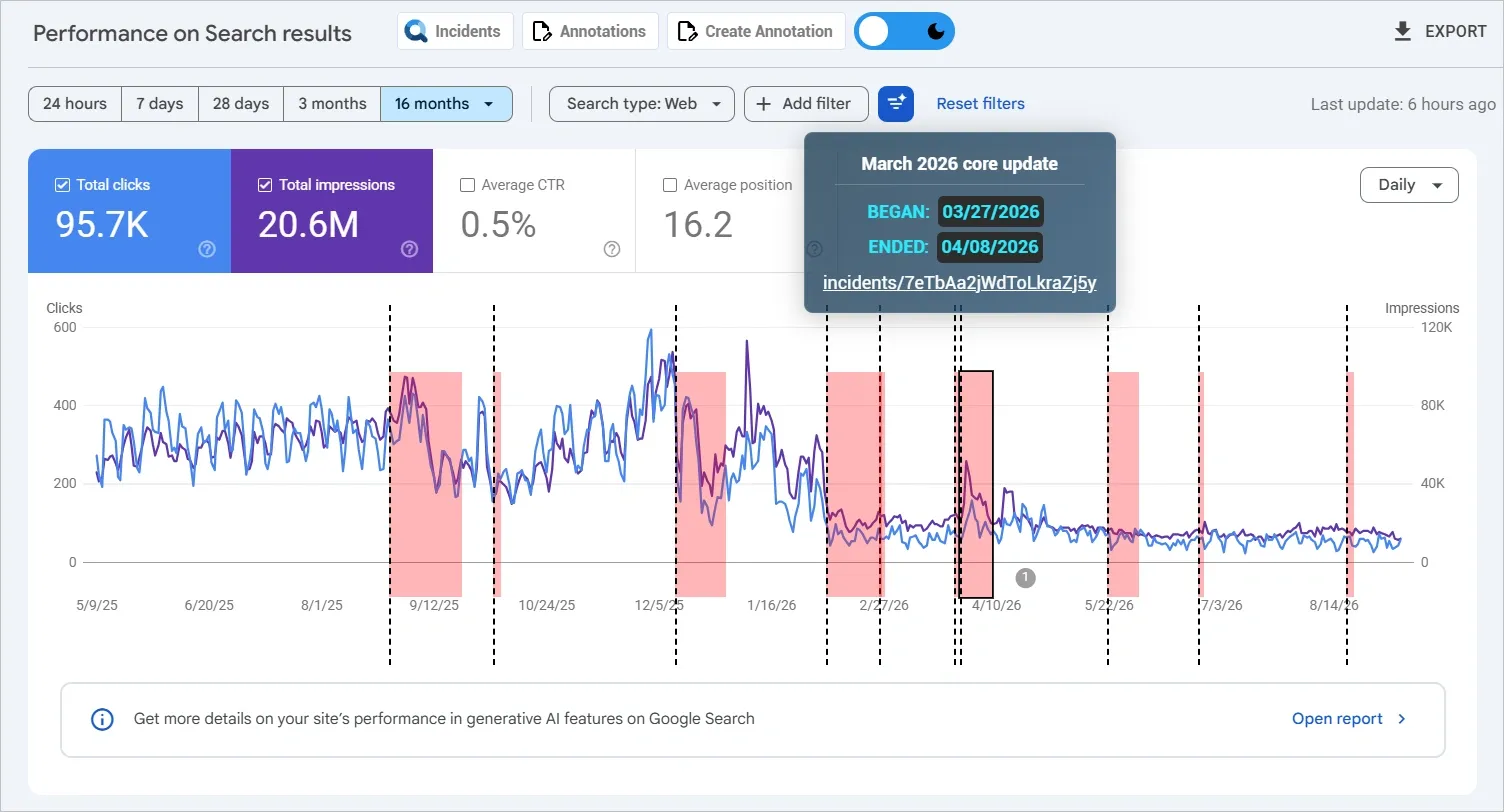
- Use GSC Guardian Chrome extension to align website traffic drop timing with core updates: Once you have confirmed a decline in Search Console, check whether it lines up with a known Google search update.
This makes it easier to see whether the decline started around the same time as an update rather than relying on memory or manually comparing dates.
Here’s an example of one of our recent clients who was affected by a Google core update. We checked the timing of the major traffic drop and matched it with the timing of the Google core update using GSC Guardian.
- Google Analytics (GA4) confirms whether that visibility change actually translated into a session or engagement drop, and lets you segment by landing page, geography, and device to see where the damage is concentrated.
When does a typical SEO ranking drop happen?
SEO ranking drops usually happen after a change that affects how Google evaluates, crawls, or displays your pages. One of the most common triggers is a Google core update.
Here are typical other scenarios that can cause a temporary ranking drop for your website:
After a website migration or redesign
A ranking drop can happen soon after a site migration, redesign, or major URL change. Google needs to recrawl and process the new URLs, redirects, and other signals, so some ranking changes during this period are normal. Google notes that this process can take a few weeks for a medium sized website and longer for larger websites.
After major website or content changes
Large changes to your pages can also affect rankings. A new template, different headings, changes to internal links, or major content edits can change how Google understands and evaluates your pages.
Conductor recommends checking recent website changes before assuming an algorithm update caused the decline.
After a technical deployment
A code or configuration change can accidentally introduce SEO problems. For example, a deployment might change robots.txt, add a noindex directive, alter canonical URLs, or break redirects.
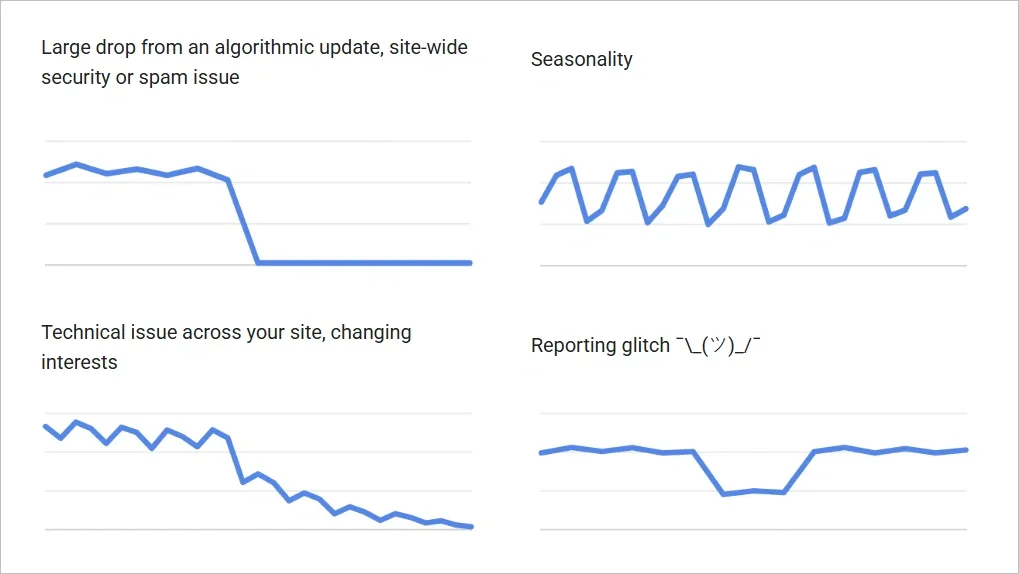
Here are some of the incidents suggested by Google that can negatively impact your site’s rankings:
During seasonal traffic declines
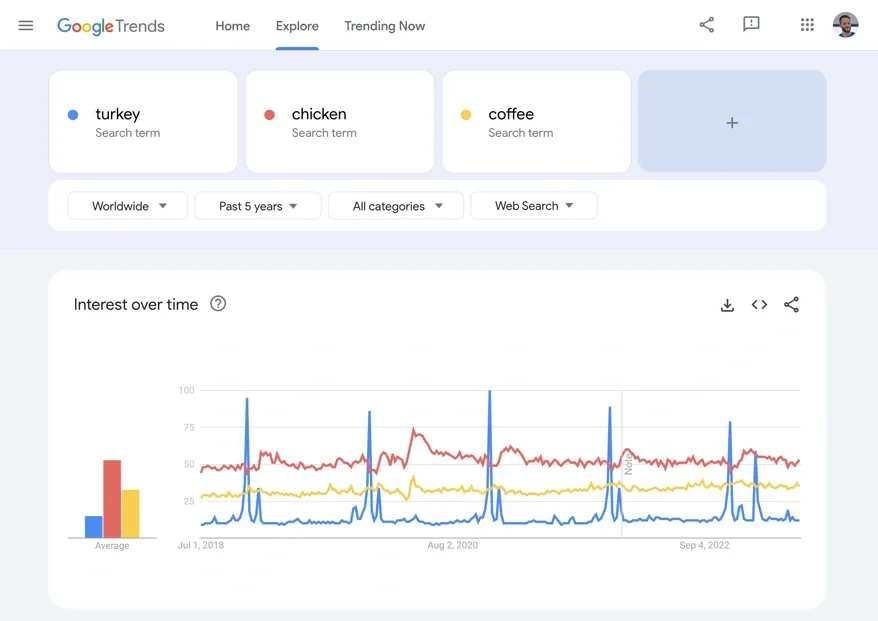
Sometimes the drop has nothing to do with SEO. Search demand naturally rises and falls in many industries. Google recommends using longer Search Console date ranges and Google Trends to check whether the same decline happens every year or across the wider market.
Google gives a useful example using food-related searches in their Google rank drop documentation. The search interest for turkey peaks every November, while chicken shows milder seasonal changes and coffee remains relatively stable throughout the year.
💡 SEO resources to follow:
- How to Do Audience Research for SEO (5 Steps to Stand Out)
- SEO lead generation strategies
- ROI of SEO: How to Calculate ROI from Your SEO Efforts?
What are the common causes of your Google keyword ranking drop?
Causes generally fall into two very different buckets, and mixing them up is the single biggest reason people chase the wrong fix. One bucket has nothing to do with your site's SEO quality at all. The other is directly tied to something Google is evaluating about your site.
Type 1. Causes That Have Nothing to Do With Your SEO Performance
These are drops where your rankings, or the underlying demand and click behavior, shifted for reasons outside your content or technical setup. Fixing your site won't move the needle here; understanding the shift will.
Branded search decline
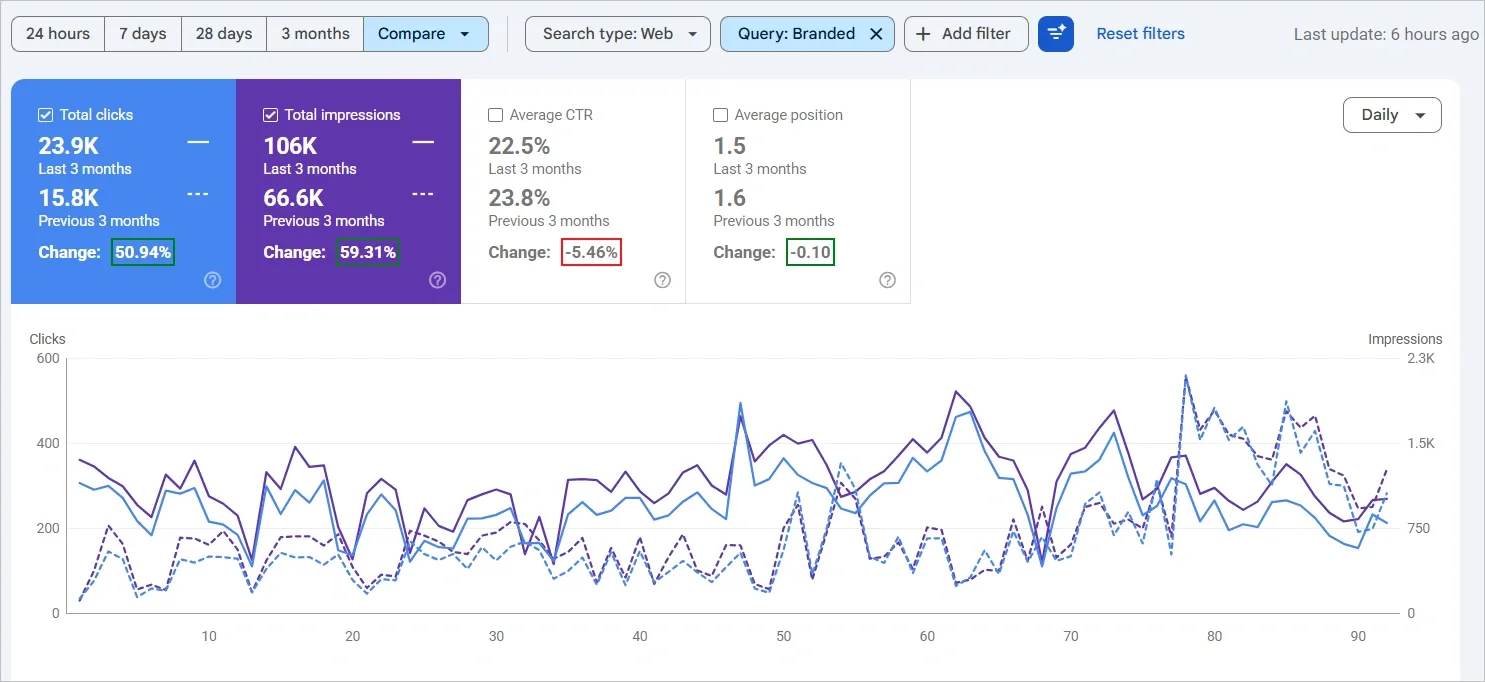
If a chunk of your organic traffic comes from people searching your brand name directly, a drop in brand awareness, ad spend, PR activity, or seasonal interest in your brand shows up in Search Console as an organic traffic drop, even though nothing changed about how Google ranks your non-branded pages.
Segment branded vs. non-branded queries in the Performance report before concluding anything is wrong with your rankings.
In the following screenshot, you can see whether clicks from branded queries have increased or decreased over the last 28 days or 3 months:
Seasonality specific to your business
Many categories have a predictable annual rhythm. Corporate gifting traffic in India, for example, typically peaks between August and October ahead of the festive season, then naturally falls off afterward.
At Tenet, we have worked with several corporate gifting clients and noticed a clear seasonal pattern. Every year, search demand for corporate gifting tends to peak between August and October. After this seasonal peak, organic traffic naturally declines as search demand decreases. We validated this pattern using Google Trends.
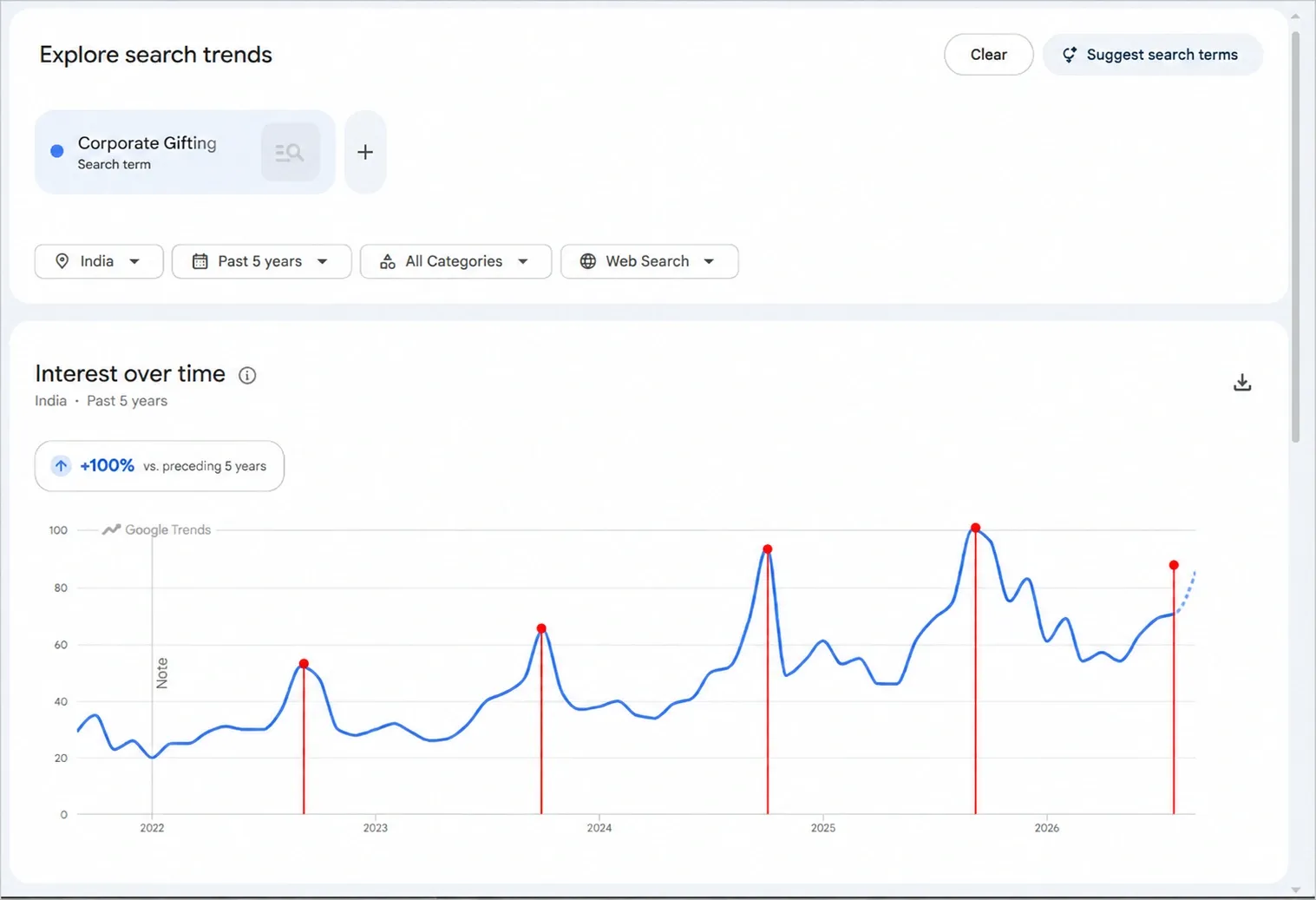
You can use the same approach to check whether a drop in your SEO keyword rankings or organic traffic is caused by seasonality rather than an actual SEO problem.
Growth of zero-click searches and AI-powered results
Google increasingly answers queries directly on the results page, through featured snippets, knowledge panels, and now AI Overviews and AI Mode, without the user ever clicking through to a website.
This particularly affects informational content:
- how-to guides, definitions
- comparison pages
- In fact, basic tools and calculator pages
In fact, a SparkToro study found that zero-click searches have increased from around 45% of Google searches a decade ago to 68% today. That means the share of searches ending without a click has grown by about 23 percentage points, or 33.8%, over the period.
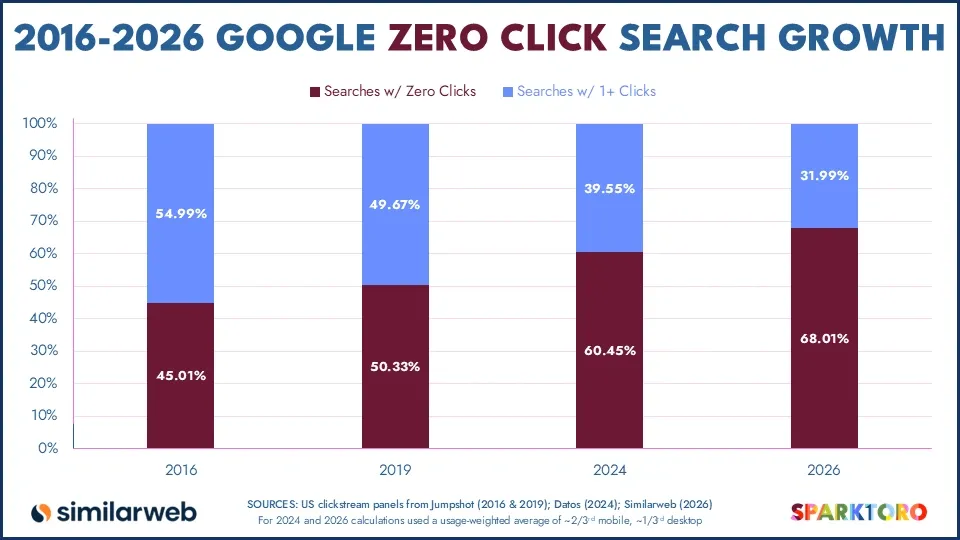
This trend matters when investigating a decline in organic traffic. Your rankings may not have changed significantly, but fewer clicks may be available because Google is answering more searches directly in its own results.
👉 Need help in getting cited and found in AI answers? Learn how our AI SEO Services can help →
Changes in search demand or user behavior
Sometimes people simply stop searching the way they used to for a given topic: a new product category emerges, terminology shifts, or interest genuinely declines industry-wide. Use Google Trends on your top queries to check whether the drop is isolated to your site or reflects a wider trend across the whole web.
SERP layout changes
Even without an algorithm update, Google frequently adds new visual elements to a results page: shopping carousels, video panels, local packs, People Also Ask boxes. If a new feature is inserted above your listing, your position number might stay the same while your visibility and CTR both drop, because there's simply less of the page left for your blue link.
👉 Need help in auditing your site’s rank drop? Request an SEO audit report here.
Causes that are because SEO activities are involved
These are the causes where something about your site itself, its content, its technical health, or its compliance with Google's policies, is the actual reason rankings fell. This is where a fix on your end can plausibly restore visibility.
Core update
A core update changes how Google's systems assess and weigh content quality broadly across the entire search index. If your pages relied on signals that the update now weighs differently (depth of expertise, originality, user value, page experience), you can see a wide, simultaneous drop across many pages.
Recovery isn't about reversing a specific technical error; it's about improving the underlying quality and usefulness of the content itself, and it can take weeks to months to show up in rankings again.
Google SERP (spam or ranking system) update
Separate from core updates, Google also ships more targeted updates aimed at specific problems: spam patterns, link schemes, low-quality auto-generated content, or reviews abuse.
If your traffic dropped in a way that lines up with one of these announced updates rather than a core update, the fix is usually about removing or improving the specific practice the update targeted.
Ahrefs also found a notable change in the SERP landscape: in March, AI Overviews visibility increased by 116%, while Featured Snippets saw a corresponding decline.
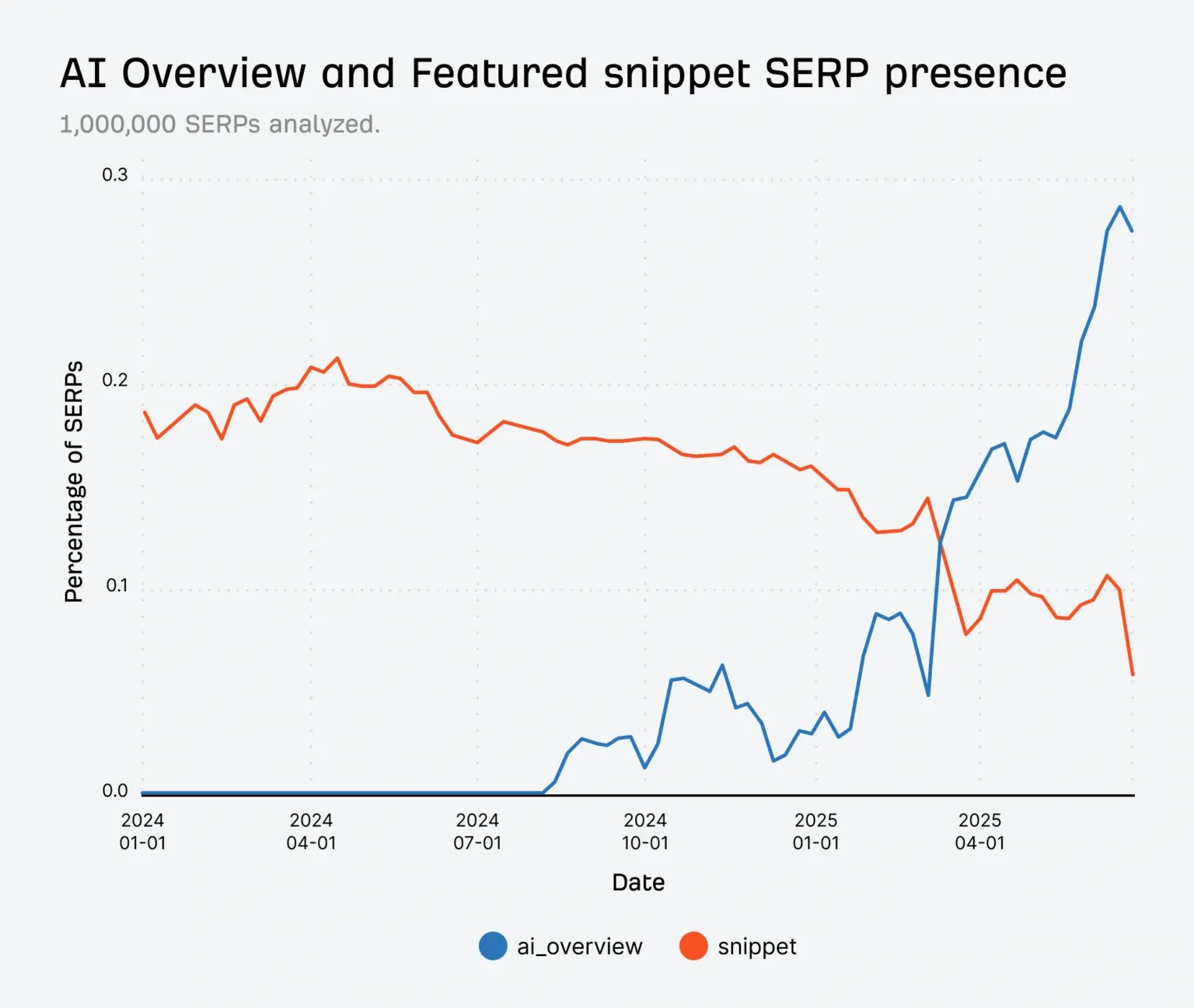
This shift shows how Google can change which SERP features receive visibility for the same queries, potentially affecting clicks even when traditional rankings remain stable.
Technical issues
These prevent Google from properly crawling, indexing, or serving your pages, and they're often the fastest-moving and most overlooked cause. Because these are often site-wide or template-level mistakes, a single bad deploy can affect thousands of URLs at once, which is why checking recent code changes should come early in any investigation, not last. Common culprits include:
1. Accidental noindex tags
A noindex tag left on a page (or a whole template) after a deploy tells Google not to show that page in results at all. This is one of the most common causes of a sudden, sharp drop, and one of the easiest to miss because the page still loads fine for a human visitor.
2. Indexing errors
Pages can silently drop out of Google's index due to crawl errors, server issues, or Google deciding a page isn't worth indexing. The Page Indexing report in Search Console surfaces these directly, showing exactly which URLs are excluded and why.
3. Content not rendering properly
On JavaScript-heavy sites, key text, links, or entire sections sometimes only appear after client-side rendering finishes. If Googlebot doesn't fully render the page the way a browser does, it may index a near-empty version, which quietly erodes rankings even though the page looks complete to a person browsing it.
Pro Tip: If your site relies heavily on JavaScript, make sure your on page content, links, images, and alt text are accessible in the rendered HTML. You can check this using Google's Rich Results Test.
4. Incorrect or broken redirects
Leftover redirect rules from an old migration, a rule that got overwritten or removed, or an expired redirect from a legacy domain can all send Google (and users) to the wrong place or a dead end. This is one of the most frequent causes of large, unexplained drops after a site change.
5. Wrong or conflicting canonical URLs
A canonical tag tells Google which version of a page is the "real" one to index and rank. If it points to the wrong URL, or conflicts with other signals like internal links or the sitemap, Google may end up ranking a different page than the one you intended, or none at all.
6. robots.txt blocks
A change to robots.txt that accidentally disallows crawling of a section of the site can cut off Google's access entirely. Because Google can't re-evaluate pages it can't crawl, this tends to cause a slower, creeping decline rather than an overnight one.
Content decay
Content that ranked well when it was published can lose relevance and rankings over time as it ages, as competitors publish fresher and more comprehensive coverage, or as the topic itself evolves and the page no longer reflects current information.
This tends to show up as a slow, page-by-page decline rather than a sudden cliff, and it's often missed because there's no single trigger event to point to.
At Tenet, we worked with a property management software company where our content audit revealed dozens of blog articles with declining clicks.
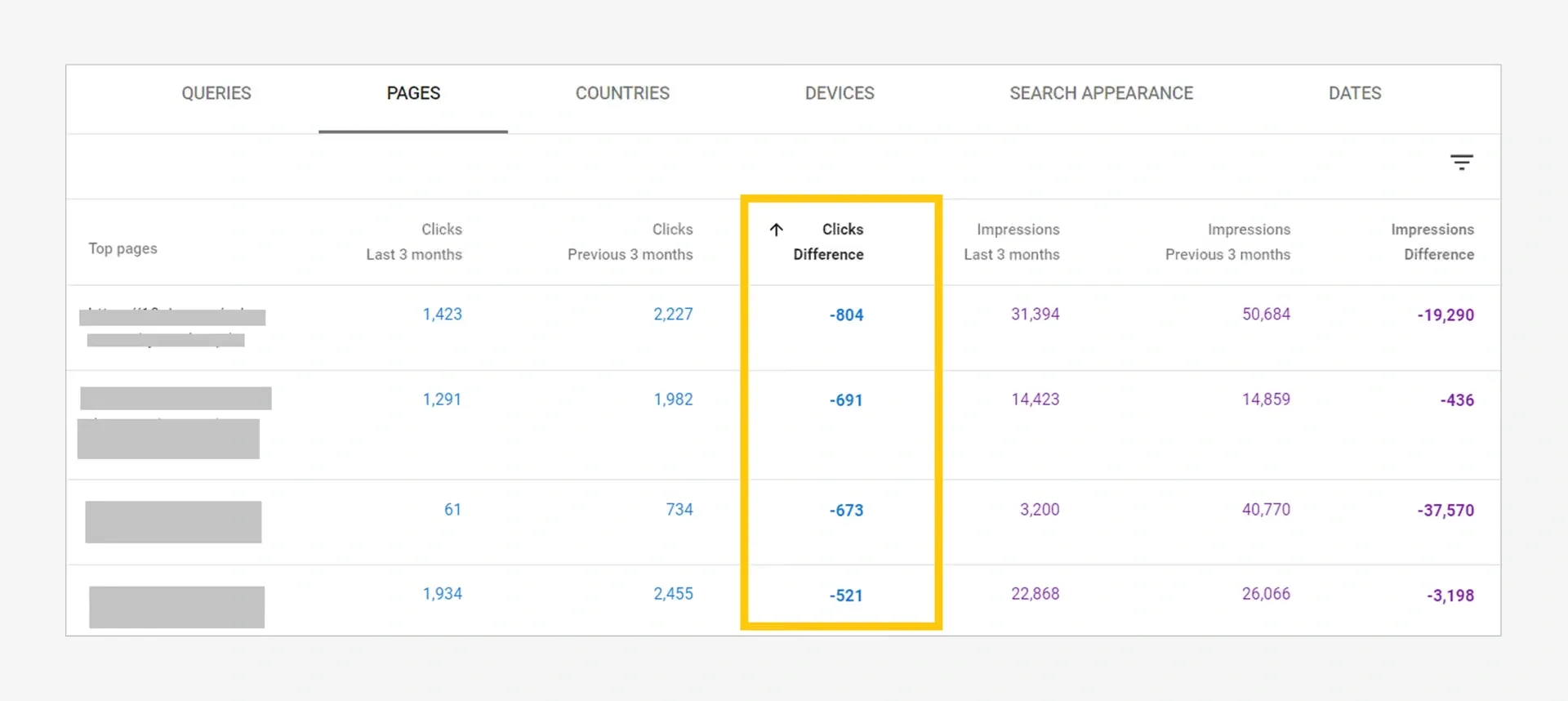
We started by identifying the pages that had lost the most traffic and analyzing the possible reasons behind the decline. Our analysis showed a clear pattern: many of the affected articles were more than one to two years old and were showing signs of content decay.
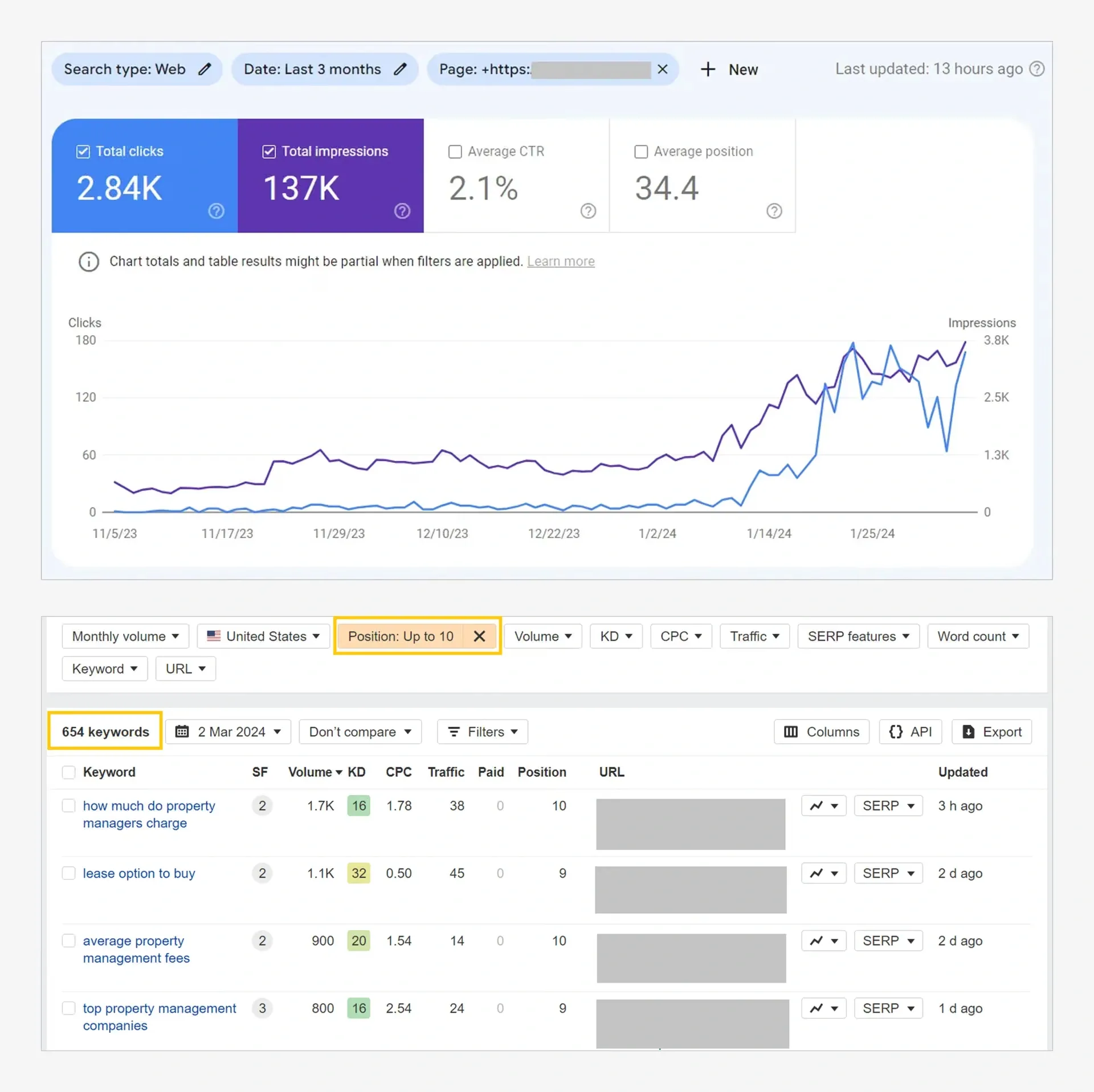
We then started updating the articles one by one, improving the content based on their current search intent and relevance. After the updates, we saw a quick increase in clicks for several of the updated URLs in Google Search Console.
You can read more about the full SaaS SEO case study here →
Google manual action
Unlike algorithmic drops, a manual action is a human reviewer at Google determining that your site violates its spam policies, and it can suppress rankings for the affected pages or the entire site. Check this directly:
- Open Google Search Console
- In the left-hand menu, go to Security & Manual Actions, then Manual Actions
- If the report says "No issues detected," there's no manual action affecting you
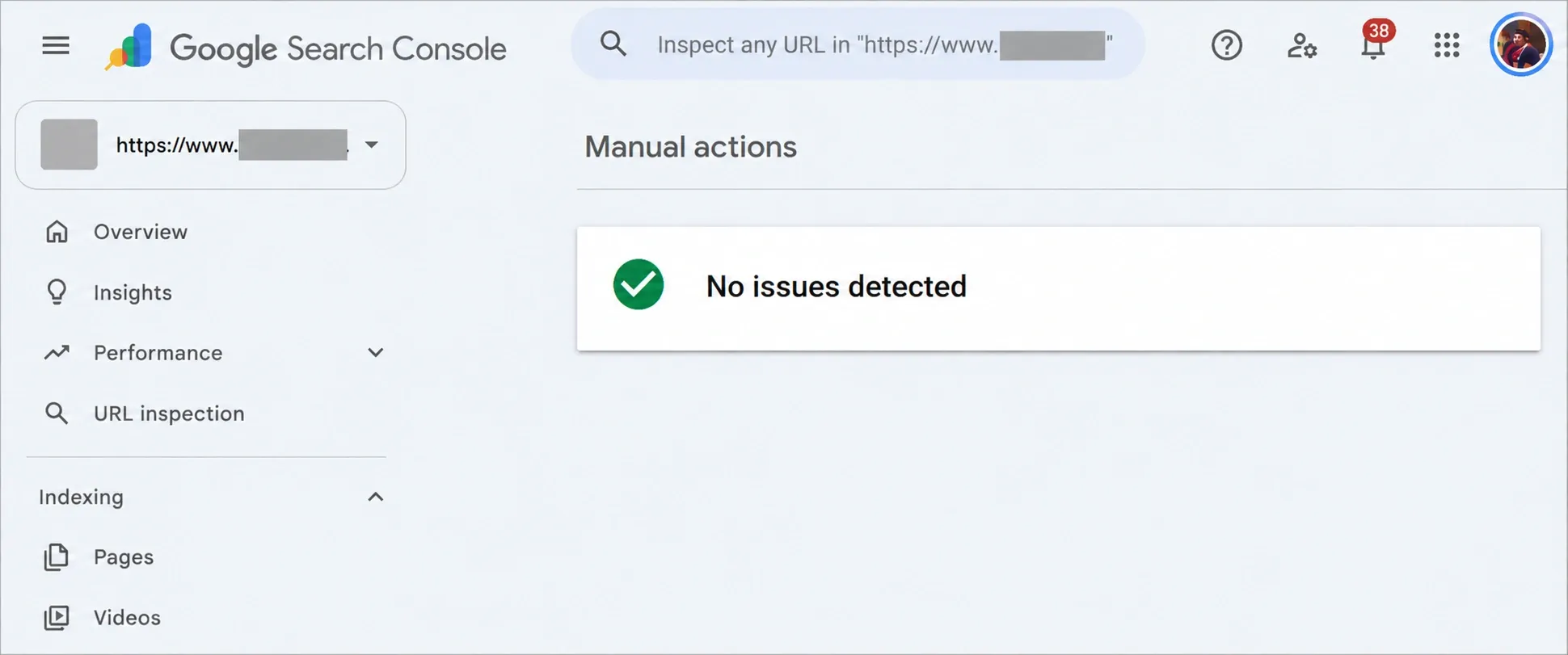
If an issue is listed, it names the specific violation and whether it applies site-wide or to specific pages, which tells you exactly what needs fixing before you can request reconsideration
Recent website migration or redesign
Changing URLs, restructuring navigation, or overhauling templates causes Google to recrawl and reassess your site, which produces a temporary dip in rankings even when the migration was done correctly. A medium-sized site typically takes a few weeks to stabilize; larger sites can take longer.
This only becomes a real problem if traffic doesn't recover after that adjustment window, at which point it's worth auditing the migration itself for mistakes like dropped redirects, changed internal linking, or lost canonical signals.
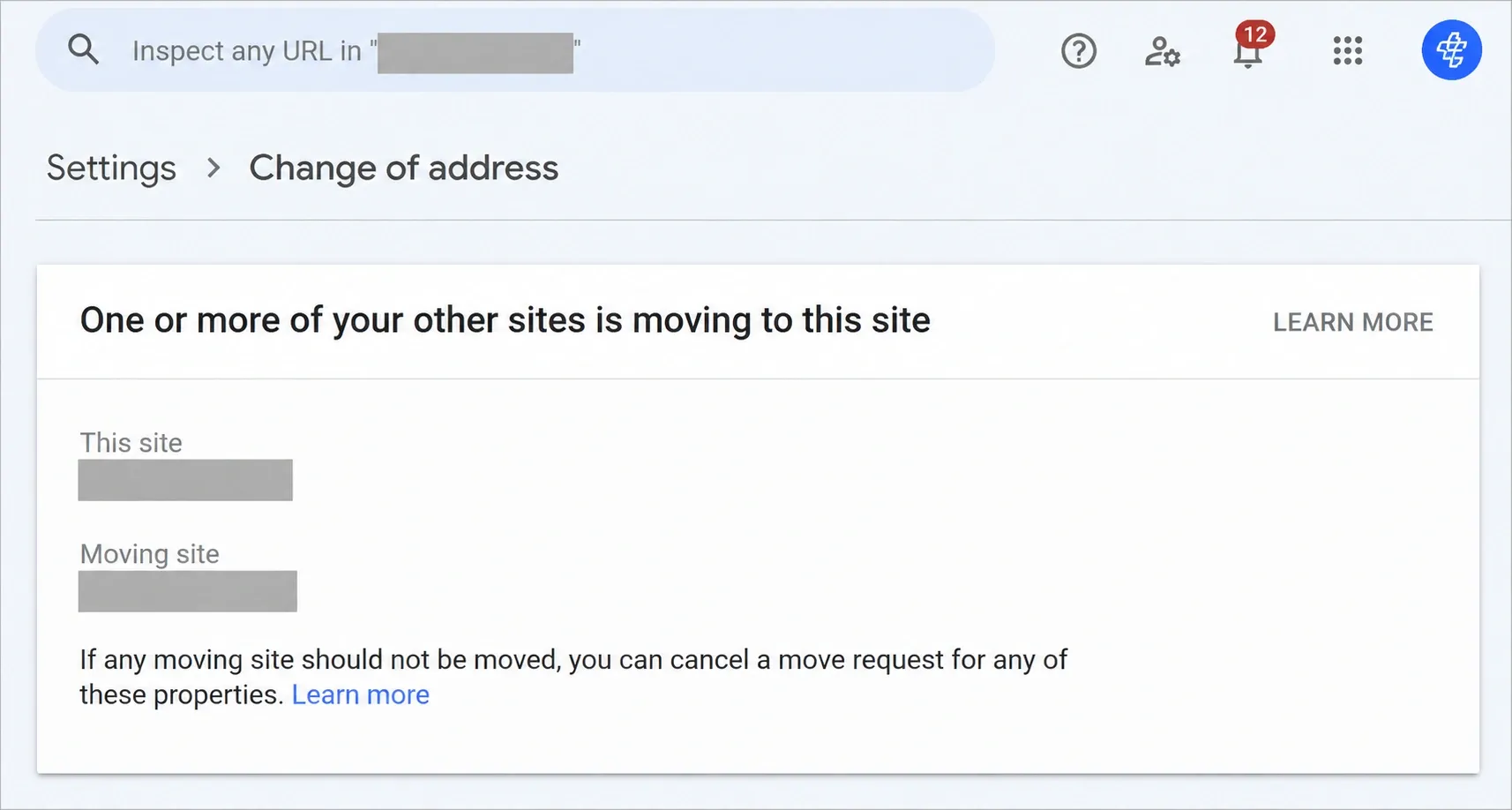
We recently worked on a website domain migration. You can check the migration status in Google Search Console by going to Settings → Change of address.
💡 Further SEO resources to read
- How To Use Reddit for AI SEO (A Complete Reddit SEO Guide)
- AI SEO Writing: 15 Tips to Create AI SEO Optimized Content
- 50+ Shocking LLM Usage Statistics for 2026
SEO keyword ranking dropped? Here's an SEO traffic recovery checklist to follow

Did your organic clicks and impressions actually drop in Google Search Console?

Did your average keyword positions also decline?

Does Google Analytics confirm a drop in organic sessions, leads, or revenue?

Did the traffic drop start around a Google core or search update?

Did your website have any major deployment, migration, redesign, or content changes before the drop?

Did branded or non-branded queries cause most of the traffic decline?

Is the decline caused by seasonality or lower search demand?

Did the SERP change for your important keywords?

Have AI Overviews, featured snippets, shopping, video, or other SERP features reduced your click opportunity?

Are important pages still crawlable and indexable?

Did a noindex, robots.txt, canonical, redirect, or JavaScript issue affect your pages?

Have your important pages suffered from content decay or changed search intent?

Which competitor pages replaced your pages in the SERPs?

Did you lose important internal links or high-quality backlinks?

Is there a Google manual action or security issue affecting your site?
Once you answer these 15 questions, you should have a much clearer idea of what caused the ranking drop and where to focus your recovery efforts.
👉 Still not sure about the possible reasons for the SEO ranking drop? Get a free SEO audit with our SEO services.
Get expert help to identify ranking issues and recover your organic traffic.
Get expert help to identify ranking issues and recover your organic traffic.
























Got an idea on your mind?
We’d love to hear about your brand, your visions, current challenges, even if you’re not sure what your next step is.
Let’s talk


